
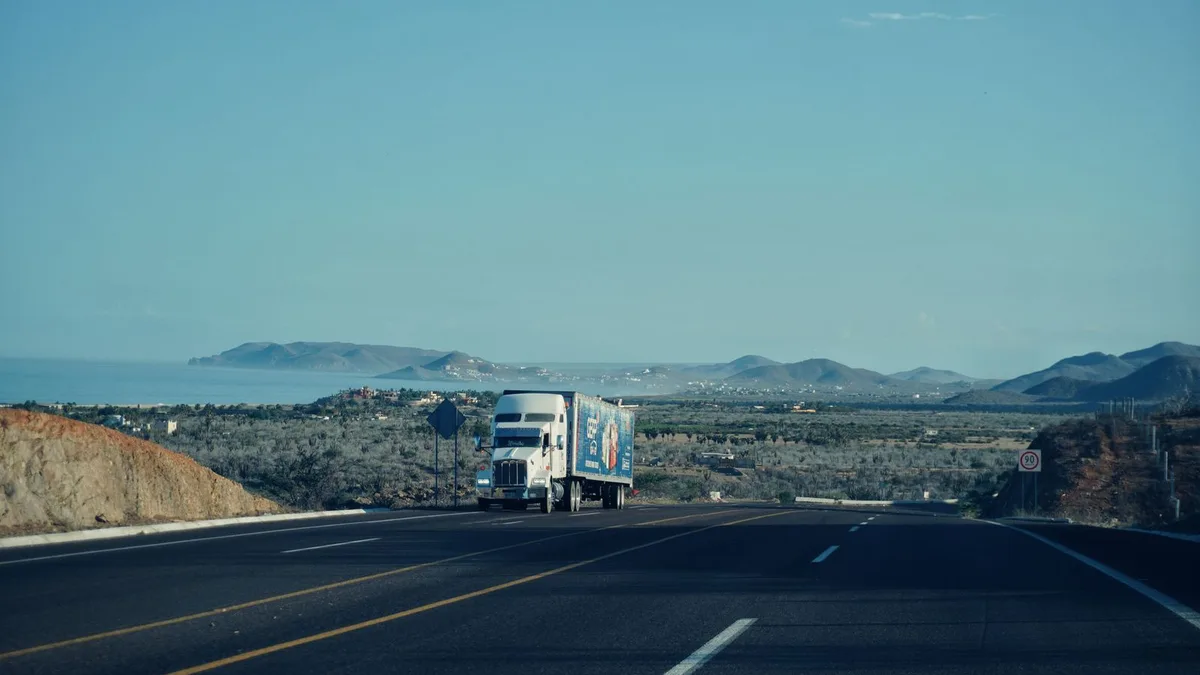
A jackknife truck wreck can unfold in seconds when a tractor and trailer rotate out of alignment, blocking lanes and creating a chain of impacts. If you are looking for a Riverside jackknife truck accident attorney after an injury, your first priorities are safety, medical care, accurate documentation, and protecting the evidence that may explain how the truck lost control.
[Call DC Law Group at (310) 571-8860](tel:+13105718860) to discuss your situation with a California truck accident attorney.
This guide explains what to do after a jackknife crash, what information can matter in a claim, and why these cases can require investigation beyond the initial traffic report. It is general information, not a legal opinion about any particular collision.
What is a jackknife truck wreck?
A jackknife truck wreck occurs when the trailer swings sharply relative to the tractor, creating an angle that resembles a folding pocketknife. The trailer can cross adjacent lanes, strike nearby vehicles, or cause drivers to take sudden evasive action. The movement may result from braking, traction, speed, steering, mechanical problems, cargo movement, roadway conditions, or a combination of factors.
The word "jackknife" describes the truck's position, not the legal conclusion about who caused the crash. A careful investigation should test each possible cause instead of assuming that the truck driver's action alone answers every liability question.
What should you do immediately after a Riverside County truck crash?
After a Riverside County jackknife crash, move away from active traffic when it is safe, request emergency services, obtain medical evaluation, cooperate with responding officers, and preserve information about the scene. Do not argue about fault at the roadside or provide a recorded statement to an insurer before you understand what is being asked.
1. Get to a safe location. If your vehicle can move and doing so will not worsen an injury, follow emergency instructions and get clear of active lanes. Do not leave the scene unless emergency personnel direct you to do so.
2. Request medical care. Tell paramedics and later providers about every symptom, including pain or limitation that develops after the shock of the collision wears off.
3. Contact law enforcement. Ask how to obtain the incident report and keep the report number with your records.
4. Exchange required information. Record the truck driver's name, employer, license information, carrier details, insurance information, and vehicle identifiers when safely possible.
5. Document the scene. Photograph vehicles, lane positions, roadway marks, traffic controls, lighting, weather, visible cargo, and any debris from safe locations.
6. Identify witnesses. Obtain names and contact information for people who saw the truck's movement, braking, lane position, or the sequence of impacts.
7. Notify your insurer carefully. Report the collision as required by your policy, but keep the first report factual and avoid guessing about speed, distance, or fault.
If you cannot safely take photographs or collect information, ask a trusted person to preserve what they can. Your health comes first. A missing photograph is not a reason to delay emergency treatment.
For a related overview of preserving video after a collision, read DC Law Group's California dashcam footage guide.
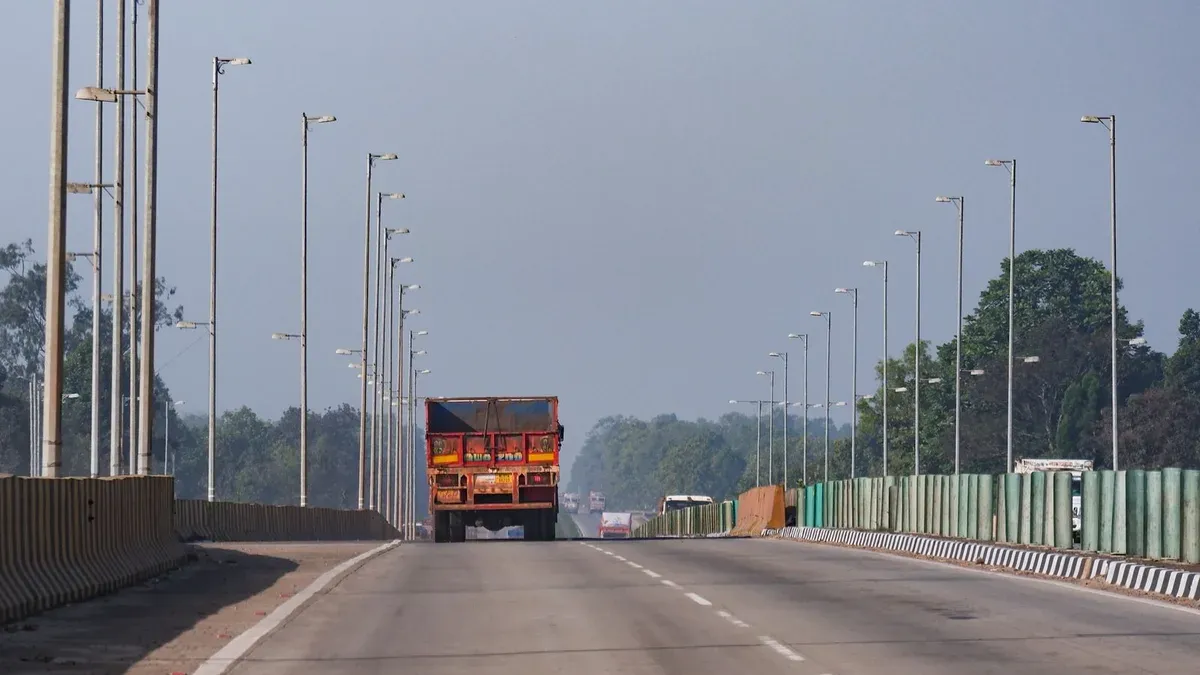
Commercial trucks and passenger vehicles traveling together on a congested highway
Truck traffic and passenger vehicles may share the same roadway during a Riverside County collision investigation.
How can investigators determine why the truck jackknifed?
Investigators determine the cause of a jackknife crash by comparing physical evidence, vehicle data, witness accounts, roadway conditions, and commercial records. The goal is to reconstruct the truck's movement before the trailer rotated, then identify whether a driver, carrier, maintenance provider, cargo-related actor, roadway condition, or several factors contributed.
Driver conduct and training
Investigators may examine speed, following distance, lane changes, distraction, fatigue indicators, braking technique, steering input, and training history. California Vehicle Code section 21703 requires a driver not to follow another vehicle more closely than is reasonable and prudent given traffic and roadway conditions. The statute is one reference point, not a substitute for analyzing the actual crash scene.
Read California Vehicle Code section 21703 for the statutory following-distance rule.
Brakes, tires, steering, and other equipment
Brake condition, tire condition, steering components, electronic control systems, and inspection history may help explain whether the truck responded as expected. Maintenance records and post-crash inspections can be time-sensitive because vehicles may be repaired, moved, or placed back into service.
Load movement and carrier practices
Records about loading, weight distribution, cargo securement, dispatch instructions, and driver scheduling may matter when the trailer's behavior suggests an unstable or shifting load. These records should be evaluated with the physical evidence rather than treated as proof of fault by themselves.
Roadway and weather conditions
Investigators may assess pavement condition, grade, curvature, lane markings, visibility, standing water, traffic congestion, and temporary construction controls. Riverside County includes major routes with substantial commercial traffic, so the location and roadway design can be important parts of the reconstruction.
A jackknife may also trigger a chain reaction involving several vehicles. DC Law Group's California freeway pileup guide discusses why sequence, roadway position, and witness accounts matter when multiple impacts occur.
What evidence should you preserve after a jackknife collision?
Useful evidence can include photographs, medical records, witness information, vehicle data, the police report, video, insurance communications, and commercial trucking records. Preserve original files when possible, write down what you remember before details change, and keep a dated folder for every communication connected with the crash.
- Photographs and videos from the crash scene, vehicles, roadway, and injuries
- Dashcam footage, nearby business video, and mobile-phone recordings
- Names and contact details for witnesses and responding personnel
- Medical records, discharge instructions, prescriptions, and appointment dates
- Vehicle repair estimates, towing records, and photographs taken before repairs
- Insurance letters, emails, claim numbers, and recorded-statement requests
- Employment records showing missed work or changed duties, when relevant
- Messages or notes describing symptoms, limitations, and the collision sequence
Electronic truck data may include event information related to speed, braking, steering, or other vehicle inputs, depending on the equipment and the preservation process. DC Law Group's truck accident black box data guide explains why these records can be important in a commercial crash investigation.
Who may be responsible for a Riverside jackknife truck crash?
Potentially responsible parties depend on the evidence. A claim may involve the truck driver, trucking carrier, vehicle owner, maintenance provider, cargo-loading company, manufacturer, another driver, or a public entity responsible for a roadway condition. Identifying a possible party is not the same as proving liability, so the investigation should connect each theory to specific facts.
California's general negligence rule asks whether a person used ordinary care under the circumstances and whether that failure contributed to injury. California Civil Code section 1714 is a starting point for that analysis. The facts of the particular crash determine which legal theories and parties may apply.
For a broader overview of commercial-carrier issues, see DC Law Group's California commercial truck accident liability guide.
When a truck's movement contributes to a rollover or another loss-of-control event, the physical evidence should be assessed before conclusions are drawn. See DC Law Group's California car rollover guide for related evidence considerations.
How can a Riverside jackknife truck accident attorney help?
A Riverside jackknife truck accident attorney can help organize the evidence, identify potentially responsible parties, communicate with insurers, evaluate injury documentation, and protect a claim while the investigation develops. The attorney's role is not to promise an outcome. It is to build a fact-based record and explain the available legal options.
- Preserving photographs, video, vehicle data, and commercial records
- Reviewing the police report and comparing it with physical evidence
- Identifying the carrier, owner, maintenance actors, and cargo participants
- Analyzing liability arguments and any disputed account of the crash
- Coordinating medical documentation for current and continuing conditions
- Communicating with insurers and reviewing proposed statements or releases
- Explaining whether litigation, negotiation, or additional investigation is appropriate
DC Law Group's truck accident practice page provides more information about the firm's California truck accident representation. If a roadside event involved an unsafe shoulder or stopped vehicle, the firm's California highway shoulder accident guide may also provide useful context.
If you are deciding whether to seek counsel after a serious collision, DC Law Group also explains when an injured driver may want to contact a car accident attorney.
[Speak with DC Law Group at (310) 571-8860](tel:+13105718860) before giving a detailed recorded statement or signing a release related to a serious jackknife truck injury.
What is the deadline to bring a California truck injury claim?
California deadlines depend on the type of claim, the identity of the defendant, and other facts. California Code of Civil Procedure section 335.1 generally addresses a two-year period for an action based on a person's death or injury caused by a wrongful act or negligence, but special rules can apply. Do not wait for a deadline question to become an emergency.
Review California Code of Civil Procedure section 335.1, then discuss the facts with a qualified attorney promptly. Claims involving a public entity, a minor, an uninsured driver, a contractual notice requirement, or a different type of defendant may involve different analysis. A consultation can help identify which dates must be investigated.
[Call DC Law Group at (310) 571-8860](tel:+13105718860) before the FAQ below if you want to discuss evidence preservation, insurer communications, or a potential Riverside County truck injury claim.
Frequently asked questions about Riverside jackknife truck wrecks
What causes a truck to jackknife?
Common possibilities include hard braking, excessive speed for conditions, loss of traction, steering input, equipment problems, uneven loading, cargo movement, or another event that forces an emergency maneuver. The actual cause requires evidence from the scene, vehicles, witnesses, and commercial records.
Should I speak with the trucking company's insurer?
Notify your own insurer as required by your policy, but use care with detailed statements, recorded interviews, medical authorizations, and releases from another insurer. You may consult a truck accident attorney before responding to a request that asks you to describe fault or the full extent of your injuries.
What if I was partially responsible for the crash?
Do not decide fault from a stressful roadside conversation. California negligence analysis considers the conduct of the people and entities involved and how that conduct relates to the injury. Preserve the evidence and obtain advice based on the complete record rather than an early assumption.
What if the truck driver says I caused the jackknife?
A driver's statement is one piece of information, not a final determination. Photographs, event data, lane marks, witness accounts, vehicle inspections, and roadway evidence may confirm or challenge that account. Avoid arguing at the scene and preserve the names of people who heard the statements.
Can I still have a claim if the truck did not hit my vehicle?
Possibly. A jackknife can force nearby drivers to brake or swerve, and a resulting collision may involve more than direct contact with the truck. Liability depends on the sequence of events, available evidence, and the relationship between the truck's movement and the injury.
What should I bring to a truck accident consultation?
Bring the incident report number, insurance information, photographs, videos, witness details, medical records, vehicle documents, work records, and every letter or message from an insurer. If you do not have everything, do not delay asking for guidance. The initial consultation can identify which records should be requested next.
[Call DC Law Group at (310) 571-8860](tel:+13105718860) to discuss your Riverside County jackknife truck wreck and your next step.