
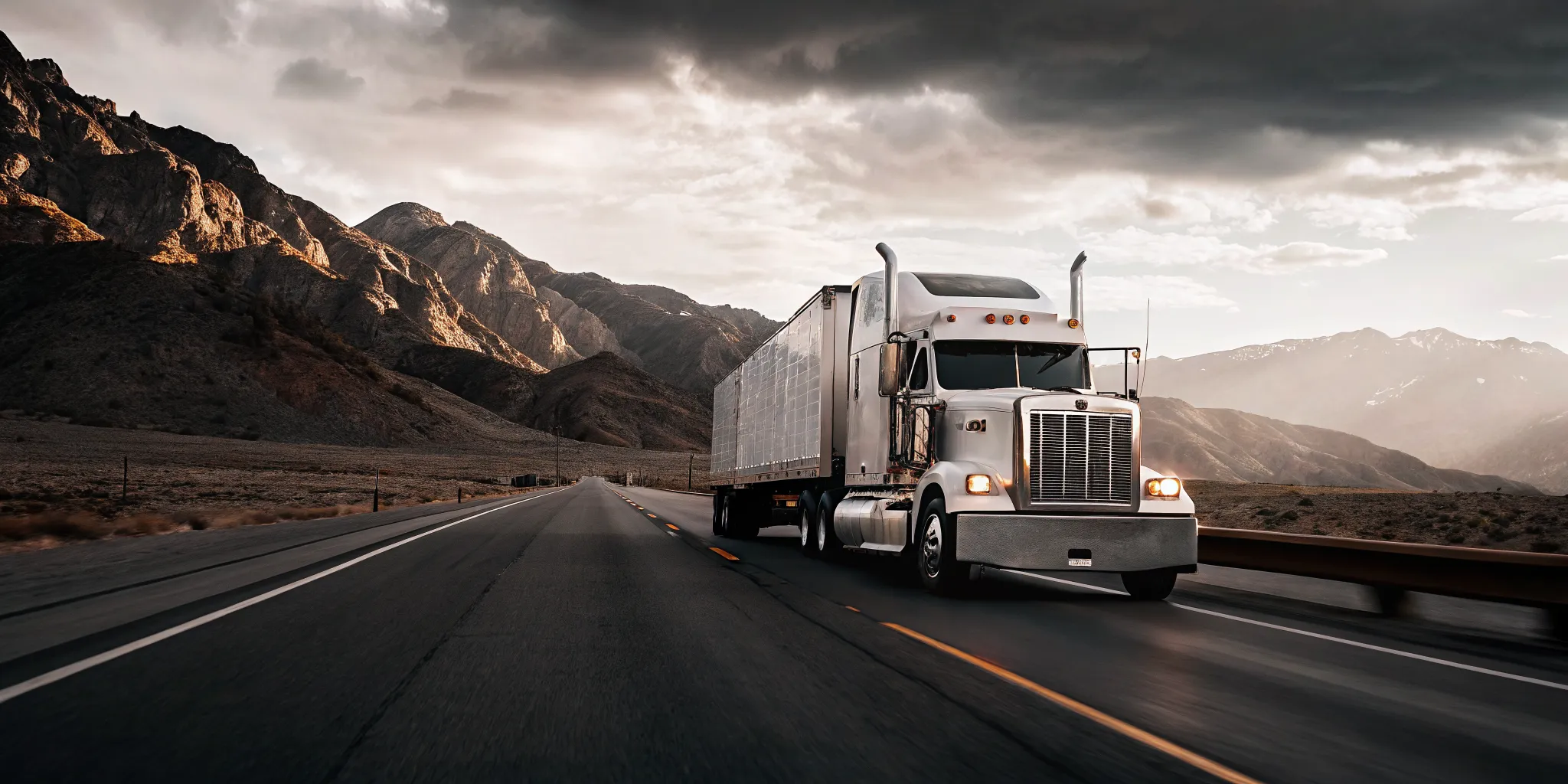
A semi-truck loaded with cargo weighs up to eighty thousand pounds. When one of these massive vehicles collides with a passenger car on a California freeway, the results are often catastrophic. Victims and their families face mounting medical bills, lost income, and a long road to recovery. A California commercial truck accident lawyer brings deep knowledge of federal trucking regulations to every case. Unlike a standard car crash claim, commercial truck accidents involve a web of federal rules, multiple potentially liable parties, and time-sensitive digital evidence that can disappear within days. DC Law Group investigates every angle of your crash, from electronic logging device data to truck maintenance records, to build the strongest possible case.
Call DC Law Group today at (310) 855-5555 for a free consultation with a California commercial truck accident lawyer who understands FMCSA regulations and will fight for the compensation you deserve.
REQUEST A FREE CONSULTATIONUnderstanding how federal regulations, liability rules, and evidence preservation requirements affect your claim is the first step toward holding the responsible parties accountable. The framework established by the Federal Motor Carrier Safety Administration provides the foundation for building a winning case.
California Commercial Truck Accident Lawyer: Understanding FMCSA Regulations and Their Role in Your Case
The Federal Motor Carrier Safety Administration (FMCSA) establishes the regulatory framework that governs every commercial truck operating in the United States. These federal regulations cover driver hours, vehicle maintenance, drug testing, and distracted driving. When a trucking company or driver violates these rules and causes a crash, those violations become powerful evidence in your case. A skilled California commercial truck accident lawyer knows exactly which regulations apply and how to use violations to prove negligence.
Hours of Service and Electronic Logging Devices
Federal hours of service regulations limit how long a commercial driver can operate a truck without taking a mandatory break. These limits are designed to prevent fatigue-related crashes on California highways. Under current rules, property-carrying drivers cannot drive beyond 11 hours after 10 consecutive hours off duty and must take a 30-minute break after 8 hours of driving. To enforce these limits, the FMCSA requires most commercial trucks to use electronic logging devices. These devices track driving time automatically and prevent the logbook falsification that was common with paper records. If a driver violated hours of service rules before your crash, the ELD data will prove it. A California commercial truck accident lawyer can issue a spoliation letter immediately to preserve this data before it is overwritten.
Post-Accident Drug and Alcohol Testing
Federal rules require mandatory drug and alcohol testing after serious commercial truck accidents. The trucking company must test the driver for alcohol within 8 hours and for controlled substances within 32 hours of the crash. If the company fails to test within these windows, they must stop attempting to test altogether, which can raise questions about what they were trying to hide.
Vehicle Inspection and Maintenance Requirements
Motor carriers must systematically inspect, repair, and maintain all commercial vehicles under their control. Drivers are required to perform pre-trip inspections before each journey. When trucking companies cut corners on maintenance, brake failures, tire blowouts, and steering malfunctions can result. Our commercial vehicle accident attorneys have extensive experience holding negligent carriers accountable for maintenance-related crashes.
Who Can Be Held Liable in a California Commercial Truck Accident
A commercial truck accident rarely involves just one at-fault party. The truck driver, the motor carrier, the freight broker, the shipper, the vehicle manufacturer, and third-party maintenance contractors may all share liability. Identifying every responsible party is essential to securing full compensation for your injuries.
The Truck Driver and the Motor Carrier
The truck driver is the most obvious liable party when their negligence causes a crash. However, under the legal doctrine of respondeat superior, the trucking company that employs the driver is also vicariously liable for the driver's actions within the scope of employment. Beyond vicarious liability, motor carriers can face direct claims for negligent hiring, training, and supervision. If a carrier hired a driver with a history of violations or failed to provide adequate safety training, they can be held directly accountable. The FMCSA safety fitness rating system provides public data on carrier safety performance. A poor safety rating can be powerful evidence of a pattern of negligence.
Freight Brokers, Shippers, and Third-Party Contractors
Freight brokers connect shippers with motor carriers. Federal regulations require brokers to select carriers that have adequate safety ratings and insurance. When a broker hires an unsafe carrier and a crash results, the broker may share liability. Shippers can also be liable if they improperly load or secure cargo. Shifting cargo can cause a truck to roll over or lose control during sudden maneuvers. Third-party maintenance contractors who botch repairs may also face liability for crashes caused by equipment failure.
The Vehicle Manufacturer
In some cases, a defect in the truck itself contributes to the crash. Brake system failures, tire defects, steering column malfunctions, and electronic system errors can all cause or worsen an accident. When a manufacturing or design defect is to blame, the truck manufacturer may be added as a defendant in a product liability claim.
What Evidence Is Critical After a Commercial Truck Crash in California
Time is your enemy after a commercial truck accident. Electronic evidence critical to your case can be lost, overwritten, or destroyed within days. Taking immediate action to preserve evidence can make the difference between winning and losing your claim. A California commercial truck accident lawyer knows exactly which data sources to secure and how to protect them from destruction.
The Risk of Data Loss
Modern commercial trucks contain multiple electronic systems that record data before, during, and after a crash. Electronic logging devices track hours of service data. Engine control modules act as black boxes, recording speed, braking, and steering inputs. Dashcams capture video of the road ahead. This data is not stored indefinitely. ELD data can be overwritten within days. Dashcam footage is often recorded over after a short period. Without a spoliation letter directing the trucking company to preserve all records, critical evidence can vanish before your legal team has a chance to review it.
Steps to Secure Truck Crash Evidence
Your legal team must act quickly to preserve the evidence needed to build your case. Here are the essential steps:
1. Send a spoliation letter immediately. Your attorney sends a formal legal notice to the trucking company requiring them to preserve all crash-related records. Including ELD data, ECM data, dashcam footage, dispatch records, and maintenance logs.
2. Extract the engine control module data. The ECM functions as the truck's black box. It records vehicle speed, engine RPM, brake application, and other data seconds before the crash.
3. Secure the truck's maintenance and inspection records. These records reveal whether the carrier performed required safety inspections and repairs.
4. Obtain the driver's logs and employment records. The driver's qualification file, training records, and prior accident history can reveal patterns of unsafe behavior.
5. Request federal accident register data. Motor carriers must maintain an accident register for three years listing every crash involving their vehicles.
If you or a loved one has been hurt in a big rig crash, contact DC Law Group now to speak with a California commercial truck accident lawyer who will immediately begin preserving critical evidence.
How Does California's Pure Comparative Negligence Rule Affect Truck Accident Claims
California follows a pure comparative negligence rule, which means you can recover damages even if you were partially at fault for the accident. However, your total recovery is reduced by your percentage of fault. This rule is especially important in truck accident cases where insurance companies often try to shift blame onto the victim.
How Pure Comparative Negligence Works
Under this system, a judge or jury assigns a percentage of fault to each party involved in the crash. If you are found 20 percent at fault and your total damages are $100,000, you would recover $80,000. Even if you are 99 percent at fault, you can still recover 1 percent of your damages. Trucking company defense attorneys frequently argue that the victim contributed to the crash, which is why having experienced legal representation is essential.
Types of Recoverable Damages
California law allows truck accident victims to recover both economic and non-economic damages.
Economic Damages: Direct financial losses from the crash. Examples include medical bills, lost wages, property damage, and rehabilitation. Proof requires bills, receipts, pay stubs, and medical records. California imposes no cap for most cases.
Non-Economic Damages: Personal, non-financial harm. Examples include pain and suffering, emotional distress, and loss of enjoyment of life. Proof requires expert testimony, personal testimony, and journal entries. California imposes no cap in most injury cases.
What Are the Most Common Causes of Commercial Truck Accidents on California Freeways
California freeways see constant heavy truck traffic moving goods throughout the state. Understanding the common causes of commercial truck accidents can help you recognize when a trucking company or driver has violated safety rules. For more guidance on steps to take after a collision, read our guide on what to do after a truck accident in California.
Driver Fatigue and Hours of Service Violations
Fatigue is one of the most dangerous threats on the road. Studies from the National Institutes of Health confirm that fatigue impairs reaction time, attention, and decision-making. Truck drivers under pressure to meet tight delivery schedules often push beyond their legal driving limits. When a driver exceeds hours of service limits, it creates a presumption of negligence that a California commercial truck accident lawyer can leverage during settlement negotiations.
Distracted Driving
The FMCSA prohibits commercial drivers from using hand-held mobile phones while operating a commercial motor vehicle. Despite this ban, distracted driving remains a leading cause of large truck crashes.
Blind Spots and Stopping Distance
Large trucks have significant blind spots on all four sides. These no-zones make it difficult for truck drivers to see smaller vehicles during lane changes. A fully loaded tractor-trailer requires drastically longer stopping distance than a passenger car.
Speeding and Improper Cargo Loading
Speeding reduces a truck driver's ability to react to sudden hazards and increases the force of impact. Improperly secured cargo can shift during transit, causing the truck to tip over on curves or during emergency maneuvers.
Steps to Take After a Commercial Truck Accident in California
What you do in the hours and days after a commercial truck accident can determine the outcome of your case.
Key Steps to Take
1. Seek medical attention immediately. Some injuries may not show symptoms right away. Getting medical care creates documentation linking your injuries to the crash.
2. Report the crash to law enforcement. California law requires that any accident involving injury or death be reported immediately.
3. Preserve physical and electronic evidence. Take photos of the scene, vehicle damage, road conditions, and any visible injuries.
4. Do not speak to insurance adjusters without legal counsel. Trucking company insurance adjusters are trained to get statements that minimize their liability.
5. Contact a California commercial truck accident lawyer. Federal regulations, multiple liable parties, and time-sensitive electronic evidence make truck accident cases uniquely complex.
REQUEST A FREE CONSULTATIONFrequently Asked Questions
Why must you preserve evidence after a California truck crash?
You must preserve evidence because key data can be lost or deleted very fast. Under federal rules, trucking firms must keep accident logs for three years. However, electronic logging device data can be overwritten in a few days. Securing this data early is vital to your case. A California commercial truck accident lawyer can send a spoliation letter to stop the firm from destroying these records.
Who can be held liable for a commercial truck accident in California?
Many parties can share blame after a wreck. The truck driver may be liable for speeding or driving while fatigued. The trucking company can be held liable for poor maintenance or negligent hiring practices. Cargo loaders, freight brokers, truck manufacturers, and third-party repair shops may also share fault. Finding all liable parties is key to maximizing your recovery.
How does a truck accident claim differ from a car accident claim?
Truck claims are much more complex than typical car crashes. Large trucks must follow strict federal safety regulations governing driver hours, cargo limits, vehicle inspections, and drug testing. When these rules are broken, it creates powerful evidence of negligence that is not available in standard car accident cases.
What damages can I recover in a commercial truck accident lawsuit?
Victims may seek compensation for medical expenses, lost wages, pain and suffering, emotional distress, property damage, and loss of enjoyment of life. In catastrophic injury cases involving permanent disability, future medical care and lost earning capacity can make up a significant portion of the claim.
How can a California commercial truck accident lawyer help my case?
A California commercial truck accident lawyer can protect your rights when dealing with large trucking firms and their insurance companies. DC Law Group investigates these crashes thoroughly, secures vital evidence like black box data and safety logs before it is lost, and builds a strong claim so you can focus on healing after a devastating crash.
Ready to Speak with a California Truck Accident Lawyer?
You do not have to face the aftermath of a commercial truck accident alone. DC Law Group is ready to put our experience to work for you. Our team is available 24 hours a day, seven days a week to take your call. We come to you, whether you are at home or in the hospital, so you can focus on healing while we handle the legal complexities of your case.
Contact DC Law Group today to schedule a free consultation with a California commercial truck accident lawyer who will fight for the compensation you deserve.