
A fatal commercial vehicle crash can leave a family grieving while an investigation, insurance claims, and legal deadlines begin moving quickly. Families searching for a fatal commercial vehicle accident lawyer California should first understand how a wrongful-death claim may work, what evidence can disappear, and which questions require case-specific legal advice.
This guide explains general California legal concepts. It is not a prediction about any particular claim. The right parties, deadlines, and potential recovery depend on the facts, available insurance, and the identity of every person or business involved.
What should a family do after a fatal commercial vehicle crash?
In the first days after a death, family members should focus on their immediate well-being and allow law enforcement and medical professionals to handle emergency responsibilities. When practical, preserve information rather than trying to investigate the crash personally. A family member or lawyer may later need to:
- Obtain the incident or collision report when it becomes available.
- Keep photographs, videos, messages, witness information, and location details that family members already possess.
- Preserve the decedent's employment, income, household, and benefit records.
- Refer calls and written communications from insurers to a designated family representative or attorney.
- Avoid posting theories about fault or the case on social media.
- Ask counsel to send preservation requests before relevant vehicle, driver, employer, and electronic records are lost or overwritten.
Do not confront the commercial carrier, driver, employer, or another involved party. A serious crash may involve several insurers and businesses with separate representatives. Statements made before the evidence is understood can create avoidable complications.
Why are commercial vehicle fatality claims different?
A commercial vehicle case may involve more than the person who was driving. Depending on the evidence, potential responsible parties can include a motor carrier, vehicle owner, maintenance provider, shipper, broker, manufacturer, or another driver. The legal analysis may involve employment relationships, dispatch records, maintenance history, training, supervision, hours-of-service records, cargo loading, and safety policies.
Commercial vehicles may also generate records that do not exist in an ordinary passenger-car crash. Examples can include electronic logging data, telematics, dash-camera footage, inspection records, driver qualification materials, dispatch communications, onboard event data, and inspection or maintenance records. The existence and retention period of each record varies. A lawyer should identify the likely evidence and send targeted preservation requests rather than assume every commercial vehicle stores the same information.
Federal motor-carrier rules may be relevant in some cases, but the presence of a rule violation does not by itself answer every California wrongful-death question. The investigation must connect the conduct, the crash, and the death using admissible evidence. Families can also review DC Law Group's truck accident practice for context about commercial-vehicle representation.
Who may bring a California wrongful-death claim?
California Code of Civil Procedure section 377.60 identifies people who may be authorized to bring a wrongful-death action, subject to the statute's requirements. Depending on the family structure and circumstances, this may include a surviving spouse or domestic partner, children, certain dependent minors, or other people within the statutory framework. The personal representative of the decedent's estate may also have a role in claims that belong to the estate rather than the survivors individually.
The family should not assume that the person handling funeral arrangements, probate, or insurance paperwork automatically controls every legal claim. Wrongful-death and survival claims can involve different rights, parties, damages, and procedures. A California attorney should review the family relationship, estate status, and available records before anyone signs a release or settlement agreement.
Read the text of California Code of Civil Procedure section 377.60 for the statutory framework governing who may bring a wrongful-death action. The statute is important, but applying it requires facts that are not available from a search query alone.
How do wrongful-death and survival claims relate?
A wrongful-death claim generally addresses losses suffered by eligible survivors because of the death. A survival claim is different. It may preserve a cause of action that belonged to the decedent before death, depending on the circumstances and applicable law. The distinction can affect who brings the claim, which damages are available, and how proceeds are handled.
California Code of Civil Procedure section 377.30 addresses the survival of a cause of action in the circumstances described by the statute. Families should ask counsel to analyze both potential paths rather than treating every fatal crash as one undifferentiated claim. The timing and medical facts between the collision and death may matter to that analysis.
A settlement discussion should also identify whether it resolves a survivor claim, an estate claim, or both. Signing a broad release without understanding that distinction can affect rights that have not been evaluated.
What evidence should be preserved after a fatal truck or commercial vehicle crash?
Evidence preservation should begin early because some records are routinely overwritten, repaired, deleted, or returned to service. A preservation request may address the following categories:
- Scene evidence: photographs, video, roadway measurements, lighting, signage, debris, vehicle positions, and vehicle damage.
- Driver evidence: licensing, qualification, training, medical certification, drug and alcohol testing where applicable, driving history, hours-of-service records, and prior safety information.
- Carrier evidence: dispatch instructions, route information, policies, supervision, communication records, incident reports, and post-crash actions.
- Vehicle evidence: inspection, maintenance, repair, tire, brake, steering, load, and onboard electronic records.
- Digital evidence: telematics, GPS data, dash-camera files, phone records when legally obtainable, electronic logging data, and platform records.
- Human evidence: witness names, statements, photographs, recordings, first-responder observations, and expert inspections.
Families do not need to collect every item themselves. They should preserve what they already have, identify possible sources, and tell counsel what they know. An attorney or investigator can then pursue records through preservation letters, subpoenas, inspection requests, and other lawful methods.
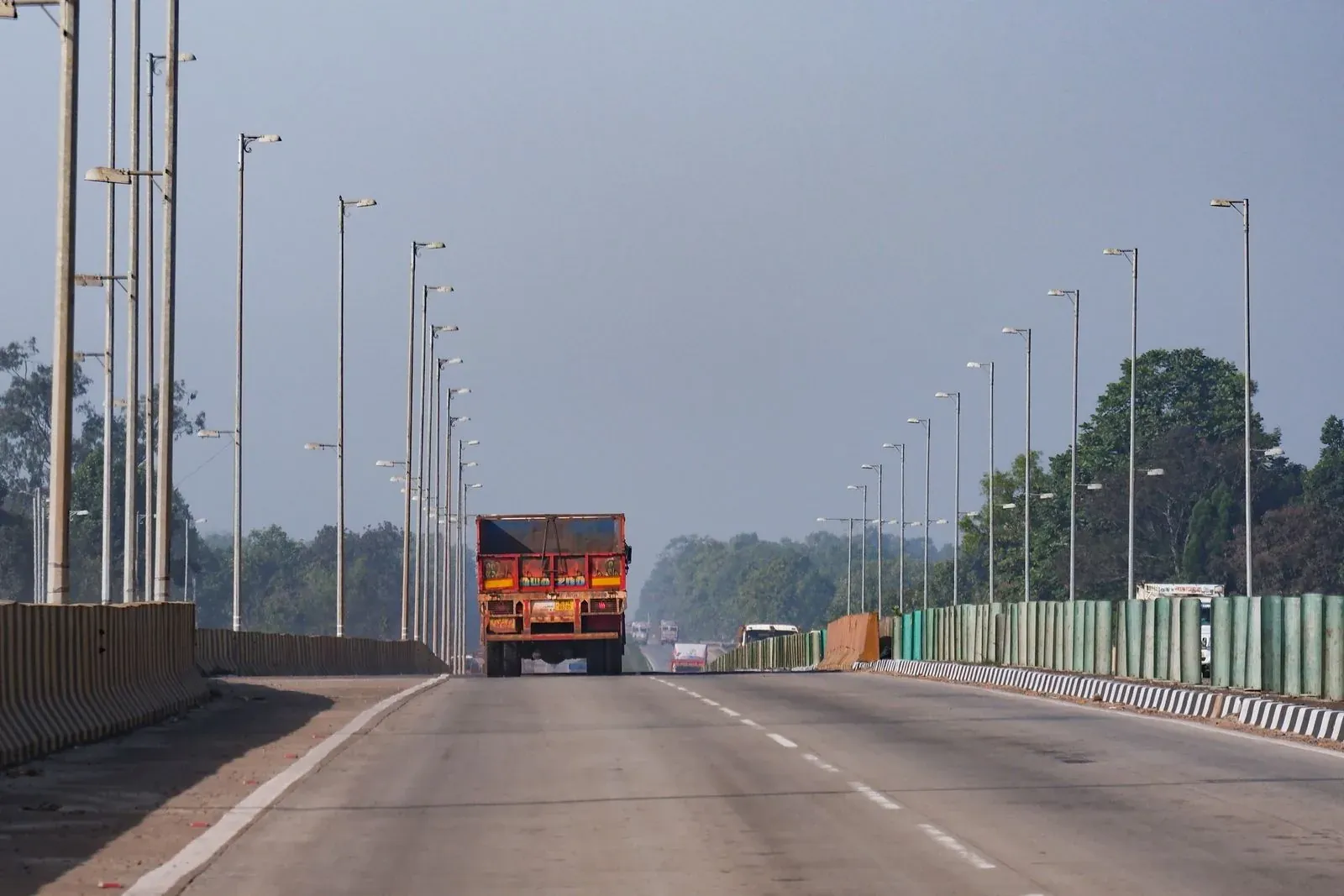
Commercial truck traveling on a divided highway, illustrating the need to preserve evidence after a fatal vehicle crash
A commercial vehicle investigation may require prompt preservation of driver, carrier, vehicle, and roadway evidence.
How is liability investigated in a fatal commercial vehicle case?
Liability is determined from the evidence, not simply from the size of the vehicle or the severity of the result. An investigation may examine whether the driver was distracted, impaired, fatigued, speeding, following too closely, improperly changing lanes, or otherwise operating the vehicle negligently. It may also examine whether the carrier hired, trained, supervised, scheduled, or retained the driver appropriately. A related resource, what to do after a truck accident in California, covers immediate preservation steps for people who survive a collision or are helping an injured family member.
Other questions can be equally important. Was the vehicle properly inspected and maintained? Was cargo loaded or secured in a way that affected control? Did a company pressure a driver to meet an unsafe schedule? Did a separate maintenance contractor miss a defect? Did another vehicle or roadway condition contribute to the collision?
California uses comparative-fault principles in many negligence cases. That means investigators may examine the conduct of every involved person, including the decedent, without reducing the need for a careful and respectful investigation. A preliminary police determination is useful evidence, but it may not resolve every civil-liability issue.
What damages may be available in a California wrongful-death claim?
Potential damages depend on the claim, the evidence, and the family members who are legally entitled to recover. A wrongful-death analysis may consider the value of financial support the decedent would have provided, household services, gifts or benefits, and the survivors' loss of the relationship. Funeral and burial expenses may also be relevant under applicable law.
These categories are not automatic awards. They require proof and may involve employment records, tax information, family responsibilities, medical history, life-expectancy evidence, and testimony about the relationship. The family should organize relevant records but should not try to calculate a claim from a generic online formula.
Separate estate-based claims may involve different categories. The legal team should identify which losses belong to survivors, which belong to the estate, and whether any other claim or insurance policy must be considered.
How long does a family have to bring a California wrongful-death claim?
California Code of Civil Procedure section 335.1 generally provides a two-year limitations period for an action based on a person's death caused by the wrongful act or neglect of another. The date a period begins, the claims covered, and exceptions or special rules can depend on the facts. Claims involving a public entity, a government vehicle, minors, an estate, or other special circumstances may require additional analysis and may involve different procedures.
Families should not treat two years as a safe waiting period. Evidence can disappear long before a filing deadline, and an insurer may request a statement or release at any time. Prompt legal review helps identify the relevant deadline, preserve evidence, and avoid decisions that could limit the claim.
See California Code of Civil Procedure section 335.1 for the statutory text. The statute is not a substitute for advice about a specific crash.
Families can also compare this truck-specific analysis with DC Law Group's general California wrongful-death claim guide. The commercial-vehicle investigation may require additional evidence about the driver, carrier, vehicle, and related businesses.
What should families ask a fatal commercial vehicle accident lawyer?
An initial consultation is an opportunity to understand the investigation and the next decisions. Families may want to ask:
- Who may have legal standing to bring the potential claims?
- Which businesses, insurers, contractors, or public entities may need to be investigated?
- What records should be preserved immediately?
- How will the team obtain commercial vehicle, driver, carrier, and electronic records?
- Are wrongful-death and survival claims both possible?
- Which deadlines and notice requirements may apply?
- What documents should the family gather before the consultation?
- Who will communicate with insurers and other representatives?
Useful documents may include the collision report, death certificate when available, insurance correspondence, photographs, medical or funeral records, employment information, and names of witnesses. If some documents are unavailable, the family should still seek advice. The absence of a complete file should not prevent an initial discussion.
Frequently asked questions
Can a family sue a trucking company after a fatal crash?
Potentially. A trucking company may be one of several parties investigated, but responsibility depends on evidence about the driver, carrier, vehicle, maintenance, cargo, hiring, supervision, and other facts. A family should avoid assuming that the carrier is responsible, or that it is not responsible, before a qualified investigation.
What if the commercial driver was not the vehicle owner?
Separate ownership, leasing, maintenance, dispatch, and employment relationships may affect the investigation. The driver, carrier, owner, broker, shipper, or contractor may have different roles. Counsel can review contracts and records to identify which parties and policies may be relevant.
Should a family speak with the commercial carrier's insurer?
Families may receive calls or documents from insurers soon after a fatal crash. Before giving a recorded statement or signing a release, it is prudent to understand what is being requested and whether counsel should respond. The insurer's representative does not represent the family.
Does a police report decide who is legally responsible?
No. A police report can provide important information, but a civil claim may involve evidence that was not available to the initial responding officers. Commercial records, vehicle inspections, expert analysis, witness testimony, and other evidence may affect the civil-liability analysis.
What if the family is unsure whether there is enough evidence?
Evidence is often developed through the investigation. Families should preserve what they have and speak with a lawyer about potential records, witnesses, and preservation steps. Uncertainty at the beginning does not answer whether a claim may exist.
*General information only. No attorney-client relationship is created by this article. Every case is different and must be evaluated on its individual facts and circumstances.*