

After an injury, waiting for answers can feel almost as difficult as managing treatment. Call DC Law Group at (310) 571-8860 to discuss your situation. A prompt review can help preserve evidence, understand insurance communications, and identify deadlines without promising a particular result.
There is no single answer to how long does a personal injury case take california. A straightforward claim may resolve through investigation, medical treatment, and pre-suit negotiation. Serious injuries, disputed liability, multiple insurers, or a filed lawsuit can extend the process from months into years. The right timeline depends on the facts, the recovery, and whether the parties can reach a fair settlement.
The first practical question is not simply how quickly a claim can end, but which stages it must pass through. Understanding the difference between pre-litigation resolution and a court case provides a clearer framework for evaluating what may happen next.
How Long Does a Personal Injury Case Take for California Claims?
There is no universal timeline for a California personal injury claim. Some matters resolve through insurance negotiations before a lawsuit is filed. Others continue into litigation, where discovery, court scheduling, and possible mediation or trial add procedural steps. The duration depends on the injury, the evidence, the liability questions, the insurance response, and whether your medical condition has become clear enough to evaluate.
In other words, the answer to "how long does a personal injury case take california" cannot be reduced to a guaranteed number of days or months. A case involving a clear accident, a single insurer. And completed medical treatment may follow a different path from a claim involving serious injuries, disputed fault, multiple parties, or ongoing rehabilitation.
Pre-litigation claims may resolve before a lawsuit
The pre-litigation stage generally includes investigating the incident, collecting records and evidence, understanding the injury, preparing a demand, and negotiating with the applicable insurer. A complete medical picture can matter because settling before the consequences of an injury are understood may leave important damages unevaluated. Some claims resolve during this stage without a trial.
Filed lawsuits usually involve more procedural steps
If negotiations do not resolve the dispute, filing a complaint begins a lawsuit. The parties may then exchange documents and information, take depositions, consult experts, address motions, and participate in mediation. A settlement can still occur before trial, but the case is subject to court procedures and scheduling. That commonly makes a filed lawsuit more involved than a straightforward pre-suit resolution, without creating a reliable fixed timeline.
DC Law Group's California accident and personal injury representation can include evaluating the evidence, communicating with insurers, negotiating a claim, and preparing for litigation when appropriate. For a useful estimate, an attorney must review the specific injuries, treatment, evidence, parties, and deadline affecting your matter.
What Happens During the First Stage of a California Injury Case?
The opening stage establishes what happened, how the injury affects the person involved, and what evidence may support the claim. It is not simply an exchange of paperwork. The information collected at the beginning can shape the liability analysis, the understanding of damages, and the next steps in the case.

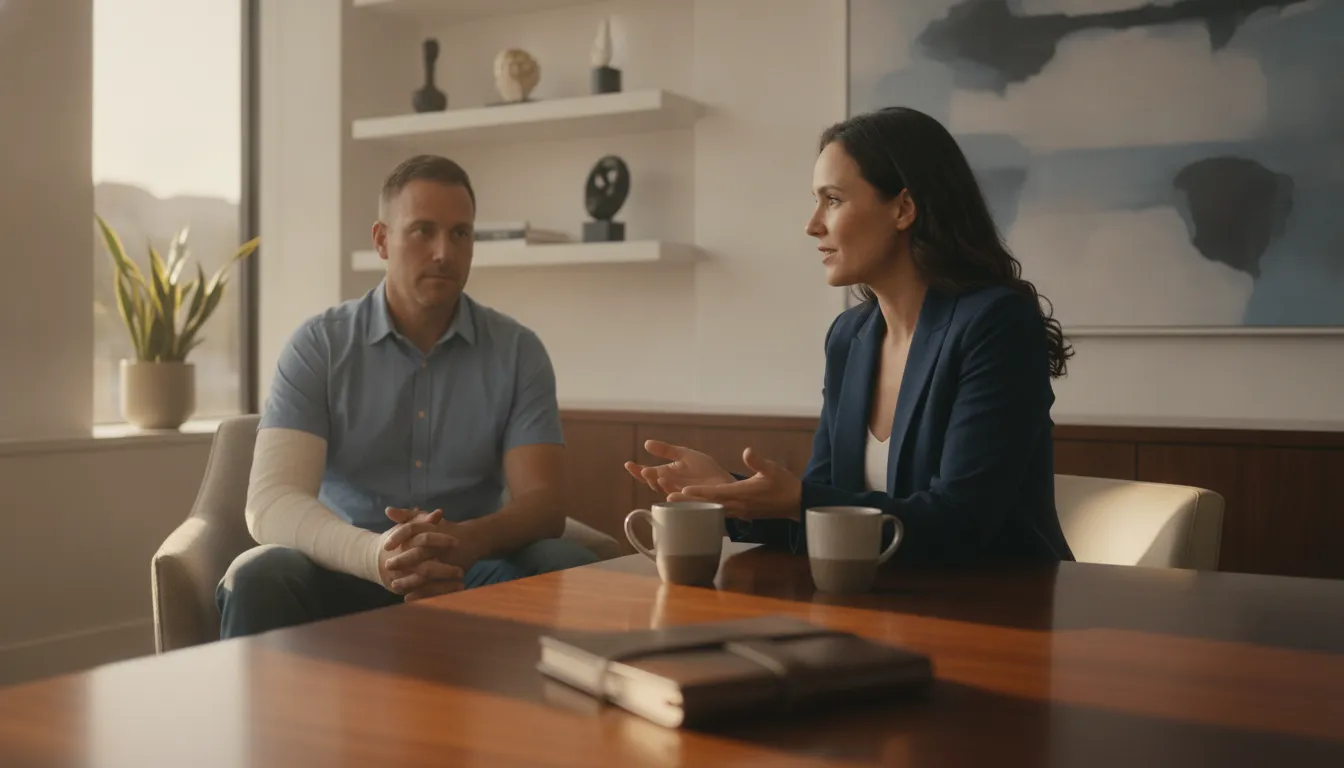
California personal injury attorney reviewing accident evidence with a client
Organized evidence and medical records help clarify the next stage of a California injury claim.
1. Initial contact and intake. The process generally begins with a conversation about the incident, the injuries, medical care, insurance communications, and immediate concerns. During intake, the essential facts are organized. Relevant documents may include an accident report, insurance information, photographs, medical records, treatment notes, and witness details. A clear account can also identify missing information that needs to be located.
2. Investigation of the incident. The facts are reviewed to understand how the event occurred and which parties or insurance policies may be involved. Depending on the circumstances, the investigation may include reviewing police or incident reports, examining photographs or video, identifying witnesses, and assessing the available evidence concerning liability. Rideshare, commercial vehicle, and multi-vehicle matters may require attention to more than one party or insurer.
3. Medical treatment and record collection. Medical care serves the person's health first, while the related records help document the injury and its effects. Records may show diagnoses, treatment recommendations, restrictions, follow-up care, and the progression of recovery. When an injury is serious or still changing, a complete medical picture may not yet be available. That uncertainty can make it premature to evaluate the full scope of damages.
4. Preservation of evidence. Important evidence can become harder to locate as time passes. Preserving photographs, video, vehicle information, communications, medical documentation, and witness contact information helps protect the factual record. In some cases, records held by a business, property owner, employer, or other non-party may require a formal request or legal process to obtain.
Medical recovery and documentation are closely connected to case evaluation. An early review may identify the immediate injury, but later records can clarify whether treatment resolved the problem. Whether additional care is recommended, and how the injury affects daily activities or work. This does not mean a person should delay necessary care or wait for a particular milestone. It means that the case may need to be evaluated as reliable medical information becomes available.
The same principle applies to evidence. A thorough record gives the parties a clearer basis to assess liability and damages. Missing reports, inconsistent accounts, or incomplete treatment records can create questions that must be addressed before meaningful negotiations begin. For a general overview of California accident and personal injury representation, readers can review DC Law Group's accident services page. The appropriate timeline remains specific to the facts, injuries, evidence, and legal path involved.
How Long Does Pre-Litigation Negotiation Take?
Pre-litigation negotiation can resolve a California injury claim without filing a lawsuit, but it does not follow one fixed schedule. The length depends on the investigation, the injured person's medical progress, the completeness of the records, the strength of the liability evidence, and how the insurer responds. A careful process may take weeks or months, particularly when injuries are serious or treatment is ongoing. That uncertainty is one reason a reliable answer to "how long does a personal injury case take california" must be based on the facts of the individual claim rather than a promised number of days.
Investigation and medical documentation
The process usually begins with a review of the collision or other incident. Available reports, photographs or video, witness information, insurance correspondence, and evidence that may help establish fault. Medical records and treatment documentation are collected as they become available. When the full extent of an injury is not yet clear, rushing to evaluate the claim can leave important consequences out of the settlement discussion. In more serious cases, the evaluation may require information about future care, functional limitations, or long-term recovery.
Once the available evidence supports an informed evaluation, a demand package can be prepared. It generally explains the facts, liability theory, medical treatment, documented losses, and requested resolution. Preparing a complete demand takes time, but it can give the insurer a clearer basis for evaluating the claim.
Insurer review and negotiation
After receiving the demand, the insurer may investigate further, request records, make an offer, or dispute liability or the extent of the claimed injuries. The parties may exchange information and negotiate through multiple offers and responses. The California Department of Insurance publishes fair-claims regulations addressing prompt acknowledgment and standards for prompt, fair, and equitable settlement handling. Those regulations are available on the California Department of Insurance website. They should not be read as a guarantee that every injury claim will resolve by a particular date.
If an agreement is reached, the settlement must be documented and reviewed before it becomes final. The remaining administrative work can include confirming the release terms, addressing medical liens or reimbursement interests, and arranging disbursement. Those steps matter because a settlement is not complete merely because the parties have discussed an amount.
If the insurer will not negotiate fairly, liability remains disputed, or the injury picture requires formal litigation, the claim may move toward a filed lawsuit. That decision should account for the evidence, recovery status, applicable deadlines, and the risks of continuing. A California personal injury attorney can explain the likely sequence for a particular claim without converting a general estimate into a promise.
What If a California Injury Case Goes to Court?
When settlement discussions do not resolve a California injury claim, filing a civil lawsuit creates a formal court process. That does not mean a trial is certain. Many cases continue to be negotiated after filing, but litigation adds procedural requirements, deadlines, and court scheduling. These factors can make the path longer and less predictable than a pre-suit resolution.
The complaint, service, and response
A complaint is the document that starts the lawsuit. It generally identifies the parties, describes the underlying incident and alleged injuries, and states the legal theories supporting the claim. The defendant must be properly served with the summons and complaint, then respond under the applicable California rules. The response may admit or deny allegations and raise defenses. These steps establish the issues the parties will address, but they do not by themselves determine the outcome.
Discovery, depositions, and expert evidence
Discovery is the evidence-gathering phase. It may involve written questions, requests for documents, requests for admission, subpoenas to non-parties, and other formal requests. The California Courts explains that discovery helps each side identify relevant facts, witnesses, documents, and expected testimony. Parties must follow court rules and meet response deadlines. See the California Courts civil discovery guide for general information.
Depositions allow attorneys to obtain sworn testimony outside the courtroom before trial. A witness, party, or expert may be questioned under oath, and a court reporter records the testimony. Medical or psychiatric examinations may also become part of discovery in an appropriate case. The scope of this work depends on the disputed issues, the evidence, and the injuries involved. It is not possible to assign a reliable timeline without reviewing the specific case.
Motions, mediation, and trial
During litigation, either side may file motions asking the judge to decide a procedural or legal issue. The parties may also participate in mediation or another settlement process before trial. A settlement can occur at several points, including after discovery reveals more about liability and damages. If the case proceeds to trial, the parties present evidence and testimony to a judge or jury. Trial length and scheduling depend on the issues and the court's calendar, so no fixed completion date should be assumed.
What an appeal can change
After a judgment, a party may seek appellate review when it identifies a legally significant error, subject to strict rules and deadlines. An appeal is not simply a new trial or an opportunity to relitigate every factual disagreement. If an appellate court reverses a decision, further proceedings may be required. Because the consequences of filing, responding to discovery, accepting a settlement, or pursuing an appeal are case-specific, this section is general education rather than legal advice. A California injury attorney can evaluate the facts, procedural posture, and available options for an individual claim.
What Factors Can Make a Case Take Longer?
There is no single answer to the question, "how long does a personal injury case take california" because each claim develops at a different pace. The most important timing variables are usually medical recovery, the available evidence, the number of people and insurers involved. The extent of the losses, and whether the matter remains in negotiation or enters litigation. A longer process is not necessarily a sign that a claim is being neglected. It may reflect the work needed to evaluate the facts accurately and protect the injured person's position.
Why medical recovery matters
A claim can be difficult to evaluate while the injury is still changing. Early records may show the immediate diagnosis, but later care may clarify whether limitations are temporary, permanent, or likely to require additional treatment. This is especially important in catastrophic-injury matters, where medical expertise and long-term care planning may be needed. Resolving too early can leave important consequences unaccounted for, while waiting does not eliminate the need to monitor applicable filing deadlines.
Why evidence and cooperation matter
Prompt preservation of evidence can reduce avoidable delays. Accident photographs, surveillance footage, vehicle information, witness accounts, medical records, and insurance correspondence may each answer a different liability or damages question. In a lawsuit, written discovery and depositions can also require careful preparation. California Courts notes that discovery may involve documents, witnesses, sworn testimony, and specific response requirements. If a claim involves multiple parties or disputed responsibility, a complete record helps counsel assess the available paths before recommending negotiation, mediation, or further litigation.
The practical goal is not to force a case into a promised timetable. It is to build a reliable factual and medical record while protecting important deadlines. A California personal injury attorney can review the factors affecting a particular matter and explain what information is still needed before the next decision.
What California Deadline Should You Watch?
Case timing and filing deadlines are related, but they are not the same question. A claim may still be under medical evaluation or settlement discussion when a legal deadline is approaching. Waiting for treatment to finish or negotiations to end does not automatically preserve the right to file a lawsuit. If you are trying to understand *how long does a personal injury case take california*, put the limitations deadline on your calendar at the beginning of the process, not at the end.
California Code of Civil Procedure section 335.1 generally provides a two-year period for an action based on injury or death caused by wrongful act or neglect. You can read the statutory language in the official text of CCP section 335.1. That general rule is important, but it is not a universal answer for every injury claim. The date an injury occurred, the type of defendant involved, and the legal theory supporting the claim can affect the analysis.
Government defendants and public entities may involve different claim procedures and deadlines. A person should not assume that the general personal injury period applies in the same way when a public agency, municipality, or other government entity may be involved. The California Courts guidance on statutes of limitations explains that deadlines are fact-specific and that exceptions, including possible tolling, may affect when a period runs. Tolling is a legal concept that can pause or alter a limitations period in some circumstances. Whether it applies depends on the facts and governing law.
Settlement discussions, an insurer's investigation, or an attorney's review should not be treated as permission to delay. A missed deadline can threaten a claim even when the underlying injuries are serious or liability appears clear. At the same time, filing too quickly without understanding the evidence, damages, and responsible parties may create avoidable complications. The practical approach is to seek case-specific legal guidance promptly, preserve relevant records, and identify the potentially applicable deadlines before relying on a general rule.
DC Law Group can review the basic timeline, identify questions that may affect the limitations analysis, and explain the next steps for a California injury claim. General information cannot determine the deadline for an individual case, so do not wait until the expected settlement timeline has passed before asking for guidance.
[Call DC Law Group at (310) 571-8860](tel:+13105718860) or [book an appointment](https://www.dclawgroup.com/appointment) before a deadline question becomes urgent.
Frequently Asked Questions
Why is my lawyer taking so long to settle my case?
A lawyer may need more time to document your injuries, obtain medical records, investigate liability, confirm insurance coverage, or determine whether your recovery is complete. Rushing before the evidence is developed can make it harder to evaluate the claim responsibly.
How long after a demand letter can I expect a settlement?
A demand letter starts review and negotiation, but it does not guarantee a particular response or resolution date. Timing depends on the insurer's review, the completeness of the supporting records, disputed liability or damages, and whether further negotiation is necessary.
How long does a personal injury lawsuit take?
A lawsuit usually takes longer than a straightforward pre-suit resolution because it can involve a complaint, discovery, depositions, expert work, motions, court scheduling, and mediation. The case may still resolve by agreement before trial.
Once a settlement is reached, how long does it take to get paid?
After settlement terms are finalized, the parties must complete the settlement documents and receive the settlement funds. The legal team may also need to resolve medical liens and case obligations before distributing the remaining funds to the client.
Who gets paid first in a personal injury settlement?
Distribution generally requires addressing valid liens, authorized case obligations, and other required disbursements before the remaining settlement funds are released to the client. The exact order depends on the documents and claims involved in the case.
Get a Case-Specific Timeline From DC Law Group
Every California personal injury claim develops differently. A review of your circumstances can help clarify the next steps, evidence, insurance issues, and deadlines that may affect your case. Call DC Law Group at (310) 571-8860 or contact us online or book an appointment to request a case-specific review.