
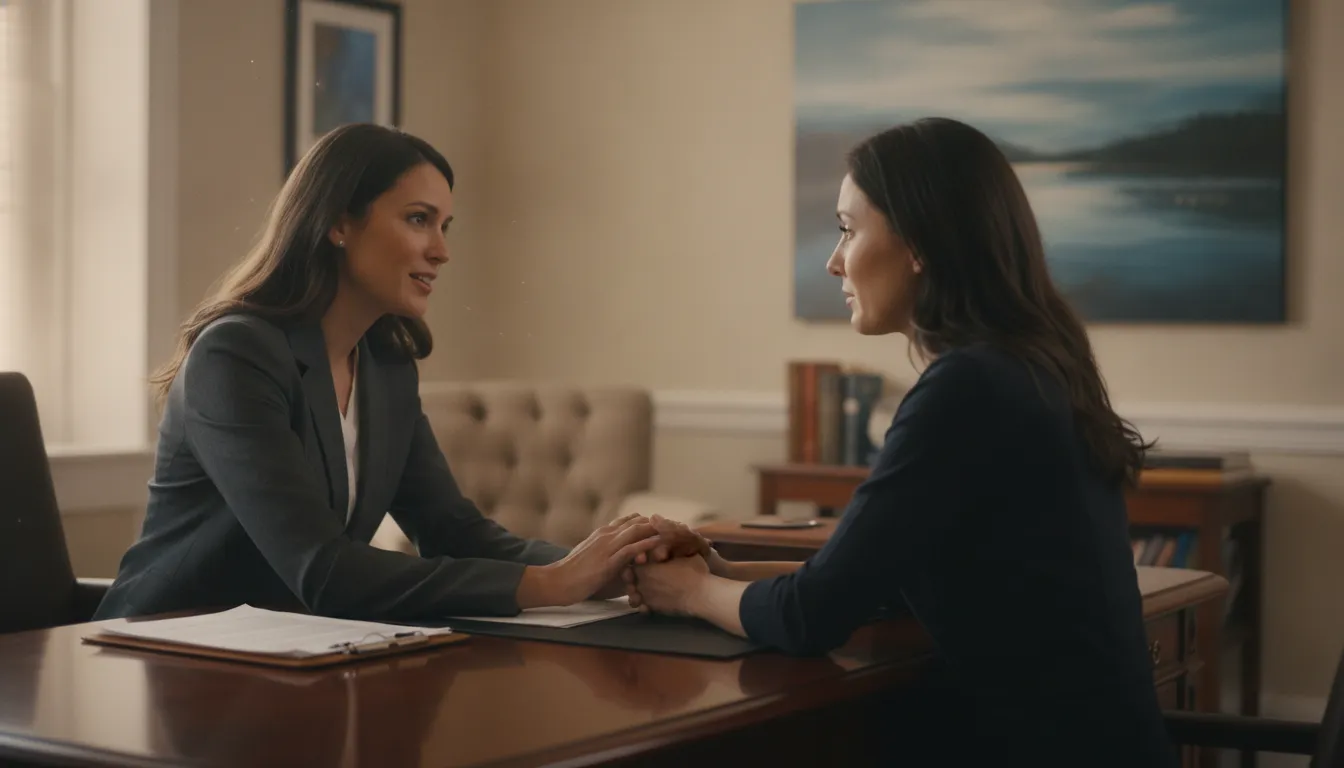
Losing a family member in an accident can leave you facing grief, unanswered questions, and decisions that cannot wait. The legal process may feel overwhelming, especially when the circumstances suggest another person or entity was responsible. Call DC Law Group at (310) 571-8860 for a confidential consultation. Call DC Law Group at (310) 571-8860 for a confidential consultation.
A California wrongful death claim may allow eligible surviving family members to seek compensation when a loved one's death resulted from another party's wrongful act or neglect. Generally, the case requires proof of a duty of care, a breach, causation, and resulting damages. California law also limits the time to file in most cases to two years from the date of death, so early legal guidance matters.
The first step is understanding how California law defines a wrongful death and which facts can support one. That foundation helps families evaluate their legal options with greater clarity.
What Counts as a Wrongful Death in California?
California law recognizes a wrongful death claim when a person dies because of another party's wrongful act or neglect. The governing statute, California Code of Civil Procedure section 377.60, permits an eligible person or the decedent's personal representative to assert the claim. The action is not based solely on the fact that a death occurred. The available evidence must connect another party's conduct to the fatal injury and establish the losses recognized by law.
These claims can arise from many forms of serious misconduct. For example, a driver may cause a fatal collision by speeding, driving while impaired, or failing to follow traffic rules. A commercial carrier or truck driver may cause a death through negligent operation, unsafe loading, or inadequate maintenance. Motorcycle collisions, rideshare accidents, and other transportation-related incidents may also support a claim when the evidence shows that another party's conduct caused the death. Depending on the facts, wrongful death claims may also involve intentional misconduct or a defective product.
The four elements that must be proven
To establish liability, a plaintiff generally must prove four legal elements: duty of care, breach of duty, causation, and damages. These elements provide the framework for evaluating whether the circumstances support a lawsuit.
- Duty of care: The defendant owed the decedent a legal duty to act with reasonable care. Drivers, for example, generally owe others on the road a duty to follow traffic laws and operate their vehicles safely.
- Breach of duty: The defendant failed to meet that required standard of conduct. A breach may involve distracted driving, unsafe commercial practices, or another act or omission that a reasonably careful person or business would not have made.
- Causation: The breach must have caused, or substantially contributed to, the death. Accident reports, medical records, witness accounts, vehicle data, and other evidence may help establish this connection.
- Damages: The surviving claimants must show legally recognized losses resulting from the death. These may include the family's financial and personal losses, subject to the rules governing wrongful death actions.
Evidence matters at every stage. In a fatal vehicle collision, investigators may need to examine photographs, roadway conditions, surveillance footage, event data, and the conduct of each driver. Families dealing with a fatal truck collision can review the firm's truck accident cases resource for related information. The specific facts determine which parties may be responsible and whether the legal elements can be proven.
Who Can File a California Wrongful Death Claim?
California law does not allow every relative or representative to bring a wrongful death lawsuit. Code of Civil Procedure section 377.60 identifies the people who may assert this claim and establishes an order of priority. The rules can become complicated when a family includes a surviving spouse, domestic partner, children, dependents, or potential heirs. Reviewing the statute with counsel can help the family identify the proper parties before a case is filed.
Surviving spouses, domestic partners, and children
The decedent's surviving spouse or domestic partner generally has standing to bring a wrongful death action. The decedent's children may also qualify. If one of the decedent's children died before the decedent, that child's issue, such as grandchildren, may have rights under the statute. These categories are not interchangeable, and the specific family relationships and circumstances can affect who participates in the action.
California's statutory framework also addresses situations in which the decedent left no surviving issue. In that circumstance, people who would be entitled to inherit the decedent's property through intestate succession may be eligible. Intestate succession is the legal process used to determine inheritance when a person dies without a valid will governing the relevant property. The governing language appears in California Code of Civil Procedure section 377.60.
Dependents and other eligible relatives
Standing may extend beyond the most immediate heirs in certain circumstances. A person who was financially dependent on the decedent may qualify under the statute even if that person would not otherwise inherit through intestate succession. Section 377.60 identifies potential categories that can include a putative spouse, the putative spouse's children, stepchildren, parents, or the decedent's legal guardians when the decedent's parents are deceased.
Dependency is a fact-specific issue. Evidence may include the nature of the relationship, the support the decedent provided, household arrangements, and the claimant's reliance on that support. A family member should not assume that a relationship automatically creates standing, but neither should a potential dependent assume that lack of formal inheritance rights ends the inquiry.
California's one-action rule
California follows a one-action rule for wrongful death cases. Eligible family members generally must participate in one lawsuit arising from the death rather than filing separate actions against the same defendant. The rule is designed to resolve the family's claims together, even when the eligible claimants have different losses or disagree about how the case should proceed.
Because one action must account for all eligible interests, identifying the proper plaintiffs early matters. A family member who is left out may raise complications for the litigation and distribution of any recovery. Families can review their options through DC Law Group's wrongful death practice area and obtain advice tailored to their relationships and circumstances.
What Damages Can Families Recover?
California wrongful death damages are intended to address the losses surviving family members experience because of the death. Under California Code of Civil Procedure section 377.61, a court may award damages that are just under the circumstances of the case. The statute also distinguishes these damages from losses that belong in a separate survival action.
The available recovery depends on the evidence, the family relationship, and the specific circumstances surrounding the death. A legal claim may address both economic losses, which can be supported through financial and employment records, and non-economic losses, which concern the family's relationship with the decedent.
- Medical expenses: Reasonable medical expenses related to the fatal injury may be recoverable when the decedent received treatment before death.
- Funeral and burial expenses: Necessary expenses associated with funeral and burial arrangements may be included in the wrongful death claim.
- Lost income and financial support: The claim may address income, benefits, and financial support the decedent would likely have provided to eligible family members.
- Loss of companionship and consortium: Surviving family members may seek compensation for the loss of love, companionship, care, assistance, affection, moral support, and the marital relationship, where legally applicable.
Economic losses require careful documentation
Calculating lost support is not limited to reviewing a recent paycheck. Depending on the circumstances, the analysis may consider the decedent's work history, expected earning capacity, benefits, household contributions, and the needs of the surviving family. Medical records, billing statements, funeral invoices, tax records, employment information, and other documents can help establish the scope of the loss.
Non-economic losses reflect the family relationship
Loss of companionship and consortium concerns the human relationship that was taken away. Evidence may include the nature of the relationship, the decedent's role in the household, shared activities, guidance, affection, and the support provided to family members. These losses are personal and cannot be reduced to a simple financial calculation.
Because California Code of Civil Procedure section 377.61 governs the damages available in a wrongful death action. Families should distinguish their own losses from damages the decedent may have sustained before death. Reviewing both potential claims with counsel can help ensure that the evidence is organized under the correct legal theory.
The Two-Year Statute of Limitations for Wrongful Death Claims
Time limits are among the most important legal issues in a California wrongful death claim. Families may need time to grieve, gather information, and understand what happened, but California law generally gives them two years to file a wrongful death lawsuit. Missing that deadline generally bars recovery, even when the underlying claim may otherwise have merit.
- Identify the governing deadline. California Code of Civil Procedure section 335.1 generally provides a two-year statute of limitations for an action based on a person's death caused by the wrongful act or neglect of another. The statute concerns the time to commence the lawsuit, not merely the time to contact a law office or investigate the incident. Review the current statutory language at California Code of Civil Procedure section 335.1.
- Determine when the clock starts. For most California wrongful death claims, the two-year period runs from the date of the decedent's death. The date of an accident, medical event, or suspected misconduct may be different from the date of death, so the timeline should be established from reliable records. The legal deadline can also depend on facts not apparent at the outset, including the identity of potentially responsible parties and the nature of the claim. Do not assume that an insurance discussion, an investigation, or a pending criminal matter automatically pauses the civil deadline.
- Act promptly while evidence is available. Early action gives counsel an opportunity to preserve records, photographs, video, vehicle or product evidence, medical documentation, employment information, and witness accounts before they are lost or altered. It also allows time to evaluate standing, identify the proper parties, investigate causation, and assess whether additional claims may exist alongside the wrongful death action. Delay can make factual investigation more difficult and can leave too little time for a careful filing decision.
- Have counsel evaluate preservation and filing steps. An attorney can calculate the apparent deadline from the death date, investigate facts that may affect the analysis. Send appropriate preservation requests, and determine what pleadings and parties are required. These steps do not guarantee a result, and no general summary can resolve every limitations issue. A lawyer should review the specific facts as early as possible, particularly when the deadline may be approaching.
Because a missed statute of limitations can prevent a court from hearing the claim. Families should not wait until the two-year period is nearly over to seek legal guidance. Prompt review helps protect the opportunity to pursue a California wrongful death claim while the relevant evidence and legal options can still be evaluated.
Wrongful Death Claims Versus Survival Actions
After a fatal accident, the family may have more than one legal avenue for pursuing accountability. A wrongful death claim and a survival action are related, but they are not interchangeable. Each claim belongs to a different legal interest, seeks different categories of damages, and may involve a different person or entity controlling the case.
What a wrongful death claim seeks
A wrongful death action under California Code of Civil Procedure section 377.60 is brought for the losses suffered by the surviving family members because of the death. The claim is not the decedent's personal-injury lawsuit continued after death. Instead, eligible plaintiffs seek recovery for their own legally recognized losses, which may include the loss of financial support. Household contributions, companionship, care, guidance, and other effects of losing their loved one.
The plaintiff in a wrongful death case is generally a qualifying heir, dependent. Or other person identified by statute, or the decedent's personal representative acting on an eligible person's behalf. The claim focuses on how the death affected those survivors. Evidence may include the family's relationship with the decedent, the decedent's contributions to the household, and the practical and emotional consequences of the loss.
What a survival action covers
A survival action under California Code of Civil Procedure section 377.30 preserves the decedent's own cause of action. The estate may pursue the damages the decedent could have claimed if they had survived. Depending on the facts, this may include losses connected to the injury, medical treatment, and the decedent's conscious pain and suffering before death. The estate, through its personal representative or another authorized successor, generally controls this claim.
The central distinction is whose losses are being pursued. A wrongful death claim addresses the family's direct losses caused by the death. A survival action addresses the decedent's losses before death. The California Legislature expressly treats these as distinct claims, and damages recoverable through one should not simply be duplicated through the other.
Wrongful death claim versus survival action at a glance
Key differences between a wrongful death claim and a survival action:
- Governing statute (wrongful death claim): Code of Civil Procedure section 377.60
- Governing statute (survival action): Code of Civil Procedure section 377.30
- Whose losses are pursued (wrongful death claim): The surviving family's own losses caused by the death
- Whose losses are pursued (survival action): The decedent's losses and damages suffered before death
- Who controls the claim (wrongful death claim): Eligible heirs, dependents, or their representative
- Who controls the claim (survival action): The decedent's estate and personal representative
- Example categories (wrongful death claim): Loss of support, companionship, household contributions
- Example categories (survival action): Medical treatment, conscious pain and suffering before death
Why both claims may be pursued
One incident can injure the decedent before causing death and also create substantial losses for the surviving family. For example, the decedent may have experienced a period of medical treatment before passing away, while the family lost expected support and companionship. A wrongful death claim can address the family's losses, while a survival action can address the losses the decedent personally sustained during that period.
Families and estates should therefore analyze both claims separately rather than assume that one filing covers every available remedy. The applicable deadlines, evidence, damages, and proper parties can be fact-specific. Careful early review helps preserve distinct legal claims and prevents confusion about whether a recovery belongs to survivors, the estate, or both.
How DC Law Group Helps Families After a Loss
After the death of a family member, legal decisions can feel overwhelming. Families may be grieving while also trying to preserve evidence, understand their rights, and respond to insurers or other parties involved in the incident. DC Law Group, PC approaches these matters with compassion and clear communication, helping families understand the legal process without treating their loss as a routine claim.
DC Law Group is a Beverly Hills personal injury firm led by Managing Attorney David Cohan. The firm represents accident victims throughout California, including families addressing the consequences of a fatal motor vehicle, pedestrian, rideshare, or other serious accident. Its personal injury practice includes matters where careful investigation and a focused legal strategy are essential.
Personal attention in a sensitive legal matter
Wrongful death cases involve more than identifying how an accident occurred. The legal team may need to examine the available records, physical evidence, witness accounts, medical information, and insurance positions while also accounting for the family's individual losses. These cases can require experienced negotiation with opposing parties and, when appropriate, prepared litigation in court.
DC Law Group's boutique personal-injury focus is suited to serious injury and wrongful death matters that demand careful attention. Managing Attorney David Cohan personally handles cases, an important consideration for families who want meaningful attorney involvement in a complex and deeply personal dispute. That involvement can help keep legal advice connected to the facts of the case and the family's goals.
Guidance from investigation through resolution
A family considering a California wrongful death claim should have an opportunity to discuss the circumstances before making important decisions or accepting an insurer's position. An early consultation can help identify potential claims, clarify who may have standing to bring an action, and determine what information should be preserved. It can also help the family understand the difference between a wrongful death action and a survival action when both may be relevant.
Families can also review how to choose a wrongful death attorney when evaluating legal representation. The right fit depends on factors such as experience with serious injury and wrongful death litigation, communication, and the level of attorney involvement the family can expect.
If someone else's negligence caused your loved one's death, the next step is a confidential conversation about the facts and available legal options. Contact DC Law Group to discuss your circumstances with a team prepared to approach the matter with care and focused legal attention.
Call DC Law Group today for a confidential consultation about your family's California wrongful death claim. Call DC Law Group today for a confidential consultation about your family's California wrongful death claim.
Frequently Asked Questions
How long does a family have to file a wrongful death claim in California?
In most cases, California allows two years from the date of death to file. The deadline comes from Code of Civil Procedure section 335.1, and missing it can prevent recovery. Because exceptions and related claims may affect the analysis, families should have the timeline reviewed promptly.
Who can file a wrongful death claim in California?
California generally gives priority to a surviving spouse, domestic partner, children, or the issue of deceased children. Depending on the family structure, eligible heirs and people who were financially dependent on the decedent may also have standing under Code of Civil Procedure section 377.60. The statute identifies the legally recognized claimants, so a family relationship alone does not always determine eligibility.
What damages are recoverable in a California wrongful death case?
Recoverable losses may include medical expenses connected to the fatal injury, funeral and burial expenses. The income and support the decedent would have provided, and the family's loss of companionship or consortium. The available damages depend on the evidence and the circumstances of the death. California Code of Civil Procedure section 377.61 permits damages that are just under the circumstances.
What is the difference between a wrongful death claim and a survival action?
A wrongful death claim seeks compensation for losses suffered by surviving family members because of the death. A survival action, brought under Code of Civil Procedure section 377.30, allows the decedent's estate to pursue claims for losses the decedent experienced before death. They are separate legal claims, and the facts may support one or both.
Ready to discuss your family's next step?
After an unexpected loss, a confidential conversation can help your family understand which legal options may apply and what information to preserve. DC Law Group can listen to your concerns and explain the potential next steps for a California wrongful death claim.
Call DC Law Group for a confidential consultation about your family's wrongful death claim. Call DC Law Group for a confidential consultation about your family's wrongful death claim.