
A clear video record of a crash can be the key factor in your California car accident claim. Video evidence removes the guesswork that often stalls insurance settlement talks.
Dashcam footage California car accident claim evidence serves as a clear and unbiased witness that protects your legal rights and prevents an insurance company from blaming you. This proof stops adjusters from reducing your payout under California's pure comparative negligence rules by proving the other driver was at fault. By showing exactly how the other driver failed to drive safely, objective video evidence stops adjusters from stalling your settlement with long debates over the facts. While you are not required to share the recording right away, refusing to do so can create doubt and slow down the process of getting money. David Cohan, a Super Lawyers Rising Star, uses this video to protect your legal interests and secure the full and fair payout you truly deserve.
You must understand how the law views these recordings before you submit them to an insurance carrier. Many drivers want to know exactly how a court handles video evidence in a legal case. We will start by answering the question, Is Dashcam Footage Legal and Admissible in California? The path begins with these mounting rules and evidence laws.
Dashcam Footage California Car Accident Claim: Is Dashcam Footage Legal and Admissible in California?
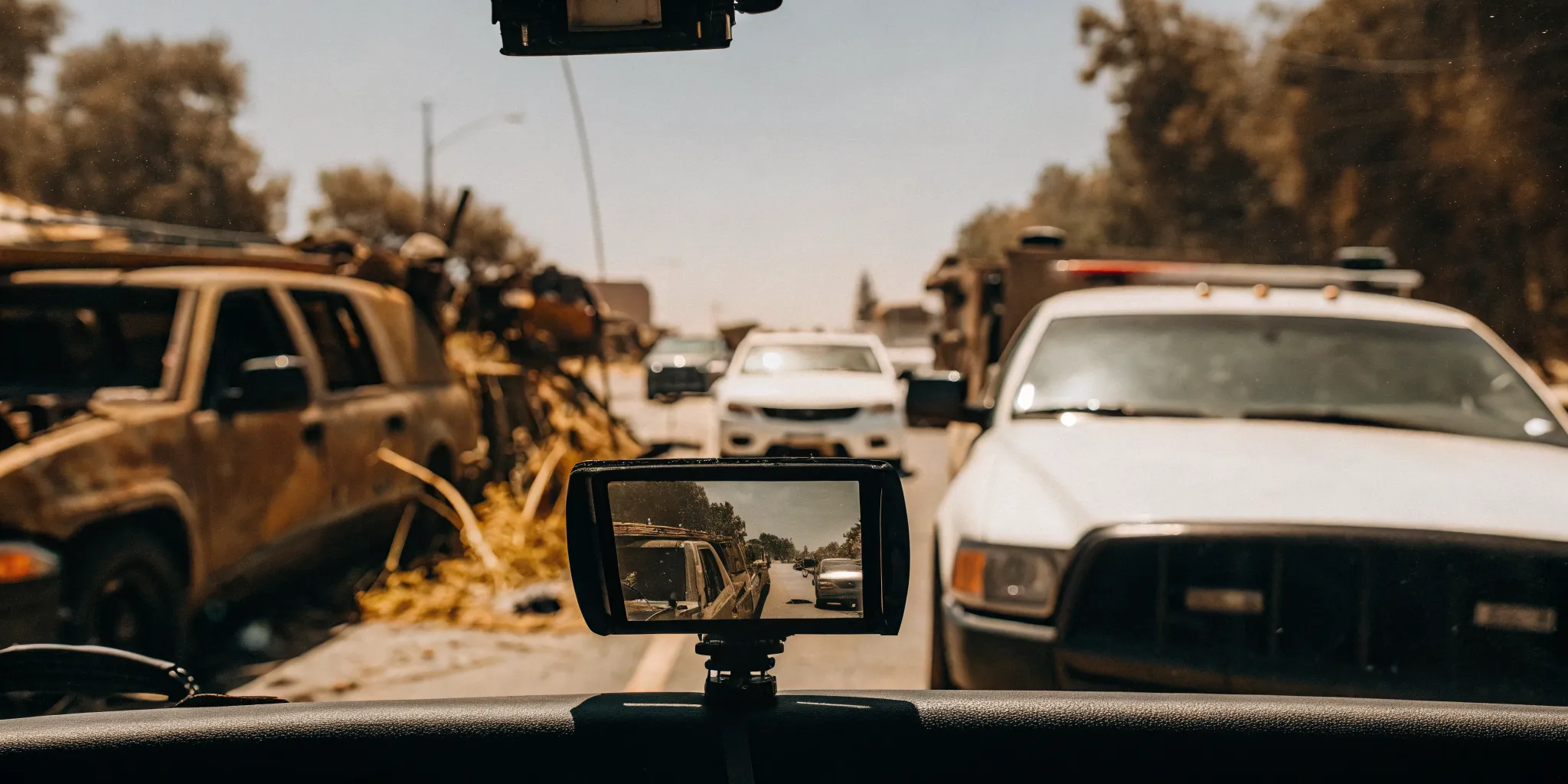
Dashcams are legal in California, but state law restricts where you can mount them on your windshield. Under California Vehicle Code Section 26708, you must place your camera in a way that does not block your view of the road. Most drivers mount their devices in a seven-inch square in the lower right corner or a five-inch square in the lower left corner. You can also place the camera in the top center of the windshield if it stays outside any airbag zones.
Proving Video is Real
For your video to work as evidence in court, it must be admissible. California Evidence Code Section 1400 sets the rules for proving a recording is real. You or a witness must testify that the footage accurately shows the crash. A clear video can prove who is at fault and help you win a dashcam footage California car accident claim. Because California comparative negligence rules reduce your payout if you are partly to blame, clear video is vital to show the other driver was at fault.
Audio and Consent Rules
While video is simple, recording audio is more complex. California is a two-party consent state under Penal Code § 632. This means you generally cannot record private talks without help or permission from everyone. If your dashcam records sound, you should post a clear notice in your car or tell your passengers. If you record audio without consent, that part of the file might not be used in your case. Most lawyers suggest turning off the mic to avoid legal issues while still getting the visual proof you need for phantom vehicle accident claims or hit-and-run crashes.
Insurance Claims and Proof
Insurance agents often try to shift blame or deny claims based on missing facts. Video gives them a time-stamped record they cannot easily ignore. While you do not have to give footage to the other side right away, having it ready can speed up your case. Good footage helps your car accident lawyer get a fair settlement. If the video shows the other driver ran a red light or drifted into your lane. The insurer is much more likely to pay your claim in full without a long fight.
How Dashcam Footage Strengthens Your Insurance Claim
When you file a dashcam footage California car accident claim, the video acts as a silent witness. Insurance firms often deal with drivers who tell different stories. Without proof, it is hard to know who is telling the truth. A video shows the facts as they happened. It records the date, time, and speed of the cars. This makes it much harder for an insurance firm to deny your claim or blame you for the crash.
Clear Evidence That Agents Can't Ignore
Insurance firms use witness notes to decide who was at fault. But people often forget details or see things the wrong way. A dashcam gives clear, time-stamped proof that a firm cannot just skip. This record helps remove any doubt about how the crash took place. Because the proof is so strong, it often forces the firm to pay for their driver's mistake.
- Fault determination: Without Dashcam: Relies on conflicting driver statements. With Dashcam: Clear video shows what happened.
- Claim timeline: Without Dashcam: Weeks or months of investigation. With Dashcam: Often resolved in days.
- Insurance tactics: Without Dashcam: Adjuster may shift blame to you. With Dashcam: Video prevents unfair fault allocation.
- Settlement leverage: Without Dashcam: Low without concrete proof. With Dashcam: Strong with objective video evidence.
- Fraud protection: Without Dashcam: Vulnerable to staged accident claims. With Dashcam: Video exposes brake-check and crash-for-cash scams.
Using video can also make your claim move much faster. When there is no doubt about who caused the crash, there are fewer things to argue about. This means the firm may offer a settlement sooner. You won't have to wait months for them to finish a long study of the scene. Instead, the video shows them exactly what they need to see to pay your claim.
Disproving False Claims and Avoiding Blame
Dashcams are great for stopping fraud. Some drivers stage crashes on purpose to get money from insurance firms. They might cut you off and slam on their brakes. This is called a brake check. Without a camera, it looks like you hit them from behind. But a dashcam proves they caused the crash on purpose. It protects you from being blamed for a scam that was not your fault.
Video is also vital for phantom vehicle claims where the other car does not even hit you. If a car cuts you off and makes you swerve into a wall, the dashcam shows why you crashed. It can also catch the license plate of a driver who runs away. This helps your lawyer find the person who did it. It ensures you have the proof needed to get the money you need for your car and your health.
Dealing With Insurance Company Requests
You should know that firms often ask for your video right away. Under the law, you do not have to give it to them on your own or right when they ask. But if you say no, they may think you are hiding something. This could make them deny your claim. It is best to talk to a lawyer before you hand over any files. They can help you share the parts that help your case the most.
You must also make sure your camera is set up the right way. Under California Vehicle Code Section 26708, you cannot put things on your windshield that block your view. If your camera is too big or in the wrong spot, the firm might say you were driving in a risky way. They could use this to give you less money. Always mount your camera in the corner or behind the mirror to keep your view clear.
One more thing to check is your audio. California has strict rules about recording sound. Under California Penal Code Section 632, you must have consent from everyone to record a private talk. This is known as a two-party consent rule. If your dashcam records sound, you should tell your riders or put up a sign. If you don't follow this rule, the audio part of your video might not be used in court.
California's Comparative Negligence Rule and Why Video Matters
How Comparative Negligence Works
California follows a pure comparative negligence system. This means you can recover compensation even if you are partially at fault for the accident. But there is a catch. Your final settlement is reduced by your percentage of fault. If the insurer argues you were 20 percent responsible, your payout drops by that same amount. That is why fault allocation is one of the most contested parts of any car accident claim.
Without clear evidence, insurance adjusters have wide room to assign blame. They may argue you were following too close, speeding, or failed to yield. These arguments are often based on incomplete information or biased witness accounts. A driver who is shaken after a crash may struggle to push back against these claims. That is where California comparative negligence rules and strong evidence intersect.
Where Dashcam Footage Makes the Difference
Dashcam footage changes the fault analysis. When a camera captures the seconds before impact, there is no room for speculation. The video shows exactly what each driver did. It shows lane position, brake lights, turn signals, traffic signals, and speed relative to surrounding vehicles. This objective record prevents the adjuster from assigning blame that the facts do not support.
Consider a common scenario. You are rear-ended at a stoplight. The other driver claims you stopped suddenly. Your dashcam shows you came to a normal stop and waited several seconds before the impact. The footage eliminates the adjuster's argument and shifts full liability to the other driver. Without the video, it is your word against theirs.
DC Law Group's Approach to Fault Disputes
David Cohan, a Super Lawyers Rising Star for 2025-2026, personally evaluates how evidence affects fault allocation in every case he handles. The firm targets underserved California markets including Sacramento, the Inland Empire, and the Central Valley. This geographic strategy allows the firm to provide direct attorney attention that larger firms cannot match.
If an insurer tries to assign you partial fault based on weak evidence. An attorney can use dashcam footage to counter that argument before it becomes part of the record. The video does not lie. And in a comparative negligence state, that makes all the difference.
Protecting Against Insurance Fraud and Staged Accidents
Insurance fraud is a big problem for drivers in California. Some people stage crashes to get money from insurance companies. A report from CTV News found that staged accidents rose 400% in 2025. This rise makes it more likely for honest drivers to face false claims. Dashcam footage is often the only way to prove you did not cause the crash.
Stopping Brake Check Scams
One common scam is the brake check. A driver moves in front of you and slams on their brakes for no reason. They want you to hit them from behind so they can blame you. Since rear-end hits are usually blamed on the trailing car, it is hard to win without proof. A dashcam shows the driver's sudden move and proves you could not stop. This video helps your car accident lawyer fight a false claim.
Proving Crash for Cash Schemes
Some people also use crash-for-cash plans. They may wave you into traffic and then speed up to hit you. Without a video, it is your word against theirs. Dashcam footage gives a clear record that insurers cannot ignore. It can also help find a driver in phantom vehicle accident claims where a car causes a crash and flees. Clear video can save you from these false claims.
Protecting Your Driving Record
False claims can lead to higher rates and a mark on your driving record. When you have a video, you protect your money and your name. Dashcam footage is a strong tool to stop fraud. If you face a false claim, a lawyer can use your video to stop the case. This ensures you only pay for what you did and not for a scam. You can get help with your California comparative negligence rules to keep your fault low.
What If the Other Driver Has Dashcam Footage?
You may wonder what happens if the other driver has a camera that caught the crash. In a dashcam footage California car accident claim, you have a legal right to see that video. You do not have to rely on their word or their insurance company's report. If their camera shows they were at fault, that footage can be the most vital proof in your case.
Your right to see the evidence
In California, the law allows you to get video files from the other side through a process called discovery. Under California Code of Civil Procedure Sections 2031.010 through 2031.510, any party in a lawsuit can request relevant items like dashcam footage. You can use this rule to force the other driver to hand over their recording. This is helpful when the other person tries to hide video that proves they caused the wreck.
A skilled car accident lawyer knows how to file these requests properly. If the other driver refuses to share the files, your lawyer can ask a judge to sign a subpoena. This legal order compels them to give up the data or face penalties. This ensures the truth about the crash comes to light during California comparative negligence rules disputes.
The need for fast action
You must act quickly if you think the other driver has video of the crash. Many cameras use loop recording. This means the device writes over old video after a few hours of driving. If you wait too long, the proof of your dashcam footage California car accident claim could be lost forever. Insurance companies might request the video, but they may not work as fast as you need to save it.
To stop the loss of data, your legal team can send a preservation letter. This formal notice tells the other driver and their insurer they must save the video. If they delete it after getting this letter, they could face serious trouble in court. Working with a firm that knows these rules can help you protect your right to a fair settlement.
Steps to Take After a Car Accident If You Have a Dashcam
Having dashcam footage is only valuable if you preserve it correctly. Many drivers make mistakes in the minutes after a crash that cost them their best evidence. Follow these steps to protect your footage and your claim.
- Save the SD card or storage device immediately. Do not let the camera keep recording. Remove the memory card or disable recording as soon as it is safe to do so. Every additional minute of driving can overwrite the footage you need.
- Make a backup copy. Transfer the file to a computer, phone, or cloud drive. Use a different device than the original card. This protects against accidental deletion or corruption. Do not edit or alter the original file in any way.
- Check all camera angles. Many dashcams record front and rear views. Some also record the interior cabin. Review each angle to find the footage that captures the crash from the most useful perspective. Save all of them, even if a section seems unimportant at first.
- Handle audio recording carefully. California is a two-party consent state under Penal Code Section 632. If your dashcam records audio, you must notify passengers that they are being recorded. Turn off audio recording if a passenger objects. Failure to comply can create legal issues with the footage's admissibility.
- Do not post or share the footage publicly. Posting dashcam video on social media or sharing it with friends can damage your claim. The defense or insurance company may use your public comments against you. Share the footage only with your attorney.
- Contact a car accident attorney promptly. An attorney can ensure the footage is preserved, properly authenticated, and used effectively during settlement negotiations. Time matters. Many dashcams use loop recording that overwrites old footage after a few hours of driving time.
Taking these steps within the first hours after a crash can mean the difference between a fully supported claim and a costly he-said-she-said dispute.
How an Attorney Uses Dashcam Evidence to Maximize Your Settlement
Building a Stronger Demand Package
A settlement demand is only as strong as the evidence behind it. Attorneys use dashcam footage to build demand packages that leave little room for an insurer to argue. The video establishes liability early, which changes the entire negotiation dynamic. When the adjuster sees clear footage of their insured causing the crash, the settlement offer typically increases before formal negotiations even begin.
David Cohan personally reviews evidence and builds case strategies for every client at DC Law Group. His Super Lawyers Rising Star recognition for 2025-2026 places him among the top 2.5 percent of California attorneys. This peer-validated expertise means your case benefits from professional judgment about what evidence matters most and how to present it effectively.
Countering Lowball Offers
Insurance companies often make quick, low offers before the full extent of injuries is clear. Dashcam footage neutralizes their most common tactic: disputing liability. When liability is clearly established by video, the adjuster cannot use fault uncertainty as leverage to reduce the offer. This allows your attorney to focus negotiations on the real value of your injuries, medical costs, lost wages, and pain and suffering.
DC Law Group handles cases on a pure contingency basis. There are no upfront fees. The firm only collects if you recover compensation. This model aligns the firm's incentives with your outcome and removes financial barriers to quality representation. The firm also offers a 24-hour cash advance program for clients who need immediate financial relief while their case proceeds.
Preparation for Litigation if Needed
Most car accident cases settle out of court. But when they do not, dashcam footage becomes the centerpiece of trial evidence. An attorney who has properly authenticated and preserved the footage can present it to a jury with confidence. The same video that persuaded the adjuster can persuade a jury. And the threat of presenting that video at trial often motivates the defense to settle on fair terms before a trial date is set.
For a closer look at how legal representation changes the value of your claim, read more about is an attorney worth it for a car accident on the DC Law Group website.
Frequently Asked Questions
Is dashcam footage admissible as evidence in California car accident cases?
Yes, dashcam footage is generally admissible in California courts if it is properly authenticated. Authentication means someone with knowledge of the recording, usually the device owner, testifies that the video accurately depicts the events. California Evidence Code Sections 1400 through 1401 establishes the foundation for admitting video evidence. The footage must also be relevant to the case and not be altered or edited.
Can insurance companies request your dashcam footage after an accident?
Insurance companies can request your dashcam footage, but you are not legally required to hand it over voluntarily. However, refusing to share footage may make the insurer suspicious and could lead to a claim denial. The safest approach is to consult with an attorney before sharing any evidence with the other driver's insurance company. Your attorney can advise on what to share and when.
Is it legal to install a dashcam in your car in California?
Yes, dashcams are legal in California under Vehicle Code Section 26708. The camera must be mounted outside of any airbag deployment zone. Permitted mounting locations include the lower right corner of the passenger side windshield. You can also mount within a five-inch square in the lower left corner on the driver side. Or place it within a five-inch square in the central upper area of the windshield. The camera must not obstruct the driver's view of the road.
Does California require two-party consent for dashcam audio recording?
Yes. California Penal Code Section 632 makes it a crime to record private conversations without the consent of all parties. If your dashcam records audio, you must notify any passengers in the vehicle that they are being recorded. If a passenger does not consent, you must turn off the audio recording feature. This rule does not apply to video recording itself, only to audio.
How does comparative negligence affect a California car accident claim with dashcam footage?
California's pure comparative negligence rule reduces your compensation by your percentage of fault. Dashcam footage helps by providing clear evidence of what actually happened. When the video shows the other driver caused the crash, the insurer cannot unfairly assign blame to you. This can mean the difference between recovering full compensation and having your settlement reduced by a disputed fault percentage.
Get a Free Consultation With DC Law Group
If you were injured in a car accident and have dashcam footage, do not wait to protect your evidence and your rights. The team at DC Law Group can evaluate your footage, assess how it strengthens your claim, and build a strategy to pursue the maximum compensation you deserve. David Cohan personally handles every case with direct attention you will not find at larger firms.
There are no upfront fees. DC Law Group works on a contingency basis: no fees unless you win. Call today or schedule your free consultation online to discuss your case and your dashcam evidence.