
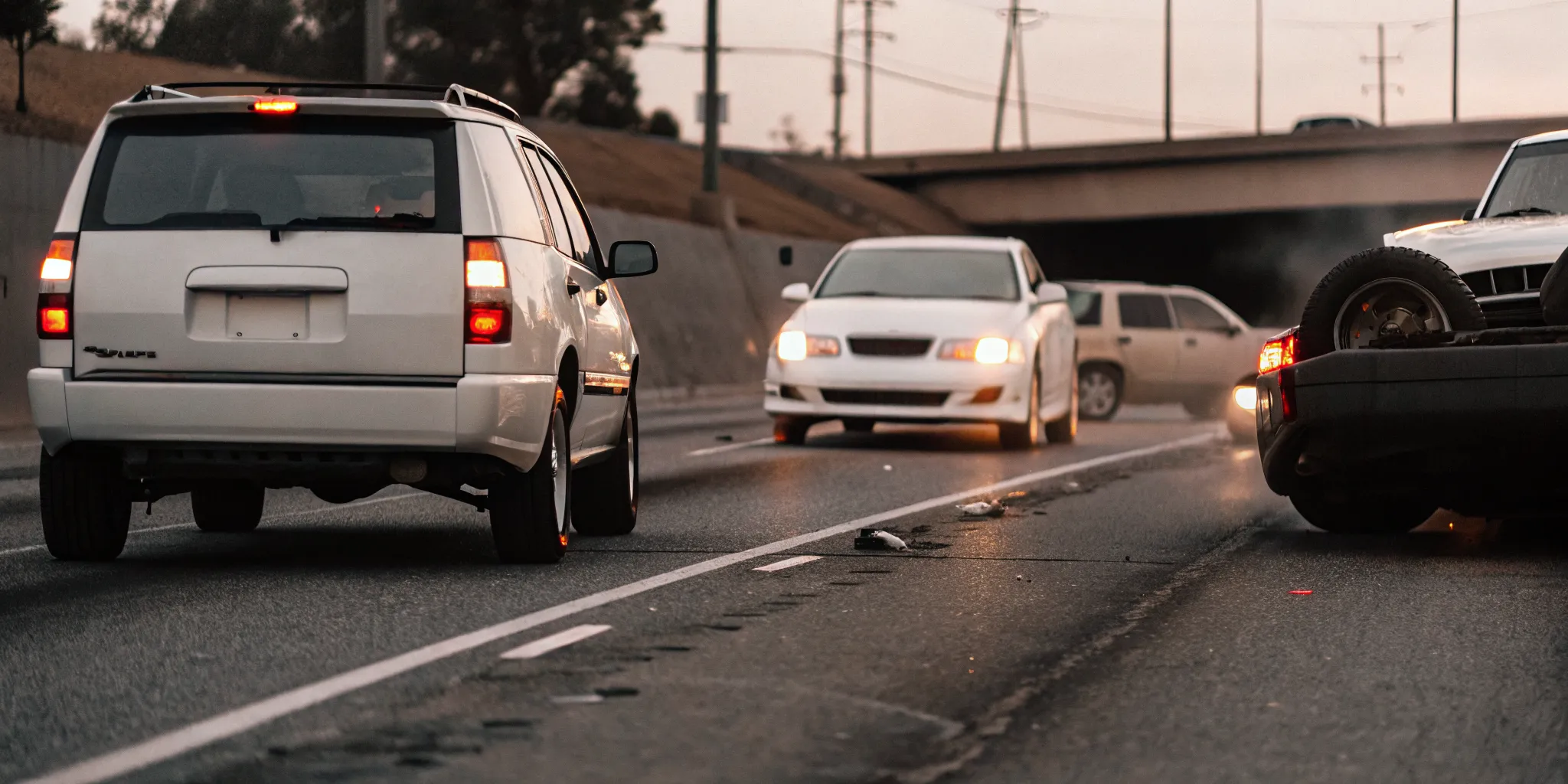
A reckless driver can cause a serious crash without ever touching your vehicle. When you wreck to avoid a hit, you are left with injuries, vehicle damage, and an unknown driver who may never stop.
Hurt in a no-contact crash? Contact DC Law Group for a free consultation before video, witness details, or scene evidence disappears.
A phantom vehicle accident claim California allows injured drivers to seek recovery when an unknown driver causes a crash without touching their car. These cases often fall under the uninsured motorist part of your insurance policy if you can prove the other driver was at fault.
Because there is no damage from a direct hit, you must provide strong proof like witness statements or video to show your story is true. The California DMV defines a phantom vehicle as a motor vehicle that causes an accident without making physical contact with others involved.
Filing this claim requires you to report the crash to police quickly and show that the unknown driver caused your harm. DC Law Group helps injured drivers understand their options after serious California accident claims and preserve the proof insurers often demand.
Proving your case becomes much harder when the person who caused the wreck is no longer there. You must learn the laws that apply to your specific no-contact crash, starting with what counts as a phantom vehicle accident in California.
Phantom vehicle accident claim California: what counts as a no-contact crash
In California, a phantom vehicle is a car or truck that causes a crash without ever touching you or your car. These events are also called no-contact accidents. Even though no paint was swapped, the other driver is still at fault if their bad driving forced you to crash. Most of these cases happen when a driver swerves to avoid a car that cut them off or drifted into their lane. Because the other car leaves the scene, it becomes a phantom.
The definition of a phantom vehicle
A phantom vehicle is a motor vehicle that causes an accident without making physical contact with other vehicles or people. This is different from a hit-and-run because in a hit-and-run, the cars actually hit each other. In a phantom crash, you might swerve to miss a car and hit a tree or a wall instead. The driver who caused the danger often keeps driving, sometimes without even knowing they caused a wreck. This makes a phantom vehicle accident claim California harder to prove because there is no damage from the other car to show as proof.
How no-contact crashes happen
Most no-contact crashes happen during quick, scary moments on the road. For example, if a car suddenly merges into your lane, you may have to jerk the wheel to avoid a side-swipe. This move might send your car off the road or into a ditch. Other times, a car might run a red light, forcing you to slam on your brakes and hit a pole. These are all real accidents where the other driver's choice led to your harm. When proving fault after a lane change crash, you must show that the other driver was the clear cause of the crash.
Proving your claim in California
In California, the burden of proof stays with the victim. You must show that an unknown driver acted in a way that was not safe and led to your crash. Since there is no physical damage from the other car, you need other types of proof. Independent witness notes or dashcam video can be key. These tools show the court or the insurance group that a phantom car was there and caused the danger. Without this proof, it is very hard to win a claim against your own insurance policy.
How do you prove a phantom vehicle caused the crash?
To prove a phantom vehicle caused your crash, gather evidence that shows the unknown driver's unsafe move forced your reaction. The strongest proof includes dashcam video, neutral witness statements, police reports, scene photos, nearby camera footage, and medical records that connect the crash to your injuries.
Because the other car is gone, you must show that their acts were the only reason you crashed. Insurance firms often doubt these claims. They worry about fraud or wrecks where the driver simply lost control. You must build a wall of proof to show exactly what took place on the road.
The burden of proof for California victims
In our state, the person who gets hurt has the "burden of proof." You must show that the facts of your story are true. This means you must prove that an unknown driver was at fault. You also have to show that their careless acts lead to your harm. California law says you can prove fault without the cars touching. But the bar is high. If you cannot find the driver, you will likely file a claim with your own insurance. To win, you must have more than just your own word about what happened.
Insurance agents will look for other reasons for the wreck. They might blame a wet road, a flat tire, or even say you were not focused. This is why fault evidence after a sudden swerve requires a deep look at the scene. You must show that the phantom car made a move that left you with no choice but to swerve. Clear facts are the only way to stop the insurer from denying your claim. Without this proof, you may be stuck with big bills.
Using dashcam clips and witness words
Since the phantom driver is not there, you need other proof. A dashcam is one of the best tools you can use. It gives a clear video of the other car's path. It shows the moment they cut you off or swerved into your lane. Video proof is hard for an agent to argue with.
If you do not have a camera, look for shops or homes nearby that might have filmed the street. Many cars now have built-in cameras that save clips during a sudden stop. This footage can prove a car was there even if it never hit you.
Witnesses are also key for these cases. A "neutral witness" is someone who does not know you. Their words carry a lot of weight because they have no reason to lie. If a bystander saw the other car flee, get their name and phone number. Their words can confirm that another vehicle caused the wreck. This type of proof is often needed to move a claim forward. Without a witness or a video, the insurance firm may say the other car was not there.
Dashcam and nearby camera footage can help prove a no-contact crash before evidence disappears.
The role of police and medical records
You must call the police to the scene of a phantom vehicle crash. An officer will write a report that marks the time and place of the wreck. This report is a vital piece of your case. It shows that you told the truth right when the event took place. In many cases, your insurance plan needs a police report within 24 hours to cover a no-contact crash. If you wait, you might lose your right to get help. The report also lists any skid marks or debris that prove you had to make a sudden move.
Medical records are just as vital. You should see a doctor as soon as you can. Even if you feel okay, some injuries take time to show. A doctor's note links your pain to the crash. It creates a paper trail that the insurance firm cannot ignore. These records show the harm you have suffered. Combined with a police report, they form a strong base for your claim. When you have both, you show the insurer that the crash was real and that it caused you actual harm.
Steps to take after a phantom vehicle accident
A phantom car crash can leave you feeling lost and unsure of what to do next. Since the other car did not hit yours, you might think you cannot get help. This is not true. You can still file a claim after a California traffic crash if you follow the right steps. Success in these cases often comes down to the proof you gather in the first few hours after the event occurs. Because there is no damage from a hit, the law puts more weight on your own records and witness words.
Protect your safety and report the crash
Your first goal must always be safety. Move your car to a flat, safe spot away from fast traffic. If you are hurt, try to stay still until help gets to you. In California, you have a legal duty to report most crashes, and this is even more vital when the other driver flees. You must show that the other car caused you to swerve or lose control without any physical touch. Taking quick action helps you meet the rules set by your own insurer and the state.
1. Check for injuries and move to safety. Make sure you and your passengers are okay. If possible, move your vehicle to the shoulder of the road to avoid more crashes with other cars.
2. Call 911 right away. You need a police report to start a phantom vehicle accident claim California. A report from a police officer creates a solid record that the event took place as you say it did.
3. Take photos of the scene. Use your phone to take shots of road signs, skid marks, and the weather. These photos help show why you had to move your car to avoid the phantom driver.
4. Find people who saw the crash. Look for other drivers or people nearby who saw the event. Ask for their names and phone numbers so they can tell the police what they saw.
5. Look for camera footage. Check if your car has a dashcam or if there are store cameras nearby. Video is the best way to prove that another car caused the crash without hitting you.
6. Get medical help. Go to a doctor even if you feel fine. Some hurts do not show up right away, and a medical record links your injuries to the crash.
Build a strong case for your claim
Once you are safe and have seen a doctor, you must think about the legal side of your case. Proving that a car was there when it did not hit you is hard. Most insurers will doubt your story because they want to protect their own funds. They may try to say you just lost control on your own or that a road hazard was the cause. You need to show that another person's bad driving led to your crash. This is why California crash fault rules are such a key part of your fight for a fair settlement.
You should also talk to a lawyer before you give a statement to your insurance firm. The firm might use your words to pay you less or deny your claim. A lawyer knows how to talk to these firms and can help you get the pay you need for bills and missed work. In California, you can still get some help even if you were part of the cause. Acting fast is key because you usually only have two years to file a case in court. Start now to protect your future and your health.
Can uninsured motorist coverage apply to a phantom driver?
Uninsured motorist coverage may apply when an unknown driver causes a no-contact crash in California. Your policy can stand in for the missing driver, but you must report the crash promptly, follow policy rules, and prove another vehicle caused the wreck without touching you.
A phantom driver is a motorist who causes a crash without touching your car. You might swerve to avoid a vehicle that cut you off. This move could lead to a hit on a rail or a ditch. In these cases, the driver at fault often leaves the scene without stopping. If you find yourself in this spot, a phantom vehicle accident claim California may help. Your own insurance plan often holds the key to your recovery.
What is a phantom vehicle?
A phantom vehicle is a car that causes a crash but does not hit any other car. These events often happen when a driver makes a sudden move, like a quick lane change. You may have to turn or brake hard to stay safe. While you avoid a direct hit, you might still crash into a tree or a wall. Under California rules, these drivers are at fault even if they never felt a bump. They cause the crash with their poor choices on the road.
Most people think you need a direct hit to file a claim. However, uninsured motorist (UM) coverage often covers these events in our state. This part of your plan steps in when the other driver cannot be found. It acts as the insurance for the driver who fled. You will need to show that the other driver was the real cause of your crash. DC Law Group can help with determining who caused the crash to build a strong case for you.
Meeting reporting deadlines for UM claims
You must act fast if you want to use your UM coverage for a phantom driver. California law requires you to report the crash to the police in a short time. This step is needed to keep your right to file a claim. If you wait too long, your insurance company might deny your request. They need a formal record that the event took place. They also need to know that another driver was involved. Check your plan to see how much time you have to start building a California injury claim.
The California Department of Insurance says that UM coverage is the main way to get help after such a crash. You must follow all the rules in your plan to get the aid you need. This often means telling your insurer about the event right away. Late notice can make it hard for them to verify your story. It may also lead to a loss of the support you need for your medical care and car repairs. We can guide you through these steps so you do not miss a vital cutoff.
Not sure whether UM coverage applies? Request a free consultation with DC Law Group before giving a recorded statement to your insurer.
Evidence for non-contact accidents
The burden of proof in these cases rests on the victim. You must show that the unknown driver's bad acts led to the crash. Since there is no paint mark or dent from the other car, you need other proof. Strong proof is vital when you file a phantom vehicle accident claim California. Without it, insurers may claim that the crash was your fault alone. They often look for a reason to deny your claim.
- Dashcam footage that shows the other car's moves.
- Notes from people who saw the crash happen.
- Physical signs at the scene, such as skid marks.
- Phone logs that show when you called for help.
Witnesses who do not know you are helpful in these cases. Their words can prove that a second car was there and caused you to swerve. Tech like a dashcam is also a great tool for your case. It gives a clear view of what happened in the seconds before you crashed. This type of proof helps show that you had no choice but to move. It makes it much harder for the insurer to say you were the one to blame.
Evidence that strengthens a no-contact accident claim
Proving a phantom vehicle accident claim California depends on the quality of your proof. Since there is no touch between cars, you must show the other driver's acts caused your crash. DC Law Group helps people build a California accident injury claim by gathering facts. The following table shows the types of proof that can help you win your case.
Types of proof for your claim
Evidence Type.What It Shows.Action Timeline.Witness words.Support from people who saw the move.Get names at the scene.Dashcam clips.Video proof of the other car's path.Save files within one day.Store video.View of the road from nearby shops.Ask for video in two days.Police report.Official record of the crash events.Call police to the scene now.Scene photos.Road marks and your car's damage.Take photos before you leave.Health records.Official link between crash and harm.See a doctor in one day.
Collecting video and witness proof
Visual proof is often the best way to show a phantom car caused your crash. Dashcam clips are a top form of proof to show that a phantom car caused a driver to lose control, per the NHTSA. If you do not have a camera, nearby shops may have video that shows the road. These files are often wiped fast, so you must act to save them now.
Other witness talk is also a key part of your case. People who are not in your car can tell what they saw. This helps when seeking help after a California crash because it backs up your story. You should try to get names and phone numbers from anyone who stops to help after the crash.
No-contact accident claims depend on fast scene documentation, reports, and witness details.
Using official reports and records
Official files provide a solid base for your legal case. California law says to report phantom car crashes to the police fast to get uninsured motorist coverage. This report creates a paper trail that agents cannot ignore. It shows that you took the crash seriously from the start.
Health records are also needed for your case. Seeing a doctor right away creates a record of your harm from the crash. The CDC says this is vital for health and legal reasons. These records prove that the swerve led to real pain. Mixing these files with video proof helps you build a strong case for the pay you need.
What if the insurance company blames you for swerving?
If the insurer blames you for swerving, focus on whether your reaction was reasonable under the danger you faced. Evidence from video, witnesses, road marks, police reports, and reconstruction experts can show that the phantom driver created an emergency and that your response was not careless.
When you swerve to avoid a car that cuts you off, you act in a split second. This quick move can save your life. But if there is no crash between the two cars, your insurer may say you are at fault for the wreck. This is a common hurdle when pursuing support after an injury crash. It is a key part of any phantom vehicle accident claim California drivers make after a near-miss. The insurance rep might argue that you reacted too much or that the other car did not exist. They look for any reason to deny your claim or pay less.
Understanding pure comparative negligence
California uses a rule called pure comparative negligence. This means more than one person can be at fault for a crash. Even if you were part of the cause, you can still get help. Your recovery of damages gets lower based on your share of fault. For example, if a jury says you were 20% to blame, you would get 80% of the total award. This law is found in California court rules. It helps victims get some support even when things are not clear.
Tactics insurers use to shift blame
In a phantom vehicle case, the insurer often tries to shift all the blame to you. They may claim you did not need to swerve so hard. They might also say that road conditions or your own speed caused the loss of control. These companies want to protect their own funds. Since there is no damage on the other car, they hope you cannot prove it was there. This makes proving fault in California a challenge. They may look for any past driving issues or car defects to use against you.
How to prove your move was right
To win your case, you must show that your swerve was a fair choice. You need strong proof to back up your story. Neutral witnesses can tell what they saw from the side of the road. Dashcam footage is one of the best ways to show the phantom car's path. It proves you had to move to avoid a direct hit. You should also document the scene by taking photos of skid marks or broken parts. These steps help your lawyer build a clear picture of what happened.
Using experts to rebuild the scene
Sometimes, your own words and photos are not enough. In these cases, your lawyer may hire an expert to rebuild the crash. These experts look at skid marks, car damage, and road data. They can show how fast the other car was going. They can also prove that a normal driver would have swerved just like you did. This helps counter the claim that you were careless. Having a full crash report and expert data makes your case even stronger. It shows the insurer that you are ready to fight for a fair outcome.
Frequently Asked Questions
Can I file a claim for a phantom vehicle accident in California?
Yes, you can file a claim for a phantom vehicle crash. In California, these cases are usually filed under your own uninsured motorist coverage. To succeed, you must prove that the unknown driver caused the danger that led to your wreck. According to the California Department of Insurance, you must meet certain reporting rules to use this coverage. It is often wise to speak with a lawyer to help build your case.
Does a phantom vehicle have to hit my car to be at fault in California?
No, the other car does not have to hit yours for the driver to be at fault. This is known as a no-contact accident. However, the burden of proof is on you to show that the phantom car's bad driving caused the crash. The California Legislative Information site notes that victims must show the other driver was careless. Without a hit, you will need other proof like video or witnesses to win.
Do I have to report a phantom vehicle accident to the DMV?
In California, you must report any crash to the DMV if there are injuries or if the property damage is more than one thousand dollars. You must use the SR 1 form to do this. The California DMV requires this report within ten days of the crash. Failing to report the accident can lead to the loss of your driver license. This rule applies even if the other driver fled the scene.
How do I prove a phantom vehicle caused my accident without witnesses?
If you do not have witnesses, you can use other forms of proof. Dashcam footage is one of the best ways to show the phantom car was there. You can also look for nearby traffic or security cameras that might have caught the move. According to the NHTSA, documenting the scene and road marks can also help show what happened. Photos of the area and your car can help prove the facts of the crash.
What is a phantom vehicle in California?
A phantom vehicle is a car or truck that causes a wreck without making physical contact. The driver may cut you off, drift into your lane, or run a light and force you to crash while they keep going. The missing driver can still be the cause of your injuries.
Is a phantom vehicle crash the same as a hit-and-run?
Not always. A hit-and-run usually means another driver hit you and then left. A phantom vehicle crash can happen without any contact. Both cases involve a missing driver, but a no-contact claim usually needs extra proof that the other car was present.
How fast should I report a phantom vehicle accident?
Report it right away. Call police, tell your insurer, and preserve evidence while memories and camera footage are fresh. Fast reporting helps prove that the crash happened as you described and may protect your rights under your insurance policy.
Can uninsured motorist coverage apply when there is no contact?
It may apply if your policy covers phantom vehicles and you meet the proof and reporting rules. Your insurer may ask for a police report, independent witness, video, or other evidence that another vehicle caused the crash even though it never touched your car.
What evidence helps most in a no-contact accident claim?
Dashcam footage, neutral witness statements, police reports, scene photos, skid marks, nearby camera footage, and medical records are the most helpful. Together, they show that the phantom driver created the danger and that the crash caused real harm.
Ready to pursue your phantom vehicle accident claim?
Waiting too long to start your legal case can result in a loss of the award you are owed after a crash. In these cases, you must move fast to find proof like video from shops or notes from people who saw what happened.
If you wait, that vital proof can disappear, and the insurance firm may try to deny the other driver was even there. Starting your legal claim now allows your team to lock in the facts while they are still fresh.
This quick action helps you protect your right to get the help you need for your doctor bills and missed work time. Do not let a driver who fled leave you with the bill for a crash you did not cause.
Ready to get help? Schedule a free consultation to talk to DC Law Group.