


After a California truck collision, photographs and witness accounts may tell only part of the story. Electronic records can help show what a commercial vehicle and its systems recorded before, during, and after the impact. Call DC Law Group at (310) 571-8860 for a free consultation.
Truck accident black box data is a general term for information that may come from an event data recorder, electronic control module, electronic logging device, or another onboard system. These systems do not all record the same information, and the available records depend on the truck, its equipment, the collision, and how the data is preserved. Electronic evidence can be important, but it should be compared with physical evidence, medical records, photographs, witness accounts, and other records rather than treated as a complete answer by itself. For help investigating a commercial truck collision, review DC Law Group's truck accident representation and contact the firm.
What Is Black Box Data in a Truck Accident?
The phrase "black box" is informal. In a truck injury case, it may refer to several different systems that serve different purposes. Understanding those distinctions helps prevent a common mistake: assuming that every truck stores the same data or that one download automatically proves who caused a collision.
The event data recorder
An event data recorder, or EDR, may record technical vehicle and occupant information for a brief period before, during, and after a crash. The National Highway Traffic Safety Administration explains EDR terminology and functions, including possible information about vehicle dynamics, system status, driver inputs, crash signatures, and restraint-system status.
The exact fields vary by vehicle and recording system. Depending on the truck, an EDR may help investigators examine speed, braking, acceleration, steering input, seatbelt status, airbag deployment, or the timing of an event. It does not necessarily record a complete trip, a driver's intent, or every fact needed to decide negligence.
The electronic control module
An electronic control module, or ECM, manages and records information about engine and vehicle operation. It may contain information such as engine speed, gear changes, system faults, or hard-braking events. The type, duration, and reliability of the information depend on the truck's make, model, software, equipment, and condition after the crash.
An ECM is not interchangeable with an EDR. It may provide operational context that helps an investigator compare the truck's condition and activity with the collision scene. A qualified professional must determine what the particular module recorded and whether the file is complete and technically reliable.
The electronic logging device
An electronic logging device, or ELD, serves a different function. The Federal Motor Carrier Safety Administration describes ELDs as devices that synchronize with a vehicle engine to record driving time and records of duty status. ELD information may help counsel examine the timeline before a collision, including reported on-duty, driving, and rest periods.
An ELD record is not the same as an EDR crash sequence. It may raise questions about the timeline or possible hours-of-service compliance, but it does not by itself prove that fatigue caused a collision or that a particular rule violation caused an injury. The record must be compared with dispatch information, fuel or toll records, inspection materials, communications, and other evidence.
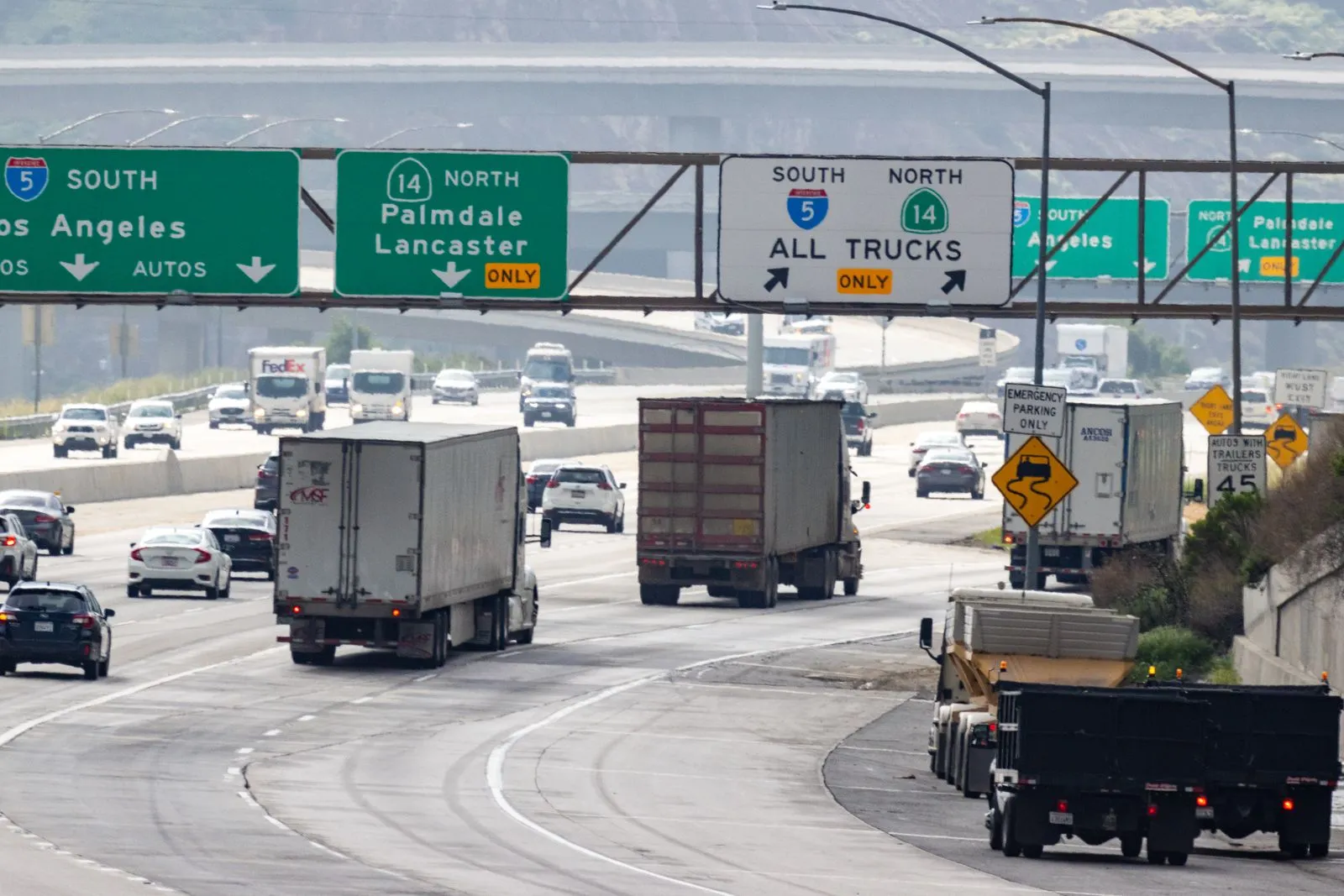
Commercial trucks and passenger vehicles traveling on a busy highway
What Information Can Truck Black Box Systems Record?
The records available after a truck collision depend on the system and the vehicle. Potential information may include:
- Vehicle speed or changes in speed before an event
- Brake application and certain hard-braking events
- Acceleration, deceleration, throttle position, or engine RPM
- Gear selection, steering input, or other driver inputs
- Vehicle-system status, fault codes, or restraint status
- The timing and sequence of an event recorded by the system
- Driving time and records of duty status from an ELD
- Route, location, video, or communications data from other equipment, when available
These are examples of possible fields, not findings about a particular crash. A truck may not preserve every category of information. A damaged module, a failed system, a later vehicle operation, or an incomplete extraction can affect what is available.
The purpose of the review is to determine what the records can reliably show and how they fit with the rest of the evidence. For example, a possible braking record may be compared with tire marks, vehicle damage, roadway measurements, surveillance footage, and the final positions of the vehicles. A possible ELD discrepancy may be compared with dispatch records, fuel receipts, toll records, and witness information. Each comparison helps test a theory of what happened without treating one data point as conclusive.
How Can Electronic Data Help Reconstruct a California Truck Crash?
A crash reconstruction professional may use electronic records to help place vehicles and driver inputs on a timeline. The analysis may compare recorded speed, braking, acceleration, steering, or system status with photographs, debris, roadway evidence, vehicle damage, surveillance video, and witness accounts.
For example, if an available record indicates when braking began, an investigator may compare that timing with the physical evidence and the distance between the vehicles. If an ELD shows a reported duty status, counsel may compare it with dispatch communications, fuel or toll records, and other operational evidence. The result is a more complete timeline, not an automatic finding of fault.
A careful reconstruction also considers conditions that electronic data may not capture fully, including visibility, traffic movement, road design, weather, vehicle loading, mechanical condition, and the actions of other drivers. The analyst should identify the system that created the file, explain its capabilities, distinguish recorded facts from assumptions, and document any limitations.
Electronic evidence may help investigate several possible theories, including:
- Whether the truck was traveling at a speed inconsistent with the roadway or conditions
- Whether braking began before impact and how the vehicle responded
- Whether a mechanical fault or maintenance issue requires further investigation
- Whether the operating timeline is consistent with ELD and dispatch records
- Whether the truck's movement is consistent with the damage and roadway evidence
- Whether another vehicle, business, or maintenance provider may have relevant records
The data may support or challenge a proposed explanation of the collision. It does not replace the full liability and causation analysis.
When Should Black Box Evidence Be Preserved After a Truck Crash?
Preservation should be considered promptly after a serious commercial truck collision. The trucking company, owner, lessee, carrier, insurer, or another custodian may control the vehicle or its electronic records. Continued operation, repairs, a change in custody, system damage, or ordinary retention practices may affect what remains available.
There is no universal retention period for every truck, recorder, carrier, or type of data. Some systems may overwrite information after additional vehicle operation, while other records may be retained differently. A source that describes a possible overwrite period for one system does not establish a deadline for every case. The safer approach is to identify the potential custodians and send a prompt preservation request while the investigation is underway.
A preservation request may address more than one device. Depending on the facts, it may identify:
- EDR or ECM information and the vehicle module itself
- ELD records and records of duty status
- Driver logs, dispatch messages, and trip instructions
- Inspection, maintenance, repair, and post-crash records
- Onboard video, telematics, GPS, or fleet communications
- The truck, trailer, cargo, and physical components involved in the crash
Preservation is not the same as guaranteed access or recovery. Consent, formal discovery, or a court order may be needed to obtain records. An attorney can assess the appropriate request based on the parties involved, the condition of the vehicle, the claim, and the available evidence.
Need help preserving truck electronic evidence? Call DC Law Group at (310) 571-8860 to request a free consultation.
Who Controls Truck Black Box Data?
Control may depend on the truck's ownership, lease, carrier relationship, insurer, repair status, and the location of the vehicle or module. A driver may not control the EDR, ECM, or ELD records. A carrier may possess the vehicle records while another company owns the truck or provides maintenance. A shipper, broker, telematics provider, or nearby vehicle may hold other evidence relevant to the investigation.
The fact that another party controls a record does not establish fault. It does mean that identifying the correct custodians early can be important. A preservation letter should be tailored to the collision and should identify the electronic, physical, and business records that may help explain the event.
The process for obtaining data may include a written request, cooperation from the custodian, formal discovery, a subpoena, or a court order. The appropriate route depends on whether a lawsuit has been filed, the parties involved, and the type of record requested. Do not try to access or alter a truck's electronic systems yourself. Preserve the evidence you already have and direct requests through counsel.
Why Do Extraction and Chain of Custody Matter?
Raw electronic data is technical evidence, not a self-explanatory conclusion. A qualified accident reconstruction professional, engineer, or forensic examiner may need to identify the system, obtain the file, interpret its format, and compare the information with photographs, vehicle damage, roadway evidence, witness accounts, medical records, and company records.
Chain of custody means documenting who possessed the evidence, when it was obtained, what was extracted, how the file was stored, and whether it was changed. That record helps establish that the information presented for review is the same information obtained from the vehicle or custodian.
The review should also identify limitations. The module may be damaged, the system may have malfunctioned, the available file may be incomplete, or different devices may produce different information. A qualified reviewer should distinguish between what the system recorded and what an attorney or expert infers from it.
What Other Evidence Should Be Preserved After a Truck Collision?
Black box records are only one part of a California truck injury investigation. If you are physically able, preserve the following information without editing or deleting original files:
- Medical records: Keep discharge papers, diagnoses, prescriptions, imaging reports, treatment instructions, and follow-up records. Maintain a simple timeline of symptoms and appointments.
- Scene and vehicle photographs: Save original photographs of the roadway, traffic controls, vehicle positions, damage, debris, skid marks, weather, and visible injuries.
- Reports and communications: Keep police or incident reports, exchange-of-information documents, claim numbers, insurance correspondence, emails, text messages, and letters.
- Witness information: Record names and contact information for people who saw the collision or its immediate aftermath. Note what each person personally observed.
- Truck and business information: Preserve photographs of the truck, trailer, license plate, unit number, company markings, and driver information. Identify the carrier, owner, lessee, broker, maintenance provider, and other potentially relevant businesses.
- Digital records: Preserve dashcam footage, phone records, app communications, location history, and original files from nearby cameras or vehicles when available.
California truck cases may involve the driver, a motor carrier, an owner or lessee, an employer, a maintenance provider, a shipper, another motorist, or more than one party. A complete investigation examines the evidence concerning each potentially responsible person or business.
Can Black Box Data Prove Who Was at Fault?
Usually, no. Electronic data can be important evidence, but it does not automatically establish negligence, causation, or legal responsibility. Depending on the system, it may help show speed, braking, driver inputs, system status, or the timing of a collision. Those records must be evaluated with photographs, physical damage, roadway evidence, witness accounts, medical records, and other proof.
Electronic records can support or challenge an account of the collision. They are most useful when properly preserved, extracted, interpreted, and compared with the full evidentiary record.
Frequently Asked Questions
Can a truck black box prove who is at fault?
Not by itself. Electronic data may help reconstruct speed, braking, driver inputs, system status, and collision timing. A qualified review should compare the records with physical evidence, photographs, witnesses, medical records, and other information.
What is the difference between an EDR and an ELD?
An EDR may capture technical vehicle and occupant information for a brief period around a crash. An ELD synchronizes with the engine to record driving time and records of duty status. They serve different purposes and should not be treated as interchangeable.
Can truck black box data be lost after a California crash?
It can be affected by continued vehicle operation, system damage, malfunction, or retention practices. There is no universal retention period for every truck or device. Promptly identifying potential custodians and requesting preservation can help protect relevant records.
What should I tell a truck accident lawyer about electronic evidence?
Share the collision date and location, truck and carrier information, photographs, reports, witness contacts, medical records, and communications from insurers or the trucking company. Describe what you personally observed without guessing about electronic readings. Counsel can determine which records should be requested and preserved.
Talk with DC Law Group about your California truck injury evidence. Call (310) 571-8860 for a free consultation.