

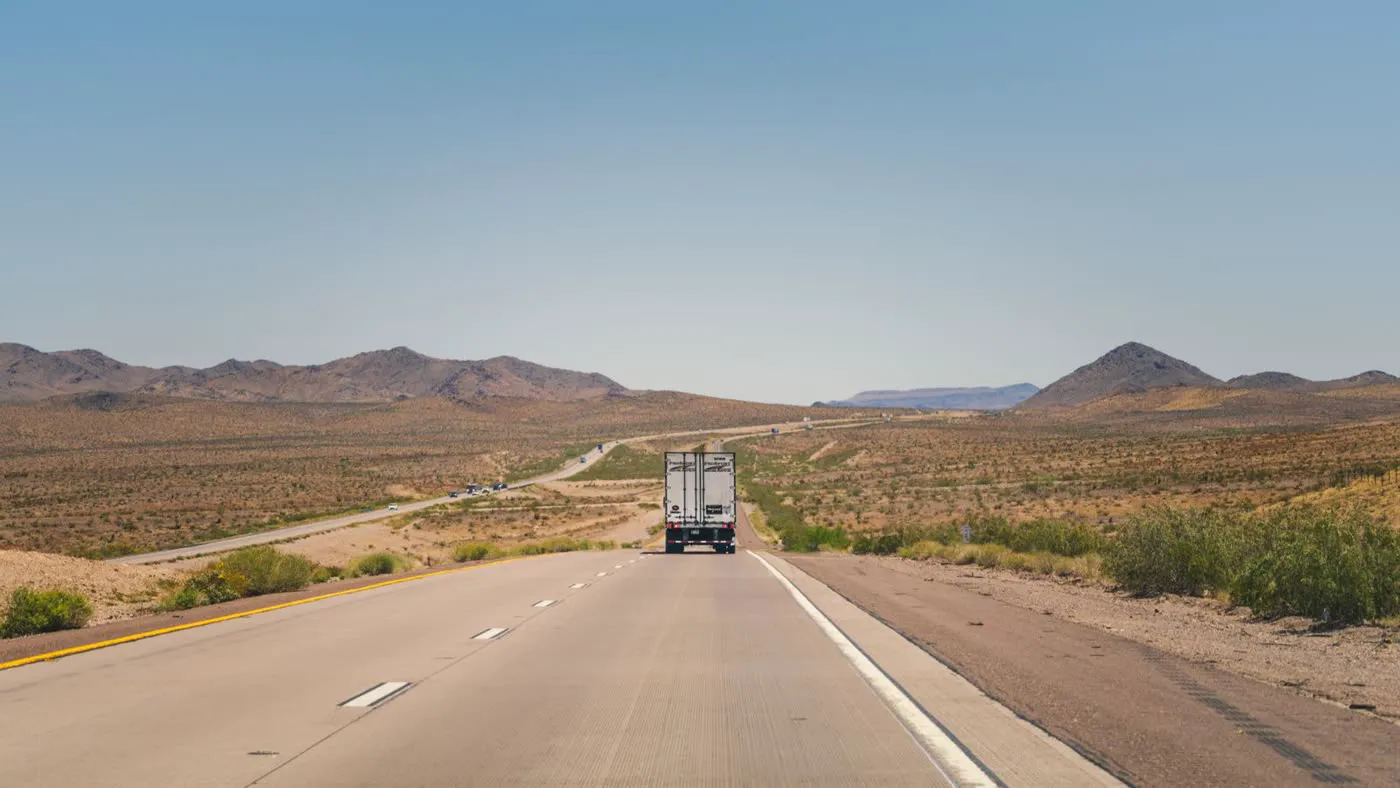
A Palm Springs truck accident lawyer helps people hurt by commercial trucks on Interstate 10 and the desert roads that feed the Coachella Valley. Those crashes can involve a carrier based far from Riverside County, a driver who has already left the scene area, and records that disappear if nobody asks for them. This guide covers what to record at the scene, which carrier and cargo records matter, how to document injuries, and which California deadlines apply. It does not assign fault for wind, sand, or traffic conditions.
Call DC Law Group at (310) 571-8860 to talk through a Palm Springs or Coachella Valley truck collision.
What a Palm Springs truck accident lawyer reviews first
The first question is not who looked at fault on the shoulder. It is what still exists. On I-10 through Palm Springs, Cathedral City, Thousand Palms, Indio, and the rest of the Coachella Valley, a tractor-trailer can be moved, repaired, or sent on its next load within days. A useful review starts with four items:
- The exact place, direction of travel, and time, including the nearest exit or cross street.
- The carrier name on the door, the USDOT number, the trailer number, and any placard.
- Photos of vehicle positions, skid marks, debris, and the roadway surface before cleanup.
- Names of the driver, any passenger, and people who stopped, plus the responding agency.
DC Law Group is a Beverly Hills personal injury firm representing accident victims throughout California. A local legal review can help distinguish the driver, carrier, cargo, maintenance, and roadway questions that remain open after a Coachella Valley collision. The analysis should begin with what you can still document, not with a promise about the outcome.
Commercial crashes are different from ordinary car claims because the company that owns or dispatches the truck often controls the records. The California truck accident practice page explains how DC Law Group approaches that investigation. This article stays on Palm Springs and the valley around it.
Where Palm Springs and Coachella Valley truck crashes happen
Interstate 10 is the freight spine of the valley. Trucks moving between Los Angeles, the Inland Empire, Arizona, and points east share that freeway with local traffic. The busy stretches include Palm Springs, the wind-prone miles near Whitewater and Cabazon, and the commercial exits serving Indio, Coachella, and the eastern valley. Local roads matter too. Deliveries use Palm Canyon Drive, Ramon Road, Highway 111, and the surface streets around resorts, warehouses, and agricultural loads.
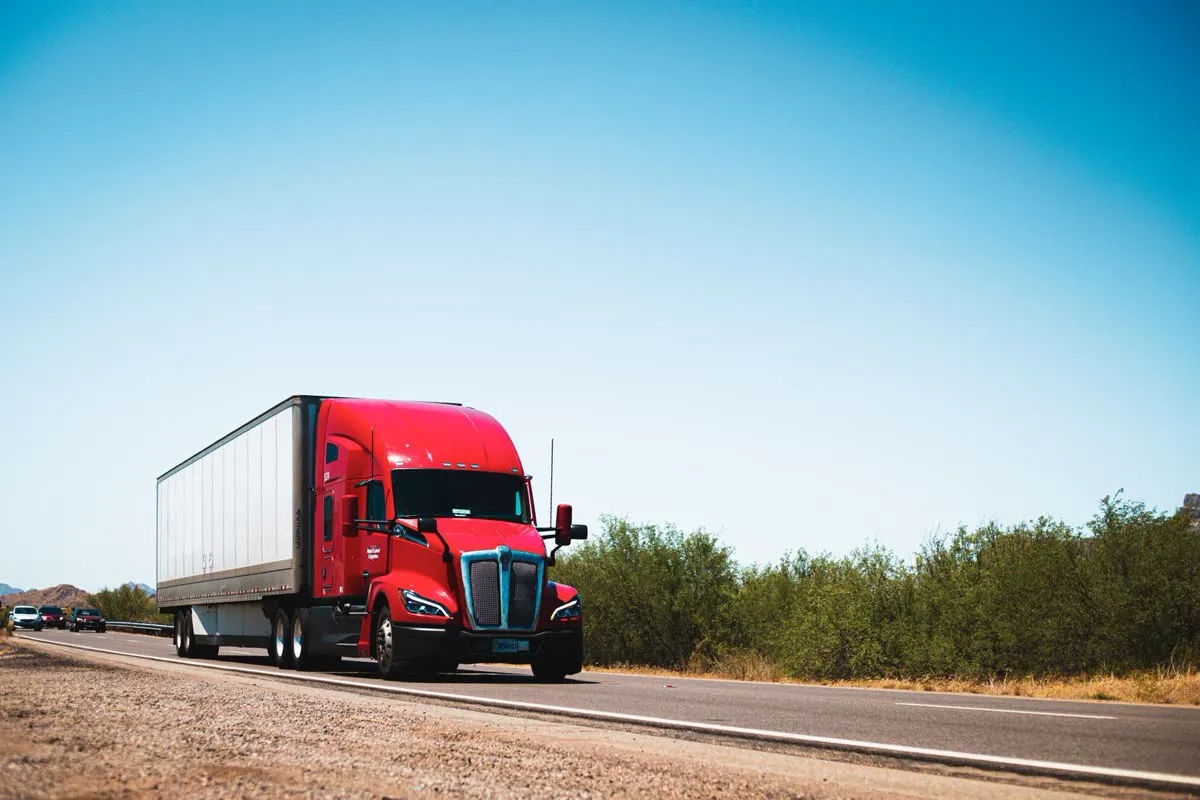
A red tractor-trailer on a dry desert highway with scrub brush, the kind of setting common on freight routes near Palm Springs
Commercial trucks share long desert stretches of Interstate 10 with local traffic through the Coachella Valley.
Desert driving adds conditions that a city crash report may not describe well. High wind, blowing sand, sudden drops in visibility, long sight lines, and wide temperature swings are real features of this corridor. None of those conditions, by themselves, decides who is responsible. A careful account separates what the weather was doing from what the driver and carrier did: speed for the conditions, following distance, lane changes, load securement, and whether the driver should have stopped.
Do not treat a nearby article about a Fontana rollover, or a statewide claims overview, as the map of your crash. Those pages answer different questions. If your collision was a rear-end hit by a commercial truck farther west in the Inland Empire, the Inland Empire rear-end truck accident guide is the closer match. Palm Springs cases turn more often on freeway miles, desert visibility, and carriers that only pass through.
Passengers and people in smaller vehicles usually absorb the worse harm. A loaded tractor-trailer can weigh many times a passenger car. That weight difference is a reason to document injuries early, not a reason to guess at a result.
What to record before the truck and the driver leave
If you can do it safely, record the scene before vehicles move. If you are hurt, ask someone you trust to do it. Useful photos and notes include:
1. All sides of the truck and trailer, including the company name, DOT number, license plates, and any visible damage or cargo shift.
2. Your vehicle, the point of impact, and debris in the lanes or on the shoulder.
3. The roadway: ruts, sand on the pavement, a steep grade, a construction taper, or a stopped queue.
4. Traffic-control devices, including signs warning of wind, blowing dust, or lane closures, if they were posted.
5. The truck driver's license, the cab card or insurance card if it is offered, and the driver's stated destination.
Write a short timeline the same day. Note when you called 911, which agency arrived, whether you went to a hospital in Palm Springs or farther down the valley, and what hurt at the time. Memory fades, and a later statement that conflicts with the first one is hard to explain.
Get medical care even if you plan to "wait and see." Adrenaline hides neck, back, and head symptoms. Tell the clinician you were in a truck collision and describe every area that hurts. Gaps in care become arguments later.
California's Department of Motor Vehicles requires a separate report from any police or insurance report. Under Vehicle Code section 16000, a driver involved in a qualifying crash must report it to the DMV within 10 days. The rule covers injury, death, or more than $1,000 in property damage. The DMV's SR-1 instructions say the report is still required when someone is injured, no matter how minor the injury. An insurance agent, broker, or legal representative may file it. A report to the California Highway Patrol does not replace the SR-1.
If the CHP investigated, a proper party of interest can request the crash report through the CHP crash portal or with a CHP 190 form, as described on the CHP crash-report page. Ask soon. The report often lists the officer's observations, the carrier, and witness names that you will not remember.
Which carrier, driver, and cargo records matter
The name on the door is a start, not the whole company chart. A Palm Springs crash may involve the motor carrier, a freight broker, a shipper who loaded the trailer, a maintenance vendor, or the driver as an employee or contractor. Sorting those roles is the point of an early records request.
Federal hours-of-service rules are one piece. For property-carrying drivers, the FMCSA summary of hours-of-service regulations states an 11-hour driving limit after 10 consecutive hours off duty. It also states a 14-hour driving window, a 30-minute break after 8 cumulative hours of driving, and a 60/70-hour on-duty limit. The same summary allows a limited extension when a driver meets the adverse-driving-conditions rule. Wind in the Coachella Valley does not automatically trigger that extension. It also does not excuse a carrier that dispatched a fatigued driver into a known dust corridor.
FMCSA guidance on records of duty status says motor carriers must retain records of duty status and supporting documents for six months from receipt, under 49 CFR 395.8(k)(1). Six months is not a long time if medical treatment and the crash report take weeks. A preservation letter should go out before that window closes. For a deeper look at logs specifically, see the California truck driver log guide. This Palm Springs article does not repeat that full log analysis.
California gives the CHP and the Department of Motor Vehicles authority to adopt safety rules for regulated commercial vehicles. Vehicle Code section 34501 covers hours of service, equipment, inspection, maintenance, and recordkeeping, among other topics. Ask for the inspection and maintenance file on the tractor and the trailer, not only the driver's log.
Cargo evidence is separate from driver fatigue. Photograph shifted freight, broken straps, an open door, or a trailer that leans. Note whether the load was produce, building materials, or a container staged for a valley warehouse. The cargo truck accident guide covers load securement in more detail. Use it when the harm came from cargo itself. Use this page when the question is a Palm Springs or valley crash and the records around it.
Event-data and electronic-logging devices can matter, but they are not the whole case. The firm's black box data article explains that device evidence. Preserve it. Do not wait for a later article to tell you the truck is still in the same yard.
How injury documentation supports a Coachella Valley claim
Injury records should track the collision, not a generic checklist. Tell every provider the date, the location (for example, I-10 near Palm Springs, or Highway 111 in Indio), and that a commercial truck was involved. Keep:
- Emergency and hospital records, imaging, and discharge instructions.
- Follow-up visits, referrals, and any work restrictions.
- A simple daily note of pain, missed work, and tasks you cannot do.
- Photos of visible injuries and of vehicle damage, stored with the date.
California's deadline for a personal-injury lawsuit is short. Code of Civil Procedure section 335.1 gives two years to file an action for injury to, or the death of, a person caused by the wrongful act or neglect of another. That two-year period is not the only clock. The 10-day DMV report and the six-month carrier record-retention period arrive much sooner. If a public entity may be involved, because of a roadway condition rather than only the truck, different and shorter claim rules can apply. Do not assume the two-year statute covers every defendant.
A public-entity claim can have an earlier administrative deadline. Government Code section 911.2 addresses presenting certain claims, while section 945.6 addresses the time to sue after a claim is acted on or deemed rejected. The correct deadline depends on the defendant and facts.
Insurance minimums are easy to confuse with what a claim is worth. The California DMV driver's handbook states a liability floor of $30,000 for injury or death of one person. The same page lists $60,000 for injury or death of more than one person, and $15,000 for property damage. Commercial policies are often written above those floors, and more than one policy may apply. The handbook figures are a legal minimum for drivers, not a measure of harm and not a settlement number.
Avoid public posts about the crash, the trucking company, or your treatment. Insurers read them. Stick to the medical record and the documents your lawyer asks you to keep.
How local conditions differ from a statewide truck claim
A statewide article can explain federal rules. A Palm Springs article has to say where those rules meet this freeway. The differences that matter here are local:
| Topic | Palm Springs and Coachella Valley. | What a statewide guide usually covers. |
|---|---|---|
| Road. | I-10 through the valley, plus Highway 111 and local delivery streets. | General California highways, without a valley map. |
| Conditions. | Wind, blowing sand, long sight lines, and desert heat, described without assigning fault. | Weather only as a generic factor. |
| Evidence. | Scene photos before the truck leaves the valley, plus carrier, cargo, and maintenance files. | Broad lists of possible records. |
| Deadlines. | 10-day SR-1, six-month duty-status retention, and the two-year injury filing period. | The lawsuit deadline alone. |
| Related DC Law Group pages. | Link out for rear-end, cargo, logs, and black-box topics. | Those topics in full. |
Passengers in the truck, people in a following car, and workers making a delivery in Palm Springs can all have claims, and they are not the same claim. A passenger may have no relationship with the carrier. A following driver may have a visibility dispute. A person struck on a surface street may have a different set of witnesses than a freeway crash. Say which one you are when you call.
A truck injury claim may involve medical care, lost income, property damage, and lasting harm. Evidence preservation and a timely review can help clarify which parties, records, and deadlines matter. Every case is different and must be evaluated on its individual facts and circumstances.
For the broader liability framework, the California commercial truck liability guide and the California truck accident claims overview are the right next reads. They are not substitutes for a valley-specific evidence plan.
Call DC Law Group at (310) 571-8860 before carrier records age out.
Frequently asked questions
What should I do first after a truck crash on I-10 near Palm Springs?
Get to a safe place and call 911. If you can do it without risk, photograph the truck, the trailer numbers, the roadway, and your vehicle before anything is towed. Then get medical care and write down the time, the exit or cross street, and the names of officers and witnesses.
Does desert wind or blowing sand decide who is at fault?
No. Wind, sand, and low visibility are conditions to describe, not an automatic finding. Investigators still look at speed, following distance, hours of service, load securement, and whether the driver or carrier should have stopped or delayed the trip.
How long do I have to report the crash to the California DMV?
Vehicle Code section 16000 generally requires a report within 10 days when an accident on a street or highway causes injury, death, or more than $1,000 in property damage. The DMV SR-1 is separate from a CHP report and from a report to an insurer.
How long does a trucking company keep driver logs?
FMCSA guidance states that motor carriers must keep records of duty status and supporting documents for six months from receipt. Ask that those records, plus maintenance and cargo files, be preserved right away. Waiting for the two-year lawsuit deadline can be too late for the logs.
Can DC Law Group review a Coachella Valley truck injury if the carrier is from another state?
DC Law Group is a Beverly Hills personal injury firm representing accident victims throughout California. A review can consider crashes in Palm Springs and the Coachella Valley, including carriers based elsewhere. Call (310) 571-8860 to start with the facts of your collision. Hiring the firm depends on a review of those facts.
Call DC Law Group at (310) 571-8860 about a Palm Springs truck collision.