
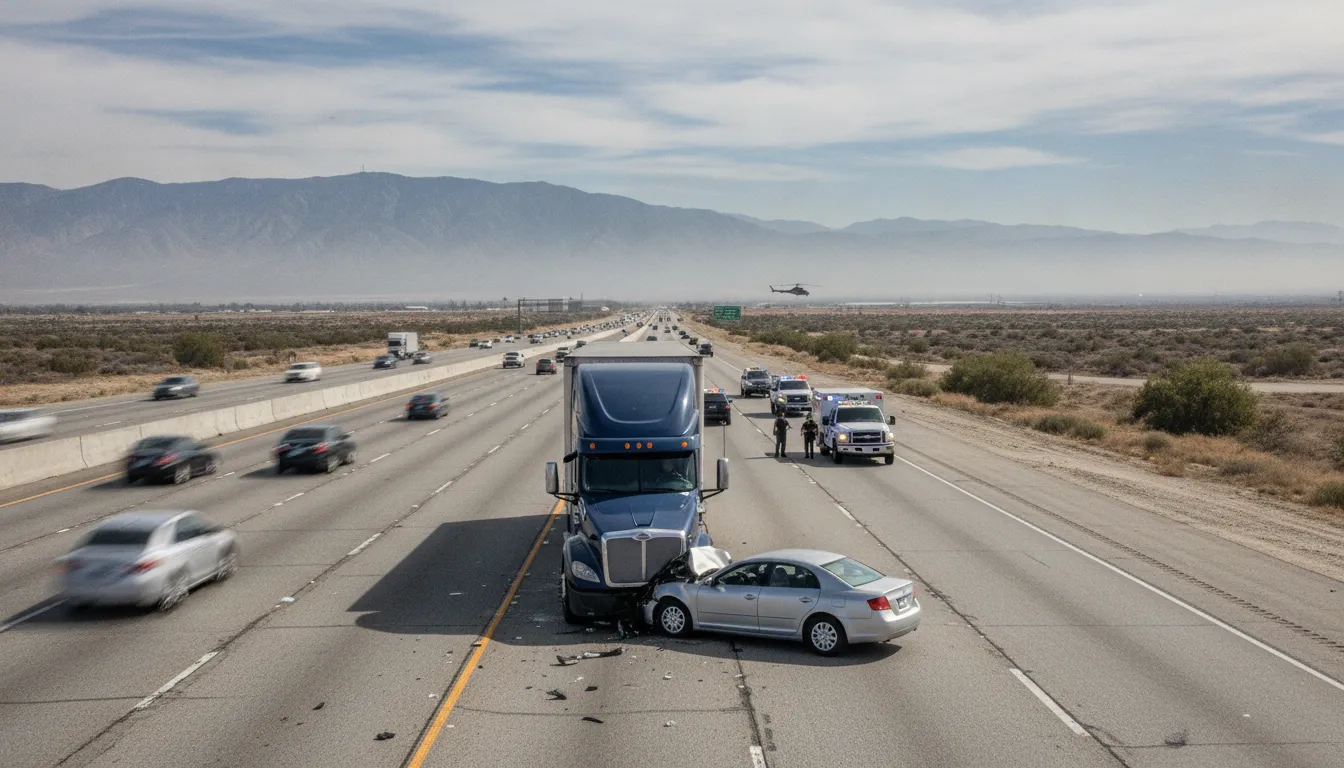
A rear-end truck crash on Interstate 10, State Route 60, or another Inland Empire roadway can leave you facing more than vehicle damage. Commercial vehicles may involve a driver, carrier, maintenance provider, or other parties, while important evidence can disappear quickly.
Call DC Law Group at (310) 571-8860 to discuss your truck crash and next steps.
An inland empire rear end truck accident lawyer can help evaluate how the collision happened, identify potentially responsible parties, preserve records and vehicle evidence, and explain which deadlines may apply. Liability is not automatic simply because a truck struck your vehicle from behind. The facts may include following distance, speed, attention, braking, visibility, road conditions, and the conduct of other involved parties.
Start by obtaining medical care, keeping records, and preserving photographs, communications, and other information related to the collision. The roadway setting and the truck's commercial operation can shape the investigation that follows.
What Makes a Rear-End Truck Crash Different in the Inland Empire?
A rear-end collision involving a commercial truck requires more than a basic comparison of the vehicles. On Inland Empire routes, investigators may need to examine freeway speed, congestion, lane changes, lighting, roadway visibility, and whether traffic stopped suddenly. Riverside and San Bernardino corridors also carry substantial commercial traffic, making the sequence of events and available physical evidence especially important.
Truck size and stopping distance
A tractor-trailer has different dimensions, weight, braking characteristics, and sight lines than a passenger vehicle. The investigation may therefore ask how far the truck was traveling behind the vehicle ahead and when the driver first saw the hazard. It may also examine whether braking began promptly and whether the truck had enough distance to stop under the conditions. Those questions are fact-specific. They cannot be answered solely by looking at where the vehicles came to rest.
Freeway conditions and visibility
Photographs and video can help show traffic density, pavement conditions, weather, glare, darkness, work zones, or an obstruction that affected visibility. Dashcam footage, nearby surveillance, witness accounts, event data, and available trucking records may help establish the timing of the impact. A commercial vehicle's electronic logging device records can also be relevant to the broader investigation when the facts make driver hours or trip timing material.
Vehicle damage and the impact sequence
Damage to the rear vehicle, underride protection, truck bumper, cargo area, and surrounding components can help reconstruct how the collision occurred. Photos should be taken before repairs or disposal when it is reasonably safe to do so, and tow or storage information should be preserved. For a related Inland Empire example involving a different collision pattern, see this guide to Fontana semi-truck crash evidence.
These details may affect which parties and records require closer review. A careful assessment can distinguish an ordinary traffic dispute from a commercial truck claim requiring broader evidence preservation.
How Is Liability Evaluated After a Rear-End Truck Collision?
Liability after a rear-end truck collision depends on the evidence, not solely on the fact that one vehicle struck another from behind. Investigators may examine following distance, speed, attention, visibility, braking, road conditions, and the truck driver's conduct. A collision report can provide an initial account, but additional evidence may change how responsibility is evaluated.
California Vehicle Code section 21703 addresses following too closely and requires a driver to maintain a reasonable and prudent distance, considering the speed of the vehicles and traffic. The statute is available through the California Legislature's official code. Whether the section applies to a particular crash still requires a review of the surrounding facts.
The driver's conduct is one part of the investigation
Evidence may include photographs of vehicle damage, scene conditions, witness accounts, available video, vehicle data, and communications about the crash. Investigators may also consider whether fatigue, distraction, impaired driving, unsafe speed, or delayed braking contributed to the impact. These issues should not be assumed without supporting evidence.
Other parties may have relevant responsibilities
A commercial truck claim can involve more than the person operating the vehicle. Depending on the facts, the carrier may have responsibilities related to hiring, supervision, training, or dispatch. A maintenance provider may be relevant if a mechanical issue affected braking or another safety system. Loading or shipping participants may require review when cargo placement, securement, or weight affected vehicle handling. Identifying a potentially responsible party does not establish liability by itself.
| Potential source of evidence | Question it may help answer |
|---|---|
| Vehicle damage and scene photographs | Where and how did the impact occur? |
| Driver and carrier records | What were the driver's trip, hours, and instructions? |
| Maintenance materials | Did a vehicle condition affect braking or control? |
| Witnesses and video | What happened immediately before impact? |
Comparative fault may also become relevant if evidence shows that more than one person or entity contributed to the harm. The effect depends on the facts and the claims asserted. A focused truck accident lawyer investigation can help preserve records and organize the evidence needed to evaluate these issues.
What Evidence Should You Preserve After a Truck Crash?
Evidence can become harder to obtain as vehicles are repaired, footage is overwritten, and memories fade. Preserve what you can safely access, and avoid putting yourself in danger or delaying medical care. These materials can help an attorney evaluate how the collision occurred, which parties may be involved, and what losses should be documented.
1. Photograph the scene and damage. If it is safe, take photographs of the vehicles, impact points, roadway position, debris, traffic controls, weather, lighting, and visible injuries. Include wide views and close-ups. Keep the original files and note when and where they were taken.
2. Request the police report. Keep the report number, responding agency, and any exchange-of-information documents. The report is an important starting point, but it may not contain every fact or identify every potentially responsible party.
3. Organize medical and treatment records. Save discharge paperwork, diagnostic results, prescriptions, bills, work restrictions, appointment information, and treatment instructions. Follow medical guidance and keep a simple record of symptoms and how the injury affects daily activities.
4. Record witness details. Write down names, phone numbers, email addresses, and a brief description of what each witness observed. Do not pressure a witness to adopt a particular version of events.
5. Preserve insurance correspondence. Keep claim numbers, letters, emails, text messages, recorded-statement requests, and other communications from insurers. Avoid deleting messages or agreeing to a release before you understand what it covers.
6. Document the vehicle's storage and video sources. Keep tow receipts, storage-location information, repair estimates, and the names of anyone with access to the vehicle. Identify nearby businesses, homes, traffic cameras, or vehicle dashcams that may have captured the crash. Video systems often retain footage for a limited period.
7. Ask for prompt evidence preservation. A written preservation request may be appropriate for vehicle data, onboard systems, dispatch records, communications, maintenance materials, and video. Electronic logging devices, or ELDs, record specified commercial-driver hours-of-service data under federal rules. The applicable regulations are published at 49 CFR Part 395, Subpart B, and the FMCSA ELD fact sheet explains the system in practical terms. The existence and availability of particular records depend on the vehicle, carrier, system, and circumstances.
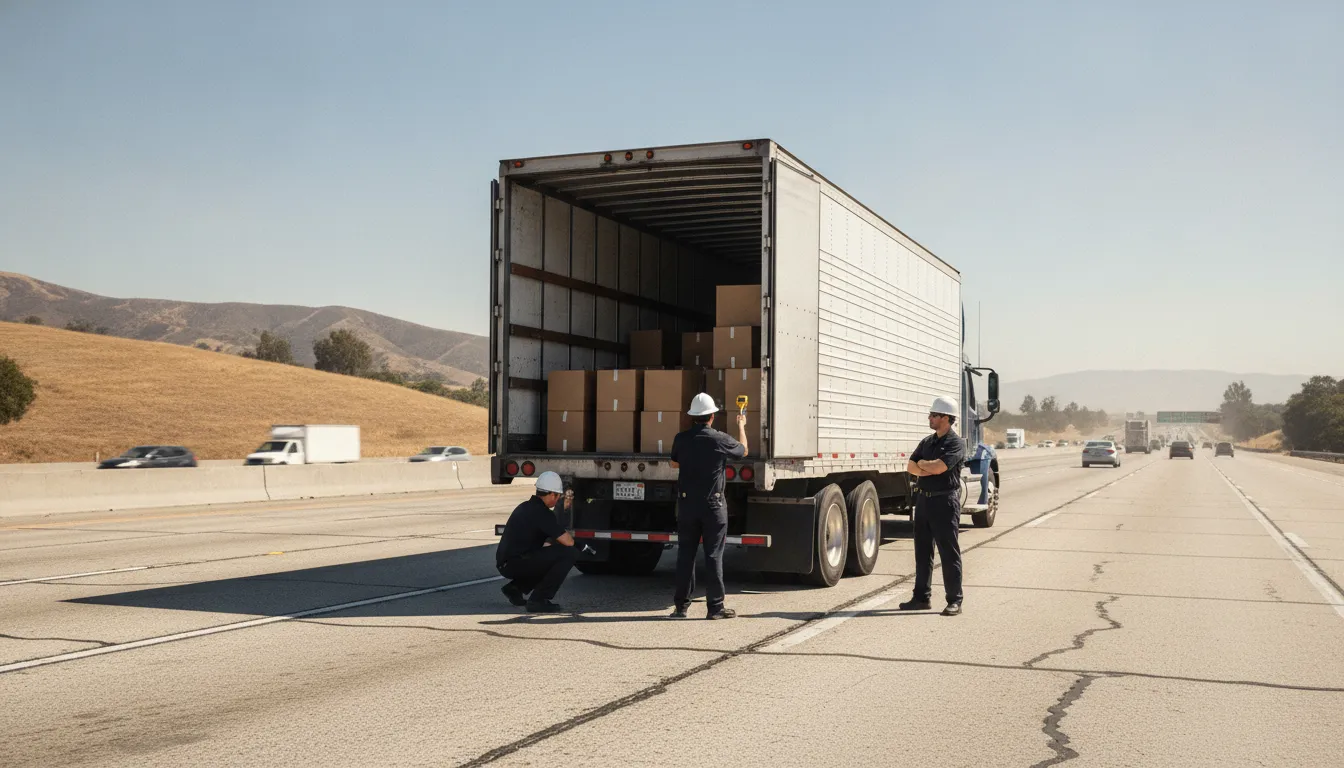
Investigators inspecting a commercial truck on a Southern California freeway
A focused truck accident lawyer investigation can help identify which evidence requests are appropriate for the facts of a specific crash. Preserve copies of everything you send or receive, and discuss uncertain or potentially sensitive records with counsel before taking further action.
What Deadlines Apply to an Inland Empire Truck Injury Claim?
There is no single deadline that applies to every truck injury claim. The time limit can depend on the legal theory, the identity of the defendant, whether a public entity is involved, and other facts surrounding the collision. California Code of Civil Procedure section 335.1 addresses certain injury claims, but it should not be treated as a universal answer for every case: read the text of CCP section 335.1.
A rear-end collision involving a commercial truck may involve more than one potential defendant. The driver, motor carrier, vehicle owner, maintenance provider, or another party may have different roles in the events leading to the crash. If a public agency or public property is part of the claim, separate claim-presentation requirements may apply before a lawsuit can proceed. Those requirements can have shorter time frames than the general rules that apply to some private injury claims.
Other issues can affect the analysis, including the date an injury was discovered, the nature of a survivor's claim, a minor's status, or a defendant's legal status. Insurance notice provisions and evidence-preservation concerns are not necessarily the same as the deadline to file a lawsuit. Waiting can make it harder to preserve vehicle data, photographs, witness accounts, medical records, and other information relevant to liability.
For a practical overview, see these California accident filing deadlines. If you were injured in Riverside, San Bernardino, Fontana, Ontario, or elsewhere in the Inland Empire, prompt legal review can help identify the deadlines and parties that may apply to your facts. Do not assume that an insurer's ongoing communications extend a filing deadline. Do not rely on a general online rule when the claim involves a commercial vehicle or a public defendant.
How Can an Inland Empire Rear End Truck Accident Lawyer Help?
A rear-end collision involving a commercial truck can raise questions that are difficult to answer while you are recovering. An attorney can help organize the claim around the available evidence, the people or companies involved, and the injuries documented in your medical records.
Preserving evidence before it disappears
Early investigation matters because physical evidence and electronic records may not remain available indefinitely. Counsel can send preservation requests concerning the truck, trailer, event data, driver logs, electronic logging device records, dispatch communications, photographs, and inspection or maintenance materials. You should also preserve your own photographs, dashcam footage, medical records, treatment documentation, police report, witness information, insurance policies, tow records, and communications related to the collision. These materials can help establish what happened and how the crash affected your life.
Analyzing liability and insurance communications
A rear impact may require analysis of following distance, speed, attention, braking, visibility, and the truck driver's conduct. The investigation may also examine whether a carrier, maintenance provider, shipper, or another party contributed to the collision. The responsible parties cannot be identified from the vehicle positions alone. An attorney can evaluate the available facts, identify potentially relevant insurance coverage, and communicate with insurers so that statements and documents are handled carefully.
Documenting medical harm and preparing the claim
Medical records and consistent treatment documentation help connect symptoms to the crash and show the course of recovery. Counsel can gather records, track providers and restrictions, and account for documented work interruption and other effects supported by the evidence. The next stage may involve preparing a demand, negotiating with the insurer, or developing the claim for litigation if a fair resolution cannot be reached. None of these steps guarantees a particular result, because liability and damages depend on the facts.
DC Law Group handles commercial truck collision claims throughout California, including matters involving Inland Empire communities. Learn more about truck accident liability representation without assuming that every rear-end claim presents the same legal issues.
What Should You Do in the First Days After the Collision?
The first days after a rear-end truck collision can feel disorganized, especially when injuries, vehicle damage, and insurer communications compete for your attention. A practical record of what happened can help preserve information for medical providers, insurers, and any later claim review.
1. Get to a safe location. If possible, move away from traffic and call 911 when emergency assistance is needed. Follow instructions from responders, and avoid putting yourself back in danger to retrieve property or photograph the roadway.
2. Obtain a medical evaluation. Seek prompt medical attention for pain, weakness, dizziness, headaches, or other symptoms, even if they appear minor at first. Tell the provider how the collision occurred and keep discharge instructions, referrals, bills, and treatment records.
3. Report the collision. Cooperate with law enforcement and request information about the report. Write down the date, location, vehicles involved, road conditions, and what you remember while those details are fresh.
4. Preserve photographs and video. Save photographs of vehicle damage, the scene, visible injuries, debris, traffic conditions, and relevant signs. Keep original files and preserve dashcam footage rather than editing or deleting it.
5. Notify your insurer carefully. Report the collision as required by your policy, but avoid guessing about fault, the full extent of your injuries, or how your recovery will progress. Do not give a recorded statement or sign a release without understanding what you are accepting.
6. Organize records. Keep police information, medical records, treatment documentation, insurance policies, witness contact information, towing and storage records, and communications in one secure location. Also document missed work or other directly related effects without estimating facts you cannot support.
7. Do not rush into a settlement. An early offer may not account for the full medical picture or available evidence. Before signing settlement papers, discuss the proposed resolution and your options with a qualified California attorney. You can also review California injury claim questions for general information.
These steps are general information, not individualized legal advice. If you want to discuss a collision in Riverside, San Bernardino, or another Inland Empire community, DC Law Group handles California truck accident claims. Every case can have a different process and result.
Call DC Law Group at (310) 571-8860 to discuss your truck crash or contact the firm online.
Frequently Asked Questions
Should I speak with the trucking company's insurer after a rear-end crash?
Be careful before giving a recorded statement or signing a release. Provide required claim information, but avoid guessing about fault, injuries, or future treatment. Preserve the insurer's messages and discuss significant communications with counsel.
What evidence can help show what caused the truck collision?
Useful materials may include scene and vehicle-damage photographs, the police report, medical records, witness information, dashcam footage, and communications with insurers. Commercial vehicle records may also matter, including electronic logging device information when relevant to the investigation.
Can more than one party be responsible for a rear-end truck crash?
Possibly. Depending on the facts, responsibility may involve the truck driver, motor carrier, maintenance provider, shipper, or another party. Investigators examine following distance, speed, attention, braking, visibility, vehicle condition, and the conduct of each potentially responsible party.
How long do I have to bring a California truck injury claim?
There is no single deadline for every claim. The applicable period can vary based on the claim type, the defendant, and other circumstances. California Code of Civil Procedure section 335.1 addresses a two-year period for certain injury actions, but prompt legal review is important before relying on any general rule.
Can I work with a truck accident lawyer if I live in Riverside or San Bernardino?
Yes. DC Law Group handles commercial truck collision claims throughout California and can discuss remote consultation options with Inland Empire clients. A consultation can help identify immediate evidence-preservation and claim-handling steps.
Talk With DC Law Group About Your Truck Crash
A focused review of the collision, available evidence, and potential liability can help you understand practical next steps after a rear-end truck crash. Call DC Law Group at (310) 571-8860 to discuss your situation, or contact the firm online.