

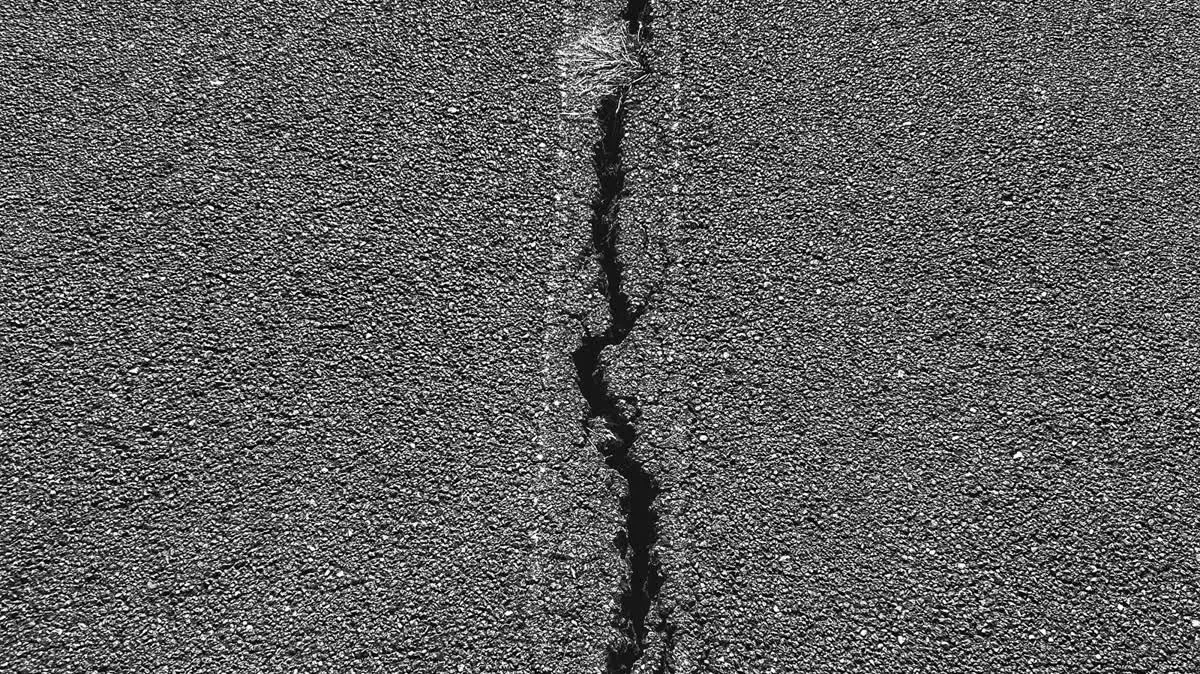
A California injury claim that involves roadway-defect evidence often turns on what the pavement looked like before a crew patched it. A deep hole, a raised seam, a missing sign, or a sunken shoulder can disappear within days. Photos, measurements, reports, and notice records are what remain. If you were hurt, get medical care first. Then preserve the scene before weather, traffic, or a repair crew changes it.
Call DC Law Group at (310) 571-8860 to review roadway defect evidence before the pavement is repaired.
DC Law Group is a Beverly Hills personal injury firm that represents people hurt in car, truck, motorcycle, rideshare, and pedestrian crashes across California. A California injury claim review is the right place to sort road evidence from medical records. Managing attorney David Cohan and the intake team look at liability, treatment records, and the long-term effect of an injury. A road defect is one more fact pattern that belongs in that review.
What Roadway Defect Evidence in a California Injury Claim Should Show
Start with the condition that existed at the time of the injury. A later patch does not show how deep the hole was, how wide the drop-off was, or whether a warning was present. California law uses a specific test for public property. Government Code section 830 defines a dangerous condition as a condition that creates a substantial risk of injury when the property is used with due care in a reasonably foreseeable way. A minor or trivial flaw is not enough.
Government Code section 835 then asks whether that condition caused the injury. It also asks whether the risk was reasonably foreseeable. Finally, it asks whether a public employee created the condition or the public entity had notice in time to protect against it. Protecting against a condition can mean a repair, a safeguard, or a warning. Your file should speak to those points with dated proof, not with a general complaint that the road felt unsafe.
Useful proof usually falls into four groups:
- Scene images that show the defect, the approach, and any missing warning.
- Measurements of depth, width, length, and the distance from the travel path.
- Official reports, including the traffic collision report and any 911 or maintenance record.
- Notice proof, such as earlier complaints, work orders, or a visible condition that existed long enough to be found.
Private property can raise a different duty. A driveway, parking aisle, or private road may be controlled by a business or property owner rather than a city or the state. The same preservation habit still applies. Photograph the flaw before anyone fills it.
Photograph the Defect Before Anyone Repairs It
Take photos and short video as soon as it is safe. Stand back far enough to show where the defect sits in the lane, shoulder, bike lane, or crosswalk. Then move closer. Include a familiar object, such as a shoe, a coin, or a ruler, so the size is not left to memory. Shoot from the direction you were traveling and from the opposite direction.
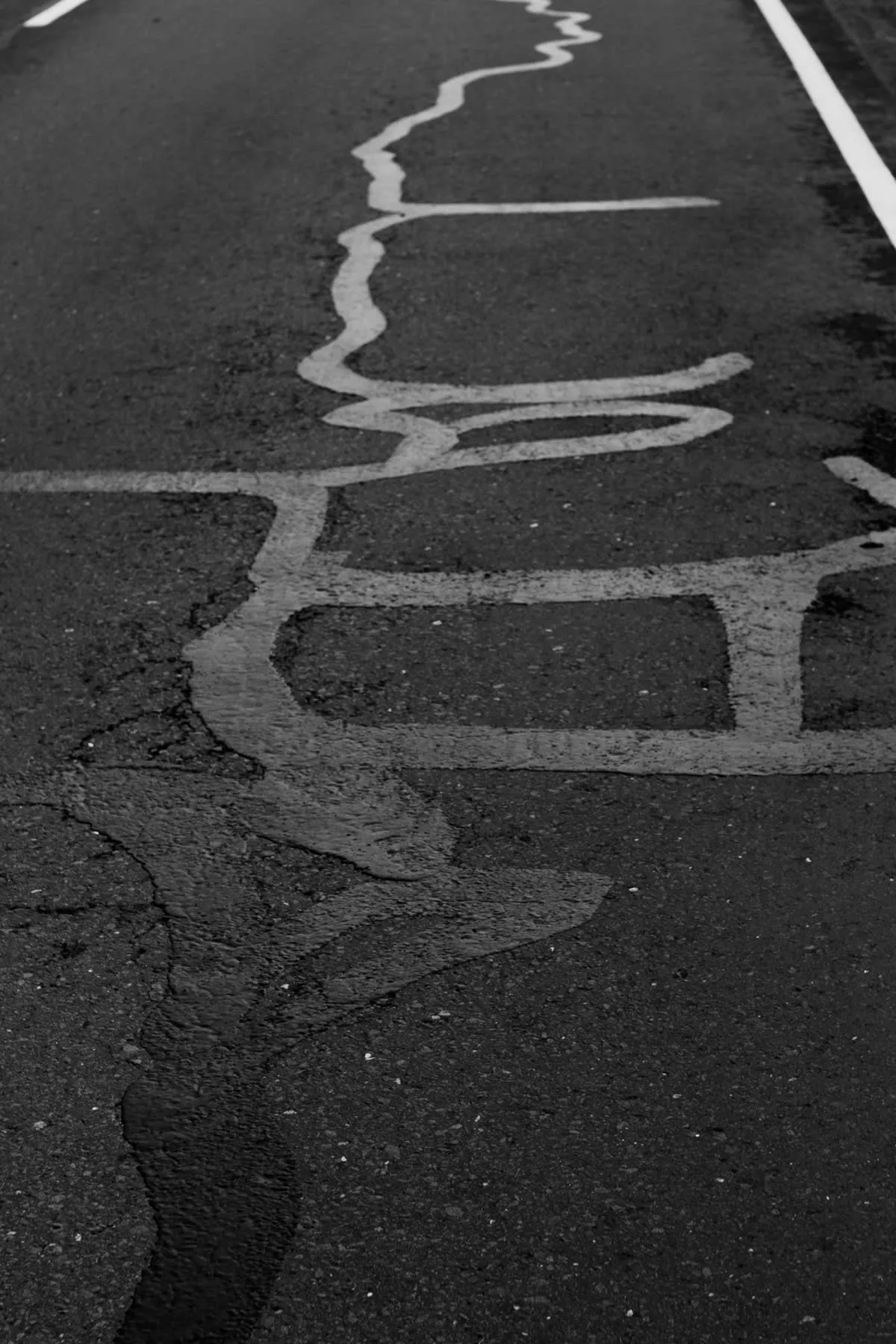
Asphalt patches on a worn road, the kind of repair that can erase a defect after a California crash
Patches can erase the condition that existed on the day of the crash. Photograph the original surface first.
Capture these views when you can:
- A wide shot of the street name, cross street, mile marker, or nearby landmark.
- The defect itself, including edges, exposed aggregate, and any fresh or old patch.
- Skid marks, debris, vehicle damage, and the resting point of a bicycle or motorcycle.
- Signs, cones, paint, lighting, and sight lines that were missing or blocked.
- Weather, standing water, and the time of day, which change how a flaw looks.
Keep the original files. Do not crop away the date, location, or surrounding context. If a passenger or witness has images, ask for copies the same day. A phone screenshot of a social post is weaker than the original camera file.
If you cannot return safely, do not stand in a live lane. A passenger, a family member, or counsel can arrange a later inspection. Say so in your notes, and record the date you first saw the condition and the date you returned.
Measure Depth, Width, and the Approach
A photo without a scale can understate a hazard. Measure depth at the deepest point and at the edge a tire or foot would cross. Measure width and length. Note whether the drop is sharp or sloped. Record the distance from the lane line, the curb, or the crosswalk.
Write the numbers in a note with the date, time, and who held the tape. A simple list is enough:
- Identify the spot with a street address, intersection, direction of travel, and lane.
- Measure depth, width, and length, and say which tool you used.
- Measure how far the defect sits from the path a careful driver, rider, or walker would use.
- Note lighting, standing water, loose gravel, and any warning that was present or absent.
- Save the note with the photos so the numbers and images stay tied together.
Do not guess. If you could not measure because traffic made it unsafe, say that. An honest gap is better than a number you cannot explain later. Government Code section 830.2 also recognizes that some conditions are minor or trivial. Measurements help separate a substantial risk from a small surface flaw.
Collect Reports That Tie the Defect to the Crash
The collision report is a starting point, not the whole file. Ask for the traffic collision report and read the narrative, the diagram, and each party's statement. Our guide on how to read a police report explains the codes and the places where an early opinion can be incomplete. If the report never mentions the pavement, your photos and measurements fill that gap.
Also gather the 911 call time, tow records, and the first medical record. Those items show when the injury happened and that you sought care. Vehicle damage photos matter when a wheel, rim, fork, or undercarriage struck the defect. A motorcycle or bicycle case may need the resting position of the bike as well as the rider.
On a state highway, Caltrans maintains the route and accepts customer service requests through its official maintenance program. A city street or county road is usually a different owner. The report should name the road, the direction, and the nearest cross street so the right agency can be identified. Do not assume the first agency you call controls that block.
Witness names and phone numbers belong in the same folder. A driver behind you may have seen the hole before you reached it. That statement can matter more than a later argument about what a careful person would have noticed.
Notice and Repair Records Can Change the Claim
For a public entity, notice is often the hard issue. Under Government Code section 835.2, actual notice means the entity knew the condition existed and knew or should have known it was dangerous. Constructive notice means the condition was so obvious, and had existed long enough, that a reasonable inspection should have found it. The statute also looks at whether the entity kept a reasonable inspection system and used it with due care.
Ask for records that show earlier knowledge or a missed chance to find the flaw:
- Prior complaints about the same block, ramp, or shoulder.
- Work orders, inspection logs, and citizen service requests.
- Photos of an old patch, paint, or cone that show the condition was not new.
- The date of any repair after your crash, which can confirm the spot was later treated as a problem.
A repair after the crash does not by itself prove earlier notice. It does show why same-day images matter. Once the hole is filled, the before condition has to come from your file and from the agency's own records.
Deadlines are separate from the evidence list, and they are short. Government Code section 911.2 generally requires a claim for injury to a person to be presented within six months after the cause of action accrues. Code of Civil Procedure section 335.1 generally allows two years for an injury action against a private party. Those are statutory starting points, not a calendar for your case. A late government claim can be lost even when the photos are strong. Read the dangerous road conditions overview for the liability frame, and keep this article focused on preservation.
Evidence to preserve when a roadway defect is part of a California injury claim.
| Proof. | What to capture. | Why it matters. |
|---|---|---|
| Scene photos and video. | Wide view, close view, approach, and any missing warning. | Shows the condition before a patch or rain changes it. |
| Measurements. | Depth, width, length, and distance from the travel path. | Helps show a substantial risk rather than a trivial flaw. |
| Crash reports. | Collision report, diagram, 911 time, and witness names. | Ties the defect to the date, place, and mechanism of injury. |
| Maintenance and complaints. | Prior requests, work orders, and inspection logs. | Speaks to actual or constructive notice under section 835.2. |
| Injury and damage records. | First medical visit, vehicle or bike damage, and lost work notes. | Connects the condition to the harm you are asking a reviewer to consider. |
How This Evidence Fits the Injury Review
Evidence does not replace medical care, and it does not decide fault by itself. California comparative fault rules can reduce recovery when a driver, rider, or walker also contributed to the crash. Speed, a phone, a missed sign, or a lane change may be part of that argument. Your file should include the facts that cut both ways, because an insurer will look for them.
Bring the scene folder to that personal injury page with the first treatment records. DC Law Group builds serious-injury matters around liability, treatment proof, and lasting effect. The firm handles car, truck, motorcycle, rideshare, and pedestrian cases throughout California. If a commercial vehicle or another driver shares fault with the road owner, say so early. Multi-party cases need every source of responsibility identified before records are closed.
A freeway debris crash is a different problem from a hole in the pavement. Loose cargo and a broken surface do not use the same proof. If your crash involved an object in the lane rather than the road itself, read the freeway debris crash guide and keep the two files separate. Riders should also see the motorcycle evidence guide for bike-specific damage and bias issues. The negligence elements that apply across crash types are outlined in establishing negligence after a California accident.
This article is general information about preserving roadway evidence. It is not a prediction of the result in any case. Prior results do not guarantee a similar outcome. Every case is different and must be evaluated on its individual facts and circumstances.
Speak with DC Law Group at (310) 571-8860 before a repair crew removes the condition you need to document.
Frequently Asked Questions
What if the city fills the hole before I can photograph it?
Save any image you already have, including a dash camera clip or a witness photo. Write the date you saw the open defect and the date you found it patched. Then request work orders and earlier complaints for that location. A later repair does not restore the missing view, but it can show the spot was addressed.
Do I need official measurements, or are phone photos enough?
Phone photos help, especially with a ruler or familiar object in the frame. Measurements of depth, width, and length make the size clearer. If traffic makes measuring unsafe, do not enter the lane. Note that limit and keep the images you could take from a safe position.
Who should I ask for road maintenance records?
It depends on who controls the road. Caltrans handles many state highways and takes service requests through its maintenance portal. A city or county usually keeps records for its own streets. The collision report's location details are what you use to ask the correct office.
Does a police report have to mention the roadway defect?
No. Many reports focus on the drivers and only briefly describe the scene. Read the narrative and diagram, then add your photos, measurements, and witness names. If the report omits the pavement, that omission is a reason to preserve your own proof, not a reason to drop the issue.
How fast do I need to act on a public-entity road claim?
Move immediately to preserve the scene, because a patch can happen first. Separately, Government Code section 911.2 generally sets a six-month presentation deadline for a personal-injury claim against a public entity. A private-party injury action generally has a two-year period under Code of Civil Procedure section 335.1. Confirm which deadline applies to your facts.
Call DC Law Group at (310) 571-8860 to talk through a roadway defect and the proof still available.