

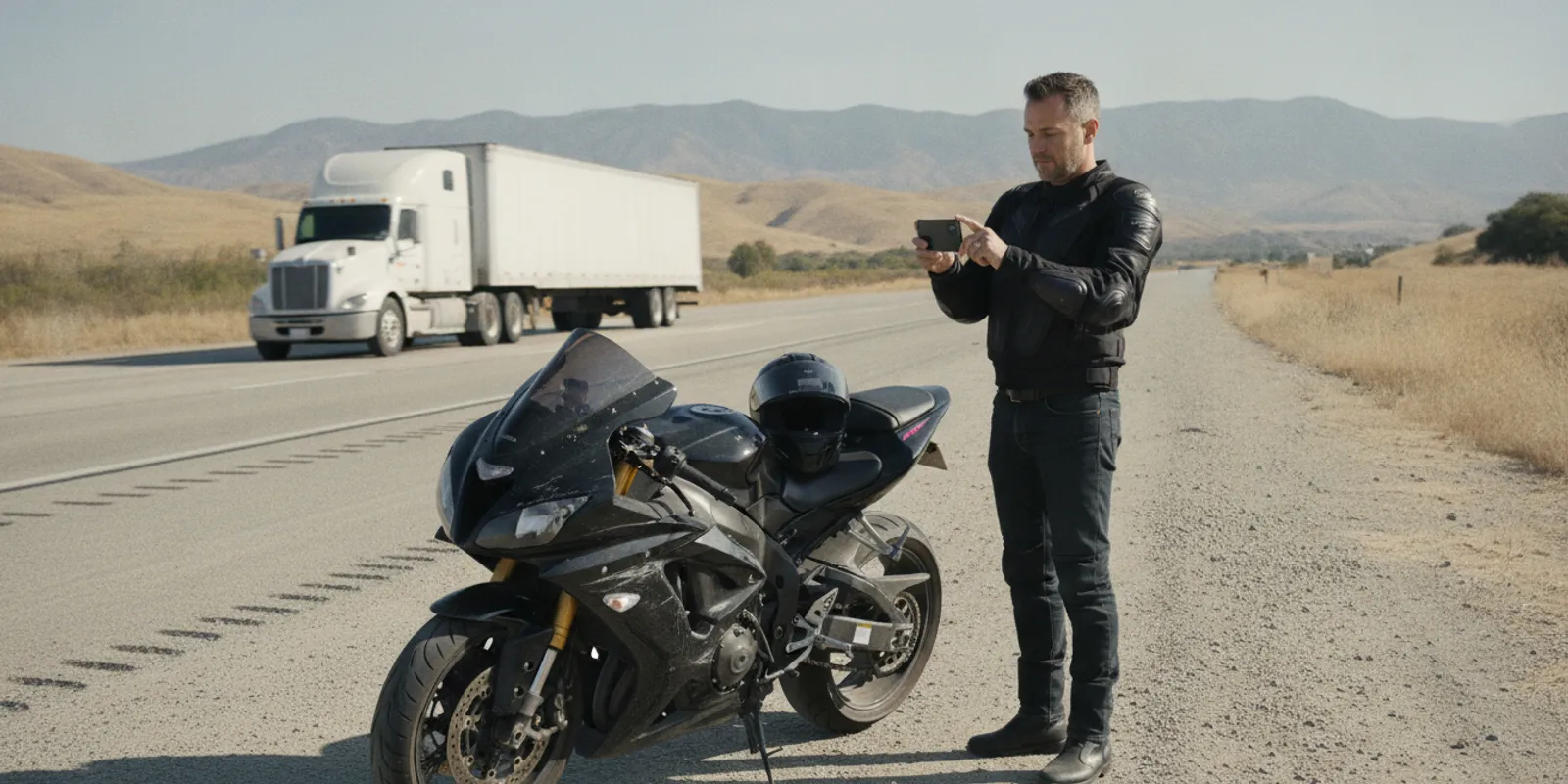
After a motorcycle collision, clear records can help explain what happened, who was involved, and how the injuries affected you. If you are looking for a motorcycle accident lawyer, start by preserving what you can without putting your health or safety at risk. You do not need to solve every question at the scene; consistent, dated details can help later when memories fade.
Contact DC Law Group to discuss your situation
What should you document first after a California motorcycle collision?
Get to a safe place and call 911 when emergency help is needed. Follow instructions from emergency responders. Do not delay urgent medical care to take photographs or gather information. If you are unable to document anything yourself, ask a trusted person to help when it is safe and appropriate.
When you are able, write down a short account of the event in your own words. Record the date, approximate time, location, direction of travel, weather, lighting, traffic conditions, and what you remember immediately before and after impact. Keep observations separate from assumptions. For example, write “the car entered my lane” rather than guessing what the driver saw or intended.
Take a few minutes to note details that may become hard to recall: the sequence of events, where each vehicle was, what you heard, and what changed after the collision. If you are unsure about a detail, say so in your notes rather than filling the gap with a guess.
A useful first account is not a polished statement. It is a time-stamped memory aid. Write down what you saw, heard, and did in the order you remember it. If the sequence is uncertain, label it as uncertain. For example, note that you heard a horn shortly before impact without claiming exactly which vehicle sounded it unless you know. Add a separate list of details you could not see, such as the other driver’s view around a parked vehicle. This keeps an early recollection from becoming more certain than the facts support.
Record where you went after leaving the scene and who helped you. Note whether an ambulance took you for an evaluation, whether a friend drove you, or whether you went home before seeking care. These simple timeline points can help you recall the order of events when you later review records and messages.
Which scene details and photographs may help explain the crash?
Only document the scene if you can do so safely. Never stand in traffic or return to a hazardous area for a picture. Use a phone or ask someone else to photograph the scene from a safe location. Capture broad views first, then closer views that show specific details.
- Road layout: Photograph the intersection, lane markings, signs, traffic signals, entrances, and nearby landmarks.
- Vehicle positions: If vehicles have not been moved and it is safe, record their positions in relation to lane lines, curbs, and one another.
- Road conditions: Document debris, surface damage, standing water, visibility, lighting, or an obstruction that may be relevant.
- Visible damage: Take images of each involved vehicle from several angles. Include close views of damaged areas and wider views that show where the damage is located.
- Protective gear and personal items: Photograph a helmet, jacket, gloves, or other gear if damaged. Keep the items rather than discarding or repairing them before documenting their condition.
- Visible injuries: If appropriate, take dated photographs over time. Images can record visible changes, but they do not replace medical evaluation or treatment records.
For a clear photo sequence, begin with an overview that establishes the location. Then take middle-distance views showing the relationship between vehicles, the road, and nearby features. Finish with close-ups of damage or a particular mark. If a detail is hard to see, take another image from a different angle rather than relying on a digital zoom. Do not cross a lane or move an item to improve the picture.
Keep the original photo and video files when possible. Avoid editing or adding marks to the originals. Back them up somewhere secure and make a note of who took each image and when. A simple photo log can connect an image to a location or event without relying on memory later. If a helper took the photographs, ask them to preserve their original files and note which views they captured.
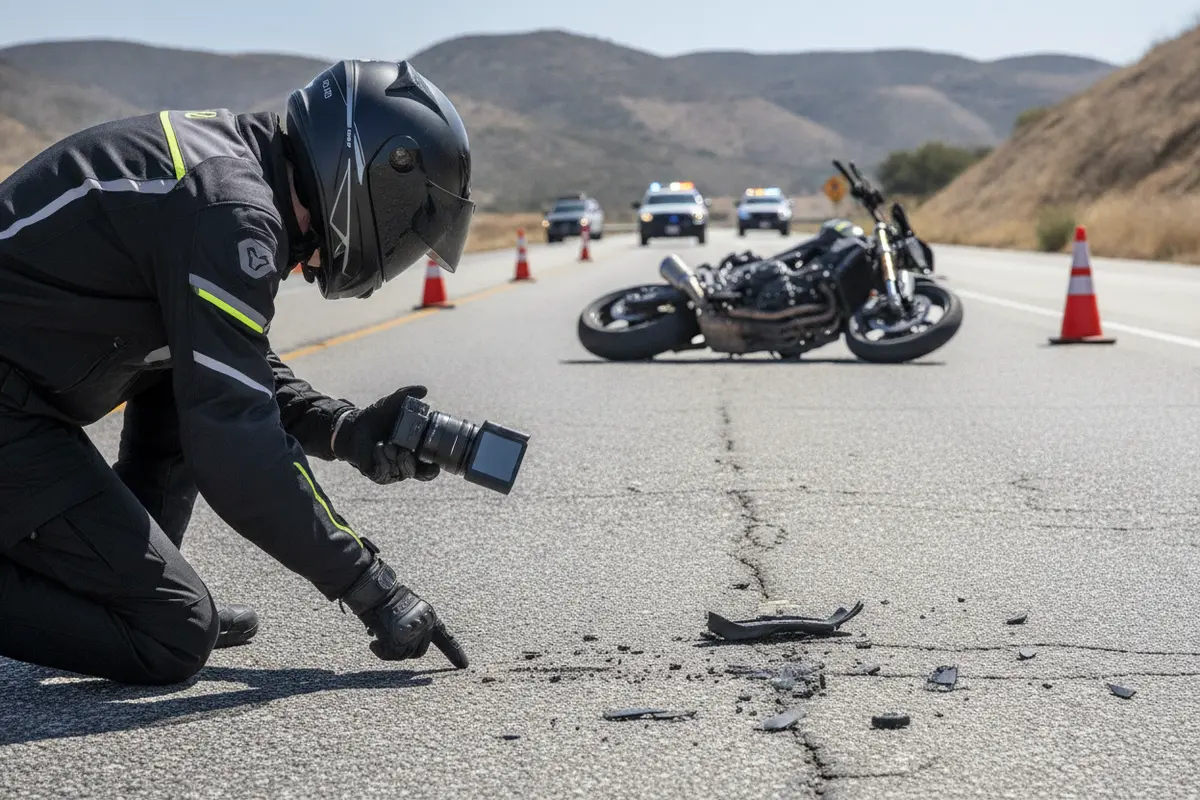
Rider photographs motorcycle damage and roadway evidence from a safe location
Public safety data can provide broader context but cannot determine what caused an individual collision. The California Office of Traffic Safety’s motorcycle safety information reports 583 motorcyclists were killed in California crashes in 2023. That figure describes statewide fatalities, not the circumstances or responsibility in any particular case.
Do not assume that a single photograph will answer every question. A wide scene view may show the roadway but not the condition of a helmet; a close image may show a damaged part but not where it was located. Pair images with a short note such as “northbound view taken from the sidewalk at about 4:30 p.m.” Keep the note factual and identify the photographer. If you cannot determine the direction or time precisely, describe it as approximate.
What information should you exchange and record?
When it is safe, gather the names and contact details of the people involved, driver’s license and vehicle information, insurance details, and license plate numbers. Record the make, model, and color of each vehicle. Ask witnesses for their names and a way to contact them; do not pressure anyone to provide a particular account.
Write down the responding agency and any incident or report number you are given. Note the names or identifying details of responders if available. Do not assume that a report contains every fact or that it will be ready immediately. You can also review this guide on how to read a California accident report when you obtain a copy.
A practical exchange checklist can prevent small details from being lost. Record who was driving each vehicle, who owned it if that person is different, and where each person can be contacted. Note the insurer and policy information shown to you, but do not photograph someone’s documents without permission. If a person leaves before you can collect details, write down the vehicle description and plate information you observed and share it with responding officers.
A report is one record among many. Read it for names, dates, vehicle details, the general location, and any listed witnesses. If you find a detail that appears incomplete or different from your recollection, preserve the report and make a separate factual note of the difference. Do not alter the report or treat an omission as proof that an event did not happen.
Avoid arguing about responsibility at the scene. Be accurate and courteous, and do not speculate when you do not know an answer. Keep copies of documents you receive. If someone asks you to provide a recorded statement or sign a document, you may want to understand what it is and how it may be used before responding.
How can you preserve witness and video evidence?
Witnesses may leave before you have a chance to speak with them. If you can, record their names and contact information soon after the incident. Make a brief note of where each person was and what they said they observed. Avoid coaching a witness or asking them to adopt your interpretation.
When you make a note about a witness, distinguish what the person actually said from your summary. A neutral entry might state, “Witness near the bus stop said they saw the car turn,” followed by the witness’s contact details and the approximate time of the conversation. Do not ask a witness to repeat a statement until it matches your memory. If the person does not want to speak, respect that choice.
Nearby homes, businesses, vehicles, or public locations may have cameras. Note the location of cameras you can see and the direction they face. Some recordings are routinely overwritten, so prompt identification matters. Do not enter private property or attempt to obtain footage in a way that creates a safety or privacy concern. An attorney or investigator can make an appropriate request where warranted.
Make a lead list with the address or general location, the camera’s visible direction, and the date and approximate time range that may matter. For a vehicle camera, record the vehicle description and any identifying information you can safely observe. A lead is not the same as secured footage, so keep track of whether anyone has confirmed that a recording exists or has been preserved.
Preserve electronic material that may show the events leading up to the collision. This might include messages about the trip, navigation history, photographs, or a helmet camera recording. Save originals and note how you obtained each item. Do not post a detailed account of the incident or your recovery publicly; online posts can be misunderstood when separated from their context.
If a recording is on a device that may overwrite older files, follow the manufacturer’s instructions to save the original safely. Avoid trimming or adding captions to the only copy. Make a duplicate for ordinary viewing, keep the original untouched, and record who handled the device or transferred the file. For messages, preserve the surrounding conversation and dates rather than saving a cropped line that removes context.
Request an appointment to discuss the evidence you have
What medical and recovery records should you keep?
Seek medical evaluation promptly, even if symptoms seem manageable at first. Tell the provider what happened and describe your symptoms in plain, specific terms. Follow the care plan given to you, ask questions when instructions are unclear, and keep copies of visit summaries, test results, prescriptions, and referral information.
When describing symptoms, include where you feel them, when they began, what makes them better or worse, and how they affect routine activities. Tell a medical professional about new or changing symptoms. A personal record can help you remember what to discuss, but it is not a substitute for professional evaluation or advice.
Consider keeping a dated recovery journal. Record pain or other symptoms, sleep disruption, mobility limits, missed work, appointments, and activities you cannot do as usual. Keep entries factual and brief. This record can help you describe changes over time, but it should not replace medical records or a provider’s assessment.
For example, an entry might state: “Tuesday: attended follow-up appointment; shoulder discomfort increased when reaching overhead; did not carry groceries.” Avoid guessing about a diagnosis or writing only conclusions. If you have a better day, record that too. A balanced record helps show the course of recovery rather than only the hardest moments.
Save work schedules, attendance records, and communications about time missed or modified duties. Keep receipts and documents related to treatment or travel for appointments. Store these records in one folder, with a backup. Before sending original records or items to anyone, keep a copy and note the date and recipient.
Keep paperwork organized by date and type. A folder for appointment summaries, a folder for test results, and a simple list of appointments can make it easier to locate a specific record. Save referral instructions and notes about scheduled follow-ups. If care changes, retain the written instructions and note the reason if it is clear to you; do not fill in a medical explanation on your own.
California’s SafeTREC at UC Berkeley published a motorcycle safety facts resource reporting 565 motorcyclist fatalities in the state in 2021. The SafeTREC motorcycle safety facts describe statewide safety information; they do not establish fault or predict the outcome of an individual injury claim.
How should you organize the evidence?
A simple timeline and evidence folder can make a complicated event easier to review. Use one folder for original files and another for working copies or notes. Name digital files with the date and a short description, such as “2026-10-19 intersection overview.” Keep a written index so you can find items quickly.
| Evidence category | Examples to preserve | Helpful recordkeeping step |
|---|---|---|
| Scene and vehicles | Road layout, vehicle positions, damage, debris, protective gear | Keep original images and note the date, photographer, and location. |
| People and official records | Witness contacts, driver and insurance details, report number | Write down who provided each item and when you received it. |
| Medical care | Visit summaries, test results, care instructions, prescriptions | Arrange records by date and keep copies of original documents. |
| Recovery and work | Dated symptom notes, work absences, modified duties, appointment travel | Use brief factual entries and retain supporting documents. |
| Digital and video material | Messages, camera recordings, navigation or trip information | Preserve original files and record where and how they were obtained. |
Make a separate note of unanswered questions, such as a missing witness contact or a camera that may have recorded the scene. A clear list helps you distinguish confirmed evidence from leads that still need checking. Add a date beside each follow-up attempt and write down whether you reached anyone. This reduces repeated calls and shows what remains unresolved.
One workable folder system is to label sections “scene,” “people,” “medical,” “work and daily life,” and “digital.” Keep a short index at the front with each item’s date, description, and file name. Use copies when sharing information, and store originals in a stable location. If a file is too large to email, note the storage location and access details rather than compressing or altering the only version.
Use a timeline to connect different types of records. Start with the collision date, then add the first medical visit, later evaluations, communications with insurers, and key evidence requests. Mark the source for each entry, such as a dated note, a report, or an appointment summary. If two records show different times, preserve both and flag the discrepancy instead of choosing one without support.
What evidence gaps can make a claim harder to evaluate?
Missing details do not automatically decide a claim, and a person who was injured should not blame themselves for evidence they could not safely collect. Still, several common gaps can make it more difficult to reconstruct events:
- Waiting too long to write down an account, so small details are harder to recall.
- Keeping only close-up images without wider views that show the scene.
- Discarding damaged gear or repairing a motorcycle before its condition is recorded.
- Failing to save original files or losing track of who took a photograph.
- Not recording witness details or the location of possible video sources.
- Leaving long gaps in medical documentation without noting why care changed.
- Posting comments or images online that do not show the full context of an injury or activity.
Do not alter records to make them appear more complete. If information is missing, explain what you know and what you do not know. If an item has already been repaired, deleted, or misplaced, make a truthful note of that fact and when it happened.
There may be valid reasons why documentation is limited. Emergency treatment, pain, medication, or the need to leave a dangerous area can make photographs or witness details impossible to collect. Note the circumstances as accurately as you can later. Do not put yourself at risk to fill a gap, and do not ask someone else to trespass or interfere with another person’s property.
A missing document is not a reason to recreate it from memory and present it as an original. If you write a later recollection, label the date you wrote it and explain that it is based on memory. If a device or item was lost, record when you last had it and what you recall about its condition. Clear labels help others understand the difference between a contemporaneous record and a later note.
How can a motorcycle accident lawyer help review evidence?
A motorcycle accident lawyer can help identify questions that may matter to a claim, organize available records, and determine whether additional investigation is appropriate. Depending on the facts, this can include reviewing photographs, medical documentation, witness information, the collision report, or available video. The process is specific to the incident; no checklist can guarantee a particular result.
A lawyer can also explain communications from insurers and help you understand what information is being requested. If responsibility is disputed, the investigation may need to consider the accounts of everyone involved and the available physical or digital evidence. For background on the firm’s steps to take after a motorcycle collision and its guide to choosing a motorcycle accident lawyer, read those related resources.
During a review, organize the materials you already have and identify what is still missing. A clear list can include the collision report, dated photographs, witness contacts, medical records, and any known video leads. You can also flag questions that need context, such as a difference between your notes and a report. The goal is to make the available information easier to assess, not to force a conclusion from an incomplete record.
DC Law Group represents injured people in California and describes itself as a team of personal injury attorneys. A consultation can help you discuss the specific facts, available records, and questions about next steps. You can also review the firm’s motor vehicle injury practice information or request an appointment.
For an evidence-focused review, contact DC Law Group and bring the records you have. You do not need to wait until every document is collected to ask what may be useful.
Talk with DC Law Group about your motorcycle collision
Contact DC Law Group to discuss your questions and available records
Frequently asked questions about motorcycle collision evidence
What if I could not take pictures at the scene?
Your safety and medical needs come first. You can still write down what you remember, save relevant messages and documents, and note whether other people or nearby cameras may have recorded the event. Do not return to a dangerous location to gather evidence.
Should I keep my damaged helmet and riding gear?
If it is safe to do so, preserve damaged gear and photograph it before cleaning or repairing it. Store it securely and make a note of its condition. If an item must be replaced for safety, document it first if possible and retain information about what happened to it.
What if my symptoms appear after the collision?
Seek medical guidance when symptoms arise and explain when you first noticed them. Keep dated notes and records of the evaluation and care you receive. Do not rely on a personal journal instead of professional medical advice.
Do I need a complete evidence file before contacting a lawyer?
No. You can ask for a consultation with the information currently available. A lawyer can help identify possible records or unanswered questions, while the specific approach depends on the facts of the collision.
Contact DC Law Group to discuss your motorcycle collision
Keep your notes and records together, and seek qualified help when you need guidance about your specific circumstances.