

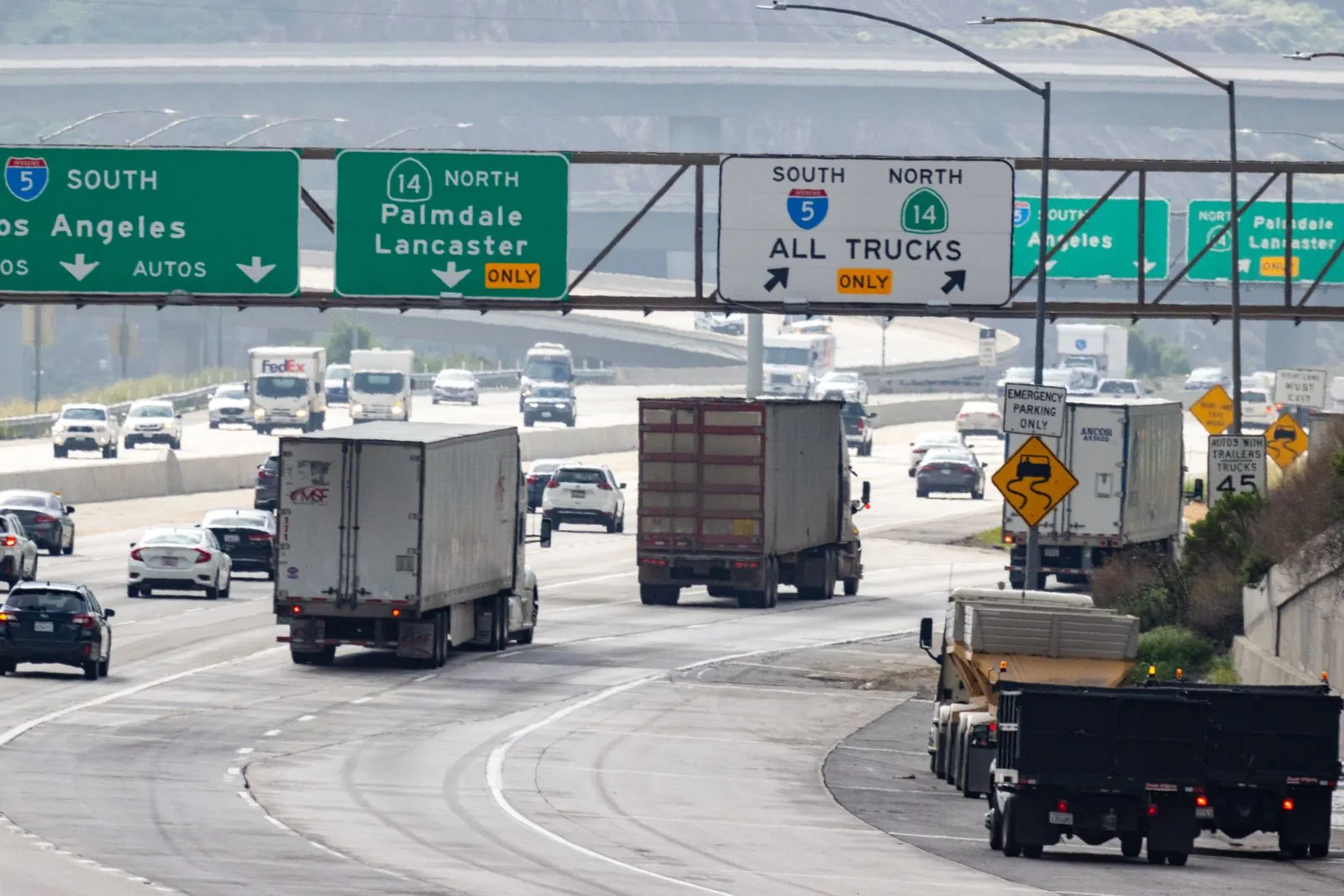
A crash with a commercial truck on Highway 99 can leave someone hurt, out of work, and unsure who has to answer for the damage. The claim may involve the driver, the motor carrier, a maintenance company, a shipper, a broker, and more than one insurer. A Bakersfield truck accident lawyer can help sort out which records matter and which legal theories fit the facts.
This guide stays on the Bakersfield and Highway 99 setting. It explains why a truck investigation is broader than a two-car crash, which records may disappear, how California and federal rules can affect responsibility, and how a serious injury can shape damages. Every collision is different. This page is general information, not advice about a specific case.
How does a Bakersfield truck accident lawyer build a Highway 99 claim?
A Bakersfield truck claim looks past the two people behind the wheel. The crash may involve commercial safety rules, company files, several businesses, and data stored in the truck or at the carrier's office. The work is to connect the collision to fatigue, maintenance, training, cargo, dispatch choices, or an unsafe company practice when the facts support that link.
Highway 99 carries local traffic, farm vehicles, delivery fleets, and long-haul trucks through the Central Valley. A collision can happen near a busy interchange, a work zone, a merge, or a crowded city stretch. The spot on the map does not decide fault. It can still point the investigation toward sight lines, traffic control, the road surface, lane changes, and how each vehicle moved.
| Ordinary car collision | Commercial-truck collision |
|---|---|
| Often centers on the drivers and their personal insurers. | May involve the driver, motor carrier, owner, shop, broker, shipper, and several insurers. |
| Photos, witnesses, vehicle damage, and the police report may be the main evidence. | Logs, telematics, video, inspections, driver files, dispatch notes, and cargo papers may also matter. |
| Repair and a routine insurance review may start quickly. | The truck, trailer, electronic data, and business records may need a fast preservation request. |
| Treatment and property damage are the usual focus. | Serious injuries, future care, lost earning ability, and cargo weight can make damages harder to measure. |
DC Law Group's California truck accident practice page covers commercial-vehicle claims statewide. This guide stays local. It focuses on a Bakersfield claim and the evidence that can show how a Highway 99 collision happened.
What truck accident evidence should be preserved after a Highway 99 collision?
Useful truck evidence can sit in several places, and some of it does not last. A preservation letter should name the crash, the vehicles, the date, the location, and the kinds of records to keep. It can go to the driver, carrier, owner, repair shop, broker, shipper, and insurers. The ask is simple. Do not delete, overwrite, sell, or throw away physical evidence or electronic files.
- Electronic logging device records: ELD data may show duty status, driving time, rest periods, edits, and related events.
- Telematics and event data: Some systems store location, speed, braking, hard acceleration, fault codes, and other vehicle activity.
- Driver records: Qualification files, training, medical cards, prior crashes, citations, and drug or alcohol tests may matter.
- Inspection and maintenance files: Daily reports, repair bills, brake and tire records, and roadside inspections can show a mechanical issue.
- Video and messages: Dashcam footage, nearby cameras, dispatch texts, route assignments, and phone records may show the minutes before impact.
- Cargo and delivery records: Bills of lading, weight tickets, securement notes, and delivery deadlines can help review loading and scheduling.
The DC Law Group guide to truck black-box data explains one piece of that picture. In a Bakersfield claim, that data should sit next to the police report, scene photos, witness accounts, medical records, vehicle damage, and the carrier's own files.
How do electronic logs and driver records affect a truck claim?
Electronic logs and driver files can test whether the carrier's story of the trip matches the other evidence. Federal hours-of-service rules limit how long many property-carrying drivers may drive and stay on duty. Most covered carriers must use an electronic logging device to record duty status, subject to the exemptions that fit the operation.
FMCSA's public summary of the property-carrying rules states several limits that lawyers compare with trip records. A driver may drive a maximum of 11 hours after 10 consecutive hours off duty. The driver may not drive beyond the 14th consecutive hour after coming on duty, and off-duty time does not extend that 14-hour window. A 30-minute non-driving break is required after 8 cumulative hours of driving. A driver also may not drive after 60 hours on duty in 7 consecutive days, or 70 hours in 8 consecutive days. A restart of at least 34 consecutive hours off duty can reset that weekly count.
Those limits live in the federal hours-of-service rules in 49 CFR Part 395. A lawyer or investigator may compare the logs with fuel receipts, toll records, bills of lading, dispatch messages, GPS data, and witness timelines. A mismatch can be important. It does not, by itself, prove that a violation caused the crash.
Driver qualification files raise a different question. The federal driver qualification rules in 49 CFR Part 391 cover who may drive and how a carrier looks into a driver's history. If the facts support it, a claim may ask whether the carrier hired, trained, supervised, or kept a driver it should not have. Asking for the file is not the same as proving negligence. It is a way to see whether the file deserves a closer look.
California traffic rules can apply at the same time. California Vehicle Code section 22350 says a driver must not go faster than is reasonable or prudent for the conditions, and must not go so fast as to endanger people or property. The question is not only whether the truck was moving quickly. It is whether the speed was safe for traffic, visibility, weather, the road, and the moment of the crash.
Who may be responsible for a Bakersfield commercial-truck collision?
Responsibility depends on the evidence, the contracts, who owned the truck, and how each business controlled the trip. The driver may be responsible for speed, distraction, an unsafe lane change, a poor lookout, or fatigue. A carrier may face separate claims about hiring, training, supervision, dispatch, maintenance, or a company rule that helped cause the crash.
- Driver: The review may cover attention, speed, lane position, impairment, fatigue, training, and safety-rule compliance.
- Motor carrier or employer: Control, policies, supervision, scheduling, and what the company did after the crash may matter.
- Owner or maintenance provider: Brakes, tires, steering, lights, coupling gear, or other parts may need an inspection and a records review.
- Shipper, broker, or loader: Cargo weight, securement, delivery pressure, and control over the trip may matter in a given claim.
California Vehicle Code section 17150 makes an owner liable, within the statute's limits, for injury or damage caused by a negligent or wrongful act of a person using the vehicle with permission. That rule does not replace a full look at the employer, the carrier, the repair shop, or other theories. The goal is to name the right defendants, not to assume the driver is the only one who can be sued.
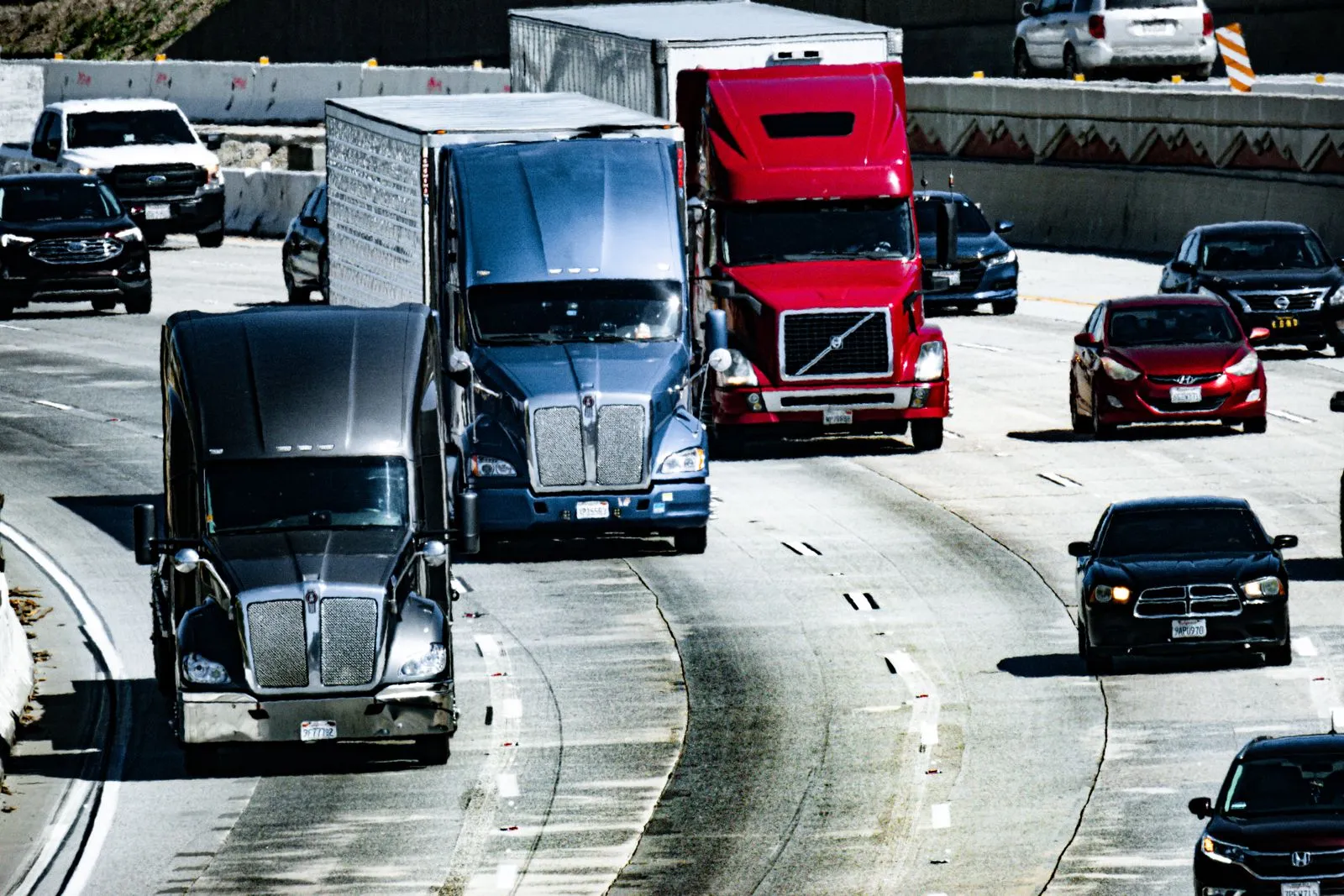
Semi-trucks and passenger cars sharing a divided California freeway
Trucks and passenger vehicles share divided California freeways. Carrier and driver records can matter after a serious collision.
Maintenance has its own federal framework. 49 CFR Part 396 covers inspection, repair, and maintenance of commercial motor vehicles. A post-crash exam of brakes, tires, lights, and coupling equipment can be paired with the carrier's inspection history. A defect does not prove the defect caused the crash. It does give the claim a concrete fact to test.
How can severe injuries affect a truck accident damages claim?
Truck crashes can cause severe injuries because of the gap in size, weight, and impact force. A damages review should follow the person's real medical course and the expected effect on work, daily tasks, relationships, and long-term independence. The right number is specific to the person and should rest on medical and financial proof.
Depending on the injury, a claim may include emergency care, a hospital stay, surgery, rehab, medication, equipment, home changes, and future treatment. It may also include lost income, reduced earning ability, lasting impairment, scarring, pain, emotional distress, and the loss of ordinary activities. Some family members have separate rights. A fatal crash uses a different legal analysis and should not be folded into a routine injury claim.
Medical records should describe symptoms and limits in plain terms. It also helps to keep a treatment calendar, work records, receipts, photos of visible injuries, and notes about what daily life no longer allows. Those papers do not replace a doctor's opinion. They do keep a clear timeline of the injury and what it changed.
Where is a Bakersfield truck claim filed, and how long do you have?
Many Bakersfield truck lawsuits are filed in Kern County Superior Court when the crash, the injury, or a defendant has a tie to the county. The right court still depends on the defendants, the contracts, and where the events happened. A federal filing is possible in some cases, but it is not the default just because a truck crossed state lines. A lawyer should check venue before anyone assumes the local courthouse is the only option.
Deadlines are a separate problem, and they can be short. California Code of Civil Procedure section 335.1 generally gives two years to sue for injury or death caused by the wrongful act or neglect of another. A claim against a public entity can have a much shorter notice deadline. Claims involving a minor, a government vehicle, or a defendant who is hard to identify can change the math. Do not wait for the truck's insurer to finish its review before asking about the deadline.
Highway 99 crashes in and around Bakersfield can also raise a practical records issue. The California Highway Patrol, Bakersfield Police, or another agency may hold the traffic report, photos, and measurements. Those files, plus nearby business cameras and the truck's own data, are easier to collect early than months later.
What should you do after a truck crash on Highway 99?
After a Bakersfield truck collision, safety and medical care come first. Once those needs are handled, take reasonable steps to protect evidence and avoid guessing about fault. A prompt legal review can show which records and which companies need attention right away.
- Call 911 when help is needed, and cooperate with the officers on scene.
- Get a medical evaluation, even if the pain starts later or seems small at first.
- Photograph the road, signs, vehicle positions, injuries, and damage when it is safe.
- Get names and numbers for witnesses, the driver, the carrier, and the responding agency.
- Keep medical, work, insurance, vehicle, and out-of-pocket records in one place.
- Do not repair, sell, or scrap a vehicle or part before you get preservation advice.
- Send insurer calls to your lawyer before a recorded statement or a signed release.
- Ask about a preservation letter for logs, telematics, video, driver files, maintenance records, and cargo papers.
You can contact DC Law Group or request a time through the firm's consultation page. DC Law Group handles California injury claims on a contingency basis. You do not pay attorney fees unless the firm recovers compensation for you.
Before truck evidence is overwritten or a release is signed, call DC Law Group at (310) 571-8860.
Frequently asked questions about Bakersfield truck accident claims
How long do I have to file a California truck accident claim?
California deadlines depend on the claim, the defendant, and the injury. Code of Civil Procedure section 335.1 generally allows two years for injury caused by a wrongful act or neglect, but shorter deadlines and exceptions can apply. A claim against a public agency may require a notice much sooner. Ask a lawyer to check the deadline before evidence is gone.
Can I still have a claim if the truck driver was not cited?
Yes. A traffic citation is not the only way to prove a civil claim. The investigation can use photos, witnesses, vehicle data, medical records, scene evidence, and maintenance files. No citation does not mean no one was negligent. A citation also does not decide every issue in a civil case.
What is an ELD in a truck accident case?
An electronic logging device records a commercial driver's duty status and hours of service when the federal rules require one. ELD evidence can help with fatigue and timeline questions. It should be read with other records, because the device does not show every cause of a collision.
Can a trucking company be responsible for a driver's conduct?
A trucking company may be responsible under more than one theory. The answer can turn on its tie to the driver, its control of the trip, and proof about hiring, training, supervision, maintenance, or dispatch. The driver and the carrier are not treated the same in every case. Naming the right parties takes a fact-specific review.
What compensation may be available after a serious truck crash?
Depending on the facts, damages may include medical care, future treatment, lost income, reduced earning ability, property damage, pain, emotional distress, scarring, and the loss of ordinary life. A fatal collision may support a wrongful-death claim with different rules. The evidence and the law decide which damages can be pursued. This page does not estimate case value.
Sources for California and federal truck-safety rules
- FMCSA, Summary of Hours of Service Regulations.
- Electronic Code of Federal Regulations, 49 CFR Part 395, Hours of Service of Drivers.
- Electronic Code of Federal Regulations, 49 CFR Part 391, Qualifications of Drivers.
- Electronic Code of Federal Regulations, 49 CFR Part 396, Inspection, Repair, and Maintenance.
- California Vehicle Code section 17150.
- California Vehicle Code section 22350.
- California Code of Civil Procedure section 335.1.