

After a collision, it can be difficult to know what to do next or whether legal representation would help. A California car accident lawyer at DC Law Group can review the collision before that decision. Understanding what a car accident lawyer does can make that decision clearer. Counsel may investigate how the crash happened, identify potentially responsible parties, document injury-related losses, communicate with insurers, and prepare a claim for negotiation or litigation. The precise work depends on the evidence, injuries, and issues in dispute.
Contact DC Law Group to discuss your accident
What does a car accident lawyer do first?
A lawyer typically begins by learning the facts, the injuries, and the status of any insurance claim. The initial review may cover the date and location, vehicles involved, police records, medical care, and communications with insurers. Counsel should explain what information is needed and what remains uncertain, rather than treat an early account as a final finding about fault.
Prepare a short timeline before the conversation. Note when the collision occurred, when symptoms began, where care was received, and when you spoke with an insurer. Mark details you are unsure about instead of filling gaps with guesses. If another person witnessed the event, preserve their name and contact information, but do not pressure them to adopt a particular account.
Early legal work can include identifying deadlines and advising on evidence preservation. Procedures can differ where a government entity or commercial vehicle may be involved. A lawyer can explain which rules may apply and what should be checked promptly. Avoid assuming that a deadline is distant simply because an insurance discussion is underway; claim procedures and court deadlines are not necessarily the same.
How does a lawyer investigate fault?
Establishing responsibility means developing evidence, not simply repeating one driver's version. Counsel may obtain available collision reports, photographs, witness details, vehicle damage records, and relevant communications. Depending on the circumstances, an investigation may also consider roadway conditions, traffic controls, vehicle inspection findings, or records held by another party.
The investigation asks practical questions: Where was each vehicle before impact? What movements are supported by physical evidence? Did a signal, lane marking, or obstruction affect visibility? Do photographs show damage consistent with a party's description? Are there independent witnesses or available recordings? Each answer may strengthen, weaken, or qualify a particular account.
- Scene and vehicle evidence: photographs, damage, road layout, and available video.
- People with knowledge: witness names and contact details, plus statements already made.
- Official records: collision reports and other records that may be available through proper procedures.
- Technical evidence: when warranted, inspection or specialist analysis of vehicles and crash dynamics.
California applies comparative fault principles, so responsibility may be disputed or allocated among more than one person. The lawyer should assess evidence that supports and weakens each account. A driver should preserve relevant materials and keep copies of documents received. Do not repair or discard a damaged item if it may be important before getting advice about documenting it.
Not every matter requires every investigative step. The evidence needed depends on the dispute, injuries, and available records. A California car accident lawyer can assess which issues may need further development.
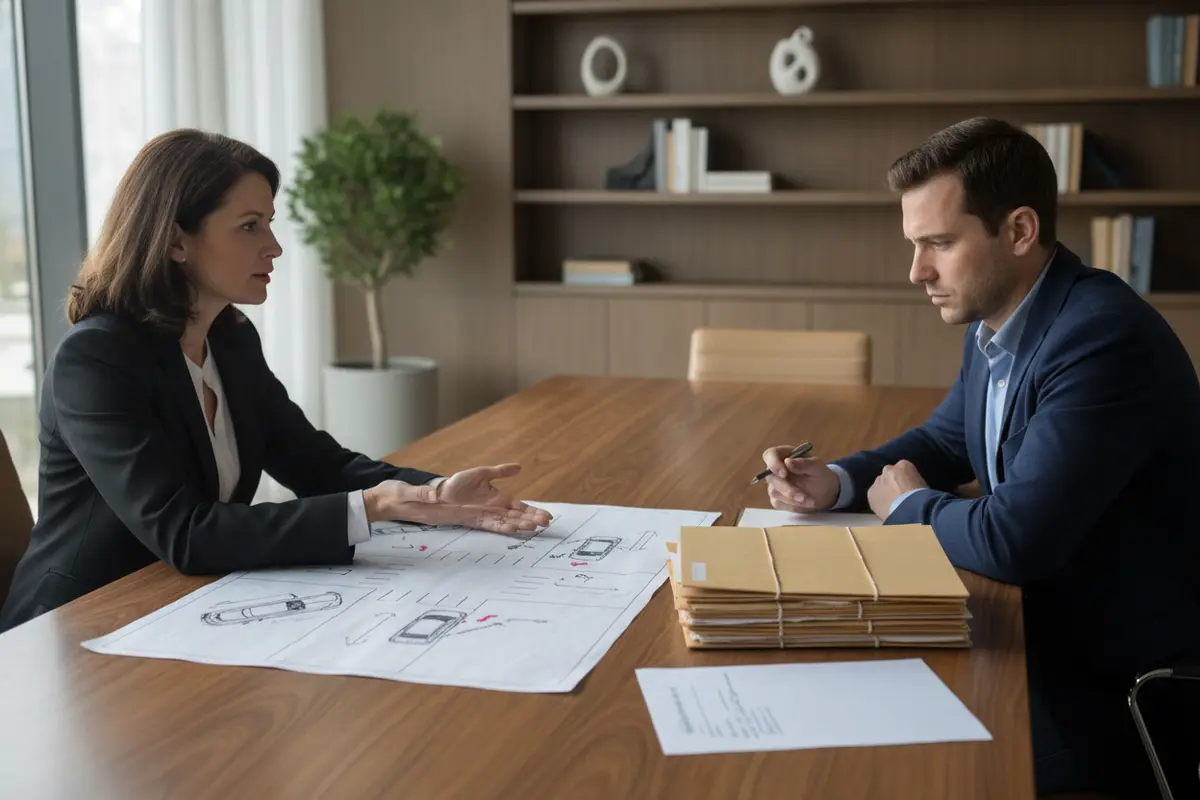
Attorney and client reviewing collision evidence and claim documents
How does a lawyer deal with insurance companies?
Insurers investigate claims and may request statements, records, or other documentation. A lawyer can help organize communications, identify what a request covers, and respond to disputed liability or injury issues. Representation does not mean every request should be ignored. It means a response can be considered in light of the claim and available evidence.
People should be careful about giving an incomplete or speculative account. Describe what you know accurately, and do not guess about speed, distance, or medical prognosis. Keep copies of letters, emails, claim numbers, and call notes. If an insurer proposes a release or requests a recorded statement, seek advice about the document or request before deciding how to proceed.
For example, a request for records may cover a defined period or a broader history. Ask what the request seeks and why it is relevant. Keep a copy of anything you sign or send. If you correct an earlier factual error, be clear about what was mistaken and what information supports the correction. Consistent, accurate communication is more useful than confident speculation.
A lawyer may communicate a settlement position and explain the consequences of resolving a claim. A signed release can affect the ability to pursue additional recovery for the same incident. Before accepting an offer, understand which claims are resolved, what documentation supports the request, and whether future care needs have been evaluated.
How are injuries and losses documented?
A claim needs reliable information about both the collision and its consequences. Counsel may help gather medical records and bills, employment information, receipts, and other documents relevant to the person's losses. Medical decisions belong with treating professionals; legal counsel can explain why consistent records and follow-up matter to documenting a claim.
Keep a simple record of appointments, symptoms, work absences, and daily limitations. Note dates and concrete examples rather than conclusions. Instead of writing only that an activity became difficult, describe what changed, when it happened, and whether it improved. Save discharge instructions and referrals. Tell providers about symptoms and changes, and ask questions when a recommendation is unclear.
Documentation should be accurate and complete. Do not exaggerate, omit relevant history, or alter records. If a prior condition affects the analysis, it may need to be distinguished from a new injury through medical evidence. The lawyer's role is to present available information coherently, not to make medical diagnoses.
Organizing records by date can reveal gaps before a claim is presented. Keep appointment summaries, pharmacy or treatment records, work schedules, and correspondence in separate folders or a clear digital archive. Make a note when a record has been requested but not received. Do not assume that a missing document proves a particular fact; identify the gap so counsel can consider how to address it.
What happens when another party may share responsibility?
Some collisions involve more than two drivers or raise questions about a vehicle owner, employer, or other entity. A lawyer may investigate who controlled the vehicle, whether the driver was acting within work duties, and what insurance policies could apply. These are fact-specific questions. The presence of a company vehicle, for example, does not by itself establish that an employer is legally responsible.
For a commercial truck collision, evidence and potential parties may differ from a passenger-vehicle claim. Records may be held by a carrier or another business, making timely identification and preservation important. Learn more about truck accident representation if a commercial vehicle was involved. In a collision involving a rideshare vehicle, the driver's status and trip circumstances may also matter; the label on the vehicle alone does not resolve coverage or liability.
A lawyer may map out each potential source of evidence and responsibility separately. For instance, one question may concern a driver's conduct, while another concerns who owned or maintained the vehicle. Keeping those questions distinct helps avoid treating a complicated event as if only one person or policy could be relevant.
How does a lawyer prepare a claim for resolution?
Once evidence and injury documentation are developed, counsel can organize the claim. This may include a factual account, support for liability, medical documentation, and an explanation of the impact on the injured person. The lawyer may negotiate with an insurer and evaluate whether a proposal reasonably addresses the evidence and unresolved issues.
A useful claim presentation ties each important assertion to supporting material. A timeline can explain how the event unfolded; photographs or records may corroborate it; medical documentation can describe the treatment and reported symptoms. If facts are disputed, the submission should identify the disagreement rather than conceal it. The client can help by reviewing factual summaries carefully and promptly flagging errors.
Negotiation is not the only possible path. If a dispute cannot be resolved, litigation may be considered, subject to deadlines, evidence, and the client's informed decision. Litigation involves formal procedures such as pleadings, discovery, and court appearances. Counsel should explain the potential steps, responsibilities, and uncertainties involved. A case can require substantial time and participation, and a filed lawsuit does not guarantee a particular outcome.
Every matter is different. No lawyer can guarantee a result. A careful assessment separates established facts from assumptions and identifies what additional information could change the analysis. Clients should receive explanations of significant choices, not just a proposed action without its purpose or possible consequences.
Speak with DC Law Group about your next step
What should you do before speaking with a lawyer?
You do not need a complete file to ask for a legal review. A few practical steps can make an initial conversation more useful:
- Write down the date, location, vehicles, and a brief timeline while details are fresh.
- Preserve photographs, contact information, claim correspondence, and available reports.
- Keep medical and employment documents together, and note which records are missing.
- Make a list of questions, including deadlines, disputed facts, and immediate decisions.
- Be candid about prior injuries, statements already made, and any offer or release received.
For related information about personal injury legal help, review the practice overview. You can also read about what to expect in the car accident lawyer process and how a California claim timeline may unfold.
Preserving evidence does not mean investigating the collision yourself. Avoid confronting another driver or entering a restricted area to obtain records. Save what you already have, write down where additional material may exist, and tell counsel about it. If your vehicle has been moved or repaired, retain photographs and related paperwork if available. These steps help create an inventory without changing or embellishing the evidence.
What can you ask during a consultation?
A consultation is an opportunity to understand the legal issues and decide what to do next. Consider asking:
- What facts or evidence will matter most in evaluating responsibility?
- Are there deadlines or notices that require prompt attention?
- What records should I preserve or request?
- How will you communicate updates and explain significant decisions?
- What options may exist if the insurer disputes fault or injury?
Ask for clear explanations of the representation agreement and how case-related responsibilities are handled. Clarify the scope of representation, how expenses and attorney compensation are addressed in the agreement, and what work is included. Do not assume every firm uses identical terms. Take time to read the agreement and ask questions before deciding.
It is also reasonable to ask who will be the main point of contact, how updates are communicated, and how urgent issues are raised. Ask how the firm will notify you about settlement proposals or significant litigation decisions. The client makes key choices, such as whether to accept a settlement, after receiving advice about the available options.
Consider communication style as well as legal analysis. You should be able to explain concerns, receive clear answers, and understand what documents or actions are expected. If a term in an agreement or legal explanation is unclear, ask for clarification before proceeding. Do not rely on a general online article to resolve a fact-specific legal question.
For a general outline of California negligence law, see California Civil Code section 1714, which addresses responsibility for injuries caused by a person's want of ordinary care. The statute provides legal context; how it applies depends on the evidence and circumstances of a particular collision.
What does a car accident lawyer do at different stages?
The lawyer's tasks change as information arrives. This table is a practical overview, not a promise that every matter follows the same sequence.
| Stage | Common legal work | Useful client contribution |
|---|---|---|
| Initial review | Identify parties, claim status, potential deadlines, and missing facts. | Share a basic timeline, insurance correspondence, and known medical care. |
| Evidence development | Request available records, preserve relevant material, and assess disputed facts. | Keep photographs, witness details, and communications; report new information. |
| Injury documentation | Organize records and connect claimed effects to supporting documentation. | Attend appropriate care and maintain accurate notes on symptoms and limitations. |
| Negotiation | Present the claim, address insurer questions, and evaluate proposals. | Review decisions with counsel and ask what a release resolves. |
| Litigation, if needed | Use formal court procedures, discovery, and hearings or trial preparation. | Provide truthful information, preserve records, and participate in required steps. |
A case may move back and forth between stages. New medical information can change how a claim is documented; new evidence may change the liability assessment. Counsel should explain why a proposed next step matters and what remains uncertain, so the client can make informed decisions rather than treat a general timeline as a guarantee.
How should you compare legal representation options?
Choosing counsel is a decision about the legal work, communication, and fit. Avoid relying on a slogan or a single early estimate. Ask how the lawyer proposes to investigate the central disputed issues, what information is still needed, and how the firm will keep you informed as the matter develops. A clear explanation of uncertainty is more useful than a promise about the result.
The following comparison can help structure questions. It does not rank firms; the right answers depend on the case and the written agreement.
| Topic to clarify | Useful question | What to understand |
|---|---|---|
| Investigation | Which facts are disputed and how might they be checked? | Whether proposed evidence-gathering steps match the issues. |
| Communication | Who will give updates and how can I raise an urgent issue? | How questions and important decisions will be handled. |
| Resolution | What would an offer or release resolve? | Which claims may be affected and what remains uncertain. |
| Representation terms | How are responsibilities and compensation described? | The written agreement's scope and terms before signing. |
A lawyer should be willing to explain the proposed approach in language you understand. You can ask what could change the assessment, what tasks require your participation, and how you will receive copies of important submissions. Those answers can help you judge whether expectations are clear.
Contact DC Law Group to discuss your options
Frequently asked questions
Does a lawyer decide who caused the collision?
No. A lawyer evaluates evidence and applicable law to assess responsibility. Insurers, opposing parties, or a court may dispute that analysis, and the resolution depends on the facts and procedure.
Should I contact a lawyer if I have not finished medical treatment?
You may seek legal information before treatment is complete. Medical care should be guided by qualified providers. When the full effect of an injury is not yet known, do not assume an early resolution accounts for future needs.
Can a lawyer make an insurer accept my account?
No. Counsel can present supporting evidence and challenge an inaccurate position, but cannot compel an insurer to agree merely by making a demand. Disputes may require further investigation or litigation.
What if I may share some responsibility?
Tell the lawyer what happened as accurately as you can. California comparative fault rules may affect how responsibility is evaluated, but the effect depends on the evidence and legal analysis. Do not conclude that you have no claim without advice about the specific facts.
Understanding what a car accident lawyer does can help you decide whether to seek representation, what records to preserve, and which questions to bring to an initial discussion.