

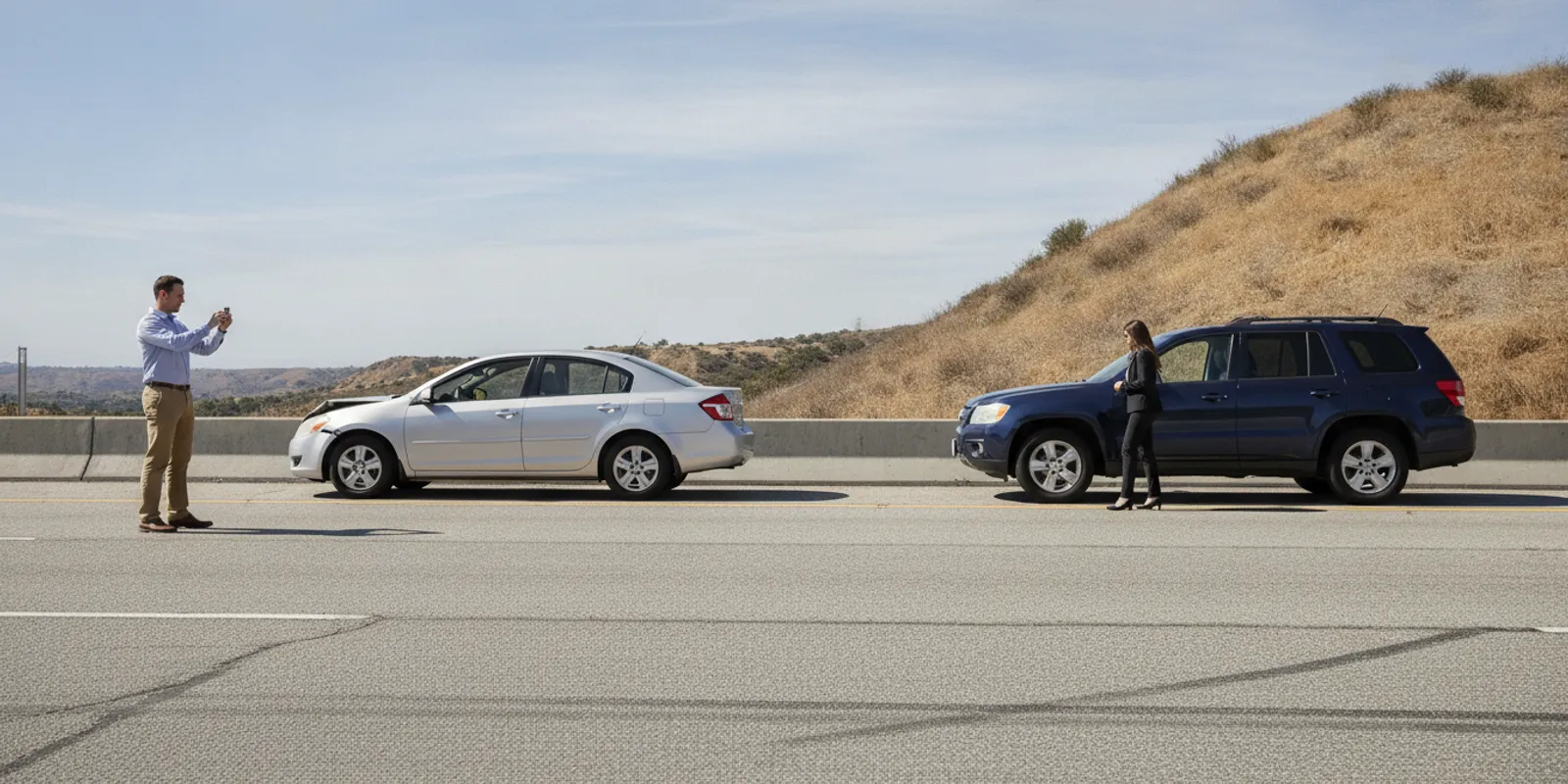
People looking for an Ontario injury lawyer usually want two things at once. They want a real number for how often crashes happen in California, and they want to know what that number means after a collision in Ontario, a city in San Bernardino County. The clearest current statewide figure is not a count of every crash in the state. Caltrans reported 185,972 crashes on the California State Highway System in 2023, including 169,351 property-damage-only crashes, 15,148 injury crashes, and 1,473 fatal crashes. That total covers state highways only, for January 1 through December 31, 2023, and it was prepared on April 30, 2025.
If you were hurt in Ontario, call DC Law Group at (310) 571-8860 to talk through the collision and the records you already have.
How many car accidents in California per year should an Ontario injury lawyer put in context?
Use the Caltrans figure as a labeled benchmark, not as the story of your collision. In the 2023 state-highway report, those 185,972 crashes produced 1,654 people killed and 22,888 people injured. Urban freeways carried most of the volume. The same table lists 125,244 freeway crashes inside city limits, against 26,041 on rural state highways outside city limits.
A second official source answers a different question. The California Office of Traffic Safety, using SWITRS and FARS data updated in July 2025, reports that traffic fatalities fell from 4,539 in 2022 to 4,061 in 2023. Motorcycle fatalities fell from 649 to 583 in the same year. Those are deaths on a broader road system, not a second copy of the Caltrans crash total. An Ontario injury lawyer should not add them together or treat either one as a city count.
The gap matters on local streets. Holt Boulevard, Euclid Avenue, and other Ontario surface roads are not state highways, so a crash there is outside the 185,972 figure even when the injuries are serious. Interstates 10 and 15 and State Route 60 are part of the state-highway system where they pass through the city. The published statewide table still does not break those crashes out by Ontario.
| Measure | Figure | What it covers |
|---|---|---|
| State highway crashes. | 185,972. | All reported crashes on the California State Highway System. |
| Injury crashes on that system. | 15,148. | Crashes with at least one injury, not a count of injured people. |
| Fatal crashes on that system. | 1,473. | Crashes with a death. This is separate from the 1,654 people killed. |
| People killed and injured. | 1,654 killed. 22,888 injured. | Victims on the state highway system, not every California road. |
| Statewide traffic deaths. | 4,061. | OTS and FARS deaths for 2023. The 2022 figure was 4,539. |
Read the rows across, not down. A fatal crash and a person killed are different units. A highway total and a statewide death total are different maps. None of these rows tells you who was at fault on a particular Ontario road.
Rates in the same Caltrans table are another unit again. The statewide total-crash rate in that 2023 summary is 0.90 crashes per million vehicle miles. The fatality rate is 1.43 deaths per 100 million vehicle miles. A rate is not a count of Ontario collisions. It also is not a prediction of what happened at one ramp or one intersection.
People searching how many car accidents in California per year often expect one simple total. There is not one. The highway-system count, the death count, and the motorcycle-death count answer three questions. An Ontario injury lawyer uses them to stop a bad comparison, then turns back to the report from your collision.
Which Ontario roads does that annual figure leave out?
Ontario sits in the western part of San Bernardino County, with freeway and surface-street traffic that do not show up in one number. A driver can be on a state highway one minute and on a city arterial the next. Only the first of those is inside the Caltrans state-highway count.
Keep three road groups separate when you talk with an Ontario injury lawyer:
- State highways through the city. Interstates 10 and 15 and State Route 60 are part of the system behind the 185,972 figure. A single fire or a multi-vehicle wreck on one of those routes is still one local event, not proof of a trend.
- City and county surface streets. Holt Boulevard, Euclid Avenue, and similar arterials can produce serious injury crashes that never enter the state-highway total.
- Private property and parking areas. A lot, a driveway, or a loading area may not appear in either official table. Photos and witness names matter more there because a traffic-collision report may be thin.
Search interest around Ontario also clusters on motorcycle crashes, not only on car crashes. Statewide, OTS counted 583 motorcycle fatalities in 2023. That number does not say how many riders were hurt in Ontario, and it does not decide a lane-position dispute. For the riding-specific questions, use the firm’s motorcycle accident practice page and the California lane-splitting crash guide rather than stretching this city guide into a riding manual.
How a local crash can be misread
A freeway number gets misused in three common ways. First, someone treats 185,972 as if it included every fender bender on Holt Boulevard. It does not. Second, someone divides that statewide figure by 365 and calls the result a daily Ontario risk. The math is not a local forecast. Third, someone cites the drop from 4,539 deaths to 4,061 deaths as if a single later crash were therefore less serious. A lower statewide year does not shrink one person’s injury.
The better use is narrow. If an insurer says crashes like yours are routine, the tables show only that many crashes occur on state highways. They say nothing about speed, a lane change, a red light, or a rider’s position in Ontario. Those facts live in the report, the photos, and the medical record.
DC Law Group has also published short news notes on specific Ontario freeway events, including an I-15 car-fire report. A news note is not this guide. It preserves one incident. It does not tell you how to read the annual tables or where a later lawsuit may be filed.
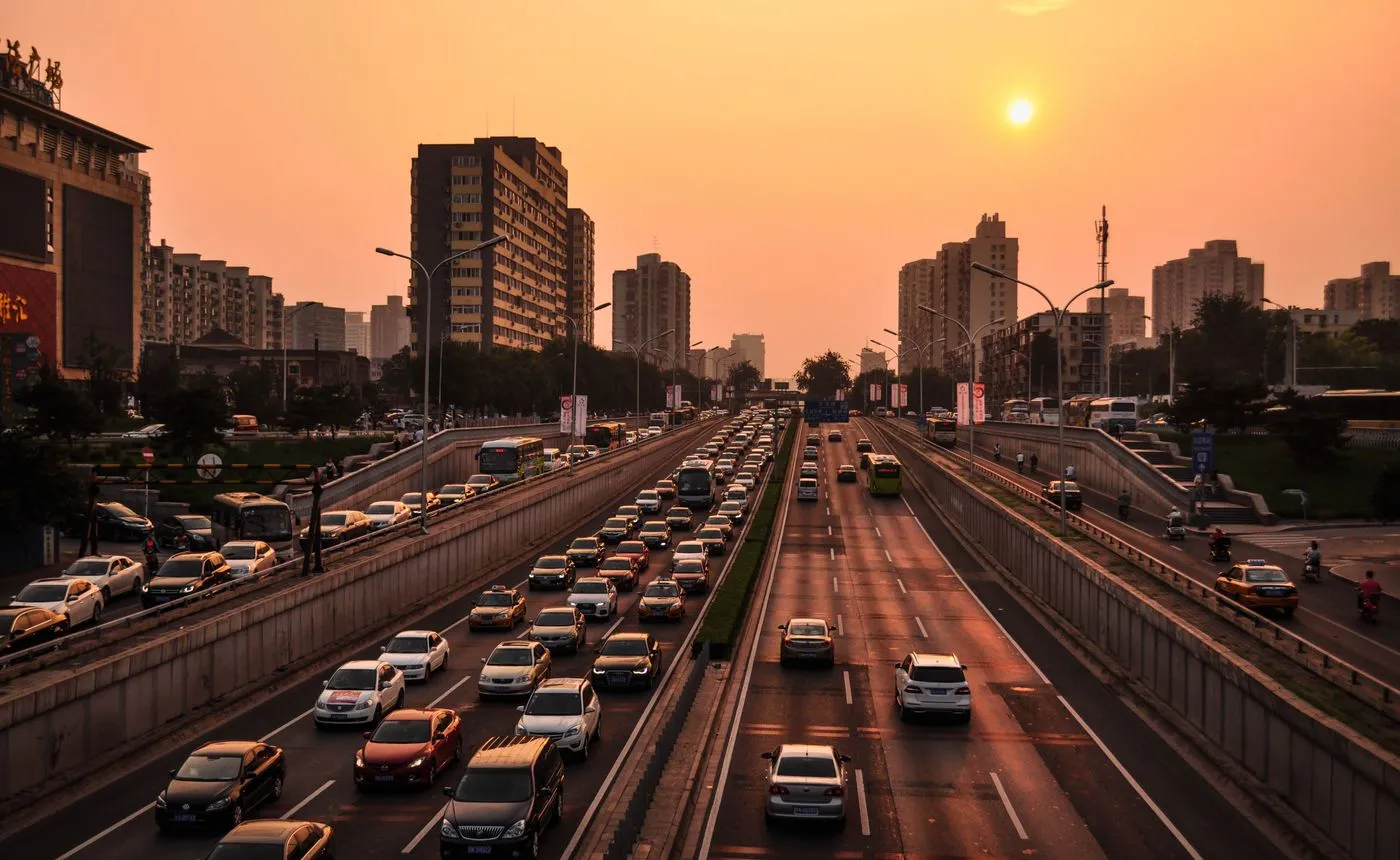
Freeway volume is only one part of the crash picture an Ontario injury lawyer has to separate from city-street collisions.
What should you keep after a collision in Ontario?
The annual tables will not identify your driver, your lane, or your injury. A short local record will. You do not need a perfect file on day one. You do need the items that disappear first.
- Get medical care and follow the discharge instructions. A delay makes the injury timeline harder to explain later.
- Photograph the vehicles, the lane markings, the signals, and the road surface before the scene is cleared.
- Ask for the traffic-collision report number and the agency that took it. City streets and freeways are not always handled by the same office.
- Save the names and phone numbers of people who saw the impact, not only people who arrived afterward.
- Keep dashcam or phone video in its original file. Do not crop it before anyone has seen the full clip.
- Write down where you were going, the time, the weather, and which road you were on, in your own words, while the memory is fresh.
The firm’s guide to what to do after a California car accident covers the broader first-week checklist. This Ontario page stays on the local question. Which facts connect your collision to a place, a report, and a court? Which statewide numbers do not? If the report and your memory disagree, the police-report reading guide shows how those forms are organized.
What to ask before you rely on a number
Bring the tables back to one collision with a few direct questions:
- Was the crash on a state highway, a city street, or private property?
- Which agency wrote the report, and does the narrative name a primary collision factor?
- Are the injuries in the medical record, or only in what you told the officer at the scene?
- Does the other side cite a statewide total that counts a different road system than yours?
If the answer to the last question is yes, the citation is incomplete. Ask which table, which year, and which roads it covers. Caltrans labels the 2023 book as state highways and says the set was prepared on April 30, 2025. OTS labels its death figures as SWITRS and FARS data and says that page was updated in July 2025. A quote that skips those labels is not a reliable comparison.
Work vehicles need one extra note, not a separate treatise. If a delivery van, a rideshare car, or a truck was involved, keep the company name on the door, the unit number, and any app receipt. Employer and contractor questions belong in a focused article. Start with the California truck-accident steps or the rideshare accident page when that is the collision you actually had.
Where can an Ontario injury claim be filed?
Ontario does not have its own superior court. The Superior Court of California, County of San Bernardino, lists the Rancho Cucamonga District at 8303 Haven Avenue, Rancho Cucamonga, CA 91730. The court’s page names Ontario among the areas that district serves for the criminal matters accepted there. The clerk’s office hours on the filing page are 8:00 a.m. to 4:00 p.m. on weekdays, excluding court holidays.
Do not assume the same counter accepts every injury lawsuit. The court’s civil division at that same Haven Avenue courthouse publishes a shorter list of areas served for unlimited and limited civil filings. Ontario appears in the criminal-area list and in the court’s western-region CEQA note, not in that shorter general civil list. Before you file, read the court’s current “Where Can I File?” page or ask the clerk which department takes an Ontario personal-injury case. Filing rules change, and a lawsuit filed in the wrong district can lose time you cannot get back.
A claim is also not the same thing as a lawsuit. Many injury matters start with an insurance claim and never reach a courthouse. The annual crash figure does not decide which path fits. Fault, coverage, the severity of the injury, and the deadlines on that file do.
Deadline rules are part of the local analysis, and they are not printed in the crash tables. A government vehicle or a public-road condition can involve a shorter notice period than a claim against a private driver. Do not calculate that date from a blog post. Write down the crash date, the agencies involved, and the date you first received the report. Then have a lawyer check the clock against those papers.
An Ontario injury lawyer at DC Law Group can also separate this city from nearby guides. A Barstow desert-highway question, a San Bernardino rideshare question, or a Riverside motorcycle question is a different road system and often a different courthouse. Linking those pages is useful. Copying them into this article would hide the Ontario-specific point.
Bring the report number and your photos to a consultation with DC Law Group at (310) 571-8860 before you decide whether the next step is an insurance claim or a court filing.
Frequently asked questions
How many car accidents happen in California each year?
On the state highway system, Caltrans counted 185,972 crashes in 2023. That figure is not every crash on every California road. The Office of Traffic Safety separately reports 4,061 traffic deaths statewide in 2023.
Does a high statewide crash count prove fault in Ontario?
No. A statewide total has no driver, no lane, and no injury. Fault comes from the report, the physical evidence, and the witnesses to that collision.
Are Holt Boulevard crashes included in the Caltrans total?
Not because they happened in Ontario. The Caltrans total covers the state highway system. A city arterial is outside that map unless the location is itself a state highway.
Which courthouse serves Ontario?
The San Bernardino Superior Court lists the Rancho Cucamonga District at 8303 Haven Avenue for the criminal matters it assigns to the Ontario area. Confirm the civil filing location on the court’s current “Where Can I File?” page before you file a lawsuit.
When should you call an Ontario injury lawyer?
Call when someone was hurt, when fault or insurance is disputed, or when a freeway crash and a city-street crash are being treated as if they were the same event. DC Law Group can review the records you already saved.
Talk with DC Law Group about the Ontario collision, the report, and the deadline that applies to your file: (310) 571-8860.