

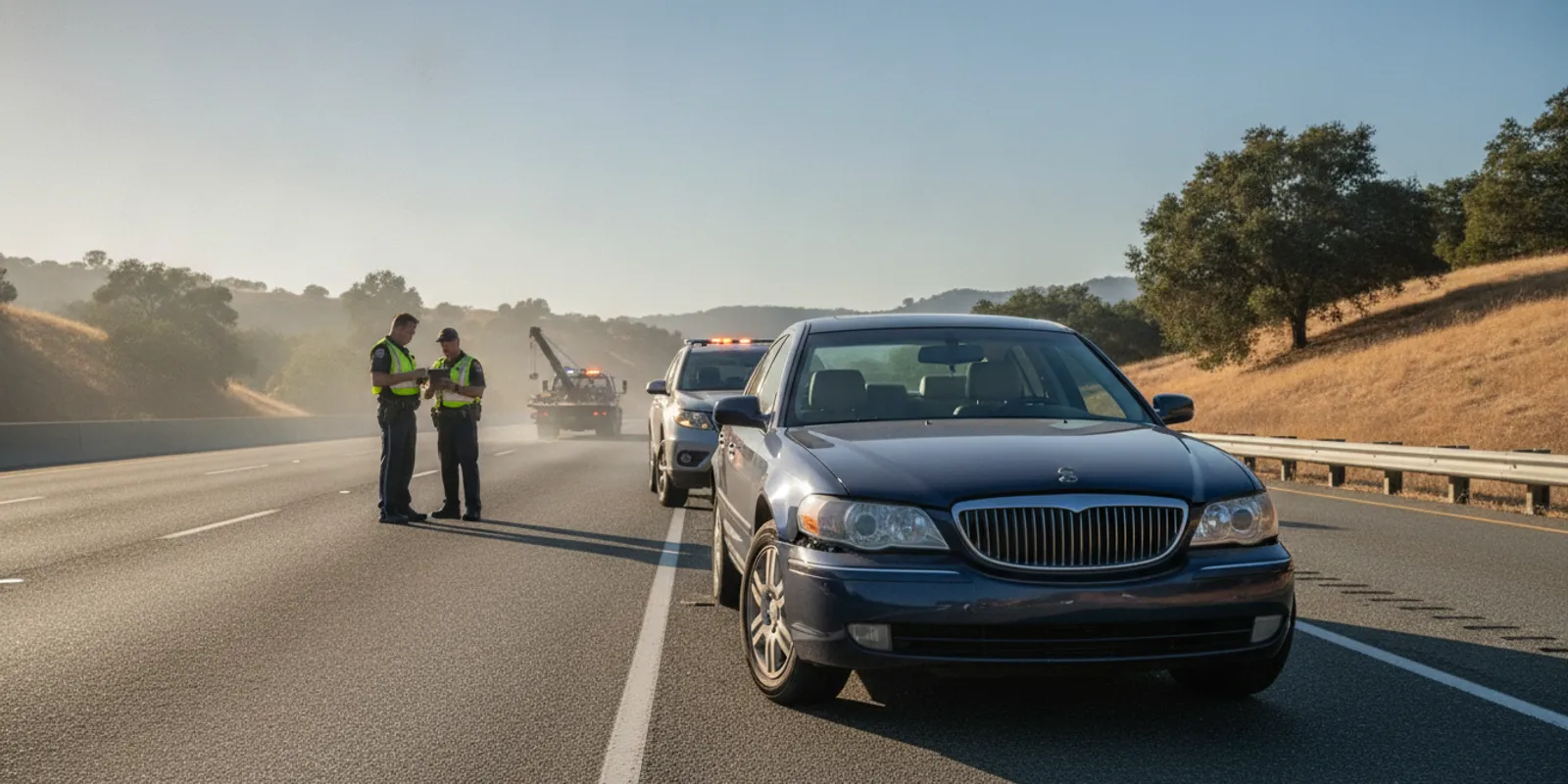
If you are searching for a Sacramento car accident lawyer, you may be trying to understand what to do with the evidence after a collision. Early records can help explain what happened, the injuries involved, and how the crash affected your daily life. Keep safety and medical needs first. The California Department of Insurance explains that claim documentation can support an accident claim.
Request a consultation with DC Law Group
What should you do first after a Sacramento collision?
Move to a safe place if you can do so without worsening an injury. Call emergency services when anyone may be hurt or a hazard remains. Do not leave the scene before meeting any applicable legal duties. Exchange identifying and insurance details with the other driver, and avoid arguing about responsibility at the roadside.
Write down the date, approximate time, street or freeway, direction of travel, weather, lighting, and traffic conditions. Sacramento-area crashes may happen on busy urban streets, freeway ramps, or regional routes. Record the precise location as best you can, including nearby intersections, ramps, landmarks, or mile markers. This helps distinguish the scene from a general city reference later.
If you are shaken or injured, ask a trusted person to help preserve information. A passenger may record the other vehicle’s plate, take photographs from a safe position, or gather witness contact details. Do not place yourself in moving traffic for a better image. Safety takes priority over collecting a complete record at the scene.
Before leaving, check that you have the other driver’s name, contact information, license plate, insurer, and policy information when available. Note the make, model, and color of the other vehicle, along with any commercial markings or rideshare indicators. If a tow operator, officer, or witness gives you a document, photograph it and keep the original. Ask for the incident or report number if one is provided, but do not delay necessary medical care to complete paperwork.
Which evidence may help explain how the crash happened?
Photographs and video can preserve details that change quickly. If it is safe, capture each vehicle from several angles, close views of damage, debris, tire marks, traffic signals, lane markings, and the broader roadway. Include images showing where the vehicles came to rest, but do not enter traffic to get a picture. Save original files when possible and note when and where they were taken.
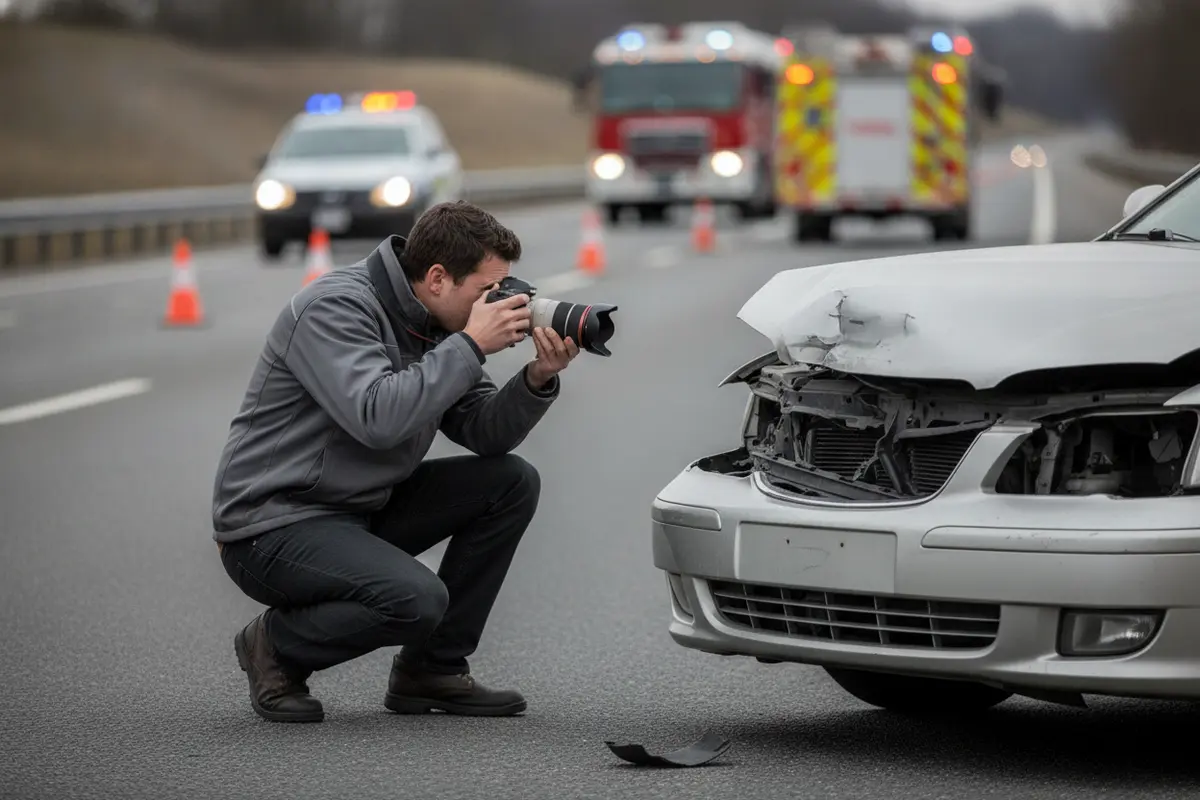
A driver documents vehicle damage after a Sacramento-area collision
Take both wide and close photographs. A close image may show a damaged light, a broken mirror, or a scrape. A wider image may show the lane configuration, signs, visibility, and distance between vehicles. Photograph damage before repairs when practical, while recognizing that urgent repairs may be necessary for safe transportation. Keep repair photographs and invoices together with the original scene materials.
Other useful records may include a police incident number, tow paperwork, repair inspections, and names and contact details for witnesses. Ask witnesses for their own account rather than suggesting what they should say. Keep copies of messages or documents exchanged with insurers. Do not alter photographs or discard damaged property before documenting it.
Preserve more than the most dramatic image. A sequence of photographs may show the roadway, vehicle positions, damage, and nearby signs in context. If your phone records video, keep the unedited file and create a separate copy for sharing. Write down who took each image and whether it was taken before or after vehicles were moved. Those small details can help a later reviewer understand what the image does and does not show.
How should you organize the evidence?
A clear file system can make a large collection of records easier to understand. Create separate folders for the scene, medical care, vehicle information, work effects, and insurer communications. Use a simple file name that identifies the date and subject, such as the collision date followed by “intersection photo” or “clinic visit.” Preserve the original file and make a separate copy when sharing it.
Prepare a short chronology while events are fresh. List the collision time, emergency response, first medical visit, insurer contact, vehicle inspection, and each later appointment. Add the person or organization involved and a brief description of what occurred. Avoid inserting guesses into the chronology. If a detail is uncertain, label it as uncertain rather than converting an estimate into a statement of fact.
Use one secure digital backup and, when practical, a paper file for essential records. Keep a note of where each original is stored. If several household members are helping, designate one person to maintain the master chronology so that duplicate versions do not create confusion. A dated index can identify a photograph, report, bill, or message without changing the original record.
| Evidence | What it may show | Practical next step |
|---|---|---|
| Scene photographs | Road layout, signs, vehicle positions, and visible damage | Save original files and label the location and date |
| Medical records | Symptoms, diagnoses, treatment, and changes over time | Follow care instructions and keep visit records |
| Witness information | Independent observations before or after impact | Record names and contact details promptly |
| Vehicle inspection | Damage patterns and mechanical or impact details | Keep inspection notes and repair documents |
| Insurance correspondence | Requests, statements, and claim communications | Keep copies and note call dates and participants |
| Work records | Missed shifts, changed duties, or time away from work | Request accurate records from the appropriate employer contact |
| Digital account records | Messages, trip details, or location information related to the event | Preserve the original account information and note access dates |
Why should you seek medical care and preserve injury records?
Some symptoms become apparent after the immediate stress of a collision. Get medical attention promptly when needed, and describe your symptoms accurately. Follow the treating provider’s instructions. Keep discharge papers, visit summaries, prescriptions, referrals, and records of missed work or changed duties. These materials can help show the timeline of an injury and its practical effects.
Do not minimize symptoms in conversations or online posts, but do not speculate about a diagnosis either. A medical professional should assess your condition. Keep a simple dated note of pain, mobility limits, sleep disruption, or tasks you could not perform. Such notes are not a substitute for medical records, but they may help you remember what changed between appointments.
Tell the provider how the event affected ordinary activities. Examples may include driving, lifting, sleeping, caring for a child, household tasks, or participating in work. Accuracy matters more than dramatic wording. Keep appointment confirmations and note any recommended follow-up. If treatment is difficult to attend, ask the provider about available options rather than silently abandoning care.
Keep a record of referrals and unanswered questions. If a provider recommends imaging, therapy, specialist care, or a return visit, save the recommendation and the date. If you choose not to pursue a recommendation, record the reason accurately and discuss alternatives with the provider. Do not change treatment simply to create a stronger claim; medical decisions belong with you and your qualified providers.
What vehicle and property records should you preserve?
Keep towing records, storage notices, repair estimates, inspection reports, rental-car communications, and receipts for accident-related transportation. Photograph the vehicle before it is moved or repaired when safe. If a repair shop replaces a part, ask for an itemized record and retain the removed part when it is released to you. Do not assume a damaged component has no later evidentiary value.
Write down where the vehicle was taken and who inspected it. If more than one inspection occurs, keep the reports in date order. A vehicle’s condition can change through towing, storage, cleaning, repair, or disposal. Prompt documentation gives a clearer record of what was observed at each stage.
If the vehicle is declared a total loss or is scheduled for disposal, preserve photographs, inspection documents, and communications before that happens. Ask the insurer or facility how long the vehicle will remain available for inspection. Do not delay necessary action involving a hazardous or unusable vehicle, but make a reasonable record before its condition changes. Keep receipts for transportation arranged because the vehicle cannot be used.
How should you handle insurer questions?
Notify the appropriate insurer as required by your policy, and provide accurate information. Keep a record of when you called, whom you spoke with, and what documents were requested. Read forms before signing them, and ask questions if a request is unclear. Avoid guessing about speed, distance, or responsibility when you do not know the answer.
Ask whether the insurer needs photographs, a recorded statement, medical authorization, vehicle records, or other materials. Keep the request and your response together. Do not destroy or discard a letter merely because it appears routine. If you receive a release or settlement document, understand what rights it addresses before signing. A legal consultation may help you identify questions about a document, but this article does not determine what you should sign.
Keep communications factual and limited to what you know. A useful call log can include the date, time, representative’s name, claim number, subject of the call, and any promised follow-up. Save voicemail messages and electronic notices. If an insurer asks for a statement about an injury before you understand the request, ask for time to review it and consider legal guidance before giving detailed answers.
The California Department of Insurance provides consumer guidance on accident claims and supporting documentation. You can also read DC Law Group’s guide to reading a police report and its California car accident claim roadmap for related topics.
What Sacramento-area details should you record?
Local context can make a record more useful without assuming it proves responsibility. Note whether the collision occurred at an intersection, on a freeway, near a merge, or in a commercial area. Record the direction each vehicle was traveling and the lane each occupied, if known. Note construction, temporary signs, blocked sight lines, or traffic control devices that may have mattered.
Record whether the road was wet, congested, brightly lit, or unusually dark. Note whether a vehicle was entering a ramp, changing lanes, turning, stopping, or traveling through an intersection. These details are clues for later review, not conclusions about legal responsibility. If you do not know an answer, say that you do not know.
If a nearby business or public location may have recorded the scene, note its name and location quickly. Video may be overwritten or unavailable later. Do not trespass or confront anyone; simply preserve the lead for an appropriate request. A lawyer can assess whether particular records can be sought and by what process.
For a freeway collision, note the direction of travel, nearest exit, shoulder or lane position, merge area, and any visible mile marker. For an urban intersection, record the cross streets, turn lane, signal direction, and nearby businesses. For a collision involving a delivery vehicle or rideshare vehicle, preserve the identifying information visible on the vehicle or application without trying to reach into another person’s account. These details help identify which records may exist and where to look for them.
What should you do if a police report contains an error?
Obtain the report number and read the report carefully when it becomes available. Compare its descriptions with your photographs, medical timeline, and recollection. A report may contain an incorrect address, vehicle description, sequence, or quotation. Mark the specific passage that concerns you and gather documents that clarify the issue.
Do not alter the report or pressure a witness to change an account. If a correction or supplemental statement may be appropriate, ask the relevant agency about its procedure. A police report review guide from DC Law Group may help you identify terms that require closer attention. The significance of any report depends on the full record and the circumstances of the collision.
Keep the original report and any later supplement together. If you provide a written clarification, make a copy of what you submitted and note the submission date. A disagreement with a report does not by itself establish that every part of the report is inaccurate. Focus on specific facts and support them with records, photographs, or witness information when available.
How can work and daily-life records help?
Injury documentation is not limited to clinic records. Keep accurate information about missed shifts, altered duties, canceled activities, transportation assistance, and household tasks that became difficult. Save employer communications and ask for corrections if a record does not accurately reflect time away or modified work. Do not exaggerate or estimate a figure without a reliable basis.
A personal journal can be useful when it is factual and dated. Note what activity you attempted, what limitation occurred, and whether the limitation changed. Keep the entries private and do not post the journal online. It should supplement professional records rather than replace them.
Use concrete examples rather than broad statements. For example, note that you needed help carrying groceries, could not drive to a scheduled appointment, or performed a different task at work on a particular date. Identify who can verify the change, such as an employer, household member, or activity coordinator. Keep the record honest when an activity improves or a limitation is temporary.
How can a Sacramento car accident lawyer review a claim?
A lawyer may examine the sequence of events, available records, injury documentation, insurance coverage, and the identities of people or entities potentially involved. The legal issues depend on the facts. A consultation can help identify what information is missing and what deadlines or procedural requirements may apply. It cannot guarantee a particular result.
Review may include comparing vehicle damage with the described movement of each vehicle, checking whether witnesses or video may exist, and organizing communications from insurers. It may also involve considering whether another driver, an employer, a vehicle owner, or another party has a role under the particular facts. That assessment requires evidence and cannot be made from the location name alone.
Before a consultation, assemble the collision chronology, report number, photographs, insurance letters, medical records, and vehicle documents that are readily available. Do not wait to seek guidance merely because the file is incomplete. Tell the lawyer which facts are uncertain and which records may still be requested. A review can then focus on the questions that matter most rather than on reconstructing basic information from memory.
DC Law Group handles personal injury matters in California. Depending on the collision, related information may be found in the firm’s pages about car accident representation, types of damages in California injury matters, and the California claim timeline.
What should you avoid doing while preserving evidence?
- Do not put yourself in danger to take photographs or retrieve items.
- Do not guess or make broad admissions about responsibility when details are uncertain.
- Do not delete messages, photographs, or insurer letters related to the collision.
- Do not post sensitive claim details publicly while the matter is being reviewed.
- Do not ignore medical instructions or wait to seek care for a concerning injury.
- Do not discard damaged property before it has been documented and its status is understood.
- Do not ask a witness to adopt wording that is not their own account.
- Do not repair, clean, or modify damaged property before documenting its condition when doing so is safe and practical.
Organize records in one secure place. Use folders for scene materials, medical documents, vehicle records, work information, and insurance communications. A brief chronology can connect each item to a date and event. Keep originals and provide copies when possible. Back up digital records in a secure location, while protecting private medical and identifying information.
Talk with DC Law Group about your collision
Frequently asked questions
Should I keep the original photographs from the scene?
Yes. Preserve original files when possible, with their dates and metadata intact. Make separate copies for sharing and note what each image depicts. Do not edit the original to add arrows, filters, or captions; make a marked copy if an explanation is needed.
What if I did not get witness information at the scene?
Write down what you remember about where the witness was and how to identify them. If a report lists witnesses, keep the report details. Nearby businesses or public locations may also be leads for video, although availability can change quickly. Do not pressure anyone to provide a particular account.
Can I determine responsibility from vehicle damage alone?
Usually, damage is only one part of the evidence. Statements, scene conditions, photographs, vehicle inspections, medical records, and other facts may also matter. A legal assessment depends on the full circumstances rather than a single photograph or repair estimate.
How soon should I speak with a lawyer?
Consider seeking guidance promptly, especially if you were injured, responsibility is disputed, or evidence may disappear. Deadlines can depend on the facts and parties involved, so do not rely on a general article to calculate one. Bring the basic chronology and available records to an initial discussion.
What if the other driver’s insurer contacts me?
Remain accurate and courteous, keep a record of the communication, and ask what information is being requested. Do not guess about facts or sign a release without understanding it. If the request concerns an injury claim or a recorded statement, consider obtaining legal guidance before responding in detail.
Key steps to remember
Prioritize safety and medical care, document the location and vehicles, preserve witness and insurance information, and organize records as they arise. Sacramento-specific details such as freeway ramps, lane changes, signals, construction, and nearby video leads can be important context. If you need help understanding how those facts may fit together, request a consultation with DC Law Group.
Request a consultation with DC Law Group
Careful documentation cannot change what happened, but it can preserve the information needed for a fact-based review of your Sacramento collision.