
A lane-splitting collision can leave a rider with serious injuries and difficult questions about responsibility. If you are looking for a california lane splitting accident lawyer, understanding how the crash happened, what evidence remains, and how insurers may assess the facts can help you prepare for a conversation with counsel.
**Contact DC Law Group to discuss your crash**
What does lane splitting mean in California?
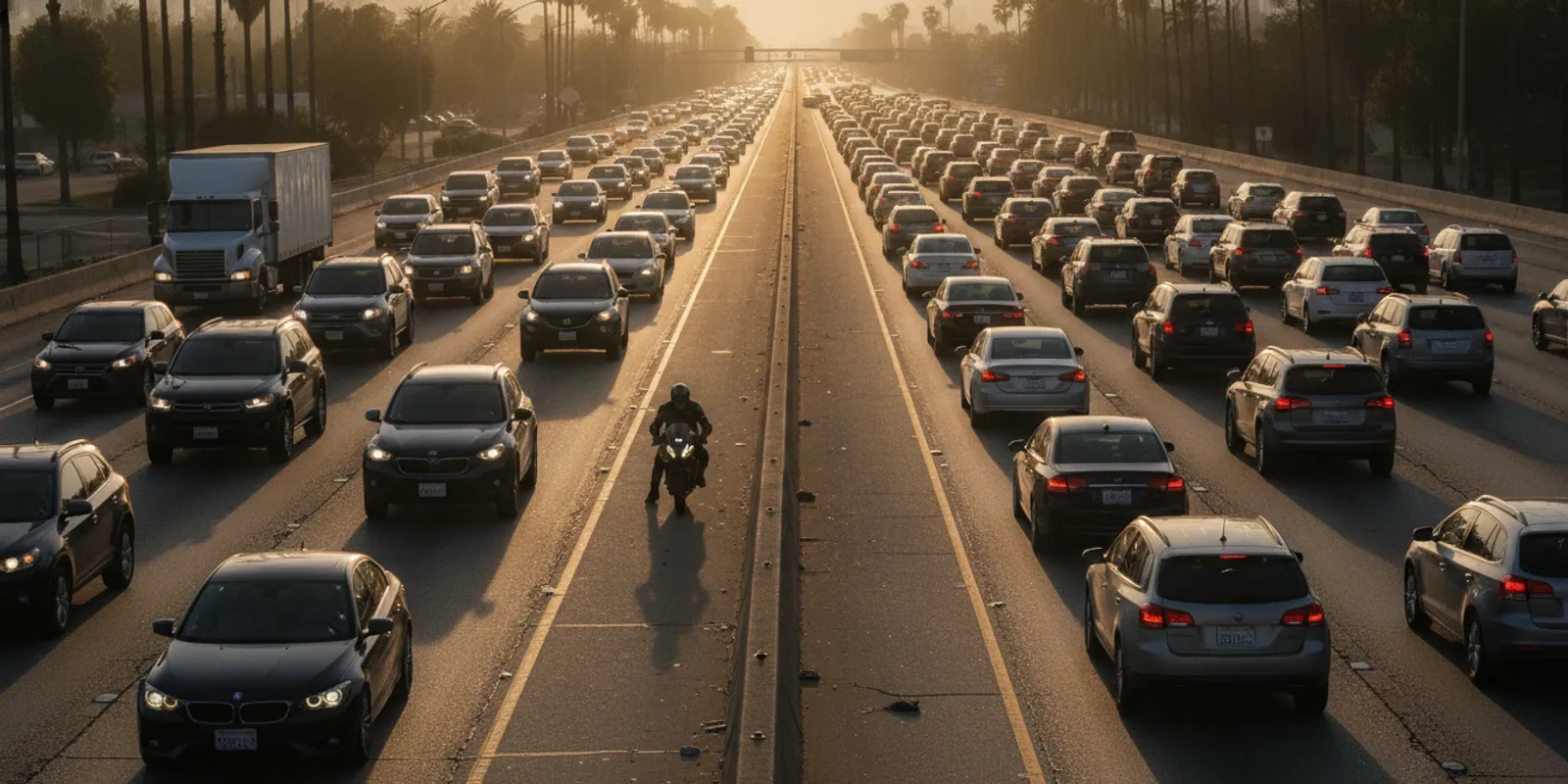
Lane splitting generally describes a motorcycle traveling between rows of vehicles moving in the same direction. It is different from riding on a shoulder or using a lane reserved for another purpose. Drivers may be surprised by a motorcycle between lanes, while a rider may have limited room to react when a vehicle changes lanes or shifts position.
California recognizes lane splitting as a motorcycle practice, but that does not mean every movement is safe or that a rider is automatically free from responsibility after a collision. The surrounding facts matter: traffic speed, available space, visibility, vehicle movements, road conditions, and each person’s conduct. The California Highway Patrol urges caution and notes that lane splitting should not be attempted by inexperienced riders. See the California Highway Patrol’s motorcycle safety guidance.
After a crash, do not assume that the label “lane splitting” resolves who caused the collision. An investigation should examine the actions of everyone involved and the physical evidence. This includes what the rider and driver could see and do in the moments before impact.
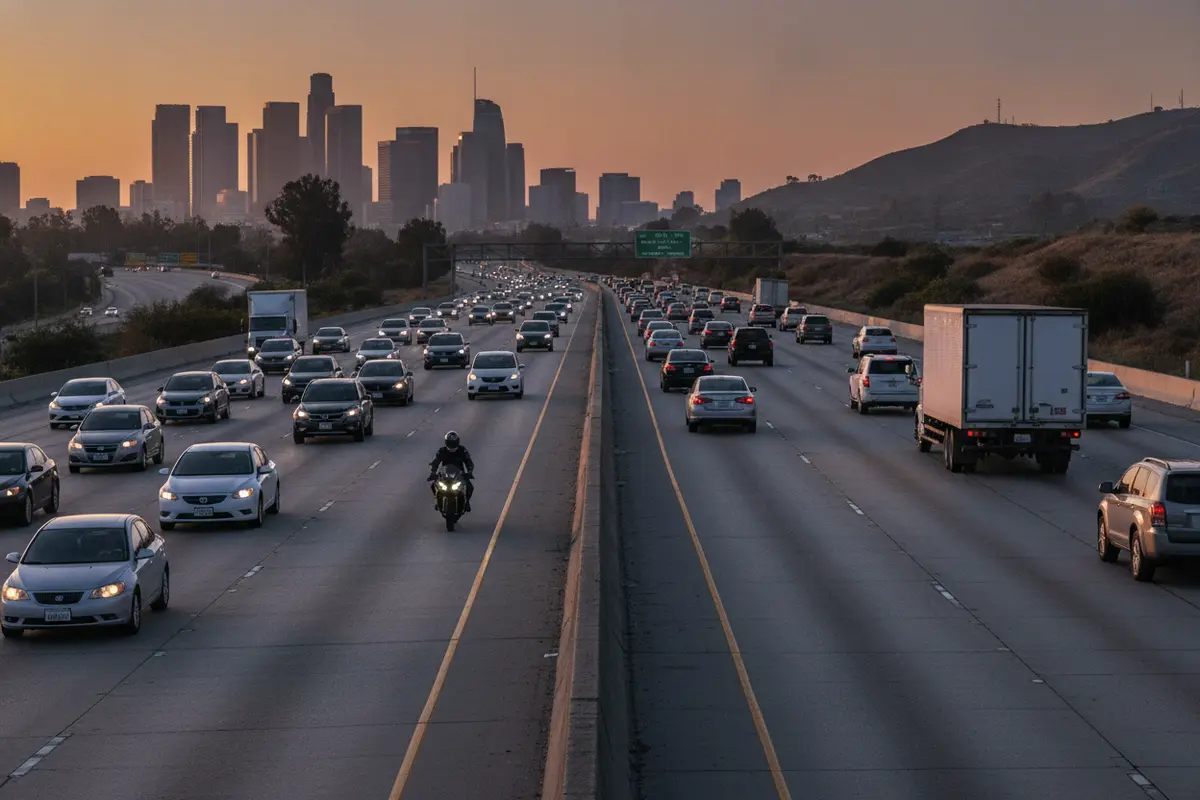
Motorcycle rider traveling between lanes of slow-moving freeway traffic
How can responsibility be evaluated after a lane-splitting crash?
California follows comparative fault principles. More than one person’s conduct may be considered when evaluating responsibility for an injury. The question is not simply whether the motorcycle was between lanes. Investigators may examine whether a driver made an unsafe lane movement, whether a rider was traveling at a speed appropriate to traffic, and whether either person had a reasonable opportunity to avoid the impact.
Potential issues can include:
* A vehicle changing lanes: Did the driver signal, check the path, and move only when it was reasonably safe?
* Rider speed and position: Was the motorcycle’s speed and path suitable for the traffic conditions and available space?
* Visibility and warning: Could either person reasonably see the other, and did surrounding vehicles obstruct the view?
* Road and traffic conditions: Were vehicles stopped, creeping, or moving at a steady pace? Were there narrowed lanes, debris, construction, or poor visibility?
* Actions immediately before impact: Did a driver move abruptly, did the motorcycle have room to respond, or did another event contribute?
These are investigation questions, not conclusions about any particular rider or driver. A witness statement or a single photograph may provide only part of the story. A qualified review should consider the full sequence of events and avoid treating an early insurance position as a final determination.
Which evidence may help explain what happened?
Useful evidence can disappear quickly. Vehicles are repaired, nearby businesses overwrite camera footage, and people’s memories become less precise. If you are able, preserve information promptly and keep original files unchanged. Your health and immediate safety come first; ask someone you trust to help if you cannot do these tasks yourself.
* Scene photographs and video: Capture the roadway, lane markings, vehicle positions, damage, debris, sight lines, traffic controls, and nearby construction. Photograph from several angles when it is safe to do so.
* Vehicle damage: Images of the motorcycle and other vehicle may help show contact points and the direction of impact. Keep repair records and do not discard damaged safety equipment before discussing its preservation.
* Witness details: Record names and reliable contact information for people who saw the collision. Ask what they observed, but avoid coaching or arguing with them.
* Video sources: Note nearby business, residential, transit, or traffic cameras. Some recordings are retained only briefly, so a prompt request may be important.
* Official records: Keep the incident or police report number and any exchange-of-information paperwork. A report can be a useful lead, but it may not include every fact or settle fault.
* Medical records: Follow up on symptoms and keep visit summaries, treatment instructions, prescriptions, and records of missed work or daily limitations.
* Personal notes: Write down your recollection while it is fresh, including traffic flow, approximate positions, lighting, weather, and what happened just before and after impact.
For a practical overview of reviewing an incident report, see how to read a California accident report. The report may identify witnesses or describe the scene, but you can still preserve other evidence that it does not contain.
When requesting video, note the exact location of the camera and the time window that may show the collision. A recording may begin before the impact or continue afterward, so a narrow request can miss important context. Keep a copy of each request and response. If a business or agency says the footage is unavailable, note when you asked and what you were told. Do not edit or crop original recordings; create a separate copy for sharing if needed. If another person helps collect records, keep track of who provided each item and when it was received. This simple recordkeeping can help explain where evidence came from and whether a gap exists.
What should an injured rider do after the collision?
1. Move to safety if possible. Call emergency services when anyone may be seriously injured or the roadway remains hazardous. Do not put yourself in danger to collect evidence.
2. Get medical attention. Some injuries may not be obvious at the scene. Seek appropriate evaluation and follow the instructions given by medical professionals.
3. Exchange information and identify witnesses. When it is safe, collect the other driver’s contact and insurance details, as well as witness information. Keep communication calm and factual.
4. Document the scene. Take photos or ask someone to do so. Note the location, direction of travel, traffic pattern, and any nearby cameras.
5. Notify the relevant insurer. Give basic factual information as required by your policy, but be careful about guessing, accepting blame, or giving a recorded statement before you understand what is being requested.
6. Keep a claim file. Save records, correspondence, receipts, photos, and a timeline of medical visits and symptoms in one place.
7. Get advice before resolving an injury claim. A release can affect the ability to seek further recovery. Consider asking a California personal injury attorney to review the facts before signing a settlement document.
These are general steps, not individualized legal advice. The right response depends on the collision, the injuries, and the available coverage. For more motorcycle-specific information, visit DC Law Group’s motorcycle accident representation page.
How may insurance affect a lane-splitting injury claim?
More than one insurance policy may be relevant, depending on who was involved and how the crash occurred. A driver’s liability coverage may be considered if the driver contributed to the collision. The rider may also have coverage that applies to certain losses, subject to the policy language and facts. Do not assume that a particular policy will pay or that one insurer’s account is the only possible account.
An insurance adjuster may ask for a recorded statement, medical authorization, photographs, or a description of the rider’s actions. Read requests carefully and keep copies of anything you provide. Be accurate, distinguish what you remember from what you do not know, and avoid speculation. If the adjuster presents a release or asks for a broad medical authorization, consider obtaining legal guidance before signing.
Keep a communication log with the date, the person you spoke with, the insurer or organization they represented, and the main points discussed. Save emails and letters with attachments. If you receive a request with a deadline, note it and ask what information is needed rather than letting the request sit unanswered. Avoid posting detailed accounts, scene images, or injury updates on public social media while a claim is under review; an incomplete post can be misunderstood outside its context. Do not delete records that relate to the collision. If you are unsure whether a document is relevant, preserve it and ask counsel before discarding it.
Insurers may focus on the rider’s position or speed. The rider’s account, witness observations, physical evidence, and available video may help put those issues in context. A fair review should consider evidence supporting each side, not only the first version reported.
What details are especially important in a lane-splitting investigation?
The same type of collision can raise different issues depending on the location and traffic flow. An attorney or investigator may consider the following details:
| Issue | Questions to document | Potentially useful information |
|---|---|---|
| Traffic movement | Were vehicles stopped, moving slowly, or traveling at a steady pace? | Witness accounts, dash camera footage, scene video, and the rider’s notes |
| Vehicle maneuver | Did a car or truck move across the motorcycle’s path? | Damage locations, photographs, driver statements, and nearby video |
| Rider visibility | Could surrounding drivers see the motorcycle in time to respond? | Road layout, vehicle positions, lighting, and sight-line photographs |
| Injury and treatment | What symptoms began, and what care was received? | Medical records, treatment instructions, and a dated symptom journal |
| Other contributing conditions | Were road work, debris, weather, or a third vehicle involved? | Scene images, agency records, witnesses, and vehicle evidence |
The table is a checklist, not a formula for deciding responsibility. Evidence may be incomplete or inconsistent. A careful review can compare accounts with physical details and identify what additional records should be requested.
How does comparative responsibility affect a California claim?
When evidence suggests that more than one person contributed to an injury, California’s comparative responsibility rules may affect the allocation of responsibility. A rider’s conduct does not automatically end the inquiry into another person’s actions. Likewise, the fact that a driver moved into the motorcycle’s path does not by itself answer every legal question.
For example, imagine a slow line of traffic where a driver begins moving toward an adjacent lane as a motorcycle approaches between rows of vehicles. Investigators would need to look at the timing, the space available, the driver’s observations, the rider’s pace, visibility, and any other contributing factor. A photo taken after the vehicles stop might show their final positions but not establish the sequence that caused the impact.
Because fault depends on the evidence and applicable law, avoid accepting a quick percentage estimate as definitive. An attorney can review whether the investigation is complete and how the available facts may be used. For background on selecting counsel, read what to look for in a motorcycle injury attorney.
What can make these claims difficult to evaluate?
Lane-splitting collisions can happen in seconds, often amid dense traffic with several vehicles close together. A driver may recall checking a mirror, while a rider may remember a vehicle moving across the motorcycle’s path. Those accounts can differ without either person deliberately providing a false account. The investigator must compare each recollection with objective details, such as damage, final vehicle positions, road geometry, and video.
Evidence can also be incomplete. A camera may show only one angle, a witness may have seen only the impact, or the incident report may record statements without resolving conflicts. Medical records may document an injury but not show how the collision occurred. For these reasons, avoid drawing a firm conclusion from one isolated item. A useful review identifies what is known, what remains uncertain, and whether another source could clarify the sequence.
Timing can matter even when the rider has not decided whether to pursue a claim. Video may be overwritten, vehicles may be repaired, and witnesses can become harder to locate. Keep potentially relevant material and note any known retention deadline or repair date. Do not try to recreate evidence by altering a file or asking another person to revise an account. If important records may be lost, ask an attorney about appropriate preservation steps.
When can a California lane-splitting accident lawyer help?
Legal help may be useful when an injury is significant, responsibility is disputed, multiple vehicles were involved, evidence may be overwritten, or an insurer is asking you to accept a quick resolution. Counsel can review the collision record, identify potentially relevant witnesses and video, communicate with insurers, and explain the options that may fit the facts. No attorney can promise a particular result before investigating the claim.
DC Law Group represents injured people in motorcycle accident matters in California. Its team can discuss the circumstances of a crash and explain whether the firm may be able to assist. Learn about the team on the DC Law Group team page, or use the contact page to request a consultation.
Before an initial discussion, it may help to gather the collision date and location, report number, available photographs, names of witnesses, insurance correspondence, and basic treatment records. Do not delay urgent medical care while assembling paperwork. If you do not have every record, explain what is missing and when you expect it may be available.
**Ask DC Law Group to review your lane-splitting collision**
Frequently Asked Questions
Is lane splitting legal in California?
California recognizes lane splitting, but whether a particular rider’s conduct was reasonable depends on the surrounding circumstances. The California Highway Patrol cautions riders and advises that inexperienced riders should not lane split. A crash investigation should evaluate the actual traffic, visibility, speed, and movements involved.
Does lane splitting automatically make the rider responsible?
No. The fact that a motorcycle was traveling between lanes does not alone determine responsibility. Evidence may show that a driver, rider, or more than one person contributed to the collision. The facts and applicable law guide the evaluation.
What evidence should I preserve after a lane-splitting crash?
When safe, preserve scene and vehicle photographs, witness information, the incident report number, medical records, and details about possible video sources. Keep original digital files and note when and where each image or recording was created.
Should I give an insurer a recorded statement?
Be accurate in any required communications, but you do not have to guess about details you do not recall. Before agreeing to a recorded statement, signing a release, or providing broad records, consider asking an attorney to explain the request and its possible effect.
How soon should I speak with an attorney?
Consider seeking advice promptly, especially when evidence may disappear or an insurer is requesting a statement or release. Deadlines can depend on the parties and circumstances, so an attorney can help identify the deadlines that may apply to your situation.
**Contact DC Law Group to discuss your options**
This article provides general information, not legal advice about any individual situation. A California personal injury attorney can review the specific facts and explain potential next steps.