
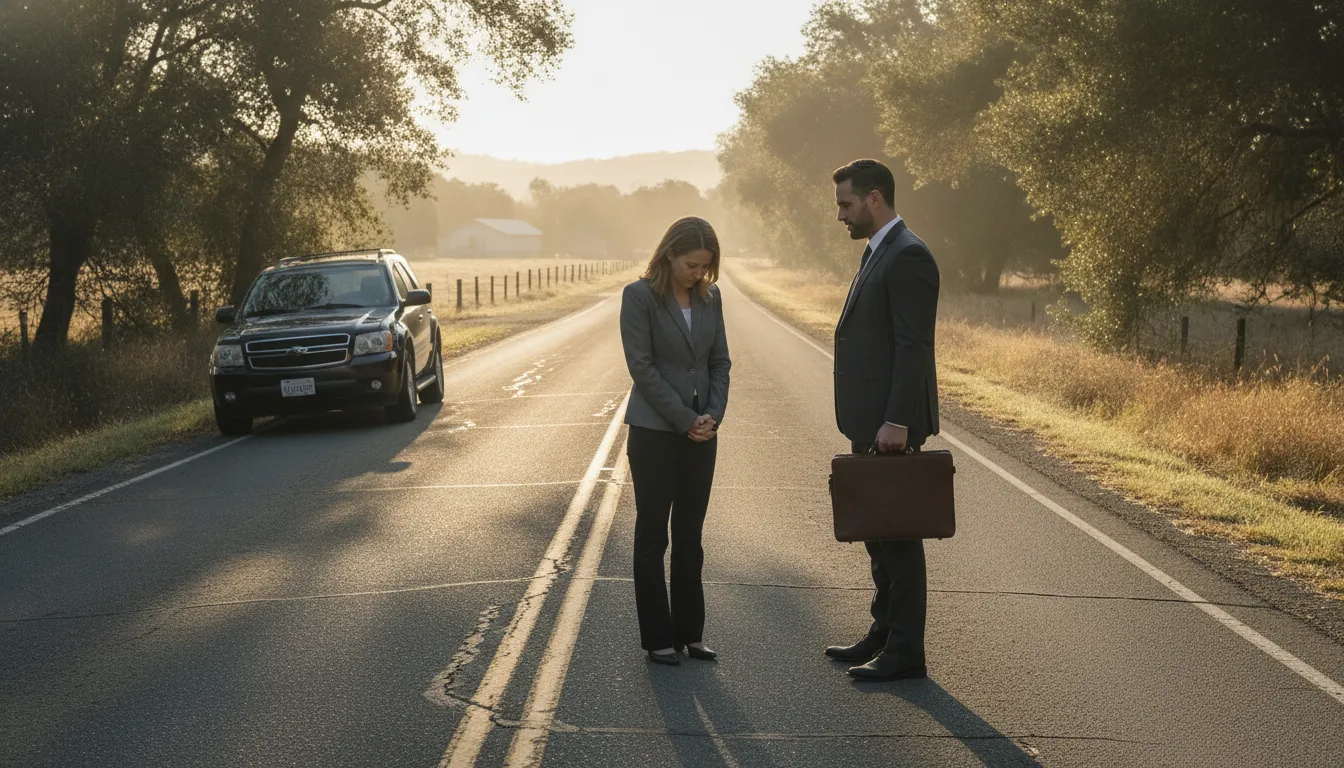
After a fatal collision or other accident, a family may face urgent questions before it knows what happened: who can bring a claim, what evidence matters, and how long California law allows to act. A wrongful death claim generally concerns a death caused by another person or entity's wrongful act or neglect.
Call DC Law Group at (310) 571-8860 for a confidential discussion with a sacramento wrongful death lawyer.
A sacramento wrongful death lawyer can help a family evaluate standing, preserve evidence, identify parties whose conduct may have contributed to the death, and assess legally recoverable losses under California law. Whether a claim is available and which deadline applies depend on the relationship to the deceased, the facts of the incident, and the claims involved.
For families in Sacramento and throughout Northern California, the first practical step is a fact-specific review rather than an assumption about fault or eligibility. That review begins by identifying what happened, locating records and witnesses that may clarify responsibility, and understanding how the investigation supports the legal claim.
How a Sacramento Wrongful Death Lawyer Helps Investigate a Fatal Claim
Answer: A wrongful-death claim generally addresses a death caused by another person's wrongful act or neglect. Investigation connects available evidence to that legal question. It identifies the parties whose conduct may be involved and documents the losses experienced by eligible family members.
For a Sacramento family, the circumstances may involve a vehicle collision, commercial vehicle, motorcycle, rideshare trip, pedestrian incident, or another accident. Each case requires its own review. The relevant evidence can include the incident report, medical records, insurance information, witness accounts, photographs, video, vehicle data, and other records that help establish what happened. When more than one person or company may bear responsibility, the investigation must also examine each party's role rather than assuming that the first available explanation is complete.
DC Law Group represents families in wrongful-death matters and serves Northern California, including Sacramento and surrounding regions. The firm describes wrongful-death representation as part of its California practice. But Sacramento service does not mean that every claim has the same facts, responsible parties, or legal path. A careful review should distinguish what is documented from what remains uncertain.
This guide explains who may be eligible to bring a claim, how fault and causation are evaluated, which categories of loss California law recognizes, and why deadlines require prompt attention. For broader background before reviewing the Sacramento-specific issues, see DC Law Group's California wrongful-death claim guide.
Who May Bring a Wrongful Death Claim in California?
California law does not allow every relative or loved one to bring a wrongful death action. California Code of Civil Procedure section 377.60 identifies the people who may have standing when a death is caused by another person's wrongful act or neglect. The statute controls, but the correct claimant can depend on family relationships, dependency, and the facts surrounding the household.
Spouses, domestic partners, children, and descendants
The surviving spouse or registered domestic partner generally belongs in the first group of potential claimants. The decedent's children may also qualify. If one of the decedent's children died before the decedent, that child's issue, such as grandchildren, may be included under the statute. These categories can become more complicated when family relationships, parentage, or multiple potential claimants must be established.
When the decedent left no surviving issue, section 377.60 may allow the people who would inherit under California's intestate succession rules to bring the claim. This can include a surviving spouse or domestic partner, depending on the circumstances. The statutory language should be reviewed rather than assuming that a particular heir automatically has standing.
Dependent family members and minors
Other potential claimants may include a putative spouse who was dependent on the decedent, certain dependent children of a putative spouse, dependent stepchildren, and dependent parents. Legal guardians of the decedent may also qualify in circumstances where the decedent's parents are deceased.
Section 377.60 also addresses some minors outside the ordinary categories. Among other requirements, the minor must have lived in the decedent's household for the preceding 180 days and depended on the decedent for at least one-half of the minor's support. Because these requirements are specific, families should preserve records showing residence, caregiving, and financial support.
Personal representative procedure
A qualifying person may assert the claim, or the decedent's personal representative may assert it on that person's behalf. This procedure does not eliminate the need to identify each person with a statutory interest. A Sacramento wrongful death lawyer can help map the family relationships, evaluate dependency evidence, and coordinate the claimants before litigation decisions are made.
Standing is only one part of the analysis. The claim also requires a fact-specific review of what happened, who may be legally responsible, and how the death is connected to that conduct. For practical context, see DC Law Group's report on a Sacramento fatal crash investigation.
Read California Code of Civil Procedure section 377.60 for the statutory categories, then obtain advice based on the specific family and case facts.
How Is Fault Investigated After a Fatal Sacramento Collision?
Fault investigation connects another party's wrongful act or neglect to the death. The process should preserve evidence before it disappears, identify the people and entities involved, and test whether the available proof supports legal causation. A family can take these practical steps while a Sacramento wrongful death lawyer evaluates the claim:
1. Preserve the scene and vehicles. Keep damaged vehicles, helmets, personal property, photographs, video, and other physical evidence when possible. Scene photographs, roadway conditions, vehicle damage, event data, nearby surveillance, and available traffic-camera footage may help show what occurred. Do not repair, sell, discard, or alter important evidence without first considering how it may affect the investigation.
2. Obtain reports and records. Request the collision report and preserve medical and death records, towing information, insurance documents, and communications about the incident. These records may establish the sequence of events, the injuries, and the parties or policies that require further review. A report is an important starting point, but it is not necessarily the final word on legal responsibility.
3. Identify witnesses and responsible parties. Record witness names and contact information while memories are fresh. The investigation may need to examine drivers, vehicle owners, employers, maintenance providers, property owners, or other entities, depending on the facts. Do not assume that the person cited or initially identified is the only potentially responsible party.
4. Evaluate causation. Compare physical evidence, witness accounts, records, vehicle data, and medical information to determine how the collision happened and whether the conduct at issue caused the death. Local news reports can provide context, but they are examples of reported incidents, not proof of liability. For example, DC Law Group's Sacramento fatal crash investigation and its report on a fatal Sacramento pedestrian collision should not be treated as evidence in another family's case.
5. Protect communications. Keep notes, preserve texts and emails, and avoid public speculation or recorded statements about disputed facts. Refer insurer questions and requests for signed statements to counsel before responding. Prompt legal review also helps identify evidence that may need preservation and deadlines that may apply.
What Losses May a Wrongful Death Claim Recover?
California wrongful-death damages focus on the losses surviving claimants experienced because of the death. Under California Code of Civil Procedure section 377.61, a court may award damages that are just under the circumstances. The statute also excludes damages recoverable through the separate cause of action addressed by section 377.34. The evidence must connect each claimed loss to the family relationship, the decedent's role, and the facts of the case.
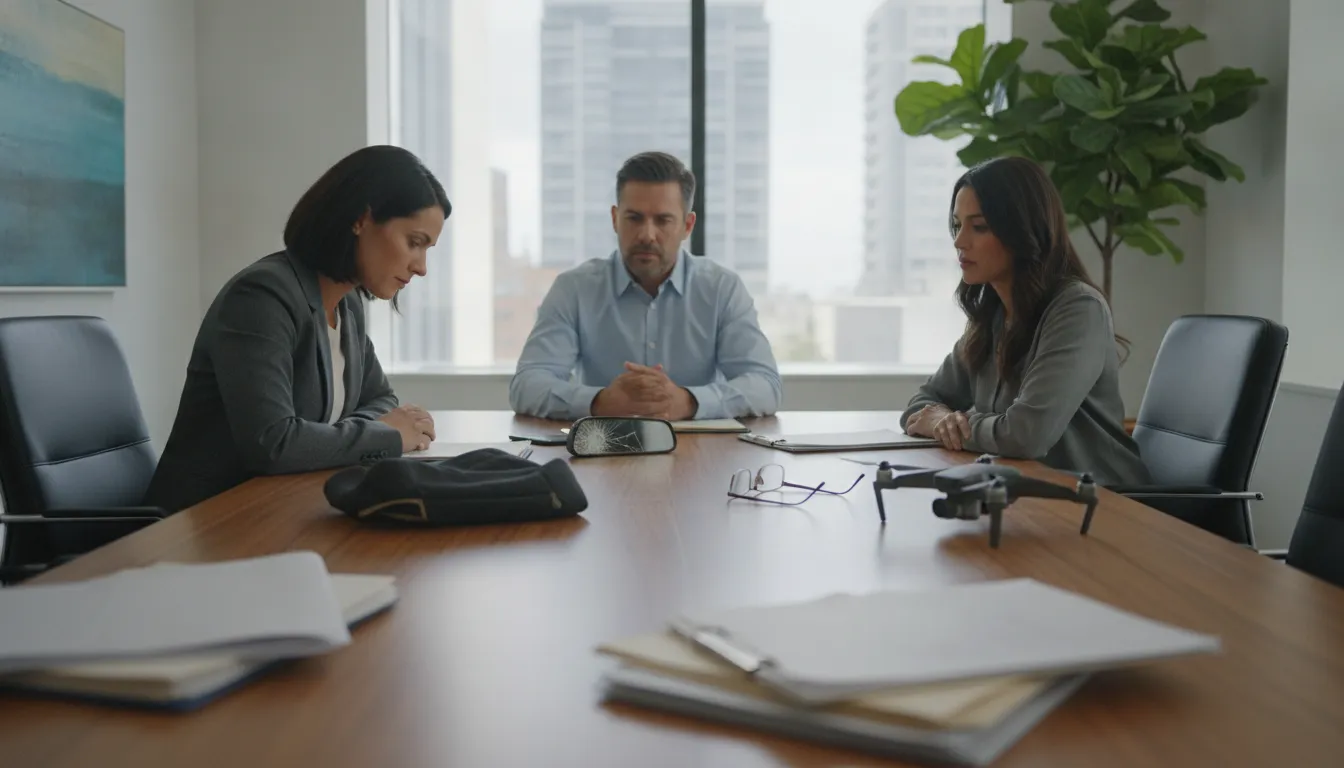
Attorney reviewing wrongful death evidence with a California family
| Loss category | Examples | Documentation |
|---|---|---|
| Funeral and related expenses | Funeral expenses incurred because of the death. | Invoices, receipts, contracts, and payment records. |
| Future contributions and support | Contributions the decedent would have provided in the future, considered in present value when appropriate. | Income records, tax documents, employment information, household budgets, and evidence of family support. |
| Services, advice, and training | The value of personal services, advice, or training the decedent provided to survivors. | Testimony, household records, work or business materials, and evidence describing the assistance provided. |
| Society and companionship | The loss of society and companionship, including the nature of the relationship and shared life. | Family testimony, photographs, correspondence, and other relationship evidence. |
| Medical and earnings items | Medical expenses to date and loss of earnings to date may appear among the documented categories in a wrongful-death damages presentation. | Medical bills, provider records, wage statements, employer records, and verified earnings documentation. |
The California Judicial Council's Civil Case Cover Sheet Addendum and Statement of Damages form identifies these categories. They include funeral expenses, future contributions, personal service, advice or training, loss of society and companionship, medical expenses, and loss of earnings. The form is a guide to categories, not a prediction that every claim will recover each item.
It is also important to separate survivor losses from pre-death losses. A survival action generally concerns loss or damage the decedent sustained or incurred before death under section 377.34. That statute has specific rules and exceptions, so families should not assume that every medical, earnings, or other pre-death item belongs in the wrongful-death claim. The available categories, proof, and allocation among eligible claimants depend on the facts and applicable law.
Wrongful Death Claim vs. Survival Action: What Is the Difference?
These claims can arise from the same fatal incident, but they address different legal interests. A wrongful-death claim is brought for the losses suffered by eligible surviving family members because of the death. A survival action preserves the decedent's separate claim for losses the decedent sustained before death.
Whose losses does each claim address?
California's wrongful-death statute permits damages that may be just under the circumstances, while excluding damages recoverable under the survival statute. The wrongful-death case therefore focuses on the family's losses, which may include the loss of society and companionship, funeral expenses, and lost financial or personal contributions, depending on the evidence and the claimant's legal status. See California Code of Civil Procedure section 377.61.
A survival action concerns the loss or damage the decedent sustained or incurred before death. That can involve pre-death medical expenses, lost earnings, or other legally recognized losses tied to the period before death. Under section 377.34, pain, suffering, and disfigurement damages are generally excluded, subject to statutory exceptions. Those exceptions should be reviewed against the dates and facts of the specific case rather than assumed.
Who generally controls the claim?
A wrongful-death claim is generally asserted by the people identified in California's standing statute, such as a surviving spouse, registered domestic partner, children, or other qualifying persons. A qualifying person may also have the claim asserted by the decedent's personal representative on that person's behalf. A survival action is generally brought by the decedent's personal representative or successor in interest under section 377.30.
Because the claims address different losses, a Sacramento wrongful death lawyer may need to analyze both rather than treating one as a substitute for the other. The proper parties, available damages, evidence, and statutory requirements can differ. Early review helps preserve the distinction and prevents a family from overlooking a potentially separate pre-death claim.
How Long Do You Have to File a California Wrongful Death Lawsuit?
In an ordinary California wrongful-death case, the generally applicable statute of limitations is two years from the date of death. California Code of Civil Procedure section 335.1 addresses an action for death caused by another person's wrongful act or neglect. Read the statute at California Legislative Information.
This deadline is not a reason to wait. A family may need time to identify the legally eligible claimants, preserve evidence, obtain records, investigate what happened, and determine which parties may be responsible. Witness memories can fade, physical evidence can change, and important records may require formal requests. Early legal review can help identify the deadlines and procedural requirements that apply to the specific claim.
Exceptions can change the analysis
The two-year rule is a general starting point, not a complete answer for every case. The applicable deadline may depend on the facts, the identity of the defendant, the legal theory involved, and other claim-specific rules. A case involving a public entity or another special defendant may require additional analysis. Do not assume that the ordinary period applies without reviewing the circumstances.
If a death occurred in Sacramento or elsewhere in Northern California, gather the death certificate, police or incident reports, medical records, insurance information, and names of witnesses as soon as possible. Then speak with a Sacramento wrongful death lawyer promptly so the family can assess the filing deadline and protect the claim before an important date passes.
What Should a Sacramento Family Do After a Fatal Accident?
In the first days after a fatal accident, family members may be handling grief, funeral arrangements, insurance calls, and urgent decisions at the same time. A careful record of what happened can help preserve facts while memories and evidence are still available. It is also wise to avoid guessing about fault, making public statements about the collision, or signing a release before its legal effect is understood.
Keep copies of the documents and information that may help establish the circumstances of the death, including:
- Police reports, incident numbers, photographs, video, and related correspondence.
- Names and contact information for witnesses, responding agencies, insurers, and medical providers.
- Medical records and bills connected with the final injury or treatment.
- Employment, household, and family information that may help document the relationship and losses involved.
- Estate documents, probate information, and the contact details for the personal representative, if one has been appointed.
Do not discard damaged property, alter photographs, or delete messages connected with the accident. Preserve the original files when possible and note when and how each item was obtained. If another party's insurer requests a recorded statement or presents a release, the family can ask for time to review it rather than treating the request as routine.
California wrongful-death claims involve legal standing, evidence, and filing deadlines that can depend on the facts and the parties involved. A family should seek a timely, case-specific review rather than assume that every claim follows the same path. For related background on the legal framework, see this California wrongful-death claim guide. Bringing organized records and a clear timeline to an initial review can make it easier to identify what still needs to be investigated.
Call DC Law Group at (310) 571-8860 before the FAQ if your family needs a timely, fact-specific discussion of a Sacramento wrongful-death claim, potential evidence, or filing concerns.
Frequently Asked Questions
Who can sue for wrongful death in California?
California generally permits a surviving spouse, registered domestic partner, children, or issue of deceased children to bring the claim. If there is no surviving issue, intestate successors may qualify. Other categories, including certain dependent parents, stepchildren, putative spouses, and minors, may apply in specific circumstances. California Code of Civil Procedure section 377.60 identifies these categories: California Code of Civil Procedure section 377.60.
How much is a wrongful death claim worth?
There is no reliable standard amount. Potential damages depend on the survivors' relationship with the decedent, financial and household contributions, funeral or medical expenses, and other evidence. California law permits damages that may be just under the circumstances, while the court determines the respective rights of eligible claimants. The facts must be evaluated individually under section 377.61.
What is the deadline to file a California wrongful death lawsuit?
California Code of Civil Procedure section 335.1 addresses actions for a death caused by another person's wrongful act or neglect: section 335.1. The applicable deadline can depend on the facts and potential exceptions. So a family should seek prompt legal review rather than assume the same filing period applies to every case.
What is the difference between wrongful death and a survival action?
A wrongful death claim addresses losses suffered by eligible survivors after the death. A survival action generally concerns loss or damage the decedent sustained before death, subject to statutory rules and exceptions under section 377.34: section 377.34. The claims can involve different damages and parties, so they should not be treated as interchangeable.
Ready to Discuss a Sacramento Wrongful Death Claim?
Understanding standing, evidence, recoverable losses, and filing deadlines can be difficult while your family is grieving. A focused review of the circumstances may help clarify the legal issues and practical next steps in your situation. Call DC Law Group at (310) 571-8860 for a confidential discussion of a Sacramento wrongful-death claim.