

What to bring to a California injury consultation is a short set of facts and papers, not a finished case file. Bring the date, time, and California location of the injury. Also bring the type of accident, how to reach you, and any medical records, incident reports, photos, insurance letters, and a short timeline you already have.
Book a California injury consultation or call DC Law Group at (310) 571-8860. A weekday slot on the appointment page works if you already know the date and place of the injury.
DC Law Group is a Beverly Hills personal injury firm that represents people and families across California after car, truck, motorcycle, rideshare, and pedestrian injuries. Managing Attorney David Cohan and the team use those first details to sort liability, treatment, and next steps. Missing pages do not block the meeting. The appointment page says you do not need every document to schedule.
What to Bring to a California Injury Consultation
Start with five groups. Accident facts, medical care, insurance papers, work and wage proof, and scene evidence. Put each group in its own folder or phone album. Label the folder with your name and the date of the injury. A messy stack still helps if the labels are clear.
Write a one-page timeline before you call. Use plain sentences. Note when the crash or incident happened, when you first got care, when symptoms changed, and when an insurer or the other driver contacted you. That page is often more useful than a thick stack of unread records.
If you were hurt on a freeway, in a city intersection, or on private property, say so in the first line. The place changes which records exist. A CHP crash may have a different report path than a city police report or a store incident form. Name the county if you know it, such as Sacramento, San Bernardino, or Los Angeles County.
Accident Facts to Have Ready
The consultation form and the first call both ask what happened, where in California the injury occurred, and the type of accident. Have those answers written down so you are not reconstructing them from memory under stress.
- Date, approximate time, and city or highway of the incident.
- Whether it was a car, truck, motorcycle, Uber or Lyft, pedestrian, or other injury.
- Names and phone numbers for other drivers, passengers, and witnesses.
- The other vehicle's plate number, company name, or rideshare trip details if you have them.
- The police, CHP, or property incident report number, if one was issued.
- A short note on weather, lighting, and what you remember about how the crash started.
California law requires a driver in an injury crash to stop and exchange information. The California Driver's Handbook says people in a collision should show a license, registration, insurance information, and current address, and should report the collision to law enforcement. If you have the card or photo the other driver handed you, bring that. Do not guess a plate number you did not record.
If anyone was injured, or if property damage to any one person is over $1,000, Vehicle Code section 16000 generally requires an SR-1 report to the DMV within 10 days. The DMV SR-1 page says that report is required in addition to any police or insurance report. A copy of a filed SR-1, or a note that it is still outstanding, belongs in the accident folder. Government-owned vehicles can follow a different reporting rule, so flag that fact if a public vehicle was involved.
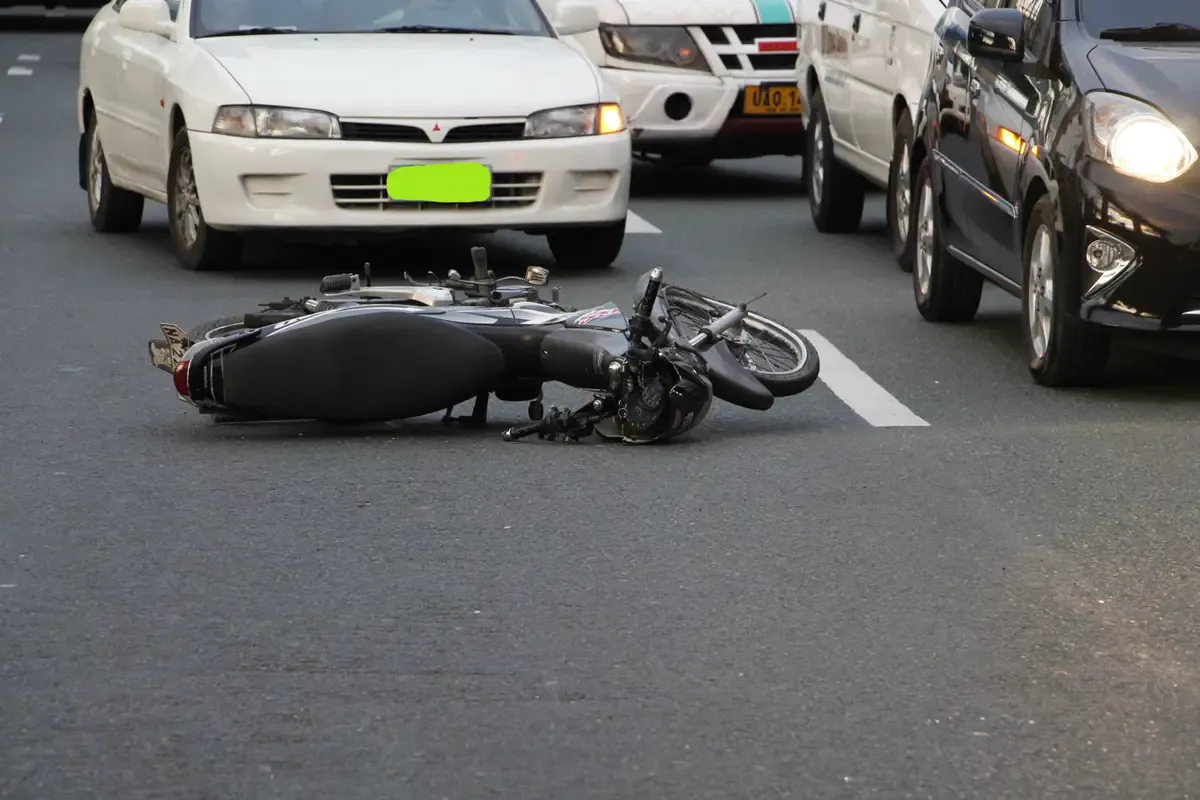
Motorcycle on its side on a roadway after a crash
Scene photos and vehicle details help explain how a California crash happened.
Medical Records That Explain the Injury
Bring what shows the injury and the care, not every page in a portal. Useful items include the emergency visit summary, discharge papers, imaging reports, a current medication list, and the names of doctors you are still seeing. If you went to urgent care the next day instead of an emergency room, that record still counts.
Add a symptom log if you have one. Note pain, missed therapy, new limits at home, and any change after the first week. Gaps in care matter, so write the reason if you waited. Transportation trouble, a full clinic, or advice to rest are facts, not excuses you need to hide.
Bills and explanation-of-benefits letters show who has paid so far. Bring those if you have them. If a provider has not released records yet, bring the request confirmation or the portal screenshot that shows the request date. The lawyer can follow up. You do not need a complete chart before the first meeting.
For a truck, motorcycle, or pedestrian injury, also note visible damage and safety gear. Helmet use, seat position, and whether you were a driver, passenger, or person on foot all change the medical story. DC Law Group handles those crash types across California, so name the role you had rather than using a generic "accident" label.
Insurance Papers and the Other Driver's Coverage
Bring your own insurance card, the declarations page if you have it, and any letter, email, or text from an insurer. Include the claim number and the adjuster's name. If you already gave a recorded statement, write the date and what you were asked. Do not create a new recorded statement just to prepare for the consultation.
California drivers must carry proof of financial responsibility. The Driver's Handbook lists minimum liability limits of $30,000 for injury or death of one person. The limits are $60,000 for injury or death of more than one person, and $15,000 for property damage. The California Department of Insurance auto guide explains that most people meet that duty with a liability policy, and that the policy is a contract with coverages and exclusions. Bring the page that shows your limits and any uninsured motorist coverage. If the other driver had no insurance, say that plainly.
Rideshare crashes add another layer. If you were in an Uber or Lyft, bring the trip receipt, driver name, and any in-app message. A commercial truck crash may involve a carrier name on the door, a USDOT number, and a separate insurer from the driver. Photograph those markings if the truck is still at the scene. Our truck accident and Uber and Lyft accident pages describe how those claims differ from a two-car crash.
Work, Wage, and Daily-Life Proof
Employment proof shows how the injury changed your days. Bring a recent pay stub, a work schedule, and any note from an employer about missed shifts. If you are self-employed, a simple list of canceled jobs is enough for a first meeting. Do not invent numbers you cannot support.
Also list practical limits. Who drove you to appointments? Did a family member miss work to help? Are you unable to lift, stand, or ride a motorcycle you used before? Those facts belong next to the wage papers because they explain why the medical chart alone is incomplete.
If a prior injury involves the same body part, bring a short note on it. Prior treatment is not a reason to skip the consultation. Hiding it creates a worse problem later, when records surface. A one-line history is better than a speech.
Photos, Messages, and Other Evidence
Photos are often the fastest way to show what happened. Bring vehicle damage, the intersection or property, visible injuries, and the safety gear you wore. Keep original files. Screenshots of a deleted text are weaker than the message thread itself.
1. Save scene and vehicle photos in one album, in time order.
2. Export witness texts and rideshare messages without cropping the dates.
3. Photograph the police card, tow receipt, and any claim letter.
4. Write names next to phone numbers so a later reader knows who spoke.
5. Note anything you do not have yet, such as a report still pending.
A broader guide to what to do after a California car accident covers scene steps. This consultation list is narrower. It is the packet you bring to the first meeting, not a full evidence manual. If your crash was a motorcycle or pedestrian impact, the same photo habit applies, and our motorcycle accident and pedestrian injury pages explain those claim settings.
What Matters Most if Your File Is Thin
People delay booking because they think the folder must be perfect. It does not. If you only have three facts, bring those three. The date, the place in California, and a description of the injury are enough to start a useful conversation.
| If you only have this | Bring it anyway | Why it helps the first meeting |
|---|---|---|
| No police report yet. | Your timeline and any photo of the scene or vehicles. | The report number can be requested later. |
| No medical chart. | Where you were treated and the date. | Records can be ordered with your permission. |
| No insurance card from the other driver. | Plate, company name, or rideshare trip receipt. | Coverage searches start with identity, not a full policy. |
| No wage documents. | Employer name and days missed. | Pay proof can follow after the consult. |
| Only a phone full of photos. | The album, plus a one-page timeline. | The timeline ties the photos to the injury story. |
Rank the thin file in this order: identity and reachability, date and California location, accident type, treatment so far, then insurance and work proof. That order matches how DC Law Group asks you to prepare on the appointment page.
How DC Law Group Uses the Packet
The firm’s main office is at 9100 Wilshire Blvd., Suite 240E, Beverly Hills, CA 90212. Consultations are also arranged for clients elsewhere in California, including matters tied to the Modesto, Sacramento, San Diego, and Sherman Oaks office listings. You do not need to appear in Beverly Hills to start. A phone consult works when travel is hard.
In the meeting, expect questions about fault clues, medical care, and insurance contact you have already had. What a California car accident lawyer does is broader than this prep list. The first consult is a screen for fit and next steps, not a trial. David Cohan’s practice focuses on people hurt in motor vehicle, truck, motorcycle, rideshare, pedestrian, and premises matters. Bring facts that match the event you actually had.
The initial consultation is free and confidential. The firm works on contingency in injury matters, and the live site states there are no fees unless the firm wins. Ask how that applies to your facts instead of assuming a result. This page is general information, not legal advice, and reading it does not create an attorney-client relationship.
Timing still matters. Code of Civil Procedure section 335.1 sets a two-year deadline for many California actions for injury or death caused by wrongful act or neglect. Some claims are shorter. Bring the incident date so the deadline can be checked against your facts. Do not wait for a perfect file if that date is getting old.
Call (310) 571-8860 before your consultation if you want help sorting which papers to pull first.
Frequently Asked Questions
Do I need every medical record before a California injury consultation?
No. Bring the records you already have, plus the names of providers and the dates of care. DC Law Group can request the rest after you decide to move forward. A missing chart is not a reason to delay the first call.
What if I do not have a police report yet?
Bring your timeline, photos, and any card or report number you were given. A report can be requested later. If the crash caused injury or more than $1,000 in property damage to one person, also note whether an SR-1 was filed with the DMV.
Should I bring insurance letters and adjuster emails?
Yes. Include the claim number, the adjuster's name, and any statement you already gave. Those papers show what the insurer has been told. Do not start a new recorded statement solely to prepare for the meeting.
Can I book a consultation if I only remember the date and city?
Yes. The appointment page says you can schedule without every document. Share the date, the California location, the accident type, and a phone number. Add photos or wage notes later if you find them.
Is the first consultation free, and how do I book it?
Yes. The initial consultation is free and confidential. Book a weekday on the appointment page, use the contact page if the calendar does not fit, or call (310) 571-8860. Have your short timeline nearby when you call.
Call DC Law Group at (310) 571-8860 to book your California injury consultation.