


A crash involving a rideshare vehicle can raise hard questions when the at-fault driver has no insurance or not enough coverage. If you are looking for an uninsured rideshare accident lawyer california residents can speak with, start by identifying which insurance policies may apply, what records could establish the rideshare driver's status, and how to protect your account of the collision.
**Contact DC Law Group to discuss your rideshare collision**
This guide explains the main coverage questions for injured passengers, rideshare drivers, and people in other vehicles. It is general information, not legal advice. Coverage depends on policy wording and the facts, so do not treat a general description as a decision about your claim.
Why can an uninsured-driver rideshare crash involve more than one policy?
A rideshare collision may involve the injured person's auto policy, a policy issued to the at-fault driver, and insurance maintained for a transportation network company (TNC) such as Uber or Lyft. Which policy matters can depend on who caused the crash, whether a rideshare driver was logged into an app, whether the driver had accepted a trip, and whether a passenger was in the vehicle.
That means “the other driver has no insurance” is an important starting fact, but it may not answer every coverage question. A driver may be uninsured, underinsured, or insured under a policy that disputes whether a particular trip was covered. Separately, the rideshare driver's own personal auto policy may have terms addressing commercial or app-based driving. Ask for the actual policy language and the insurer's written position rather than relying on a brief phone explanation.
The California Department of Insurance's Auto Insurance Basics for Ridesharing Drivers discusses insurance considerations for ridesharing, including uninsured-motorist protection. It is a useful starting point, but it does not decide how a particular policy applies to a particular crash.
What does uninsured or underinsured motorist coverage do?
Uninsured motorist (UM) coverage may apply when an at-fault driver has no applicable liability insurance. Underinsured motorist (UIM) coverage may become relevant when the available liability coverage is not enough to address the injury claim. The exact terms, limits, proof requirements, and claim process depend on the policy and applicable law.
Do not assume that UM/UIM automatically applies just because an accident involved a rideshare. The injured person may need to identify whose policy is being considered, confirm whether the person qualifies as an insured under it, and establish the other driver's responsibility and insurance status. A passenger's own policy, a household policy, or coverage connected with a rideshare trip may raise different issues.
Coverage disputes can also arise over whether a vehicle or driver fits the policy's definition of an uninsured motorist, how other payments affect the claim, or whether notice and cooperation requirements were met. Keep policy documents and all claim correspondence. If an insurer asks you to provide a recorded statement, sign a release, or accept a payment, understand what the request covers before responding.
Your role in the collision can shape the questions. A passenger may need to identify coverage through a household policy or the rideshare trip, while an injured rideshare driver may need to explain whether the app was active and whether a trip had been accepted. Someone in another vehicle may be dealing with the at-fault driver's insurer and a separate UM/UIM policy. These are examples of issues to investigate, not assumptions about which insurer must pay.
Ask each insurer to identify the policy it is reviewing, the information it still needs, and any deadlines or notice instructions. Keep a copy of what you send. If the answers conflict, a written explanation can help a lawyer compare the insurer's position with the policy language and the available trip records.
It can help to make a simple coverage map before the first detailed call. List each person and vehicle involved, the role each person had, and the insurer or company connected to them. Add a separate line for each policy you know about, even if you do not yet have a copy. Mark each item as confirmed, reported but unverified, or unknown. That distinction prevents a guess—such as assuming a driver had no policy—from being repeated as an established fact.
Also separate two questions that are easy to blend together: whether a particular policy might cover the event, and whether the evidence establishes who caused the collision. A coverage inquiry may continue while fault is being investigated. One unanswered question does not necessarily resolve the other, so track them separately in your notes and ask what information remains necessary for each.
**Call DC Law Group at 310-571-8860 to discuss your coverage questions**
Which rideshare period matters after a crash?
For a rideshare driver, the app's status around the time of the collision can be central to identifying potential coverage. A driver's personal trip, waiting for a request, traveling to pick up a passenger, and transporting a passenger are not necessarily treated the same by every policy. TNC coverage terms and applicable requirements may change by phase.
Passengers and people in other vehicles may not know what the app displayed. That is why trip receipts, app records, dispatch information, and driver or company records can be useful. A claimant should not guess at a period from memory alone if records may be available.
| Situation to clarify | Records to seek | Why it can matter |
|---|---|---|
| Rideshare driver was not using the app | Driver's account, trip history, witness details, and any available app status record | May help identify whether personal auto coverage or another policy should be examined |
| Driver was available for a ride request | App activity and time-stamped trip or dispatch records | May help determine which coverage terms applied during that phase |
| Driver had accepted a request or was carrying a passenger | Ride receipt, pickup and drop-off data, messages, and trip records | May help confirm the trip stage and direct inquiries to potentially relevant insurers |
| At-fault driver may lack enough insurance | Policy declarations, written coverage responses, and claim communications | May help evaluate whether UM/UIM or another policy should be reviewed |
The table is a practical checklist, not a guarantee that any listed policy will pay. Preserve the information and let the relevant insurers or counsel assess the policy terms against the documented facts.
How can you confirm the trip stage without guessing?
Begin with the information available to you. A passenger can save a ride receipt, confirmation messages, and screenshots showing pickup and drop-off details. A driver may be able to locate the trip in the app history and preserve the relevant screen or receipt. A person in a different vehicle can note what the rideshare driver or passenger said, but should distinguish a direct observation from something another person reported.
Write down the time shown on each record and the device or source it came from. If a screenshot does not show a date or time, keep it with the message or receipt that supplies that context. Do not edit or annotate the original image; make a separate note explaining what you believe it shows. This creates a clearer record if the times differ or an insurer later asks how you reached a conclusion.
If the company or driver controls the records, note who may have them and when you requested them. Keep any response, including a statement that a record is unavailable. A lawyer can assess whether a formal preservation request or another step is appropriate. Avoid assuming that a receipt alone proves every detail of app status or insurance coverage.
What should you do after an uninsured rideshare collision?
Prioritize health and safety. Call emergency services when needed and obtain medical evaluation for injuries. Some symptoms are not obvious at the scene. Follow the advice of qualified medical professionals and keep records of appointments, instructions, and symptoms.
1. Report the collision. Use the appropriate channels for law enforcement and the rideshare company. Give accurate information, and keep any report or incident reference number you receive.
2. Save trip details. Keep the rideshare receipt, trip screen, driver and vehicle information, pickup and drop-off details, and relevant app messages. Take screenshots if information is visible in the app, and retain the original files.
3. Document what you can safely observe. Photograph vehicle damage, the scene, visible road conditions, and contact information for witnesses. Do not put yourself in danger to collect evidence.
4. Notify potentially relevant insurers promptly. Ask how to submit a claim and what documents are needed. Be factual and avoid speculating about fault or the driver's app status.
5. Keep a claim file. Save emails, letters, policy information, claim numbers, medical records, bills, wage records, and notes of calls, including the date and the name of the person you spoke with.
6. Get legal guidance before important decisions. A lawyer can review the available coverage, communications, and evidence with you. Do not sign a broad release or settle without understanding what claims it may close.
For more on rideshare-specific issues, see DC Law Group's overview of Uber and Lyft accident representation and its guide to what to do after being hit by a Lyft driver in California. Each collision is different, but keeping the trip records and insurance communications together makes it easier to ask focused questions.
How should you organize the first calls with insurers?
Before calling, write a short factual summary: when and where the collision happened, your role, the vehicles involved, what you personally observed, and whether you received medical attention. Keep the summary neutral. If you do not know whether the other driver had insurance or which rideshare phase was active, say that the detail is not yet confirmed rather than filling the gap with an assumption.
For each call, record the date, the company, the representative's name or reference number, the claim number, and the documents requested. Ask where to send records and how the company will confirm receipt. If an instruction is given by phone, consider requesting it in writing, especially when it concerns a deadline, a statement, a medical authorization, or a release.
When sending documents, keep a copy of the exact files and a note of when they were sent. Do not send original photographs, receipts, or records if a copy will do. If different insurers ask for overlapping information, track each request separately and clarify the purpose and scope before signing authorizations. An organized paper trail helps you spot inconsistent requests and identify which questions remain open.
What evidence can help clarify coverage and fault?
Coverage and responsibility are separate questions. A policy may be available only if certain conditions are met, while the injury claim still requires evidence about how the collision happened and who was responsible. Keep evidence that can help address both topics.
* App and trip records: receipts, status screens, messages, and timestamps can help establish whether a rideshare trip was underway.
* Collision records: photographs, witness contact details, incident reports, and vehicle information can help preserve the scene's initial facts.
* Medical documentation: treatment records and provider instructions can document the injuries and care received. Share health information through appropriate channels, and understand the scope of any authorization.
* Insurance documents: declarations pages, policy notices, denial letters, and coverage explanations can show which issues remain unresolved.
* Income and daily-impact records: if injuries affect work or routine activities, retain relevant employment information and a clear account of the changes.
Evidence may be held by a driver, insurer, rideshare company, repair facility, or another third party. Records can be overwritten or become harder to obtain over time. A lawyer can assess whether a formal preservation request or other step is appropriate for the specific matter.
Make a folder for each evidence category rather than keeping every item in one long email chain. Use clear filenames, such as the date and a short description, and keep a separate index noting what the document is, who supplied it, and whether it is an original or a copy. This is especially useful when you have several pictures of the same vehicle or messages from different dates. Do not alter the original files; add explanations in the index or a separate note.
For a collision scene, preserve context along with close-up damage images. A wide view may show vehicle positions, lane markings, traffic controls, or a nearby landmark; a close view may show a damaged area. If another person took the pictures, record their name and how to reach them. These details do not establish fault by themselves, but they can help an investigator understand what the images depict.
Keep a consistent account of symptoms and changes in daily activity, without trying to diagnose yourself. Note when a symptom began, whether it changed, and what appointments or care instructions followed. Medical questions belong with qualified health professionals. Share records through appropriate channels and do not post private medical details publicly while a claim is being reviewed.
Not every item will be available immediately. Make a list of missing records and the likely holder: for example, a rideshare company may have trip data, a witness may have scene photographs, and an insurer may have its own coverage correspondence. Record the request date and any response. A missing document is a status to track, not a reason to invent what it would say.
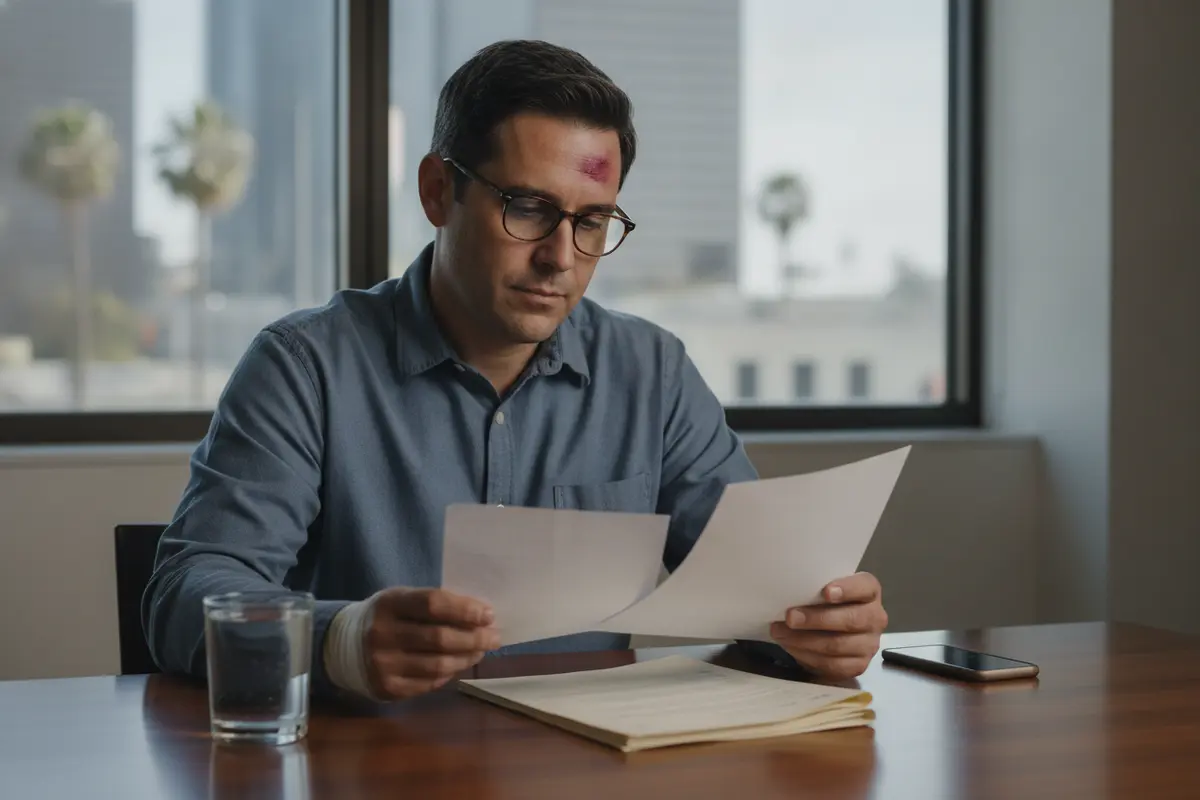
Rideshare passenger reviewing trip records and insurance documents after a crash
What questions should you ask a lawyer early?
A useful first conversation should help you understand the next steps, not promise a particular result. Bring what you have, even if some records are missing. Consider asking:
* Which policies should be identified based on my role in the crash and the rideshare trip's status?
* What information could establish whether the rideshare driver was logged in, waiting for a request, on the way to pick someone up, or carrying a passenger?
* How can we confirm whether the at-fault driver's insurance is absent or insufficient?
* What should I do if an insurer asks for a statement, medical authorization, or release?
* Which records should I preserve now, and who may have them?
* What deadlines could apply to my claims, and are any shorter deadlines involved?
* Who will explain case updates and respond to questions as the matter proceeds?
Deadlines depend on the claim, the parties, and the facts. A claim involving a public entity or another special circumstance may have a different process from an ordinary insurance claim. Do not wait for every record to arrive before asking about deadlines.
You can make the consultation more focused by preparing a one-page timeline. Include the collision date, when you first contacted the rideshare company or insurers, medical visits, any written coverage decisions, and any upcoming response dates shown in correspondence. Separate confirmed dates from estimates. If you have not received a document, list the request and the date it was made. A timeline lets counsel see the sequence without requiring you to recall every detail during an initial discussion.
Bring the policy declarations or insurance cards you have, but do not assume they show every relevant term. If you lack the documents, identify the insurer or policyholder and explain how you know about the policy. Bring photographs, the trip receipt, incident or police report information, and any letters that state a policy will not respond. A partial file is still useful when you clearly label what is missing.
Ask the lawyer to distinguish immediate tasks from issues that require further investigation. For example, a prompt notice request may need attention while the rideshare trip phase is still being confirmed. Ask who will handle follow-up, how to share additional records, and how you will receive updates. Clear responsibilities can make it easier to avoid missed requests and duplicate submissions.
It is also reasonable to ask how the firm evaluates whether it can assist, what information it needs before making that decision, and how its fee arrangement is explained. Do not rely on a general article to decide whether to sign a representation agreement. Read any agreement carefully, ask about provisions you do not understand, and take the time you need to make an informed choice.
How can DC Law Group help evaluate an uninsured rideshare claim?
DC Law Group handles personal injury matters involving Uber and Lyft collisions. Its team can discuss the crash circumstances, review the available documents, and help identify questions about potentially relevant insurance coverage and evidence. A consultation is an opportunity to explain what happened and learn whether the firm may be able to assist; it is not a promise about coverage or an outcome.
The firm serves injured people in California. You can read more about the team on the DC Law Group team page. When you contact the firm, it can be helpful to have the date and location of the collision, your role (passenger, rideshare driver, or occupant of another vehicle), the trip details you know, and any insurer correspondence available.
If you were injured in another type of vehicle collision, the firm's car accident practice page provides a related starting point. The best next step depends on the facts and on what you need help understanding.
To speak with DC Law Group about your situation, use the contact page or call 310-571-8860.
**Ask DC Law Group about your uninsured rideshare collision**
Frequently asked questions
Can I make a claim if the driver who caused the rideshare crash had no insurance?
Possibly. Depending on the facts and policy terms, an injured person may have a claim under applicable uninsured-motorist coverage or another policy. The first steps are to confirm the driver's insurance status, identify policies that may apply, and review any notice or claim requirements. No single outcome follows automatically from the other driver's lack of coverage.
Does rideshare insurance apply whenever a driver has the app?
Not necessarily under every policy or for every purpose. The driver's app status and trip phase can matter, and coverage terms may differ. Preserve time-stamped trip details and ask the insurer to identify the policy terms it is applying.
Can a rideshare passenger use their own UM/UIM policy?
That depends on the policy, the passenger's status under it, the accident facts, and other applicable coverage. A passenger should not assume either that personal coverage is available or that it is ruled out. Have the actual policy reviewed before relying on a general description.
What if the rideshare company or insurer says another policy should respond?
Ask for the position and its basis in writing, including the policy or records being relied on. Keep the response and any request for additional information. If insurers dispute responsibility for handling the claim, a lawyer can review the communications and discuss possible next steps.
How soon should I speak with a lawyer?
Consider seeking guidance promptly, particularly if you were injured, coverage is disputed, or records may be held by others. Deadlines vary by claim and circumstances, so do not rely on a general article to calculate the time available.
**Ask DC Law Group about your uninsured rideshare collision**
An early review can help you understand which coverage questions remain open and what information may be important to preserve.