
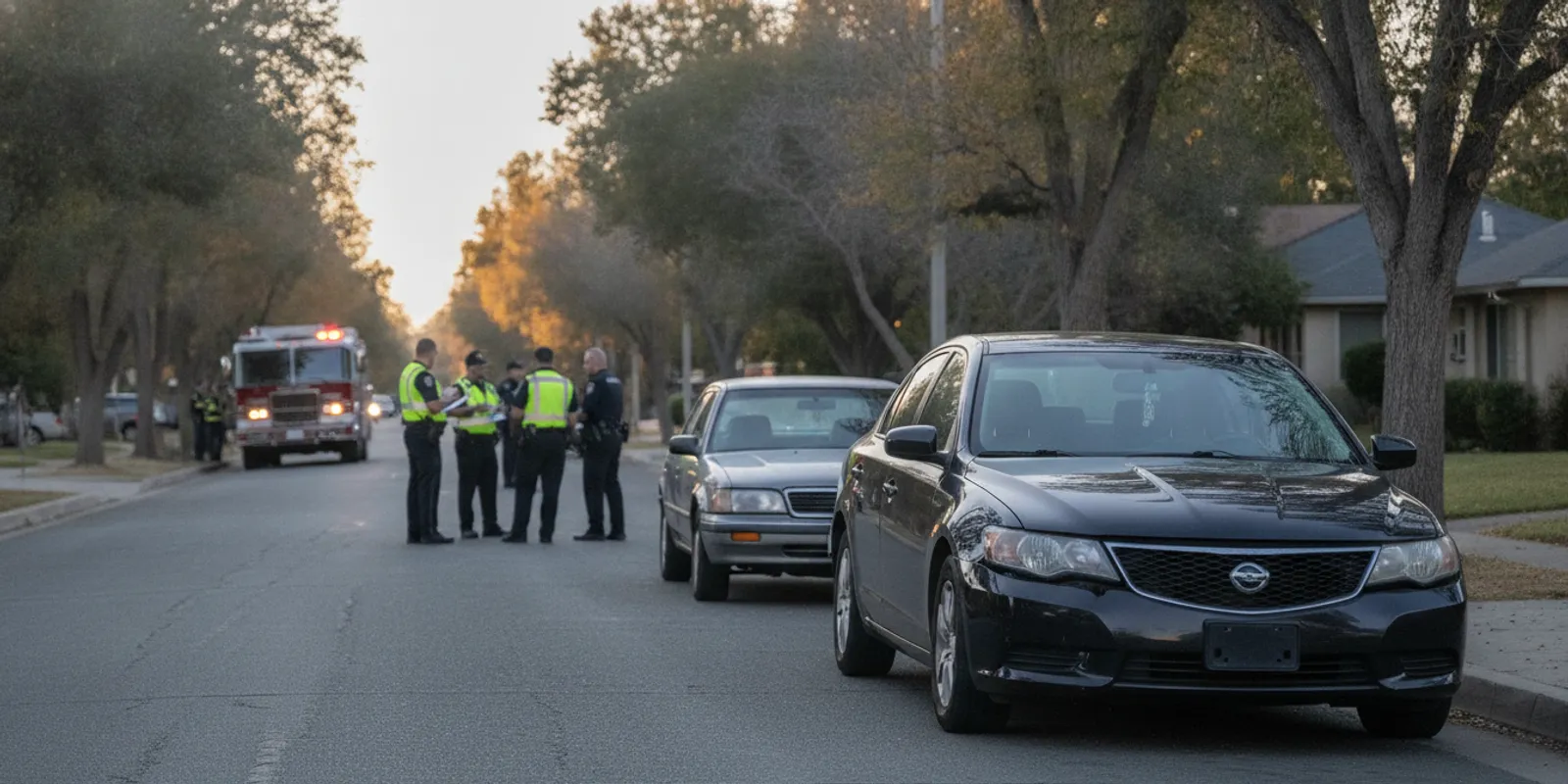
If you are searching for a Modesto Lyft accident attorney after a collision, the evidence you preserve can help clarify what happened and who may be responsible. Start with safety and medical care; then, only if it is safe, record basic scene details and keep the trip information. The following steps can help you preserve useful information without putting yourself at risk.
Request a consultation with DC Law Group
What should you do first after a Lyft crash in Modesto?
Do not put evidence gathering ahead of safety. Move away from traffic if you can do so safely, call 911 when anyone is seriously injured or there is an immediate hazard, and follow instructions from emergency responders. Do not remain in a dangerous roadway to photograph vehicles or collect information.
Get medical attention for injuries, even if symptoms seem manageable at first. Tell the medical provider that the symptoms followed a collision and describe what hurts, when it began, and whether it is changing. Keep discharge paperwork, visit summaries, prescriptions, and follow-up instructions. A clear record of care helps connect the reported injury with its timing and progression.
When it is safe, record these scene details:
- Date and approximate time
- Exact location, direction of travel, and nearby cross streets or landmarks
- Weather, lighting, road surface, and traffic conditions
- Anything unusual you observed
Write down what you remember promptly, while distinguishing your own observations from what another person told you. Do not guess at speed, distance, or fault if you do not know.
Which details matter if you were a Lyft passenger?
A passenger may have information about the trip that other people at the scene do not. Save a screenshot of the ride in the Lyft app, including the ride status, pickup and destination information, driver profile, vehicle description, and any trip receipt or notification that remains available. Keep the date and approximate time. Do not assume the app will retain every detail indefinitely.
Write down where you were seated, whether you had fastened your seat belt, and what you remember just before and during the impact. If you noticed a sudden stop, lane change, signal, obstruction, or another vehicle’s movement, describe it in plain language. Avoid filling gaps in memory. A passenger’s account is most useful when it is specific about what they personally saw, heard, or felt.
Save messages or calls with the driver and any communications about the trip or collision. If you report the incident through Lyft, save the confirmation and copies of what you submitted. Keep relevant messages in their original form; do not edit screenshots or delete the conversation. The Lyft-specific coverage question can depend on the driver’s app status and the circumstances of the trip. Preserve the trip record rather than assuming which policy applies.
For a broader explanation of issues that can arise in these cases, see DC Law Group’s California rideshare accident guide. Passengers and drivers may have different facts and potential sources of insurance, so clearly identifying your role in the trip is a useful starting point.
What should you document at the crash scene?
Take photographs or video only when it is safe and lawful to do so. Capture several views instead of relying on a single close-up. Useful images may show:
- Vehicle positions and visible damage
- Debris and skid marks
- Traffic signals, road signs, and lane markings
- The wider intersection or roadway
Include identifying details for the location so the images can be understood later.
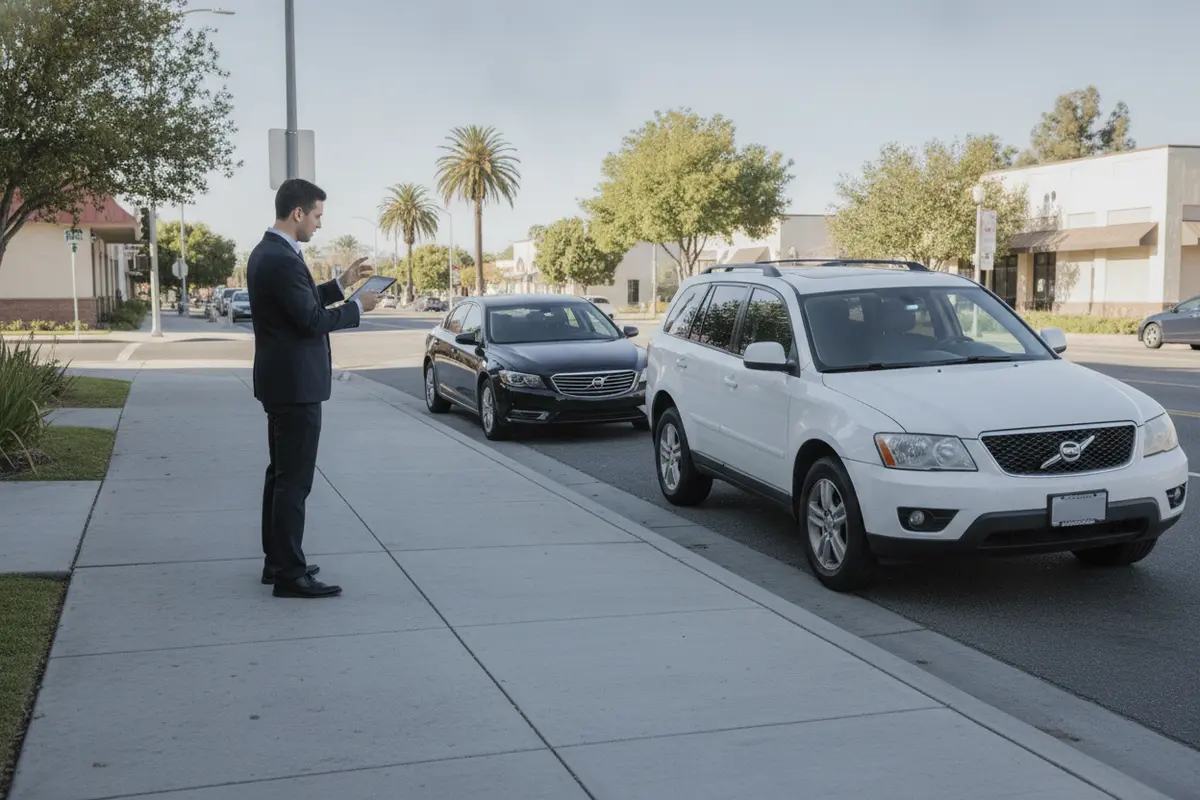
A person safely records vehicle positions and roadway details after a rideshare collision in Modesto.
If a vehicle has to be moved, do not assume that the final positions show where the vehicles were at impact. Note that the vehicles were moved and, if known, who moved them and why. Do not enter a vehicle or roadway to retrieve an item if doing so could put you at risk.
Record the make, model, color, license plate, and visible damage of each involved vehicle when possible. Include the rideshare vehicle and any other vehicle, bicycle, or road user involved. If a commercial vehicle was involved, note any company name or identifying number you can safely see. Do not confront another driver or attempt to inspect a vehicle without permission.
Witness information can be difficult to recover later. Ask willing witnesses for their names and a phone number or email address. If they are comfortable, ask what they saw and where they were positioned. Keep their words separate from your own account. Do not pressure anyone to take sides or tell them what to say.
How can you preserve the Lyft trip and communications?
Preserve the Lyft trip and communication records you have:
- Trip details and any available receipt
- In-app reports and follow-up messages
- Original emails and texts, including sender details and timestamps
- Any report number or confirmation shown in the app
If a detail disappears from the app, make a note of what you recall seeing and when; do not recreate a screenshot or alter a record to make it look contemporaneous.
You may also want to keep a simple incident log. Note when you contacted Lyft, law enforcement, an insurer, or a medical provider, what was discussed, and any reference number provided. Record facts rather than conclusions. For example, note that you reported neck pain at a particular appointment instead of trying to diagnose the cause yourself.
When communicating with an insurer or another party, be accurate and measured. You can ask for questions or requests to be provided in writing if you need time to understand them. Avoid posting crash details, photographs, or injury updates publicly while matters are being reviewed. Do not delete relevant posts or messages; preserve them and seek guidance about how they may relate to your situation.
How can you create a useful timeline?
A short timeline can help keep dates and events in order. Begin with the approximate collision time and location. Add the time you sought care, reported the crash, contacted Lyft or an insurer, and received any report number. If you do not know the exact time, mark it as approximate instead of presenting an estimate as certain.
For each entry, identify the source of the information. Separate what you personally observed from what a witness, responder, medical professional, or app record reported. For example, a note might say, “I felt pain in my shoulder after the impact,” followed by the appointment date when you first reported it. That is clearer than making a medical conclusion about how an injury occurred.
Keep the timeline factual and update it when you find a new document or remember a detail. Do not alter old entries without noting the correction and date. If memories differ or a detail remains uncertain, say so. A careful record can preserve uncertainty as well as facts; there is no need to force every part of the event into a single explanation.
Use a secure location for the timeline and supporting files. Avoid sharing sensitive personal or medical information publicly. Keep an unedited copy of original photographs, messages, and documents, then make a separate working copy if you need to add labels or notes. This makes it easier to distinguish the original item from later explanations.
What records may help explain injuries and losses?
Keep medical records and appointment information together, including emergency care, follow-up visits, referrals, and instructions. Save receipts or records for injury-related items and document missed work or changes to usual responsibilities where applicable. These materials do not decide fault by themselves, but they can help describe the timeline and practical effects of an injury.
Keep the original photographs and files, not just versions sent through a messaging app. Back them up in a secure place and label copies with the date, location, and what they depict. Preserve damaged clothing or personal property if it is safe to do so. Do not repair, discard, or alter potentially relevant items before documenting them, unless immediate safety or practical needs require action.
| Evidence | How to preserve it | What it may help clarify |
|---|---|---|
| Lyft trip record | Save app screenshots, receipts, and report confirmations | Your role, trip timing, and ride details |
| Scene photographs | Keep original files and note where and when each was taken | Vehicle positions, visible damage, signs, and road conditions |
| Witness information | Record names and contact details with permission | What another person independently observed |
| Medical documents | Keep visit summaries, referrals, and follow-up instructions | Reported symptoms and the sequence of care |
| Communications | Save complete messages, emails, and claim references | What was reported, requested, or acknowledged and when |
How do police reports and other official records fit in?
If law enforcement responds, write down the agency name and any report or incident number provided. Ask how to request a copy and follow the agency’s stated process. A report can preserve basic information gathered at the scene, but it may not contain every witness account, later medical detail, or fact needed to resolve responsibility. Read it carefully and note any factual error or missing information; do not assume a report alone answers every question.
A directory listing describes accident reports associated with the Stanislaus County Sheriff’s Department. Use the relevant law-enforcement agency’s own instructions to confirm how records for your particular collision may be requested. A crash in Modesto may involve a different responding agency depending on where it occurred.
Keep any report copy with your own notes and the scene documentation. If the report includes a witness name or vehicle detail you did not record, make a note of it, but distinguish that information from what you personally remember. If a record appears incomplete, preserve it as received and ask the agency about its process for correction or adding information.
What if you were the Lyft driver or another road user?
The same safety and evidence principles apply, but the trip and insurance details may differ. If you were driving for Lyft, preserve the app status and trip information around the time of the collision. If you were a driver, passenger, pedestrian, bicyclist, or other road user, record your own position and what you observed without assuming that a rideshare driver’s account covers the full event.
More than one person may have contributed to a collision. Record each vehicle and witness separately, and avoid deciding responsibility based only on the fact that a rideshare vehicle was involved. If you need information on car-collision representation, see DC Law Group’s car accident practice-area page. The relevant facts and applicable insurance questions depend on the particular crash.
What evidence can disappear or become harder to obtain?
Some evidence is temporary. Vehicles may be repaired or moved, surveillance systems may overwrite recordings, and people may become harder to reach. If you know of a nearby business or residence with a camera, note its location and the approximate time window. Do not enter private property or demand footage; simply preserve what you observed and let an appropriate representative make a request if needed.
Record the names of responding personnel or witnesses when available, along with any publicly visible identifying details. Do not interfere with an investigation or attempt to obtain restricted records. Preserve the original trip and communication information, and make a prompt written account of the scene while your memory is fresh. If you are unsure whether an item matters, retaining it in its original form is generally more useful than discarding it.
How can a Modesto Lyft accident attorney help assess the evidence?
A lawyer can review the available records, help identify unanswered questions, and explain how your role in the Lyft trip may affect the issues to investigate. Depending on the facts, that review may include trip status, driver and vehicle information, witness accounts, photographs, medical records, and communications with insurers or Lyft. A lawyer can also help distinguish an established fact from an assumption or a point that needs further investigation.
DC Law Group is a California personal injury law firm with a team of personal injury attorneys. The firm offers a free consultation and mobile consultations, including coming to you. A consultation is an opportunity to explain what happened, ask questions, and learn whether the firm may be able to assist; it does not guarantee a particular result. Visit the firm’s Uber and Lyft accident practice-area page for related information.
If you have a report, trip details, photographs, or medical paperwork, organize what you have before you speak with a lawyer. You do not need to resolve every unanswered question on your own. A clear timeline and preserved original records can make an initial discussion more focused.
For another practical resource, DC Law Group explains how to read a police report after a California accident. Compare that report with your own notes and flag specific discrepancies rather than changing or annotating the original document.
What should you bring to an initial consultation?
Bring or gather what you already have; do not delay asking for help because a report or record is missing. A useful starting set may include:
- Date and location of the collision
- Your role in the trip and the Lyft ride details
- Photographs and witness contact information
- Any report number
- Medical visit summaries
If you have only some of these items, explain what is unavailable rather than trying to recreate it.
Prepare a concise account of how the collision happened and what you remember before and after it. Include any detail that is uncertain, such as an estimated time or an unclear vehicle movement. Note the questions you want answered, including how to preserve a particular record or what information may still need to be confirmed. This can help keep the conversation focused on your circumstances.
Keep a copy of anything you share and note the date it was provided. Do not send original physical items unless specifically arranged, and use care with sensitive records. The lawyer can explain what additional information may be useful after learning more about the crash. An initial discussion is not a substitute for urgent medical care or directions from emergency responders.
Contact DC Law Group about your Lyft collision
Frequently asked questions
Should I report a Lyft collision in the app?
Save the trip details and use the app’s available reporting process if appropriate. Keep the confirmation and any follow-up communications. An app report does not replace emergency assistance, medical care, or any separate reporting process that may apply to the circumstances.
What if I did not take photographs at the scene?
Do not return to an unsafe location to recreate scene photographs. Write down what you remember, preserve the app record and communications, and keep any photographs taken by others if they share them with you. Note who took each image and when, if known.
Can I rely on a police report to determine who was at fault?
A report may contain useful observations and identifying information, but it may not include every relevant fact or make a final determination of legal responsibility. Preserve a copy, review it for factual accuracy, and consider the other available evidence as well.
What if my injury symptoms become clearer later?
Seek medical care when needed and explain the timing and development of your symptoms accurately. Keep the resulting records and follow-up instructions. Do not delay urgent care while trying to gather documents or contact a lawyer.
When should I speak with a lawyer?
You can request a consultation when you want help understanding what records to preserve or how the circumstances may affect a claim. Deadlines and required steps can depend on the facts and parties involved, so do not assume a general online article determines the time limit for your situation.
Request a consultation with DC Law Group
After a Lyft crash in Modesto, prioritize safety and care, save the trip and scene information you can gather safely, and keep original records organized. Careful documentation can help you and a legal professional evaluate the next steps based on the facts of your collision.