

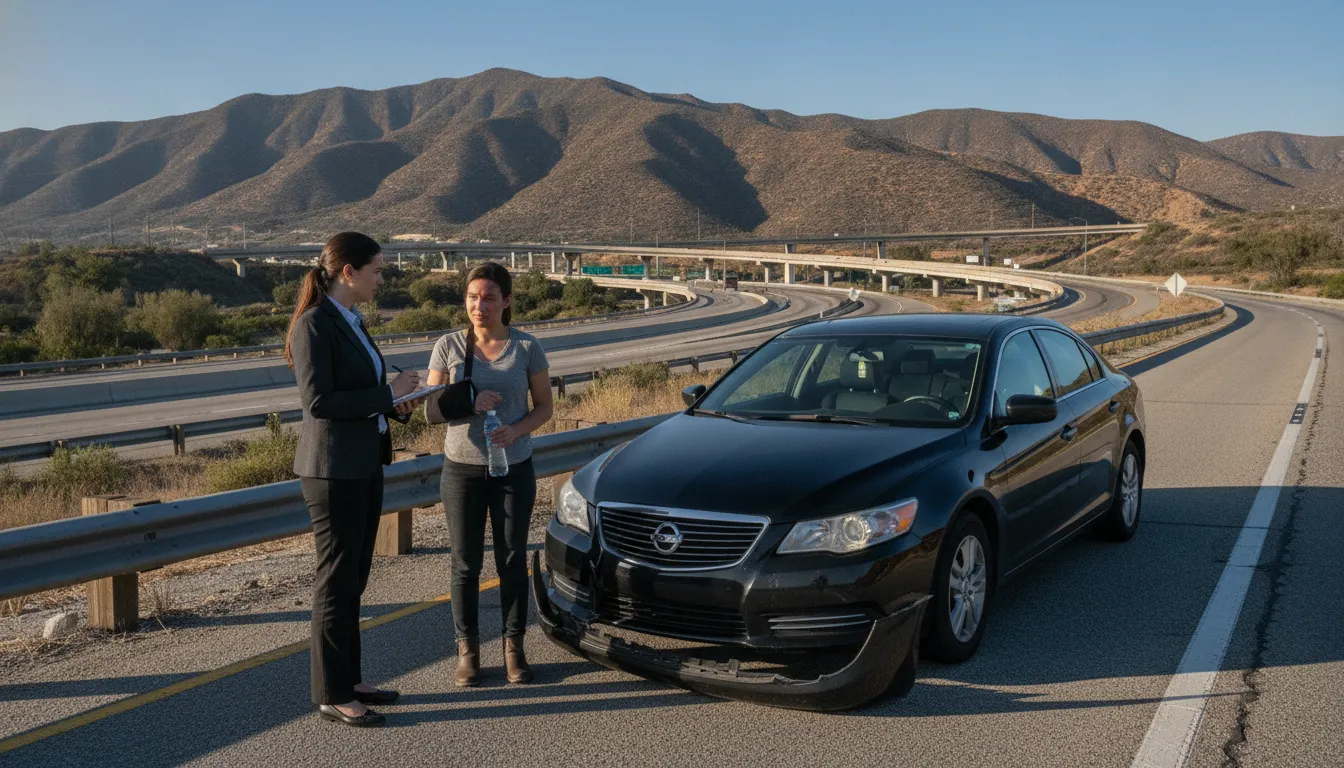
After a rideshare collision near San Bernardino, the visible damage is only part of the problem. The available insurance may depend on whether the driver was offline, waiting for a trip request, or transporting a passenger, as well as who was injured and which vehicle caused the crash.
Call DC Law Group at (310) 571-8860 to discuss the circumstances of your crash and the records that may matter.
A san bernardino rideshare accident lawyer can review app status, trip records, personal and commercial policies, collision evidence, and each person's role before identifying potential claims. Coverage is fact-dependent, so a policy limit is not automatically a promise that an injured person will recover that amount.
Start by protecting your health and preserving information while the details are still available.
The immediate steps you take at the scene can help preserve evidence, clarify who was involved, and prevent important app or witness information from disappearing.
What to do after a rideshare crash near San Bernardino
- Move to safety if you can. If the vehicle is creating an immediate hazard, move away from traffic without leaving an injured person who needs help. Call 911 when anyone may be hurt or the collision presents a roadway danger. Request medical responders and law enforcement, and avoid arguing about fault at the scene.
- Report the collision and identify everyone involved. Give responding officers the location, direction of travel, vehicle descriptions, and your account of what happened. Record the rideshare driver's name, license information, vehicle details, and whether the driver was waiting for a match, traveling to pick up a passenger, or carrying a passenger.
- Obtain medical care promptly. Tell the medical provider about every symptom, even if it seems minor at first. Follow reasonable treatment instructions and keep discharge papers, prescriptions, referrals, and later appointment records. A medical record can help connect an injury to the collision.
- Document the scene when it is safe. Photograph vehicle positions, visible damage, roadway conditions, traffic controls, lighting, and your injuries. Note the time, weather, nearby businesses, and any apparent cameras. For more practical guidance, review these steps after a highway collision.
- Preserve trip and app records. Save the ride receipt, driver and vehicle information, pickup and drop-off details, route data, in-app messages, and screenshots showing the driver's app status. Do not assume the platform will preserve every record automatically.
- Collect witness information. Ask witnesses for their names and reliable contact details. If nearby businesses or vehicles may have video, note their locations promptly because recordings may not be retained indefinitely.
- Use caution with insurers. Notify the appropriate insurer as required by the applicable policy, but do not guess about coverage. Give a recorded statement without understanding the request, or sign a release before the injuries and available policies are evaluated. Coverage can depend on the driver's app status, role, policy terms, and the facts of the crash.
How rideshare insurance coverage works in California
Coverage after a rideshare collision is not determined only by whether the vehicle displayed an Uber or Lyft emblem. The analysis usually begins with the driver's role, the status of the rideshare app, the driver's personal policy, the applicable TNC policy, and the facts of the crash. A passenger, a driver, and a person in another vehicle may therefore face different insurance questions.
When the app is off, the driver's personal auto policy may be the starting point, subject to its terms and any rideshare endorsement or exclusion. When the app is open, California treats the driver as operating within a defined TNC coverage period. The driver may be waiting for a match, traveling to pick up a passenger, or transporting a passenger. Those distinctions can affect which policy responds and what limits may be available.
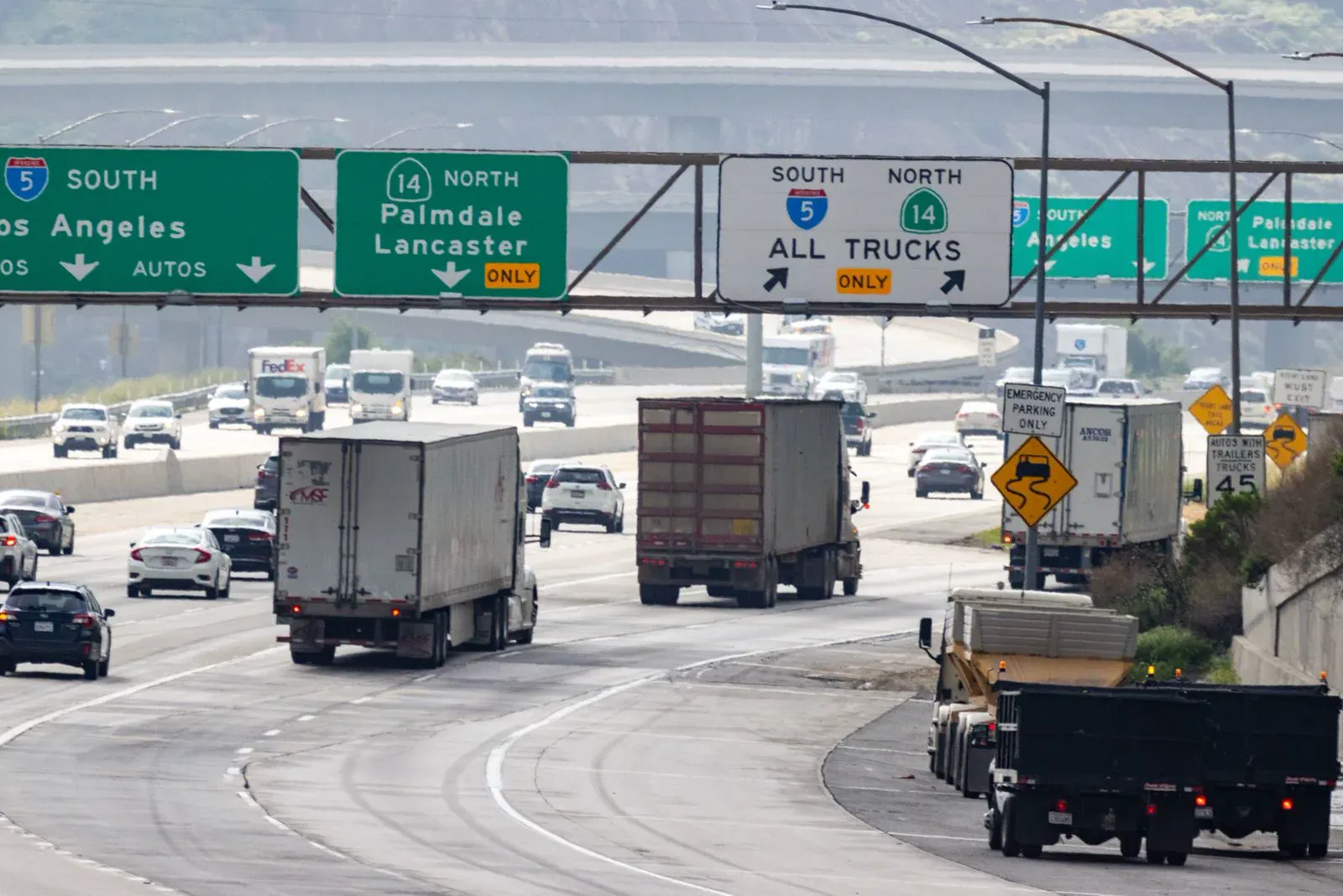
Traffic with cars and trucks on a California freeway near San Bernardino
California's Public Utilities Commission identifies three TNC periods. Period 1 begins when the app is open while the driver waits for a match. Under California state law and CPUC requirements, Period 1 primary coverage includes at least $50,000 per person and $100,000 per incident for death and personal injury, plus $30,000 for property damage. California state law and CPUC requirements also require $1 million in primary commercial insurance during Periods 2 and 3, with $1 million in uninsured and underinsured motorist coverage during Period 3. These are regulatory requirements, not a promise that a particular claim will be paid at a stated limit. Review the CPUC's TNC insurance requirements.
Insurers may dispute app status, driver conduct, fault, medical causation, or policy application. Preserving the trip record, screenshots, crash evidence, and policy communications can help establish which coverage analysis applies.
California TNC coverage periods: a practical comparison
California organizes transportation network company (TNC) insurance around the driver's status in the rideshare app and the stage of the trip. That status can affect which policy responds first after a collision in San Bernardino. The table below summarizes the regulatory framework described by the California Public Utilities Commission's TNC insurance requirements.
| Period | App status | Coverage framework | Why it matters |
|---|---|---|---|
| Period 1 | App open and waiting for a match. | California state law and CPUC requirements set primary TNC insurance minimums of $50,000 per person for death and personal injury, $100,000 per incident for death and personal injury, and $30,000 for property damage. | The driver may be working through the app without carrying a passenger. Confirming whether the app was active and whether a match had been accepted can help identify the applicable coverage framework. |
| Period 2 | The driver has accepted a ride request and is traveling to pick up the passenger. | California state law and CPUC requirements require primary commercial insurance of $1 million. | The accepted request and the driver's route may be important evidence. App records, dispatch information, and trip details can help establish this period. |
| Period 3 | The passenger is in the vehicle and the accepted trip is underway. | California state law and CPUC requirements require primary commercial insurance of $1 million, and the framework also includes $1 million in uninsured and underinsured motorist coverage. | Passenger, driver, and third-party claims may involve different liability questions. The trip record, collision facts, and all potentially applicable policies should be evaluated together. |
These limits describe a regulatory insurance framework, not a guaranteed recovery. The amount and source of available coverage can depend on the driver's exact app status, the people involved, the cause of the collision, policy terms, exclusions, and other facts. A San Bernardino rideshare accident lawyer can review those details and determine which evidence and policies may be relevant to the claim.
Who may be responsible after an Uber or Lyft crash?
Responsibility after a rideshare collision depends on how the crash happened, who was injured, and what the driver was doing in the app at the time. A passenger, rideshare driver, pedestrian, or occupant of another vehicle may have a different claim. The analysis can involve more than one potentially responsible party, so an early conclusion based only on the driver's statement or the company's name may be incomplete.
The rideshare driver
If the rideshare driver caused the collision, the driver's personal auto policy and the applicable transportation network company (TNC) policy may both need review. The driver's app status matters. Whether the app was off, open while the driver waited for a request, en route to pick up a passenger, or carrying a passenger can affect which coverage framework applies. California's TNC insurance requirements describe these periods, but they do not guarantee payment in every claim. Policy language, evidence, and the driver's conduct still matter.
The passenger and other injured people
A passenger's claim may involve the rideshare driver, another motorist, or both. A person in another vehicle may have a claim against the rideshare driver if that driver caused the crash. A pedestrian or another third party may also be involved if a vehicle, road condition, or separate act contributed to the injuries. Comparative fault is fact-dependent. An injured person may be assigned some responsibility without that automatically resolving every insurance or liability question.
The rideshare company and available policies
Uber or Lyft may have commercial coverage connected to the driver's app status, while the driver's personal policy may also be relevant. That does not mean the driver is automatically an employee or that the company is automatically liable for every collision. A when to contact a car accident lawyer resource can help explain why prompt review matters, especially when app records and policy communications may become disputed.
California Code of Civil Procedure section 335.1 generally provides a two-year period for an action based on death or injury caused by another person, but exceptions and government-claim rules can change the analysis. Review the statute at California Code of Civil Procedure section 335.1 and seek case-specific legal guidance promptly rather than relying on a general deadline.
What evidence can support a San Bernardino rideshare injury claim?
Evidence should help establish who was involved, what the driver was doing through the rideshare app, how the collision occurred, and how the injuries developed. Preserve the trip receipt, ride details, driver and vehicle information, and the app status shown around the crash. If available, save screenshots rather than relying on continued access to the app. Do not edit or crop original files, and keep copies with the date they were created.
Records from the crash and the rideshare app
Photographs can document vehicle damage, road conditions, traffic controls, visible injuries, and the surrounding scene. Dashcam footage, nearby business or traffic-camera video, and phone recordings may help clarify vehicle movement and timing. Witness names and contact information can be important because memories and recordings may become harder to locate. A police report may also provide an initial account, although it does not by itself resolve every liability question.
Medical and insurance documentation
Seek appropriate medical evaluation and retain records showing symptoms, diagnoses, treatment, referrals, and restrictions. Keep communications with insurers, the rideshare company, the driver, and any claims representative, including claim numbers and written requests for information. These materials can help connect the collision to the claimed injuries and identify which parties or policies may require further review.
Organizing these records early can make the California accident claim timeline easier to understand because passengers, rideshare drivers, and people in other vehicles may face different evidence and insurance issues. The significance of any single item depends on the facts of the San Bernardino collision.
How a San Bernardino rideshare accident lawyer can help evaluate coverage
Rideshare collision claims can involve more than one potentially responsible party and more than one insurance policy. A San Bernardino rideshare accident lawyer can begin by reconstructing what happened and identifying each person's role: passenger, rideshare driver, another motorist, pedestrian, or vehicle owner.
One important starting point is the driver's activity in the rideshare application. Was the driver offline, logged in and waiting for a request, en route to pick up a passenger, or carrying a passenger? Those details can affect which policy may apply. Counsel can request trip records, app-status information, crash reports, photographs, witness accounts, medical records, and communications with the rideshare company or its insurer. The goal is not to assume coverage, but to compare the available policies with the facts and the applicable terms.
The analysis may also examine whether the driver was working for a rideshare platform, using a personal vehicle, or involved in another business activity at the time of the collision. A lawyer can assess potential liability among the driver, another motorist, and other entities when the evidence supports doing so. This is especially important when an insurer characterizes the incident differently from the injured person's account.
After evaluating the records, counsel can help determine which claims should be presented, what supporting evidence is needed, and how communications with insurers should be handled. For a broader explanation of the process, see how an auto accident lawyer helps. The appropriate strategy remains fact-dependent, particularly when injuries, app records, competing accounts, or overlapping policies are involved.
Questions to ask before pursuing a rideshare injury claim
What insurance coverage may apply?
Coverage can depend on whether the driver was offline, logged into the rideshare app and waiting for a request, traveling to pick up a passenger, or carrying a passenger. The driver's personal policy and the applicable rideshare policy may each require review. Do not assume that the app company's policy automatically determines the result.
What evidence should I preserve?
Keep the trip receipt, driver and vehicle information, app screenshots, photographs, medical records, and messages about the collision. Note the time and location while they are fresh. Witness information, nearby video, dashcam footage, and records showing the driver's app status may help establish what happened. Avoid deleting app communications or discussing disputed facts in recorded statements before receiving guidance.
Can I bring a claim directly against Uber or Lyft?
That question cannot be answered solely by the company name on the app. The potential defendants and claims depend on who was injured, who caused the collision, the driver's role, the available policies, and the applicable legal agreements. A passenger's agreement may affect the process, while a claim by another driver, cyclist, or pedestrian may involve different issues. A lawyer can evaluate those distinctions before you choose a course of action.
How soon should I seek legal guidance?
Prompt review can help preserve electronic records and clarify which deadlines may apply. California law generally provides a two-year limitation period for many injury actions, but exceptions and special claim procedures can change the analysis. See California Code of Civil Procedure section 335.1, and do not wait to investigate a claim simply because the general period may appear open.
Call DC Law Group at (310) 571-8860 to discuss your rideshare injury claim.
Frequently Asked Questions
What insurance coverage applies after an Uber or Lyft crash?
Coverage depends on whether the driver was offline, waiting for a ride request, en route to a passenger, or carrying a passenger. California transportation network company rules use these app-status periods, and required limits can differ substantially. The applicable policy, the driver's role, and the facts of the collision must be reviewed before coverage is assessed. See the California Public Utilities Commission requirements.
What should I do after a rideshare accident in San Bernardino?
Seek medical attention, report the collision when appropriate, and preserve the trip receipt, app screens, driver information, photographs, witness details, and any available video. Avoid deleting messages or making recorded statements about fault before you understand what happened. Prompt documentation can help establish the trip status and how the collision occurred.
Can I sue Uber or Lyft directly after a rideshare accident?
Not necessarily. The available legal path may involve the rideshare company's insurer, the driver's personal insurer, another motorist, or more than one party. Whether a direct claim against Uber or Lyft is available depends on the collision facts, applicable law, policy language, and any passenger agreement. A careful liability review is necessary before choosing a filing strategy.
How can I prove who caused a rideshare accident?
Useful evidence may include the rideshare app record, GPS or trip data, photographs, vehicle damage, medical records, witness statements, dashcam footage, nearby surveillance, and communications with insurers. These materials can help compare each person's account with the physical evidence and identify whether more than one party contributed to the collision.
How long do I have to file a personal injury claim after a rideshare crash in California?
California Code of Civil Procedure section 335.1 generally provides two years for an action based on death or injury caused by another person. Exceptions and different rules may apply, including in claims involving a government entity. Do not wait until the deadline is close. Prompt legal review can help identify the correct deadline and preserve evidence.
Contact DC Law Group about your rideshare crash
Rideshare coverage can depend on details such as the driver’s app status, the people involved, and the available insurance policies. A focused review may help clarify which records and coverage questions matter in your situation near San Bernardino.
Call DC Law Group at (310) 571-8860 to discuss your rideshare collision.