

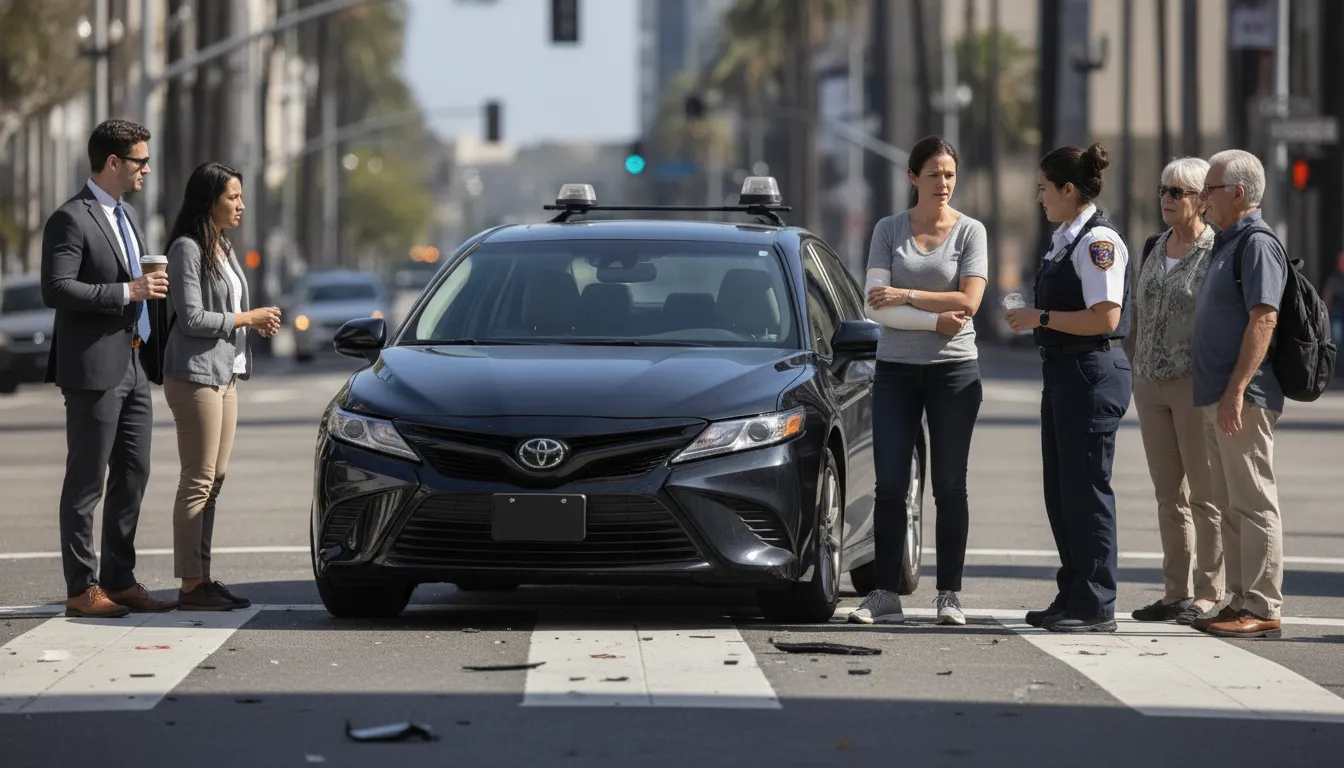
Hit by Lyft Driver in California: What to Do After a Crash
A Lyft collision can leave you injured, shaken, and unsure which insurer should hear from you first. Focus on safety, medical attention, accurate documentation, and preserving evidence about the driver's activity in the Lyft app.
Call DC Law Group at (310) 571-8860 for a case review.
If you were hit by lyft driver in California, move to a safe location, call emergency services when appropriate, exchange information, and identify witnesses. Photograph the scene and preserve trip or app-status evidence. Seek medical care and avoid detailed statements about fault or coverage until the facts are documented.
Rideshare collisions can involve a driver's personal policy, Lyft-related coverage, your own uninsured or underinsured motorist coverage, or more than one insurer. The relevant coverage layer may depend on what the driver was doing in the Lyft app when the impact occurred. Liability and coverage are separate questions. The driver may be responsible for causing the collision, while the insurers still dispute which policy responds.
What to Do Immediately After a Lyft Driver Hits You
If you were hit by a Lyft driver as a pedestrian, passenger, cyclist, or another motorist, take practical steps in a safe order. Do not place yourself in additional danger to collect evidence. If your injuries prevent you from handling these tasks, ask a trusted person to help preserve information.
- Get safe. Move away from traffic when you can do so without worsening an injury.
- Call for help. Request emergency services when the situation requires immediate medical or police assistance.
- Record information. Exchange driver details and identify witnesses.
- Preserve evidence. Photograph the scene and save Lyft trip or app-status records when safe.
Move away from immediate danger
If you can move without worsening an injury, get away from moving traffic and other hazards. Turn on hazard lights or ask someone nearby to warn approaching vehicles when it is safe. If you cannot move, remain where you are and wait for emergency responders. Do not return to a damaged vehicle or roadway merely to retrieve property.
Call 911 when emergency help is needed
Request emergency help for serious pain, heavy bleeding, loss of consciousness, breathing problems, a suspected head or spinal injury, an unsafe roadway, or any situation requiring immediate assistance. Ask for a police response when someone is injured, vehicles are damaged, or the people involved disagree about what happened. Give the officer a factual account of what you personally observed.
Exchange information without arguing about fault
Record the driver's name, phone number, driver's license information, license plate, vehicle description, insurance information, and Lyft affiliation. Note whether a passenger was present or whether the driver said the vehicle was traveling to pick someone up. Do not argue with the driver at the scene. Do not make a hurried statement that minimizes your injuries or accepts a theory you have not investigated.
Identify witnesses and preserve the scene
Ask witnesses for their names and contact information. Note what each person says they saw, without asking anyone to change or expand an account. When safe, take wide photographs showing the roadway, traffic controls, lighting, vehicle positions, and nearby businesses. Take closer photographs of damage, visible injuries, damaged clothing, debris, and other physical evidence. Keep the original files and note when they were taken.
Save evidence showing Lyft activity
If it can be done without interfering with another person's phone, record visible information showing whether the Lyft app was active. Relevant evidence may include a trip screen, pickup status, driver profile, ride receipt, messages, or an incident-report confirmation. Do not access another person's account or attempt to alter digital records. A screenshot can preserve a lead, but the complete app history may need to come from Lyft or another source.
How to Document Injuries and Crash Evidence
Medical care protects your health and creates a contemporaneous record of what you reported after the collision. Seek an evaluation when appropriate, follow professional medical instructions, and tell providers that your symptoms followed the crash. Do not dismiss symptoms because they appeared gradually. Do not exaggerate them either. Accurate medical information is more useful than a conclusion about what an insurer should pay.
Keep a complete medical file
Save discharge instructions, imaging referrals, prescriptions, work restrictions, follow-up notes, bills, and appointment records. Keep a dated symptom log that describes pain, mobility limits, sleep disruption, and effects on ordinary activities. Record missed appointments and why they occurred. If treatment changes, preserve the instructions explaining the change.
Your medical providers decide what care is appropriate. This article does not replace medical advice. A consistent record helps separate what you experienced from later assumptions. It can also help a legal professional understand the timeline when reviewing a potential injury claim.
Preserve physical and digital evidence
Keep damaged clothing, a bicycle helmet, vehicle parts, and other relevant items when practical. Do not repair or discard property before photographing it and preserving records. Save dashcam footage, nearby camera information, text messages, call records, location history, trip confirmations, and social-media posts that may place people or vehicles at the scene. Make a backup in a secure location.
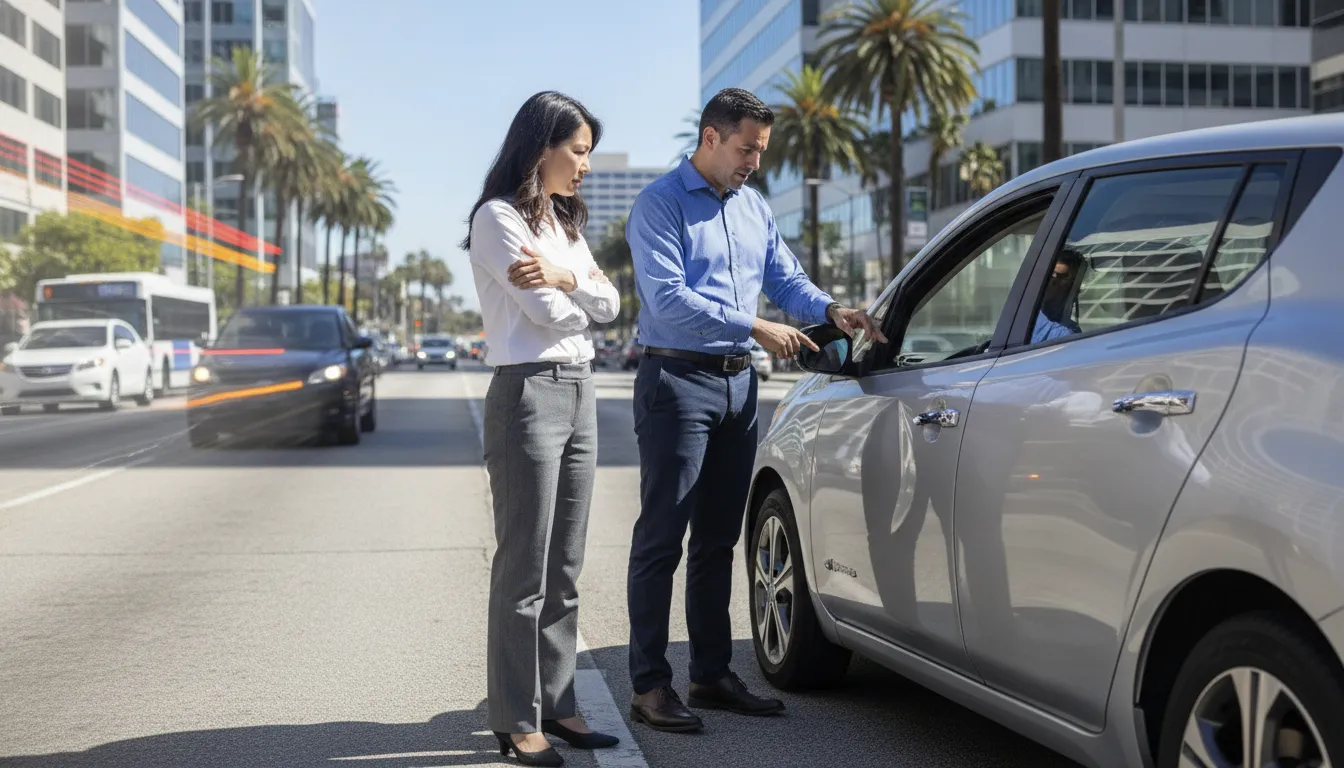
California rideshare collision scene after a person is hit by a Lyft driver
Build a clear incident timeline
Write down the date, time, location, weather, road conditions, traffic signals, direction of travel, point of impact, and what happened immediately afterward. Use facts you remember rather than guessing at speed or distance. Identify every person or company that may have information, including witnesses, medical providers, vehicle owners, and insurers. A timeline can expose missing information without filling the gaps with speculation.
DC Law Group's Uber and Lyft accident practice page provides a relevant starting point for California rideshare questions. The firm's personal injury practice page provides broader context for injury claims. Use these pages as general information, then obtain advice based on the specific collision record.
Does Lyft Insurance Apply After a Hit by Lyft Driver?
Lyft insurance may apply after a collision, but coverage depends on the driver's app status, who caused the crash, the injured person's role, and the relevant policy terms. A Lyft logo alone does not identify the insurer or establish liability. Preserve app, trip, medical, and crash evidence while coverage is investigated.
Lyft insurance may apply when you are hit by a Lyft driver, but a Lyft decal or app alone does not answer the coverage question. The analysis can depend on who caused the collision, whether the driver was logged in, and whether a ride had been accepted. It can also depend on whether the driver was traveling to a passenger, whether a passenger was inside, and what the applicable policies say.
California regulates transportation network companies and requires insurance disclosures for covered transportation network activity. The California Public Utilities Commission provisions in Public Utilities Code section 5430 are part of that framework. The California Department of Insurance transportation network company guidance also explains that rideshare insurance questions require attention to the driver's activity and policy terms.
These rules do not guarantee that a particular claim will be accepted. An insurer may investigate fault, the driver's app status, the injured person's role, policy conditions, and available limits. Preserve the underlying evidence before treating an insurer's first position as final.
Lyft app stages and coverage questions
- Not logged into Lyft: Ask whether the driver's personal auto policy is the starting point for the analysis. Preserve the driver's statement, app records, personal policy information, and witness accounts.
- Logged in and waiting for a request: Ask whether a rideshare-related layer was available and what conditions applied. Preserve login status, timestamps, policy information, and whether a request had been accepted.
- Traveling to pick up a passenger: Ask whether the accepted trip placed the driver in a different coverage category. Preserve trip status, route, pickup details, app records, and communications.
- Transporting a passenger: Ask what coverage applied while the ride was underway and who was injured. Preserve passenger status, the ride receipt, fault evidence, medical records, and all insurer communications.
Lyft's driver materials describe insurance by app stage. You can review the company's California driver information, but company materials are not a substitute for reviewing the policy and collision facts. The identity of the responsible insurer may remain disputed while the evidence is collected.
What Insurance Questions Arise After a Hit by Lyft Driver?
The driver's app status can help identify which insurance layer to investigate, but it does not decide fault. Compare whether the driver was offline, waiting for a request, traveling to a pickup, or carrying a passenger with trip records, timestamps, witness accounts, and policy language. Ask insurers to explain their position in writing.
The driver's app status may influence the coverage analysis, but it does not replace the liability investigation. A complete review asks what the driver was doing, what each person did before impact, and which policies may respond. The following stages are a framework, not a prediction about any individual claim.
Offline or driving for personal reasons
If the driver was not logged into Lyft and was traveling for a personal reason, the driver's personal auto policy may be the primary place to begin. That does not automatically establish coverage or fault. Confirm the driver's statement against app records, trip information, witness accounts, and other evidence. A personal policy may also contain terms that require careful review.
Logged in and waiting for a request
A driver who is logged in and available may be in a different position from a driver who has accepted a trip. Preserve timestamps and any information showing the app status at the moment of impact. Ask insurers to identify the policy provision on which they rely. Do not assume that a brief verbal description of the driver's status resolves the issue.
Traveling to a passenger
After a driver accepts a request and travels to the pickup location, trip records may help establish a distinct stage. Save the ride request, pickup location, driver profile, timestamps, route details, and messages. If the driver disputes the trip status, the available records may become important. The existence of an accepted request still does not determine who caused the crash.
Transporting a passenger
When a passenger is inside the vehicle, the coverage framework may differ from the period before pickup. A passenger, pedestrian, or another motorist may each raise different questions about injury, fault, and available insurance. Identify who was in the vehicle, preserve the ride receipt, and obtain medical attention for any injury.
App data may be held by Lyft, the driver, an insurer, or another party. Do not try to obtain records by accessing an account that is not yours. Preserve what you lawfully possess and ask a qualified professional about requesting additional records.
How to Report the Crash and Protect Your Claim
Report a Lyft collision by requesting police assistance when appropriate, notifying your insurer under your policy, and using Lyft's available accident-reporting channel. Keep report numbers, claim references, screenshots, emails, and copies of documents. Give accurate information, but do not guess about fault, app status, future treatment, or coverage.
Reporting a collision creates an initial record, but it does not by itself decide negligence or coverage. Make reports accurately and keep copies of everything you submit. If you are injured, ask a trusted person to help manage communications while you focus on care.
Make a police report part of the record
Provide the responding officer with your name, contact information, location, direction of travel, observed vehicle movements, and known injuries. Avoid guessing about details you did not see. Request the report number or instructions for obtaining the report. Read the report when available and identify factual errors promptly, without changing your account to fit another person's version.
Notify the relevant insurers
Notify your own insurer according to your policy requirements. The driver's insurer or Lyft-related carrier may also contact you. Keep a communication log with the date, representative, claim number, topics discussed, and documents requested. Provide truthful information, but do not guess about app status, fault, future treatment, or the value of a claim.
Do not sign a release or provide a recorded statement about disputed issues without understanding what you are agreeing to. A request for information is not proof that the requesting insurer has accepted responsibility. Ask for important positions in writing.
Report through Lyft when appropriate
Use Lyft's available accident-reporting channel when you have relevant trip or driver information. Preserve the confirmation, screenshots, email responses, and claim reference. California law also addresses reporting obligations for transportation network activity. The driver or platform's reporting process does not eliminate your need to document the collision independently.
Keep claim records organized
Create folders for medical records, vehicle or property damage, police information, photographs, witness contacts, app evidence, and insurer communications. Use file names that include the date and a short description. Avoid editing original photographs. A structured file can make it easier to identify missing evidence and respond consistently.
What Liability Issues May Follow a Lyft Collision?
Liability asks who caused the collision and whether that conduct caused the claimed injuries. Coverage asks which insurance policy may respond under its terms. After a Lyft crash, investigators may examine traffic conditions, driver conduct, app status, witness accounts, video, medical records, and more than one insurance policy. These questions must be evaluated separately.
Insurance coverage and legal liability are connected but distinct. Liability asks whether a person or entity caused the collision and what injuries or losses followed. Coverage asks whether an insurer must provide benefits or defend a claim under a policy. A rideshare collision may involve both disputes at once.
Fault and comparative responsibility
Investigators may review traffic signals, right of way, speed, distraction, lane position, visibility, vehicle damage, witness accounts, and available video. If another person claims you contributed to the crash, compare that claim with the complete evidence. Do not accept or reject comparative responsibility based only on a conversation at the scene.
Pedestrian, passenger, and motorist claims differ
A pedestrian may have questions about visibility, crossing conditions, and the driver's approach. A passenger may have information about the trip and the driver's behavior inside the vehicle. Another motorist may have vehicle damage, a dashcam, and a different account of the traffic pattern. The same app status can therefore produce different evidence questions for different injured people.
Multiple insurers may communicate with you
Depending on the facts, communications may involve the Lyft-related carrier, the driver's personal insurer, your own carrier, another driver's insurer, or a property insurer. Keep each claim number and do not assume that one insurer's position binds another. Send documents consistently and retain proof of delivery.
For general information about related California collision issues, DC Law Group's California car accident practice page, pedestrian injury practice page, and truck accident practice page may be useful. A rideshare case still requires a fact-specific review.
When Should You Speak With a California Rideshare Lawyer?
Consider speaking with a California rideshare lawyer when injuries are serious, treatment is ongoing, fault is disputed, app status is unclear, or an insurer requests a recorded statement or release. Bring crash, medical, claim, and trip records to the review. Legal guidance can help organize the issues, but cannot guarantee a particular result.
Consider seeking legal guidance when an injury is serious, treatment is ongoing, or fault is disputed. Get advice if an insurer requests a recorded statement, the driver's app status is unclear, or more than one policy may apply. Early advice can help preserve evidence and avoid an avoidable statement. It cannot guarantee a result.
Coverage is unclear or disputed
Ask for help when insurers disagree about whether the driver was offline, waiting, traveling to a pickup, or carrying a passenger. The disagreement may affect which policy is investigated. Bring the police information, photographs, medical records, claim letters, and app evidence to the review.
Your injuries affect work or daily activities
Keep records of work restrictions, missed activities, treatment instructions, and changes to ordinary tasks. Discuss symptoms accurately with medical providers. A legal review can help identify what documentation may be relevant without asking you to predict the outcome of a claim.
Someone asks you to sign a release
Read every release and settlement document carefully. A signature may affect claims or rights beyond the immediate payment being discussed. Ask questions before signing. Keep the complete document and any related correspondence.
Call DC Law Group at (310) 571-8860 before responding to disputed rideshare coverage questions.
Frequently Asked Questions About Being Hit by a Lyft Driver
What should I do after a Lyft driver hits me?
Move to safety if possible, call emergency services when needed, exchange information, identify witnesses, photograph the scene, seek medical care, and preserve Lyft trip or app-status evidence. Avoid arguing about fault or making a detailed coverage statement before the facts are documented.
Does Lyft insurance cover the accident?
Lyft-related coverage may apply, but the answer depends on fault, the driver's app status, the injured person's role, policy terms, and other facts. The driver's personal policy, a rideshare-related policy, your own coverage, or more than one insurer may be relevant. Coverage cannot be confirmed from the Lyft logo alone.
How does the driver's app status affect my claim?
The status may help identify which coverage layer to investigate. Being offline, waiting for a request, traveling to a pickup, and transporting a passenger can raise different policy questions. Preserve trip records and timestamps, but do not treat a preliminary app-status statement as conclusive.
How do I report a crash involving a Lyft driver?
Request police assistance when appropriate, exchange information, notify your insurer under your policy, and use Lyft's available accident-reporting channel. Save report numbers, screenshots, emails, claim references, and all documents you send or receive.
What rights do Lyft passengers have after a collision?
A Lyft passenger may have injury and coverage questions involving the ride, the driver's conduct, the driver's app status, and potentially other vehicles. Obtain medical care, preserve the ride receipt and trip details, document symptoms, and seek advice when fault or coverage is disputed.
Talk With DC Law Group About Your Lyft Collision
Every rideshare collision turns on its own facts, evidence, injuries, and insurance language. If you were hit by a Lyft driver in California and want to discuss the next step, contact DC Law Group for a case review.
Call DC Law Group at (310) 571-8860 to discuss your Lyft collision.