

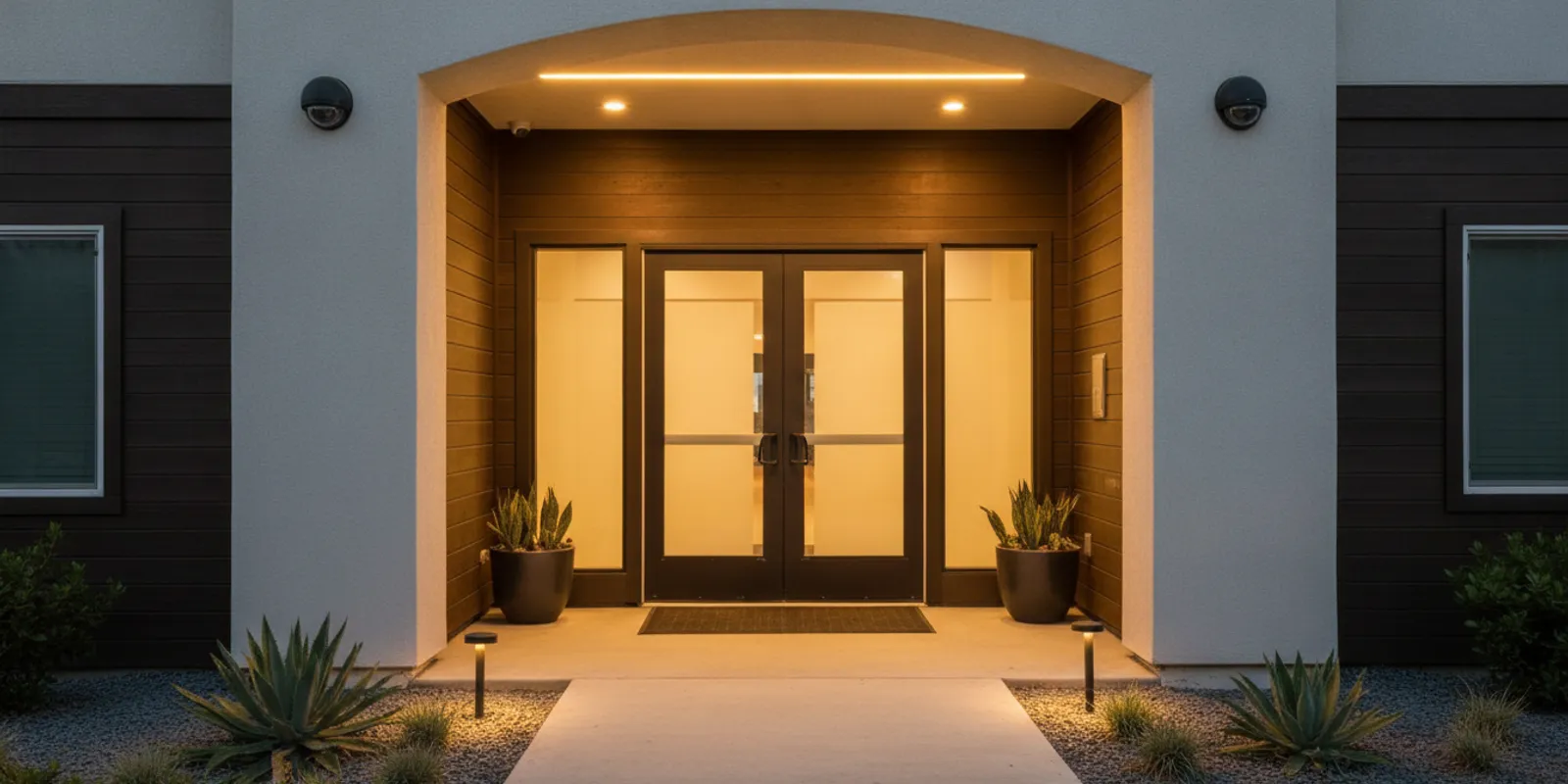
If you are researching a negligent security lawyer California residents can consult after an injury, start by understanding what the phrase means. A claim may involve an injury on property where a security-related hazard or inadequate safety measure contributed to a foreseeable risk. The details matter; an incident alone does not establish that an owner or operator is legally responsible.
Contact DC Law Group to discuss your situation
What does a negligent security lawyer California clients consult about?
Negligent security is a way of describing a potential premises-liability claim involving safety measures at a property. Depending on the facts, a question may arise about whether a person or business responsible for the property failed to take reasonable steps in response to a foreseeable risk, and whether that failure was a substantial factor in causing injury. Those are fact-specific legal questions, not conclusions that can be drawn from a brief description.
A property owner is not automatically responsible whenever a crime or injury takes place. An evaluation may consider the property's use, the nature and location of the danger, what was known or reasonably knowable beforehand, what precautions were in place, and how the event occurred. The relationship between the alleged security failure and the harm also matters.
Security measures can vary by location and context. Potentially relevant details might include lighting, locks, gates, access controls, staffing, cameras, posted procedures, or how reports of prior problems were handled. None of these items, considered alone, establishes liability. A camera that did not capture an event, for example, does not by itself show that the property's security was legally inadequate.
Which questions may a negligent security lawyer California clients consult ask about a claim?
California premises-liability matters generally turn on the evidence and applicable legal standards. A lawyer reviewing a possible negligent-security matter may ask several connected questions:
- Who controlled the area? The owner, tenant, property manager, business operator, security contractor, or another party may have had a role. Control over the particular location and responsibility for a safety measure can be important.
- What risk was present? The analysis may distinguish a specific, known hazard from a general concern. The location, timing, and circumstances of earlier incidents or warnings may be relevant.
- What was done in response? Records about maintenance, lighting, access procedures, patrols, staffing, or complaints may help show what precautions were selected and when.
- How did the event happen? The sequence, location, visibility, access route, and actions of those involved may help explain whether a particular security issue contributed to the injury.
- What harm resulted? Medical records and other reliable documentation can help describe the injury and its effects. A legal claim requires proof, not assumptions about the extent of harm.
These questions are not a checklist that guarantees a claim. They are areas that can guide careful fact gathering. A property may have more than one responsible party, or the evidence may show that a particular party did not control the relevant condition. An attorney can assess the facts and identify what further information may be needed.
What should you do after an incident at a property?
First, address immediate safety and medical needs. Seek medical attention when appropriate and follow the treating professional's instructions. Tell the provider what happened and describe symptoms accurately, including symptoms that appear later. Keep copies of discharge instructions, appointment information, and records you receive.
If it is safe and practical, make a private record of what you remember. Note the date, approximate time, exact area, lighting and weather conditions, people present, and the sequence of events. Record your observations promptly, while avoiding guesses about facts you did not see. Do not alter images or recordings; preserve original files and note when they were made.
Photographs may help preserve a view of the location, entrance, lighting, locks, barriers, signs, or other visible conditions. Take broad views as well as closer images, where safe. A condition can change quickly when a property is repaired or cleaned, so note when you took each image and what it depicts. Do not trespass or place yourself at risk to collect evidence.
Report the incident through an appropriate channel, if you can. Ask how to obtain a copy of any incident report and keep a record of the date, recipient, and response. Be accurate and concise. Do not speculate about responsibility or sign a statement you do not understand. If someone asks you to provide a recorded account, consider getting legal guidance first.
What evidence could help explain the security conditions?
Evidence can come from multiple sources. It can be useful to create a simple inventory, then note who may have the original record and when it could be lost, overwritten, or changed. Do not attempt to access another person's account or system.
| Evidence category | What it may help clarify | Practical preservation step |
|---|
| Photographs or video | Layout, lighting, access points, sightlines, and visible conditions | Keep original files, dates, and unedited copies |
|---|
| Incident and security records | When a report was made, what response followed, and relevant procedures | Write down the report location and request process |
|---|
| Witness information | What others saw or heard and the event's sequence | Record names and contact details if voluntarily provided |
|---|
| Medical documentation | Evaluation, diagnosis, treatment, and reported symptoms | Keep visit summaries and follow care instructions |
|---|
| Messages and correspondence | Notice given, requests made, and responses received | Save complete messages with dates and attachments |
|---|
| Prior condition records | Whether a hazard or security concern was reported or addressed | Identify likely record holders; do not seek restricted files |
|---|
Security video can be especially time-sensitive because some systems routinely overwrite footage. If you believe a recording may exist, promptly make a written request asking that the relevant time period and location be preserved. Identify yourself, the date and approximate time, and the specific area as clearly as possible. A request does not guarantee that footage exists or will be provided. Keep a copy and note any response.
Other records may include maintenance logs, work orders, access-control records, staffing schedules, prior complaints, written security policies, or communications about a known condition. These records may be held by different entities. A person seeking records should use lawful, appropriate channels; a lawyer can advise about formal processes where applicable.
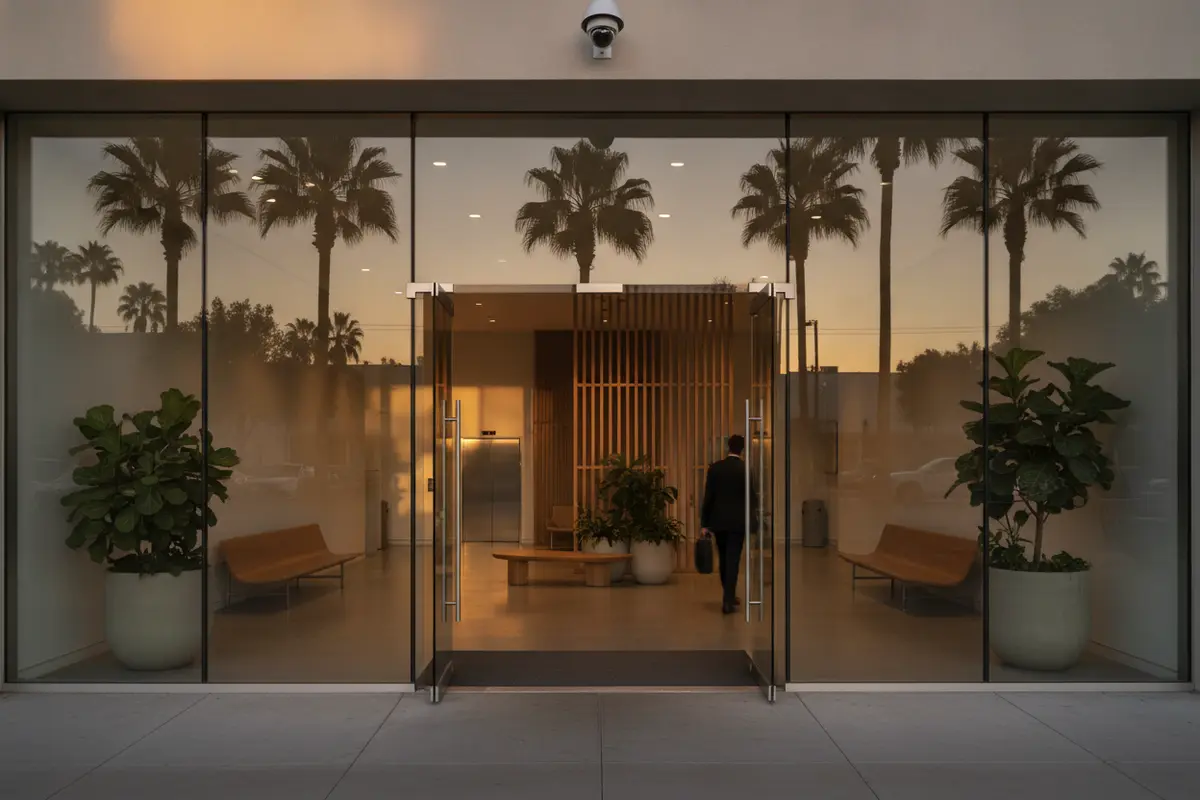
A lit property entrance with a security camera and clear sightlines
How can responsibility be shared?
More than one person or organization may have played a role in the conditions surrounding an incident. For example, a property owner may lease space to an operator, while a management company or security provider performs specific tasks. The contracts, actual responsibilities, notice, and control over the area may all matter. A business name on a sign does not necessarily answer who was responsible for a particular security measure.
The conduct of the injured person and other participants may also be considered under California law. Avoid assuming that one detail resolves fault. Preserve evidence and describe events candidly. If you are unsure of an answer, say so rather than filling gaps with an estimate.
For more information about the firm's broader injury practice, see DC Law Group's California personal injury overview. If an incident involved a vehicle rather than a property security issue, the firm also has information about California car accident matters and rideshare accidents.
What deadlines and records should you keep in mind?
Legal deadlines can depend on the parties, the type of claim, and other circumstances. Claims involving a public entity may have separate claim-presentation requirements and shorter timelines than many claims against private parties. Do not rely on a general article to calculate a deadline. Ask a California attorney promptly about the rules that may apply to your specific situation.
Organize records in a way that makes them easy to review. Keep one folder for medical paperwork, one for property or incident communications, and one for photographs and witness details. Maintain a brief dated timeline. Include each contact with a property representative or insurer, who you spoke with, and what was said. Preserve originals and do not discard documents because they seem repetitive.
When corresponding with a property owner, insurer, or other party, be truthful and measured. Avoid posting detailed accounts, photographs of sensitive records, or speculation on public social media. Do not assume that an informal conversation changes a legal deadline or preserves evidence. If you receive a document or release, make sure you understand it before signing.
How should you prepare to speak with an attorney?
A first discussion is more useful when you can explain the basic facts without trying to prove every issue on the spot. Consider writing down:
- When and where the incident happened, including the specific area of the property.
- What you directly observed before, during, and after the event.
- What injury or symptoms followed and what medical care you have received.
- Whether you reported the incident, and the name or role of the person you contacted.
- Names of witnesses and a list of photographs, messages, reports, or video you know may exist.
- Any contact from an insurer, property representative, or other party.
- Questions about who may have controlled the location and what security measures were in place.
You do not need to have every record before requesting a consultation. Be clear about what you know, what you do not know, and what you have not yet been able to obtain. A lawyer can explain whether the facts warrant further review, what information may be important, and what options are available. No responsible attorney can promise a result based on a short description.
DC Law Group represents injured people in California personal injury matters. To explore whether the firm's team can review your circumstances, use the contact page or call (310) 571-8860. The discussion should be based on your actual facts and any available documentation.
Where can you check California court information?
For general information about California courts and the court system, visit the California Courts website. Court information is not a substitute for advice about an individual claim or a deadline. If you are trying to determine whether a particular filing requirement applies, ask a lawyer to review the circumstances and identify the appropriate court or agency process.
How do property type and location affect the questions?
The setting can shape which records exist and who may hold them. A residential complex may have a management office, access system, maintenance vendor, or written procedures for visitor entry. A retail location may have opening and closing routines, employee reporting channels, and records of customer complaints. A parking structure may have separate operators, lighting systems, entrances, and camera coverage. These examples do not establish a legal duty by themselves. They show why identifying the exact place and the people responsible for it can be a useful early step.
At a hotel or other temporary lodging property, a guest may have interacted with front-desk staff, security personnel, or an online reporting process. Preserve booking confirmations, messages, room or entry details, and the names or roles of people you spoke with. For a workplace or commercial site, there may be an employer, building owner, contractor, or security vendor, each with a different role. A careful review should distinguish the entity that owns a property from the entity that operated a particular area or controlled a safety feature.
Publicly accessible spaces can have additional questions. A street, transit facility, public building, or other government-controlled location may involve a public entity. Special procedures can apply, so getting prompt legal guidance matters. Do not assume that notifying a front desk, police department, or general customer-service address satisfies a formal claim procedure. Keep the confirmation of any notice and ask a lawyer whether more steps are required.
Distance and visibility can also matter when reconstructing events. A photograph taken after the incident might not show the same lighting, furniture, gates, or access conditions that existed at the relevant time. Record whether the property changed the area afterward and, if known, when. If you revisit the location, do so only if safe and lawful, and do not interfere with operations. A written description made soon after the incident may preserve details that are difficult to recall later.
How can you keep your account clear and reliable?
A dated timeline can help separate direct memory from information learned later. Begin with your arrival, the route you took, and what you noticed. Then describe the event in sequence, using plain language. If you learned a detail from another person or a document, identify that source rather than presenting it as something you personally saw. This approach helps an attorney evaluate gaps without confusing recollection and assumption.
Keep a symptom journal if it is helpful to track how an injury affects ordinary tasks. Use factual entries: date, activity, symptoms, care received, and any limitation you experienced. Do not exaggerate or omit information to make a record seem stronger. Medical providers should receive an accurate account, including prior conditions or symptoms where relevant. A consistent, truthful record is more useful than a dramatic description.
Save correspondence in full, including attachments and dates. If you speak by phone, note the caller's name, organization, role, date, and the main points discussed. Avoid recording a conversation without first checking applicable law and obtaining appropriate consent. If a representative asks you to provide documents, ask what is requested and why; do not send private medical or identity information through an unverified channel.
Witnesses may move, change contact details, or forget specifics over time. If someone voluntarily provides contact information, record it accurately and avoid pressuring the person to adopt your interpretation. Do not coordinate stories. An independent account is valuable precisely because it reflects what that person recalls. An attorney can advise on appropriate next steps for obtaining witness information.
What are common misunderstandings about these claims?
A crime automatically makes the property owner liable. It does not. The specific duty, foreseeability, control, response, and causal connection must be evaluated under the applicable law and facts.
A camera or guard always prevents liability. No single security measure resolves every question. Its location, operation, scope, and relation to the actual risk may matter, along with other evidence.
No visible damage means no useful evidence exists. Conditions and records may change, and relevant information can include communications, witness observations, medical documentation, and procedures. The value of any item depends on what it shows and whether it can be authenticated.
A report proves the full account. An incident report can document that a report was made and may contain observations, but it may not include every detail or resolve disputed facts. Preserve a copy and review it carefully for accuracy. If it contains an error, make a note of the specific point and any supporting information.
An online article can decide the deadline. General information cannot account for every party, claim type, or procedural requirement. Have a qualified lawyer assess timing rather than relying on a general rule found online.
How can an attorney review the available information?
An attorney may begin by listening to the account, identifying potential parties, and determining what records could clarify control and notice. Depending on the matter, the review may involve photographs, reports, correspondence, contracts or maintenance material obtained through proper means, medical documentation, and witness accounts. The process should distinguish established facts from unanswered questions.
Some evidence needs to be preserved quickly. A lawyer may explain how to make a focused preservation request, what dates or locations to identify, and how to document the response. A request is not a substitute for a formal legal process where one is needed. The correct procedure depends on the circumstances and record holder.
Representation terms and communication expectations are also important to discuss. Ask who will be your point of contact, how updates are handled, what documents you may need to provide, and what fee agreement applies if the firm takes the matter. Read any written agreement carefully and ask questions before signing. Do not assume that every firm uses identical terms.
For more guidance on the firm's injury work, you can also review its guide to reading a California accident report and its steps after a California car accident. Those resources address other scenarios and do not replace advice tailored to a property-security incident.
What should you remember?
A negligent security claim depends on more than the fact that someone was injured on another person's property. Responsibility, notice, control, reasonable precautions, causation, and the available evidence all require careful evaluation. Focus on safety, medical care, accurate records, and preserving information that could otherwise disappear. A consultation can help you understand what questions apply to your situation without assuming that any specific outcome is assured.
Request a consultation with DC Law Group
Write down what you remember, keep relevant records, and seek qualified guidance about the facts and deadlines that apply to you.