

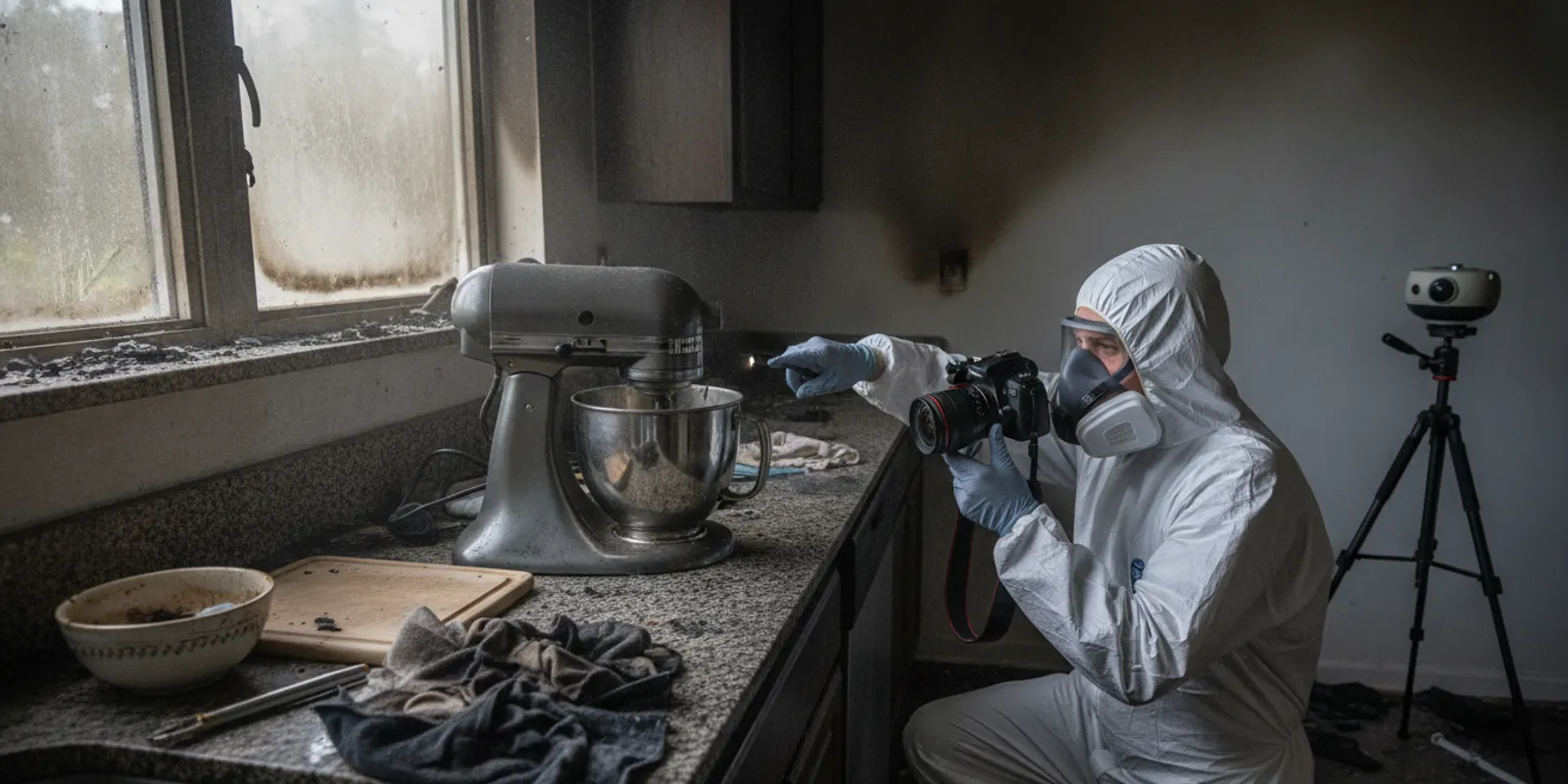
To understand how to prove negligence in a burn injury case, start by connecting the event to evidence: who had a responsibility to act carefully, what they did or failed to do, how that conduct caused the burn, and what harm followed. A fire or heat injury can involve several people or businesses, and the evidence may change quickly. The American Burn Association reports hundreds of thousands of fire- or burn-related injuries in the United States, but the facts of each incident determine whether another party may be legally responsible.
Request a case evaluation from DC Law Group
What must be shown to prove negligence in a burn injury case?
A negligence claim generally asks whether the evidence supports four connected points. The injured person must show that the defendant owed a duty of reasonable care, failed to meet that duty, caused the injury through that failure, and that the injury resulted in legally recognized harm. A strong case does not rest on the fact that a burn happened by itself. It explains the event through reliable evidence and links the conduct at issue to the injury.
- Duty: Identify the relationship or circumstances that required the person or entity to use reasonable care. A property operator, product maker, employer, contractor, or driver may have different duties depending on what happened.
- Breach: Show what precaution a reasonable person or business should have taken and how the defendant’s conduct departed from that standard. Relevant evidence might include an unsafe device, a known hazard left unaddressed, or a safety procedure that was not followed.
- Causation: Connect the breach to the burn. The evidence should support that the conduct was a cause of the incident and resulting injury, rather than merely occurring at the same time.
- Harm: Document the physical injury and its consequences with medical records, photographs, treatment history, and other reliable proof.
The precise legal analysis depends on the facts and the parties involved. A fire scene may have more than one contributing cause, and legal responsibility is not established simply because a person owned the location or made a product. A claim needs evidence that addresses the relevant duty, conduct, causal link, and injury.
Who may be responsible for a burn injury?
Begin with an open list of possible responsible parties, then use the evidence to narrow it. Depending on the incident, responsibility may involve an individual, a property owner or manager, a product manufacturer, a business, a contractor, an employer, or another driver. More than one party may have contributed. For instance, an electrical device may have malfunctioned while an inspection or maintenance process also failed to address a known problem. These are examples of questions to investigate, not conclusions about any particular event.
For an incident at a home, rental property, hotel, restaurant, or other business, consider who controlled the area and who was responsible for inspecting, maintaining, or warning about the condition. For a product-related burn, preserve the product and its packaging if it is safe to do so, and record its make, model, serial number, and purchase or installation details. For an event at work, record the job assignment, equipment, training, applicable procedures, and who received notice of the hazard. An attorney can assess whether a workplace injury also raises issues outside an ordinary negligence claim. Where a burn involves a chemical substance rather than a fire or heated product, the legal and technical questions may differ; see DC Law Group’s California chemical burn claim guide for that distinct context.
Identifying the correct party matters because different defendants may hold different records and may have different legal duties. A building manager may keep inspection reports; a business may have incident records; a manufacturer may hold design or testing documents; and an employer may maintain training and equipment records. Do not assume that the person closest to the incident is the only party whose conduct should be reviewed.
For more on organizing an injury matter, see DC Law Group’s California personal injury practice overview. The page is general information; the evidence in a burn incident still needs individual review.
Which evidence can connect the conduct to the burn?
Useful evidence often comes from several sources. Preserve what is available, note where each item came from, and avoid altering damaged property. If an area remains dangerous, leave it to the appropriate responders or qualified professionals. The following records may help establish what happened and why.
- Scene photographs and video: Capture the room, equipment, visible damage, alarms, exits, warning notices, and the surrounding area from more than one angle. Preserve original files and note who took them and when.
- Witness accounts: Write down names and contact details, what each person saw or heard, and when they were present. Ask witnesses to describe events in their own words rather than coordinating accounts.
- Incident and response records: Request or preserve available incident reports, fire-response records, inspection documents, maintenance requests, and communications about the hazard. The record custodian and access procedure vary.
- Product evidence: Keep the product, parts, packaging, instructions, receipts, and repair history where possible. Do not discard, clean, test, or repair a potentially relevant item before getting advice about safe preservation.
- Electronic records: Identify security-camera footage, phone photographs, messages, work logs, device alerts, and other data that may be routinely overwritten. Make a timely written request to preserve relevant material.
- Expert analysis: A qualified fire investigator, engineer, or other specialist may evaluate origin, cause, product performance, or safety practices. Any opinion should rest on appropriate evidence and methods.
Keep a simple timeline. Record when the event occurred, what happened immediately before it, who was present, what response followed, and when medical care began. Separate what you personally observed from what someone later told you. That distinction helps maintain a clear account and lets investigators test the sequence against records.
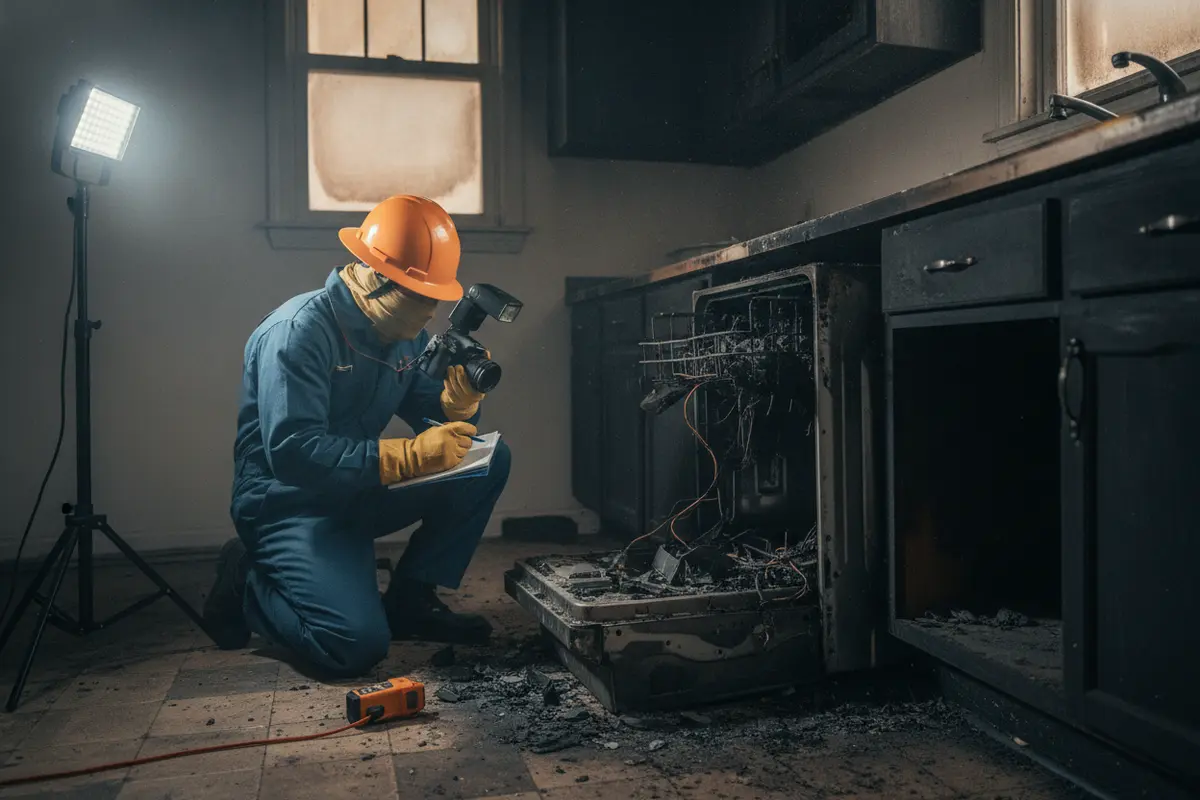
Photographs and notes documenting a damaged appliance after a burn incident
Evidence should be gathered lawfully and safely. Do not trespass, enter a restricted or unsafe area, take another person’s property, or interfere with an investigation. If a business, landlord, insurer, or other party controls important material, a lawyer can advise about appropriate preservation requests and formal procedures.
How do medical records help prove injury and causation?
Medical documentation can show the nature and extent of a burn, when symptoms began, what treatment providers observed, and how the injury affected daily activities. Seek prompt medical care and follow the treatment plan provided by qualified clinicians. Describe how the injury occurred as accurately as possible, and tell medical providers about relevant symptoms, changes, and limitations.
Retain discharge instructions, treatment notes, photographs taken over time, medication records, follow-up recommendations, and records of procedures or rehabilitation. Keep a personal log of pain, sleep disruption, assistance needed, missed work, and activities that became difficult. A log does not replace medical evidence, but it can help preserve details that may otherwise be forgotten.
Medical records also help clarify causation. A clinician’s records may document the timing and pattern of the injury, while an investigator may examine how the heat source operated. These roles are different: medical professionals address diagnosis and treatment, and technical experts may address the event’s origin or mechanism. The claim should not ask one type of evidence to answer questions outside its proper scope.
Burns can require care over time, and the course of treatment may not be clear at the outset. Avoid treating an early estimate as a final account of the injury. Keep updated records and discuss questions about prognosis with the treating provider. A national burn injury resource from the American Burn Association provides background on burn-related injuries and treatment; it does not determine the cause or value of an individual claim.
What should you do to preserve a possible claim?
Use practical steps that protect health and preserve information without making unsupported conclusions.
- Get emergency help and medical care. Follow the directions of emergency personnel and treating clinicians. Do not delay necessary care to collect evidence.
- Record the basic details. Note the date, approximate time, location, people involved, and a factual description of what you recall. Mark uncertain details as uncertain.
- Photograph what is safe to document. Take pictures of visible injuries, the scene from accessible locations, and relevant objects. Keep the original files and backups.
- Identify witnesses and records. Save contact information and make a list of cameras, reports, messages, or equipment that may contain relevant information.
- Keep physical items intact. Preserve relevant products and packaging when safe. Do not attempt to recreate the event or conduct your own tests.
- Limit informal statements about fault. Provide accurate information when required, but avoid guessing about technical cause or signing a broad release before understanding what it covers.
- Get legal guidance promptly. Deadlines and notice requirements can depend on the defendant and claim. A lawyer can identify which time limits may apply and what action is needed.
For related evidence-preservation ideas in a different type of incident, DC Law Group discusses documentation in its step-by-step guide to evidence after a California truck accident. The subject differs, but keeping a timeline and preserving original records are useful general practices.
How can responsibility be evaluated when several causes are possible?
A burn incident may involve a chain of events rather than one obvious act. An investigation should test competing explanations, not select the first theory and ignore contrary evidence. For example, investigators might examine whether a device failed, whether it was used or installed according to instructions, whether a warning was adequate, whether maintenance was performed, and whether another condition contributed. Which questions matter depends on the specific event.
A clear evidence review separates established facts from open questions. Create a chart that lists each question, the evidence supporting or challenging it, and the next record or witness to locate. This makes gaps visible and reduces the risk of treating an assumption as proof. It can also reveal that a record needs to be preserved quickly.
| Issue to establish | Potential evidence | Question to test |
|---|---|---|
| Who had a relevant duty? | Ownership or control records, contracts, work assignments, product information | Who was responsible for the place, equipment, or safety step? |
| What conduct may have breached that duty? | Inspection and maintenance records, instructions, warnings, training, witness accounts | What reasonable precaution was available, and was it taken? |
| What caused the event? | Scene documentation, preserved equipment, incident records, qualified expert analysis | Does reliable evidence connect the conduct to the burn? |
| What harm resulted? | Medical records, treatment history, injury photographs, work and daily-activity records | What injury and related limitations are documented? |
California uses comparative fault principles in many negligence matters. A defendant may argue that the injured person or another party contributed to the event. The evidence should therefore address foreseeable alternative explanations and the actions of each person involved. Do not assume that a disagreement about fault automatically defeats a claim; the legal effect depends on the evidence and applicable law.
For instance, product use, warnings, maintenance, and the condition of the surrounding area may all be relevant, but none is conclusive by itself. A reliable analysis compares physical evidence with records and witness accounts, checks whether the timeline fits, and considers whether the proposed cause is technically plausible. If the evidence does not yet answer a question, label it as unresolved rather than overstating the claim.
What should you know about insurance communications?
An insurer may ask for a recorded statement, documents, medical authorization, or a settlement release. Read each request carefully and keep copies of what you send. Answer truthfully, but do not speculate about the source of a fire or the extent of future effects when you do not know. Ask for clarification if a question is unclear, and consider legal advice before signing a release that could end claims.
Organize communications by date and identify the claim number, adjuster, and subject of each exchange. Keep a copy of photographs, bills, and forms submitted. If the insurer proposes an early resolution, consider whether the available records explain the cause, identify all potentially responsible parties, and document the injury’s treatment course. A decision should reflect the actual evidence and the legal rights affected by any release.
DC Law Group’s consultation page is available for people who want to discuss an injury matter with the firm. A consultation is a chance to explain the facts and ask what additional information may be useful; no outcome can be promised from a brief summary alone.
Talk with DC Law Group about evidence preservation
Which California deadlines and records should you check?
Do not assume every claim has the same deadline. The time to bring a civil claim can depend on the legal basis, the defendant, the date of injury, and other facts. Claims involving a public entity may have separate early claim procedures. Product-related matters can raise additional legal questions. Because missed deadlines can affect rights, identify the potentially applicable rules with a California attorney as soon as practical rather than relying on a general online article.
At an initial review, gather the incident date and location, the names of people or organizations involved, any insurance correspondence, available reports, and a concise treatment chronology. If you do not have a particular document, note who may hold it. A lawyer can assess what is missing, whether a preservation request is appropriate, and whether additional parties or legal theories require investigation.
There is no single document that proves every burn case. The strongest record is often a consistent collection: timely medical documentation, preserved physical or digital evidence, independent witness accounts, and a supported explanation of how the defendant’s conduct caused the injury. A global burden study likewise illustrates that burn injuries span many circumstances, but population figures cannot establish negligence in a particular California event: Global, Regional, and National Burden of Burn Injury.
How can you prepare for a legal consultation?
Bring what you have, not a polished case file. A short timeline, photographs, medical records, insurer letters, and a list of witnesses can make the first discussion more focused. Prepare questions about who may be responsible, which evidence should be preserved, whether a deadline may apply, and what additional records are needed. If some detail is uncertain, say so.
DC Law Group represents accident victims in California. The firm can review the facts presented and explain possible next steps, but each claim turns on its own evidence and legal circumstances. For more information, read DC Law Group’s guide to burn injury claims or use the appointment link below.
Schedule a consultation with DC Law Group
Frequently asked questions
Does a burn injury by itself prove negligence?
No. The injury establishes that harm occurred, but a negligence claim also needs evidence of a duty, a breach, a causal connection, and resulting harm. The investigation must connect the relevant conduct to the incident.
What if I do not know what started the fire or heat exposure?
That uncertainty is a reason to preserve evidence and seek an appropriate investigation, not to guess. Scene records, witness accounts, product information, and qualified technical analysis may help identify the cause.
Can more than one person or business be responsible?
Yes, depending on the facts. Several parties may have had distinct roles in control, maintenance, warnings, product design, installation, or safety procedures. Evidence is needed to evaluate each party’s role.
Should I keep the damaged product?
If it is safe and lawful, preserve the item, its parts, packaging, instructions, and identifying details. Do not repair, discard, clean, or test it before receiving advice about preservation and safety.
How soon should I speak with an attorney?
Consider doing so promptly because evidence can be lost and deadlines vary by claim and defendant. An attorney can review the incident date and parties to identify which rules and preservation steps may apply.
Request a consultation with DC Law Group
Careful documentation can help an injured person and counsel assess whether the evidence supports a negligence claim under California law.