

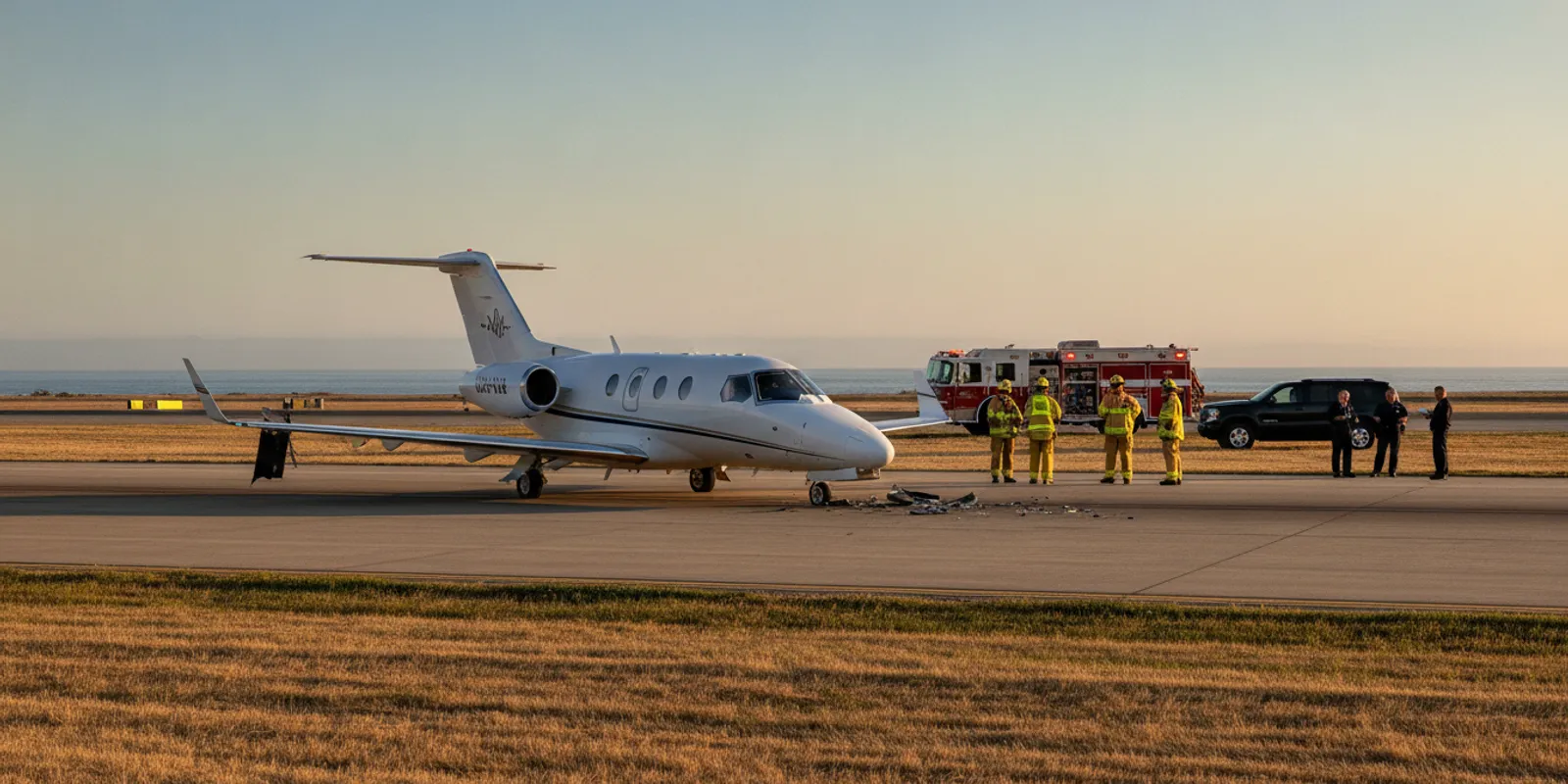
Aviation incidents can involve serious injuries, complicated investigations, and several potentially responsible parties. A California aviation accident lawyer can help identify which rules apply, but the first priority is safety, medical care, and preserving information. The right next steps depend on whether the event involved an airline, charter, private aircraft, or airport operation.
Request a consultation with DC Law Group
Call DC Law Group at (310) 571-8860 to discuss what happened and what records may matter.
What should you do immediately after an aviation incident?
Get to a safe location and follow directions from emergency responders. Request medical evaluation for any injury, even if symptoms seem mild at first. Some conditions may become clearer over time, and a timely medical record can document what you reported and what clinicians observed.
When you are able, write down the basic facts while they are fresh: the date and approximate time, airport or location, aircraft or flight details, where you were seated or standing, what you experienced, and the names of people who saw the event. Keep the notes factual. Do not guess about the cause or try to determine technical fault yourself.
- Photograph visible injuries and personal property damage when it is safe to do so.
- Save boarding passes, itineraries, baggage tags, receipts, messages, and any written notice from an airline or operator.
- Ask witnesses for their names and contact details, but do not pressure anyone to provide a particular account.
- Keep copies of medical instructions and records, and note missed work or changes to daily activities.
- Do not discard damaged clothing, equipment, luggage, or other physical evidence before documenting it.
Do not enter a restricted area, touch wreckage, or interfere with responders or investigators. If an insurer, airline, aircraft operator, or another representative asks for a recorded statement or broad authorization, consider getting legal advice before responding. Be accurate and avoid speculation. Preserve your own records, and do not post detailed theories about the event on social media.
Which type of aviation incident occurred?
The term “aviation accident” can describe different events, and the categories may involve different evidence, insurance, and regulatory questions. Identifying the operation is an early step, not a conclusion about liability.
| Incident category | Questions to clarify | Evidence that may matter |
|---|---|---|
| Scheduled commercial flight | Was the event during boarding, flight, turbulence, or deplaning? Which carrier and contractors were involved? | Flight and cabin records, crew reports, maintenance history, passenger accounts, and medical records |
| Charter or other commercial operation | Who arranged and operated the flight? What type of service was provided? | Booking documents, operator records, pilot and aircraft records, maintenance material, and contracts |
| Private or recreational aircraft | Who owned, operated, maintained, or supplied the aircraft? What was the purpose of the flight? | Aircraft and pilot records, maintenance documents, witness accounts, weather information, and inspection findings |
| Airport or ground event | Did the injury involve a vehicle, boarding equipment, a terminal, a service provider, or an airport-controlled area? | Surveillance footage, incident reports, maintenance logs, safety procedures, and contractor records |
These descriptions are not legal classifications. A passenger injury during a flight, an aircraft event, and an injury on airport property may be reviewed under different rules. Some incidents also involve more than one category, such as an aircraft event followed by an emergency response or evacuation.
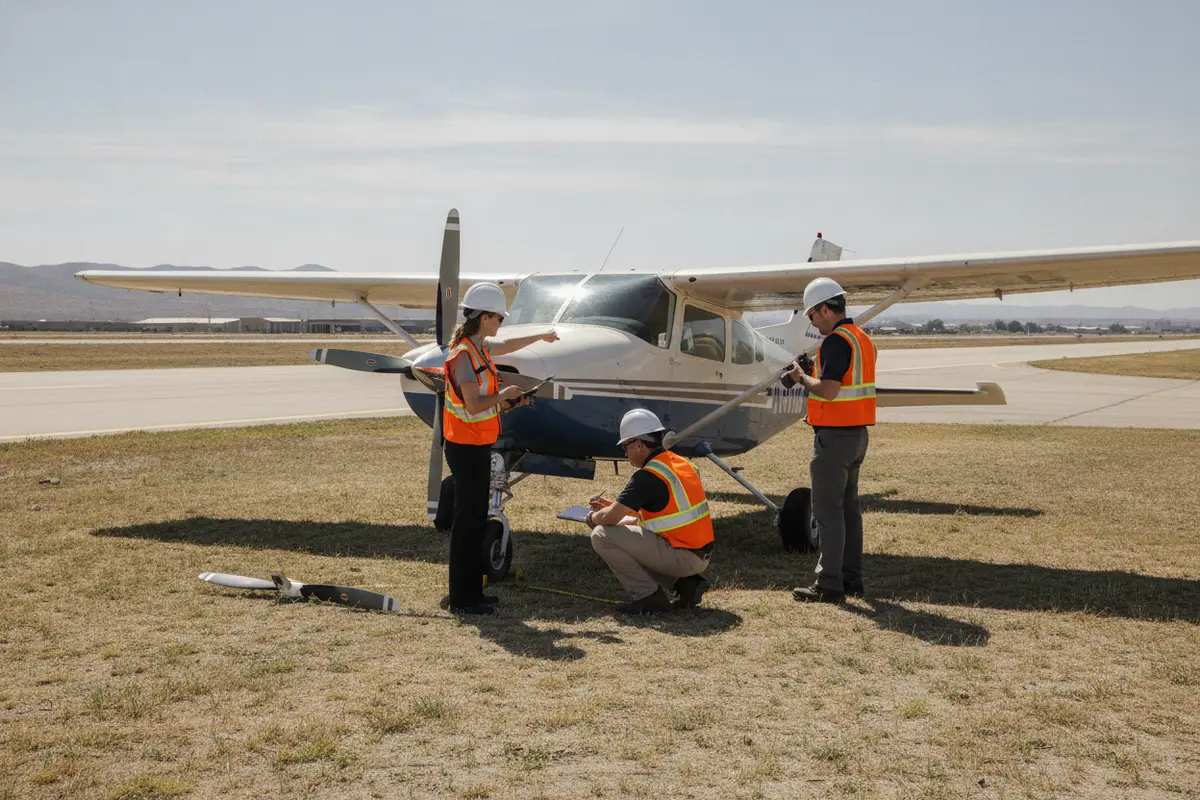
Aviation investigators documenting a small aircraft beside a runway
How are commercial, charter, and private-aircraft claims different?
For a scheduled airline flight, relevant questions may include what happened aboard the aircraft, what the carrier and crew knew, what safety steps were taken, and whether another company supplied a service or equipment. A passenger’s ticket and itinerary can help identify the carrier and route. Keep all travel confirmations, notices, and communications.
Charter and other commercial flights can require a closer look at the actual operator and the arrangement behind the trip. The company that sold a flight may not be the same entity that operated or maintained the aircraft. Contracts and operational records can help clarify those roles. Do not assume that a brand name alone identifies every responsible party.
Private and recreational flights may involve an owner, pilot, maintenance provider, aircraft manufacturer, or component supplier. The facts matter: who controlled the aircraft, who performed recent work, and what records exist. A technical malfunction does not by itself establish who is legally responsible. Investigators may examine mechanical, operational, weather, and human factors.
Airport-related injuries can involve property conditions, vehicles, ground-support equipment, boarding bridges, or the acts of a contractor. A claim based on an airport condition may raise different notice and deadline questions from a claim against a private carrier. For general background on injury matters, see DC Law Group’s personal injury practice page.
Who may be responsible for an aviation injury?
Potentially responsible parties depend on evidence and the operation involved. They may include an aircraft operator, owner, carrier, maintenance provider, parts manufacturer, airport operator, ground-services contractor, or another entity. More than one party may have contributed to an event. A claim should not name a party solely because it had a visible connection to the flight or location.
Investigators and attorneys may examine applicable safety duties, maintenance and inspection practices, training, operating decisions, equipment condition, and warnings. The analysis can include records from different organizations. A pilot’s conduct, for example, may be only one part of a broader review involving aircraft condition, dispatch, maintenance, or external conditions.
Preserve documents that identify who provided the flight or service. Record the names shown on tickets, booking confirmations, baggage labels, uniforms, vehicles, and written notices. Those details can be useful starting points, but formal records and investigation findings are needed to assess each party’s role.
In a major aircraft event, specialized evidence may be controlled or collected by public investigators. Avoid attempting to retrieve items from a restricted area or contacting witnesses in a way that could affect an official investigation. An attorney can help determine what records can be requested and when to make preservation requests to private entities.
What evidence should you preserve?
Aircraft incidents can involve evidence that changes quickly. Surveillance recordings may be overwritten, devices may be repaired or returned to service, and witnesses may become harder to locate. A prompt written record of where important evidence may exist can help guide appropriate preservation steps.
- Travel and service documents: tickets, itinerary changes, boarding passes, receipts, charter arrangements, and messages with the carrier or booking provider.
- Medical information: emergency records, follow-up instructions, diagnostic results, prescriptions, rehabilitation notes, and a personal symptom log.
- Photographs and video: images of the location, visible injuries, damaged belongings, and relevant surroundings taken from a lawful, safe vantage point.
- Witness information: names and contact details for passengers, employees, responders, and other people who observed relevant events.
- Work and daily-life records: attendance records, employer communications, and notes describing activities that became difficult after the injury.
- Official communications: incident numbers, letters, forms, and the names of agencies or organizations that contacted you.
Keep original files when possible and make a separate backup. Avoid editing photographs or recordings; if you make a copy for sharing, retain the original. Maintain a simple log of when records were received or sent. Do not publish private medical details online or send original documents without keeping copies.
Evidence requests can be technical and time-sensitive. Depending on the facts, relevant items may include aircraft maintenance records, flight and dispatch records, crew training materials, airport video, equipment logs, and communications among involved companies. A lawyer can assess how to request or preserve such records without interfering with an official investigation.
What do federal and California rules have to do with a claim?
Aviation safety is substantially regulated at the federal level. The Federal Aviation Administration (FAA) provides information about aviation regulation and safety. The National Transportation Safety Board (NTSB) investigates certain transportation events and publishes investigation information. Their roles are different: an investigation can address how an event occurred and recommend safety measures, while a civil claim asks whether a party is legally responsible for a particular injury.
Read the agencies’ official information at the FAA and the NTSB. Not every event is investigated in the same way, and an agency’s findings do not automatically resolve every civil liability issue. The type of operation, severity, and event circumstances affect which agency processes may apply.
Federal rules can intersect with state claims concerning negligence, product responsibility, or property conditions. Whether a particular state-law theory is permitted can depend on the claim and controlling law. Choice of forum, preemption, and the effect of federal statutes or regulations are case-specific issues; the fact that a plane was involved does not answer them by itself.
For an incident involving a California public entity or airport, special claim-presentation rules may apply before a lawsuit. The applicable deadline and procedure depend on the public entity, claim type, and facts. California statutes are available through the California Legislative Information Code Search, but a code index is not a substitute for advice about which provision applies.
In an unrelated but useful example of why technical evidence and serious injury records matter, DC Law Group has a guide to catastrophic personal injuries. The legal and factual analysis for an aviation event must still be made on its own record.
How do injury and wrongful-death claims differ?
An injured person may seek compensation for legally recognized harms supported by evidence. Depending on the claim and applicable law, that can include medical care, lost earnings, reduced ability to work, physical pain, and the effect of an injury on ordinary activities. The available categories and proof required depend on the facts and the governing legal rules. A list of possible damages is not a prediction of recovery.
Maintain medical records and follow the treating clinician’s instructions. If symptoms change, tell the provider and keep a dated note. For a serious spinal injury, DC Law Group’s spinal cord injury resource explains the importance of documenting diagnosis, treatment, and the lasting effects of an injury; aviation claims require an individualized review.
When an aviation event results in a death, eligible family members or a representative of the estate may have legal options, subject to California law and any applicable federal rules. Wrongful-death and survival claims are distinct and can involve different claimants, damages, and procedures. Family members should preserve travel and incident records, medical documents, and communications, while avoiding assumptions about who may bring a claim until eligibility is reviewed.
DC Law Group also provides a general overview of a wrongful-death lawsuit in California. That overview cannot determine the right to sue or the deadline in a specific aviation matter.
Which deadlines should you check?
Do not assume that one deadline applies to every aviation claim. California personal-injury claims often have a limitations period, but the date it begins, exceptions, and applicable law require review. Claims involving a public entity can have shorter claim-presentation requirements. Federal law, the place of the incident, the identity of the defendant, a contract of carriage, and the nature of the claim can affect the analysis.
International air travel may raise treaty rules and different time limits. A ticket, route, and the nature of the flight can matter in determining whether an international-carriage framework applies. A court or insurer may also treat claims differently depending on whether the event happened aboard an aircraft, at an airport, or during a separate ground service.
Because the correct deadline can be difficult to identify from a general article, seek case-specific advice promptly. Keep the date of the event, relevant travel documents, agency notices, and any letters from a carrier or public body together. Do not wait for an investigation to conclude before asking whether a claim notice or other filing must be made. An investigation schedule does not necessarily pause a legal deadline.
How can you prepare for a legal consultation?
A focused consultation is easier when the basic timeline and documents are organized. You do not need to know the technical cause before asking questions. Bring what you have, identify what is missing, and distinguish what you personally observed from what another person told you.
- Write a concise timeline from booking or arrival through the event, response, and medical care.
- List every business, agency, or person that has contacted you, and summarize what each requested.
- Gather travel records, photographs, medical documents, and any incident number or report.
- Note current symptoms, treatment, missed work, and daily activities affected.
- Ask which deadlines may apply, which entities should receive preservation notices, and whether any communication should be handled through counsel.
If you are reviewing other transportation-related claim questions, DC Law Group’s California truck incident guide offers a separate overview of immediate documentation steps. Different rules apply to aircraft matters, so do not treat advice for one type of event as a substitute for a case-specific aviation review.
Call DC Law Group at (310) 571-8860 to discuss your aviation injury questions
Frequently asked questions
Does every aircraft incident lead to an NTSB investigation?
No. Which agency investigates an event depends on the event type and applicable federal rules. The NTSB explains its investigative role and publishes reports for certain events. An incident not investigated by the NTSB may still involve other reporting, regulatory, insurance, or civil processes.
Can I bring a claim before an official investigation is complete?
Potentially, but whether and how to proceed depends on the facts and applicable deadlines. Investigation and civil claim processes can run on different timelines. Get advice promptly about preserving evidence and any required notices rather than assuming that an official report must be issued first.
Who may bring a claim after a fatal aviation event?
Eligibility depends on the relationship to the deceased, the type of claim, and the applicable state or federal law. A wrongful-death claim and an estate-related survival claim may have different rules. A qualified attorney can review the family relationships, documents, and event details before advising who may act.
Can a claim involve an airport or ground-service company?
It may, if evidence supports a legal duty and a connection between a party’s conduct or condition and the injury. The relevant entity could differ from the airline or aircraft operator. Identify the exact location, equipment, service, and businesses involved, then have the facts reviewed.
What if an insurer asks me to give a recorded statement?
Ask who the representative works for, what the statement will cover, and whether it is optional or required under a policy or other agreement. Be truthful, do not speculate, and consider legal advice before providing a recorded account or signing a broad release. Keep a copy of anything you submit.
Contact DC Law Group to discuss your next steps after an aviation incident.
This article provides general information, not legal advice or a conclusion about any particular event. Aviation claims depend on the facts, governing law, and applicable deadlines, so obtain advice tailored to your circumstances.