

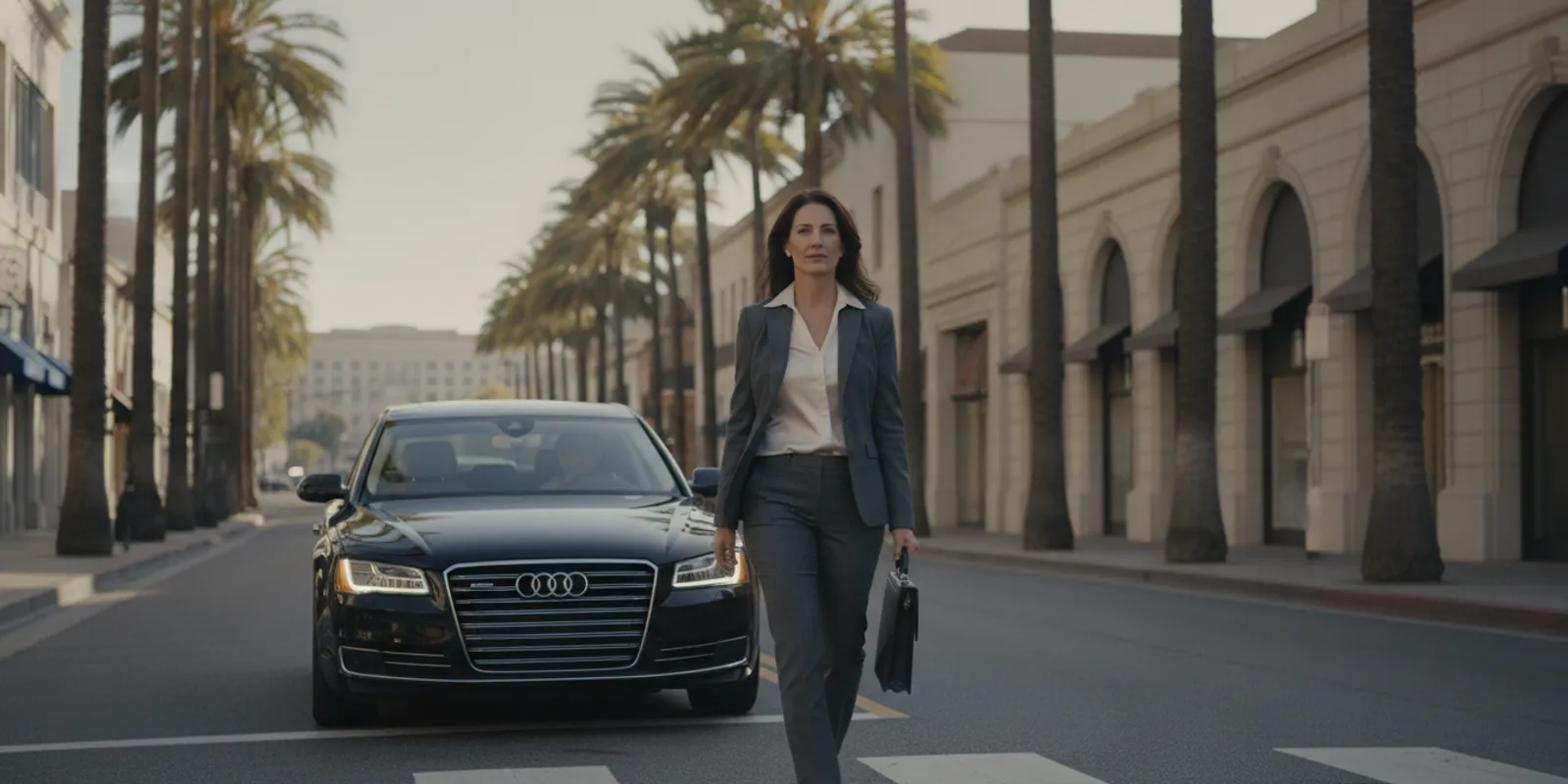
A collision at a Beverly Hills crosswalk can leave an injured pedestrian with incomplete memories and urgent questions about responsibility. A Beverly Hills pedestrian accident lawyer can review available scene evidence and explain how California law may relate to the facts. Acting early can help preserve details that may otherwise be lost.
Request a consultation with DC Law Group
What should you do first after a pedestrian collision?
Start with safety and medical attention. Call 911 if anyone needs urgent help. Move away from active traffic only when it is safe to do so. Do not try to inspect an intersection while vehicles are moving around you. If you can, ask someone nearby to help communicate with responders or locate witnesses.
As soon as practical, make a factual note of the date, approximate time, street names, direction of travel, weather, lighting, and signal indications you remember. Record where you and the vehicle were just before impact, but clearly label estimates as estimates. A frightening event can affect memory; there is no need to fill gaps by guessing.
Photograph the scene from a safe place. Include the crosswalk, curb ramps, signal heads, signs, vehicle position, visible damage, and sight lines. Note whether construction, parked vehicles, landscaping, street furniture, or queued traffic blocked a view. Do not enter the roadway or trespass to get a better angle.
Report the collision to law enforcement and ask how to obtain the report. Give what you know and say when a detail is uncertain. Avoid deciding who was legally responsible before evidence has been reviewed. If you are physically unable to gather information, focus on care; someone you trust may be able to note basic details later.
How can crosswalk evidence clarify the sequence?
Investigators may need to determine where the pedestrian was, what a signal displayed, and whether the driver had time to see and respond. A painted crosswalk is important context, but it does not by itself answer every question. Its position, condition, connection to signals, and relation to the vehicle path may matter.
Write down whether the crossing was marked and where its boundaries appeared. Note the direction you were walking and whether you had entered the crossing before the vehicle turned or approached. If there was a pedestrian signal, record whether you recall a walking symbol, countdown, or stop indication. If you do not remember, say so. A witness who observed the signal may offer a separate account.
California Vehicle Code section 21950 addresses driver duties toward pedestrians in marked and unmarked crosswalks and also describes pedestrian duties. Consult the California Legislative Information site for official statutory materials. The specific rule and its application depend on the location and circumstances. The mere presence of a crosswalk does not settle responsibility.
A simple sketch can preserve useful recollection. Draw the intersection from above and label corners, crosswalk boundaries, lanes, direction of travel, traffic controls, and the approximate contact point. Use arrows for movement. Mark anything uncertain with words such as “approximate.” Keep the sketch dated and do not alter the original note later; add a dated supplement if you remember more.
Photographs taken after the event can show layout, signs, and obstructions, but they may not show the signal phase or traffic at the time. Keep original files and note when each image was made. If conditions have changed, label the image as a later scene photograph rather than presenting it as a record of the moment of impact.
Why do turning vehicles need close attention?
A vehicle turning through a crosswalk may be navigating traffic, checking for a gap, or following directions. The driver’s view, speed, path, and attention are factual questions. The fact that a vehicle was turning does not alone establish legal responsibility, but reconstructing its movement can help explain how the collision occurred.
Record the vehicle’s approach and direction if you observed them. Note whether it paused, slowed, or appeared to yield, and where it stopped afterward. Describe the route in ordinary terms: for example, a vehicle approached from the north and turned across the marked crossing toward the west. Avoid assigning a precise speed unless you have a reliable basis for it.
Identify anything that could have limited a driver’s or pedestrian’s view. A delivery vehicle at the curb, a sign near the corner, a line of cars, temporary work equipment, or foliage could affect sight lines. Photograph relevant features from safe public areas and identify the corner so the images can be understood later.
Consider the sequence rather than one isolated detail. Did the pedestrian begin crossing before the vehicle entered the turn? Was the pedestrian visible for a period before impact? Did the vehicle stop at a line or continue through? Did a witness see the whole event or only its final seconds? These questions help separate what someone directly observed from what they inferred afterward.
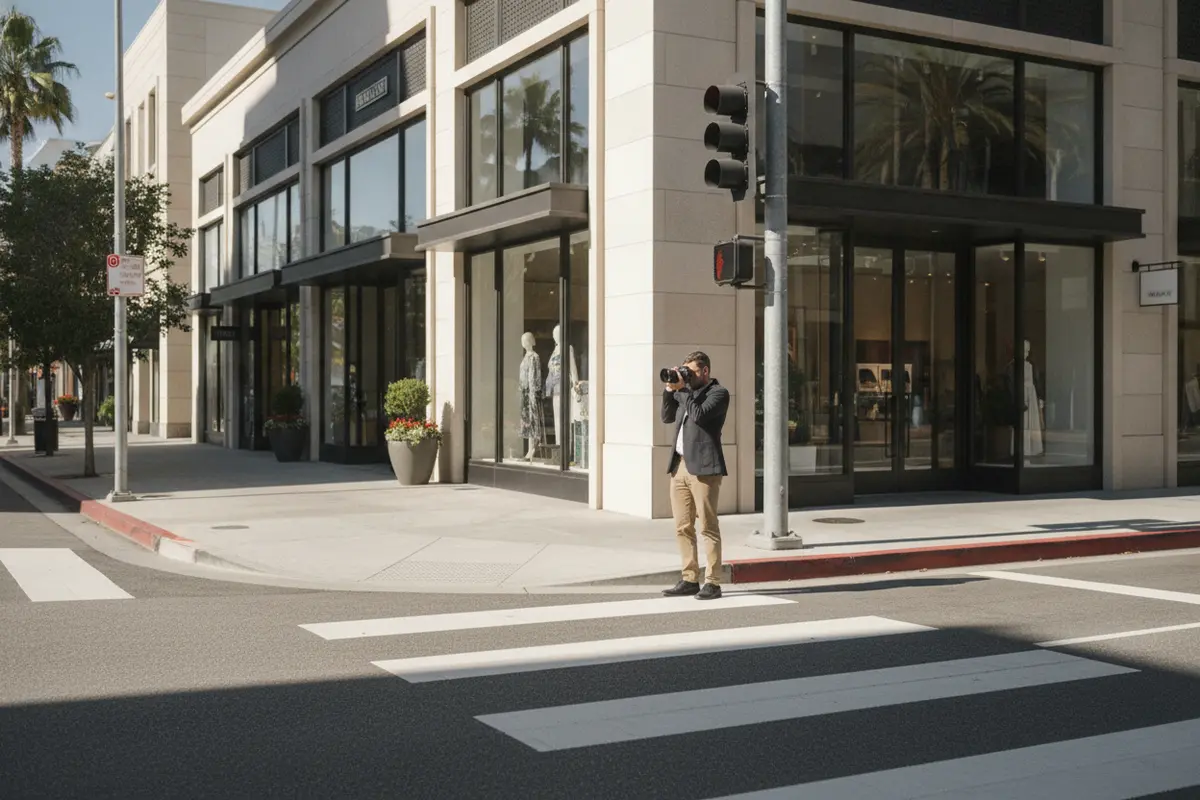
A pedestrian documents a Beverly Hills crosswalk and signal from the sidewalk
How can lighting and visibility change the evidence?
Visibility is not simply a matter of day or night. Relevant conditions may include streetlights, glare, shadows, rain, headlights, clothing contrast, and obstructions. The direction of sunlight and the position of a vehicle’s windows may also be worth documenting. Record these details as you remember them, without claiming to know precisely what another person could see.
Preserve clothing and footwear worn at the time if they may help document visibility or contact. Do not wash or discard an item before considering whether it may be relevant. Store it safely and make a note of its condition. This is not a substitute for medical care or a technical evaluation; it simply retains potentially useful material.
Make two separate records if necessary: one for conditions at the time of the collision and another for conditions when you returned to the location. That distinction matters when the weather, lighting, construction, or parked vehicles have changed. Include the date and time of later photographs so a reviewer does not mistake them for contemporaneous images.
Some vehicles may retain electronic information, but availability and meaning depend on the vehicle and circumstances. Do not assume a particular device recorded the event or that a recording will answer every question. Identifying the vehicle, its owner, and any potential recording source early can help determine whether a preservation request is appropriate.
What if the driver leaves the scene?
If the driver does not remain, contact 911 or local law enforcement as soon as it is safe. Provide the location, direction of travel, and only the description you can reliably give. A partial plate number, color, make, model, or distinctive damage may help. Do not pursue the vehicle or put yourself in danger to collect details.
Ask witnesses if they are willing to remain or provide contact information. Record their names and the best way to reach them, with permission. Write down what each person says in their own words as soon as possible, and distinguish a direct observation from something the person heard from another source.
Look for nearby businesses, residences, parking facilities, or vehicles that may have cameras aimed toward the street. Note the location and, if visible, which direction the camera faces. Some recordings may be overwritten or retained only briefly. A lawyer or investigator can consider a prompt preservation request through appropriate channels; do not assume an owner will provide footage informally.
A hit-and-run may raise questions about available insurance, including whether a policy could apply. Coverage depends on policy language and the facts. Do not assume a particular source is available or that an insurer will accept a claim. Keep policy documents and correspondence together for review, and report the event to your own insurer as required by the policy.
Which records can help document an injury?
Seek care from qualified health professionals and follow their guidance. Describe how the incident occurred and report symptoms accurately, including when they began and how they change. If a symptom appears later or worsens, contact a medical professional rather than relying only on a personal note. A journal can help you remember what to discuss, but it does not replace an examination.
Keep visit summaries, imaging reports, prescriptions, referrals, and follow-up recommendations. Maintain a simple calendar of appointments and symptoms. Record practical effects, such as difficulty walking, sleeping, driving, or completing ordinary tasks. Use concrete observations: “needed help carrying groceries on Tuesday” is more useful than a broad conclusion that omits what happened.
Retain relevant employment records showing missed time or modified duties. Keep receipts and correspondence related to care and transportation. Organize materials by date, preserve originals, and save digital copies in a secure location. A short index can identify each document and the date it concerns, making it easier to find a particular item later.
Medical records serve a clinical purpose and may be reviewed in a claim. They do not automatically establish every disputed issue. Accurate reporting and appropriate follow-up give treating providers a clearer record. Avoid exaggerating or minimizing symptoms; consistency between what you tell a provider and what you experience is important.
Think about privacy before posting detailed commentary or photographs about the collision or your condition online. A post may lack context when viewed later. Do not delete existing material to shape a claim; ask counsel how to handle relevant records and communications. Keep copies of important messages from insurers, employers, and health providers.
How does comparative fault affect a pedestrian claim?
California follows comparative fault principles. Responsibility may be apportioned among parties according to their conduct, and an injured person’s recovery may be reduced by that person’s share of fault. The result depends on evidence and applicable law. An early accusation by a driver or insurer is not a final decision.
Questions may include where the pedestrian crossed, what the signals showed, whether the driver yielded, vehicle movement, visibility, and what each person could reasonably observe. A reviewer may focus on one detail while overlooking others. A careful assessment considers the sequence, the physical setting, witness accounts, and records together.
For example, suppose a pedestrian remembers entering a crossing while a witness recalls the vehicle already turning. Those accounts are not automatically irreconcilable: the timing, viewing angle, signal phase, and point at which the witness first looked may explain the difference. Preserve both accounts accurately instead of trying to make them match. Video, scene measurements, or another witness may help clarify the sequence.
Be precise when speaking with an insurer or investigator. Do not speculate about speed, distance, or signal timing. If you do not know, say so. Preserve materials that may clarify the event and note who created each record. An attorney can assess disputed facts without promising a particular outcome.
What should you know about insurance communications?
Identify the driver, vehicle owner, and insurance information when available. Keep a communication log with dates, names, phone numbers, and requested documents. Ask an adjuster to put a request in writing if it is unclear. Take time to understand what is being requested before responding.
Before giving a recorded statement or signing a broad medical authorization, understand its scope and purpose. Do not sign a release resolving a claim without understanding the rights it affects. If you have legal representation, ask counsel how communications should be handled. Keep copies of every document sent or received, including attachments.
Coverage and responsibility are separate issues. Policies may contain limits, exclusions, or conditions that require review. Do not assume the first insurer contacted is the only possible source of coverage. If more than one vehicle or employer may be involved, preserve the names and identifying details rather than deciding which party must respond.
When an adjuster asks for a timeline, use a dated outline and label uncertain details. If a request concerns an item you do not have, say that rather than creating an estimate. A careful, complete response is preferable to a rushed account that later needs correction.
How do common evidence sources compare?
No single item usually answers every question. Different sources document different parts of an event and may have different preservation needs. Use this table as an organizing aid, not as a conclusion about any particular collision.
| Evidence source | What it may help establish | Practical next step |
|---|---|---|
| Witness account | Signal phase, direction, movement, and events before impact | Record contact details with permission and note what was directly observed |
| Video recording | Movement, timing, visibility, and sequence | Note camera location promptly and consider a preservation request |
| Scene photographs | Crosswalk markings, signs, sight lines, lighting, and layout | Take original images safely and record date and viewpoint |
| Medical records | Reported symptoms, examination, and recommended care | Keep visit records and follow up with providers |
| Police and vehicle records | Vehicle identity, reported accounts, damage, and observations | Request available report information and retain correspondence |
Each source has limits. A later photograph may show the street layout but not the signal at impact. A witness may recall vehicle movement without exact timing. A report may record accounts without resolving a dispute. Medical records document care and reported symptoms but may not determine legal responsibility.
Compare sources by asking what each one can answer. A witness may describe a turn; a camera may show timing; a scene image may reveal an obstruction; and a medical record may document an examination. If details differ, write down the difference and its source. Do not silently discard an account because it does not match your first recollection.
Which California deadlines should you check?
California law sets time limits for legal claims, and special rules may apply depending on the parties and circumstances. A claim involving a public entity may require an earlier administrative claim than the usual civil filing period. Other facts can affect how a deadline is calculated.
Do not use a general article to calculate an individual deadline. Keep the collision date and any notices together, and seek legal guidance promptly. Evidence can become harder to obtain before a filing deadline: witnesses may be difficult to locate, recordings may be erased, and scene conditions may change.
The California Legislative Information site provides official statutory materials. The applicable law and its effect should be confirmed for the particular claim. A lawyer can review the parties involved, the event date, and any facts that may affect the required filing steps.
How can you prepare for a legal consultation?
A concise timeline and a small set of key records can make a consultation more focused. You do not need to resolve every question first. Bring what you have and identify what remains uncertain. A useful packet can be organized by topic rather than by trying to assemble every document at once.
- The date, approximate time, and exact intersection or nearby address.
- A short account of each person’s direction and what you recall about signals.
- Photographs, video, witness contact details, and police report information.
- Medical records and a list of appointments or recommended follow-up.
- Insurance correspondence, available policy details, and forms already signed.
- A note identifying missing evidence, such as a camera location or an unlocated witness.
- Questions about deadlines, preservation, representation, and possible next steps.
Before the meeting, make a one-page timeline with dates and sources. Separate what you personally saw from what another person told you. Bring originals only if requested and keep a copy of anything you provide. If an item is unavailable, note that plainly instead of delaying a conversation while searching for every record.
DC Law Group’s personal injury attorneys can review available facts and discuss whether additional investigation may be useful. A consultation is a chance to ask questions; it is not a promise about a claim’s result. To learn more about the firm’s work, visit its pedestrian injury practice page and its personal injury overview.
For related reading, see the firm’s California pedestrian claim steps and evidence guide, its Sacramento pedestrian guide, and the Bakersfield pedestrian guide. These resources address broader claim questions; the details of a Beverly Hills collision still depend on its own evidence.
Call DC Law Group at (310) 571-8860 to discuss your situation
Frequently asked questions
Does a pedestrian always have the right of way in a crosswalk?
Not in every circumstance. California law describes duties for both drivers and pedestrians, and the applicable facts matter. Signal indications, location, and each person’s conduct should be considered together.
What if I crossed outside a marked crosswalk?
The crossing location may be relevant, but it does not alone resolve responsibility. Driver conduct, visibility, and the surrounding circumstances may also matter under California law.
How soon should I try to preserve video?
As soon as practical. Some recordings may be overwritten or retained briefly. Record the camera’s location and ask counsel or an investigator about an appropriate preservation request.
What if symptoms began after I left the scene?
Contact a qualified medical professional and explain when the symptoms began. Keep accurate records of care and follow-up, and report changes to your provider.
Can an attorney guarantee a particular result?
No. Evidence, applicable law, insurance coverage, and disputed facts affect how a claim may proceed. A review can explain issues and possible next steps, but cannot promise an outcome.
Contact DC Law Group to arrange a consultation about your pedestrian injury claim.
This article provides general information, not legal advice. Every situation depends on its facts and applicable law.