

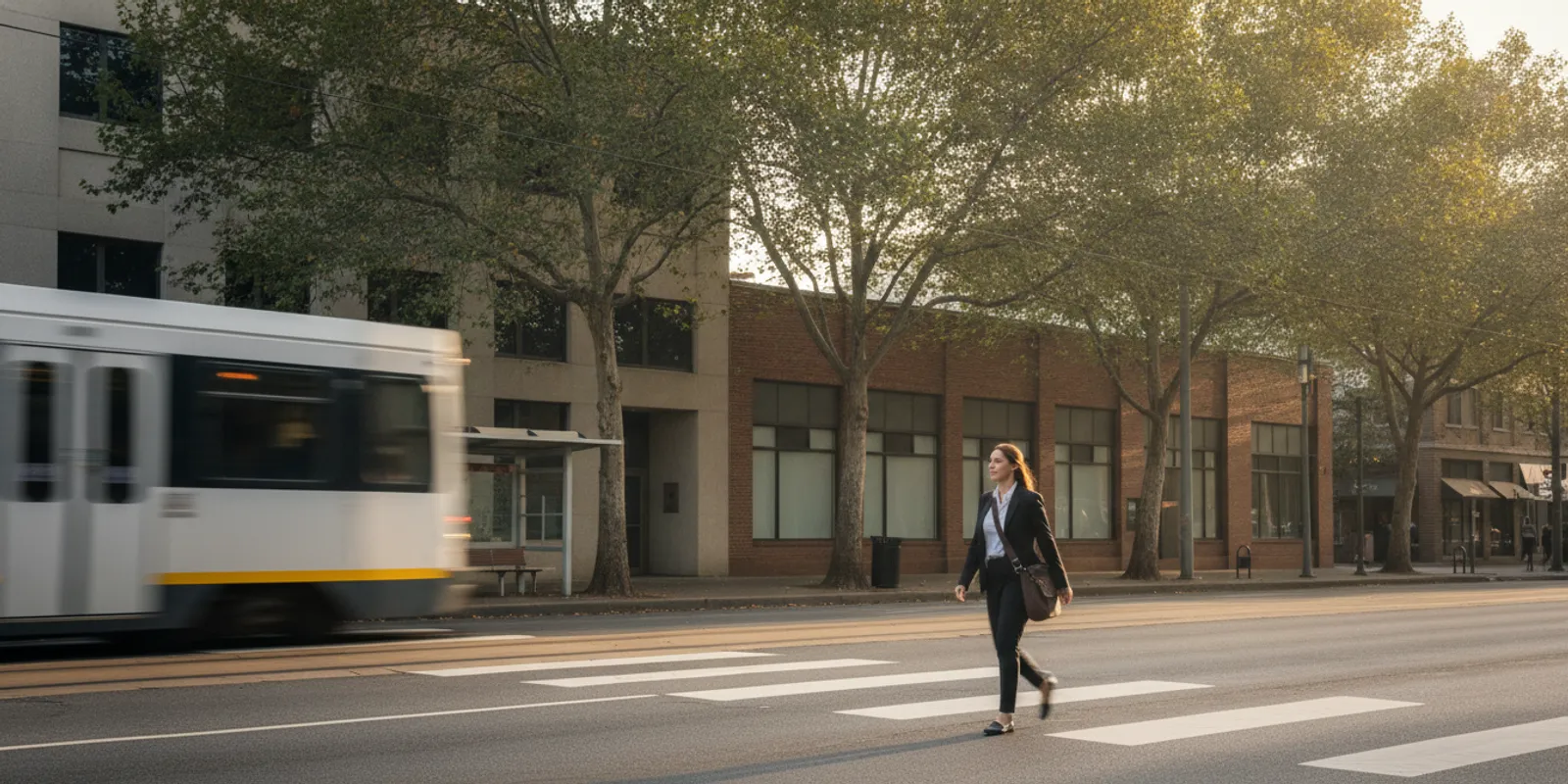
A collision can leave a pedestrian trying to understand what happened while dealing with pain, missed work, and calls from insurers. A Sacramento pedestrian accident lawyer may review the available evidence, identify questions about driver conduct and visibility, and explain which deadlines could apply. The first priority is safety and medical care; preserve records as soon as you reasonably can.
Call DC Law Group at (310) 571-8860 to discuss your situation
What should you do after a collision, and when should you call a Sacramento pedestrian accident lawyer?
Get to a safe place if you can do so without worsening an injury. Call 911 when someone is hurt, a driver has left the scene, or the roadway remains dangerous. Ask for medical evaluation even when symptoms seem limited at first. A collision can cause pain or mobility problems that become clearer over time, and an early medical record can document what you reported and when.
If it is safe, collect the basic facts before the scene changes. Ask the driver for a name, contact details, license plate, insurance information, and vehicle description. Get the names and contact information of witnesses. Photograph the crossing, traffic signals, vehicle position, lighting, sightlines, debris, and any visible injuries. Do not step into traffic or delay emergency care to take pictures.
- Note the date, approximate time, and exact location, including the nearest cross streets or transit stop.
- Write down the direction each person was traveling and where the pedestrian was crossing.
- Save the incident or police report number and the responding agency’s information.
- Keep damaged clothing, shoes, mobility aids, or other items in their condition after the event.
- Record witness accounts promptly, using their own words where possible.
For a broader overview of how legal representation may fit into the process, see DC Law Group’s pedestrian injury practice page. A lawyer’s review is not a substitute for emergency care or a medical professional’s advice.
Which crosswalk and intersection evidence may explain what happened?
The location can shape the questions investigators ask. At a marked crosswalk, useful evidence may show the pedestrian’s position, the signal phase, the driver’s approach, and whether parked vehicles or other objects blocked a view. At an unmarked intersection, the location of the crossing and the layout of the roadway can still matter. Do not assume that the absence of painted lines, by itself, resolves responsibility.
Preserve a wide view of the scene as well as close details. A wide photograph can show the distance between a crossing and a vehicle’s stopping point. Close photographs can show signal displays, curb ramps, lighting, traffic-control signs, and damage. If you return later, conditions may have changed: construction, moved vehicles, weather, or a repaired signal can make a later image different from the scene at the time.
Signal timing and nearby camera footage may be important, but footage can be overwritten or become unavailable. Note which businesses, residences, transit facilities, or public agencies might have cameras facing the location. Do not trespass or confront a property owner. Record the potential source and ask an attorney promptly about appropriate ways to request preservation.
Research on pedestrian safety emphasizes the importance of conditions at crossing locations. The University of California, Berkeley SafeTREC describes countermeasures used in pedestrian safety improvement work, while an Auburn University transportation report discusses differing risks at uncontrolled and signalized crossings. These sources provide safety context; they do not decide who was legally responsible in any individual collision.
- UC Berkeley SafeTREC pedestrian safety countermeasures
- Auburn University report on pedestrian crossing procedures
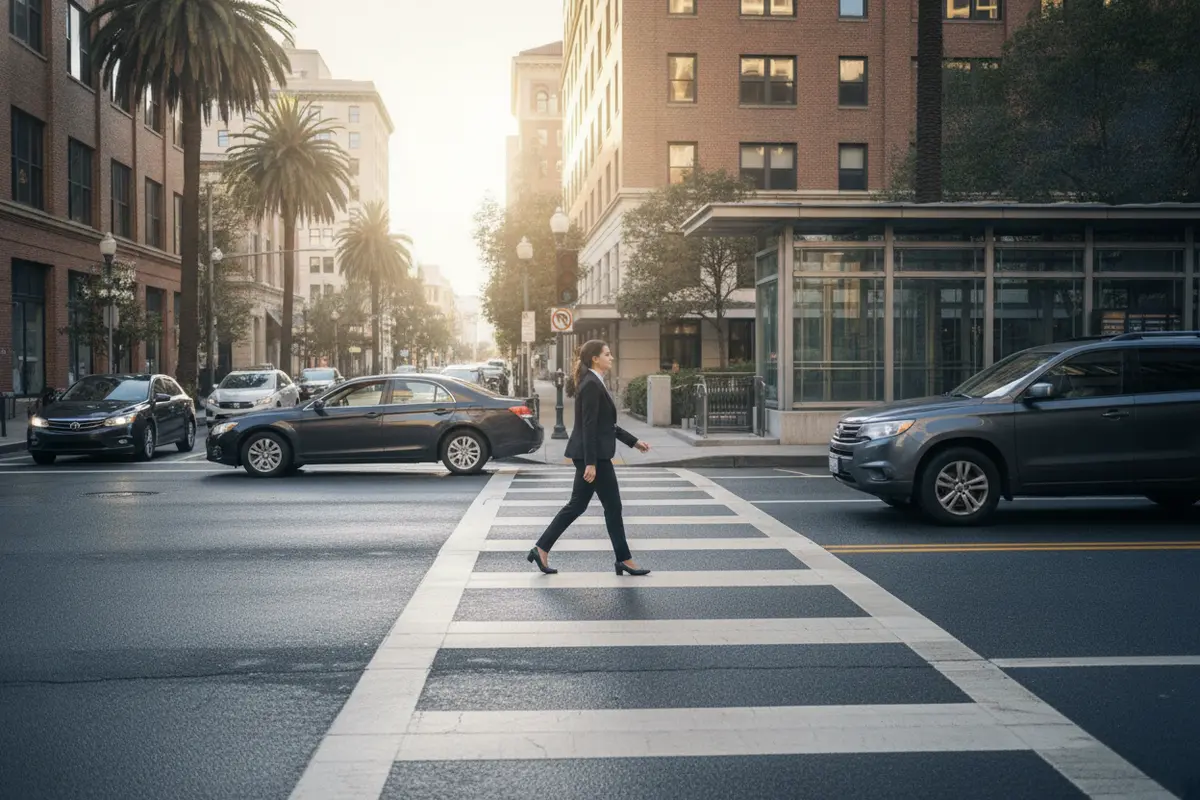
Marked Sacramento intersection with a pedestrian crossing and vehicles approaching
How can visibility and driver conduct be evaluated?
Visibility is a set of facts, not a conclusion based only on the time of day. Investigators may consider street lighting, glare, shadows, weather, vehicle headlights, obstructions, traffic, and the pedestrian’s position. A driver’s view may have been affected by a large vehicle, landscaping, a sign, or a vehicle parked near the corner. The relevant question is what the available evidence shows about the scene and the timing of the collision.
Record what you remember without filling gaps with guesses. Was it daylight, twilight, or dark? Were headlights on? Was a signal operating? Was there a turning vehicle, a queue of traffic, or a delivery vehicle near the corner? If your memory is uncertain, say so in your notes. A clear account that separates what you saw from what you later learned is more useful than speculation.
Vehicle damage, paint transfer, debris, and final positions can help explain movement. The location and shape of damage may be relevant to the direction of travel or point of contact. Preserve original photographs and videos when possible, rather than relying only on cropped or edited copies. Keep a note of who made each image and when.
What changes when a collision happens near a Sacramento transit stop?
A collision near a bus stop, light rail platform, or station can involve more than a passing vehicle and a pedestrian. The pedestrian may have been approaching or leaving a stop, crossing to reach a platform, or walking through a station access area. Relevant details can include the route taken, the location of the stop, the signal and crossing design, vehicle movements, and whether a transit vehicle or another obstruction affected visibility.
Identify the transit operator and location, but avoid assuming that the transit provider caused the collision simply because it was nearby. Depending on the facts, the driver, a vehicle owner, an employer, a public entity, or another party may warrant investigation. Responsibility is fact-specific. Agency records, camera footage, vehicle records, maintenance information, and witness accounts may be held by different people or organizations.
Write down the route number, direction of travel, stop name, platform, and approximate time. If a transit vehicle was involved or may have captured footage, note any vehicle number or identifying details you can safely observe. Ask a lawyer promptly about record preservation because public entity claims may have special notice procedures and shorter deadlines than ordinary injury claims.
For context on related vehicle claims, DC Law Group also has information about California car accident matters and Uber and Lyft collisions. Those pages address different case types; the details of a pedestrian incident still need individual review.
Call DC Law Group at (310) 571-8860 to discuss evidence preservation and possible deadlines.
What steps matter after a hit-and-run?
If a driver leaves, call 911 as soon as you are safe and give a clear description of the vehicle, direction of travel, and any plate characters you remember. Do not follow the vehicle. Ask nearby witnesses to stay if they are willing, and get their contact details. Point out potential camera locations to responding officers. A partial description can still help distinguish a vehicle from others, so note color, body style, damage, and distinctive features without guessing.
Keep a record of when you reported the incident and any case number provided. Notify your own insurer as required by your policy, but be accurate and do not speculate about details you cannot recall. If you have auto insurance, an uninsured motorist provision may be relevant to some pedestrian collisions, depending on the policy and circumstances. Read the policy and get qualified advice before assuming that coverage applies.
Do not post scene images or guesses about the driver on social media. Preserve the original files and provide them through an appropriate channel. A lawyer can help identify potential insurance coverage and explain how to handle insurer requests without making promises about whether a claim will succeed.
How should you document injuries and medical care?
Follow the treatment plan recommended by your health care professional and keep copies of visit summaries, referrals, imaging reports, prescriptions, and work restrictions. Make a simple dated record of symptoms and how they affect ordinary tasks, such as walking, sleeping, driving, or caring for family. The purpose is to keep an accurate account, not to diagnose yourself or exaggerate what you experience.
Tell each provider that the symptoms followed a pedestrian collision and describe when they began. If a symptom changes or a new concern arises, contact a clinician. Keep appointment dates and note if transportation, scheduling, or another barrier makes it difficult to attend. If you miss a visit, record why rather than leaving a confusing gap in your records.
Save employment records that show time missed or modified duties, along with relevant communications from an employer. Keep receipts and invoices related to treatment or transportation in one place. Do not discard paperwork because you expect an insurer or another party to have its own copy. These records can help explain the course of care and the practical effects of an injury.
DC Law Group’s consultation request page provides a way to ask about discussing a matter. During any conversation, share only information you know to be accurate and keep copies of documents you provide.
Can a pedestrian share responsibility for a collision?
California uses comparative fault principles. A person’s conduct may be considered alongside a driver’s conduct, and responsibility may be divided based on the evidence. That does not mean an insurer’s first description of the event is the final legal answer. The signal phase, crossing location, visibility, speed, turning movement, and each person’s actions may all need to be examined.
For example, a driver may say the pedestrian entered the roadway suddenly, while a witness recalls that the pedestrian was already crossing. A photograph may show an obstruction near the corner, while a signal record could help establish the timing. Each source may add context, but no single detail automatically resolves the dispute. Preserve original evidence and avoid adopting another person’s conclusion before the facts are reviewed.
| Issue | Evidence to preserve | Question it may help answer |
|---|---|---|
| Crossing location | Scene photographs, curb and crosswalk layout, witness accounts | Where was the pedestrian in relation to the intersection? |
| Signal and timing | Signal details, nearby footage, incident report, time notes | What traffic-control conditions existed at the relevant moment? |
| Visibility | Lighting, weather, obstructions, vehicle and street photographs | What could each person see while approaching? |
| Injury and treatment | Medical records, dated symptom notes, work documentation | What care followed and how did the injury affect daily activity? |
| Hit-and-run details | Plate fragments, vehicle description, witnesses, camera locations | Can the vehicle or potential insurance coverage be identified? |
The table is a practical preservation checklist, not a test that decides fault. Keep the evidence in its original form, note where it came from, and avoid altering images or messages. A legal review can compare accounts and records and identify missing information.
What California claim deadlines should you check?
California injury claims have filing deadlines, and the deadline can depend on the type of claim, the parties, and the facts. California Code of Civil Procedure section 335.1 generally gives an injured person two years to file a personal-injury lawsuit, but exceptions may affect when the clock starts or how much time is available. Under Government Code section 911.2, a claim against a public entity for injury to a person often must be presented not later than six months after the cause of action accrues, before a lawsuit may proceed. See California Code of Civil Procedure section 335.1 and Government Code section 911.2. Do not treat these general descriptions as a deadline calculation for your situation.
Transit-adjacent incidents deserve prompt attention if a public agency, public roadway condition, or public transit operation may be involved. Identify every potentially responsible party early, preserve the incident date, and ask a California attorney to evaluate the applicable rules. Waiting for treatment to end, an insurer to finish its review, or a police investigation to close may not pause a legal deadline.
Keep a timeline with the collision date, first medical visit, reports made, insurer contacts, and any letters received. Save envelopes and note the date a notice arrived. If a representative provides a deadline, request it in writing and independently ask a qualified attorney to confirm what applies. Different claims arising from the same event may have different procedures.
How can you prepare to speak with a Sacramento pedestrian accident lawyer?
Bring a short, factual timeline and organize records by topic. You do not need to assemble a perfect file before asking for a consultation. Useful material may include:
- Incident report information and any citation or case number.
- Photographs, video, witness contact details, and notes about camera locations.
- Medical records you already have, appointment dates, and current treatment instructions.
- Insurance letters, claim numbers, and a list of calls or messages with adjusters.
- Information about missed work, modified duties, and related records.
- Questions about deadlines, possible parties, and what evidence should be preserved next.
Be candid about facts that may be disputed, including what you remember about the signal or your route. If you are unsure, say that you are unsure. Do not sign a release or give a recorded statement without understanding the request and its implications. The appropriate response depends on the circumstances; this article cannot assess a specific claim.
For additional firm information, see the DC Law Group team page and its California personal injury law firm overview. These links provide general firm information, not an assessment of eligibility or a prediction about results.
DC Law Group’s attorneys handle personal injury matters. A consultation can help you discuss the basic facts and ask what steps may be appropriate. No legal outcome can be guaranteed, and each matter depends on its evidence and applicable law.
Request a consultation with DC Law Group before evidence or deadlines become harder to address
Frequently asked questions
Should I get medical care if I feel okay after being struck?
Seek medical guidance when you may be injured, even if symptoms seem minor at first. A clinician can assess your condition and advise you about follow-up. Keep a dated record of symptoms and care.
What if the collision happened outside a marked crosswalk?
The location is one fact among several. The intersection layout, signal, visibility, vehicle movement, and witness accounts may matter. Do not assume that the lack of painted markings alone determines responsibility.
What if the driver left the scene?
Call 911 when safe, provide the vehicle description and direction of travel, and ask witnesses to share contact information. Preserve photos and report details. Do not follow or confront the driver.
Can a public transit agency be involved in a pedestrian claim?
Possibly, depending on the incident and evidence. A transit vehicle or public property being nearby does not by itself establish responsibility. Public entity claims can have special notice procedures, so ask a California attorney promptly about deadlines.
How long do I have to bring a California pedestrian injury claim?
The deadline depends on the claim and the parties. Some injury claims generally have a two-year filing period, while a claim involving a public entity may require earlier notice. Have an attorney assess the dates and rules that apply to the specific facts.
Keep a copy of the records you have, prioritize medical care, and get prompt legal guidance about evidence and deadlines that may affect your situation.