

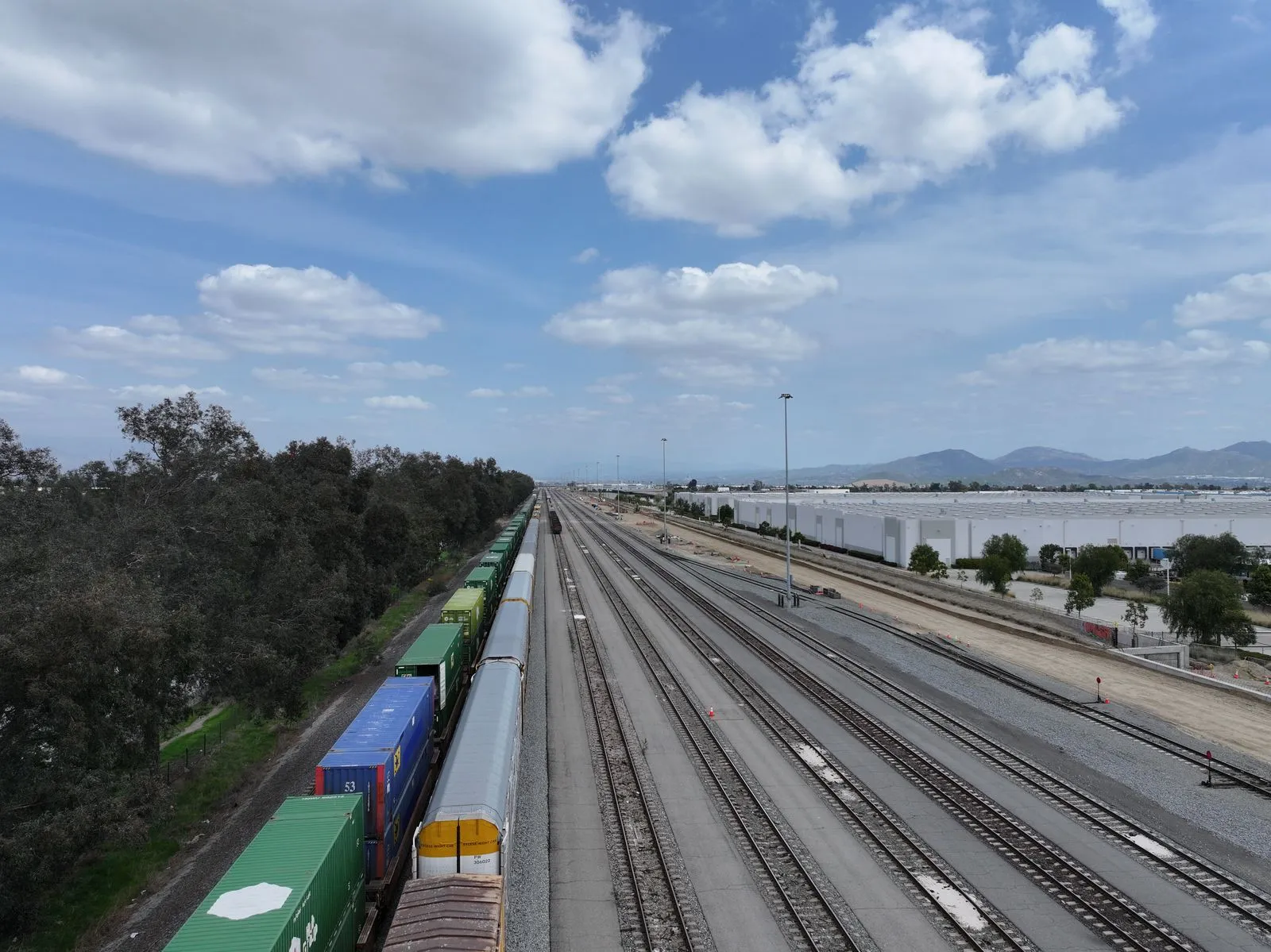
A railroad collision can involve a passenger train, freight carrier, light-rail operator, crossing equipment, a motorist, or a public agency. If you were hurt in California, a railroad accident lawyer can help identify which rules apply, preserve evidence, and evaluate each potentially responsible party. The right claim depends on the facts, the operator, your relationship to the railroad, and where the incident occurred.
Call DC Law Group at (310) 571-8860 to discuss a California train collision claim.
What counts as a railroad accident claim?
A railroad accident claim seeks compensation for injuries or a death allegedly caused by negligence or another legally recognized wrong connected to rail transportation. The incident may occur on a train, at a station or platform, at a grade crossing, beside tracks, or in a work area. A collision is not required. A sudden stop, unsafe boarding area, defective crossing signal, inadequate warning, derailment, or track condition may also require investigation.
In practical terms, the legal question is not simply whether a train was involved. The investigation asks who controlled the relevant equipment or location, what safety duty applied, what happened, and whether that conduct substantially contributed to the injury. A railroad accident lawyer should keep the analysis fact-specific instead of assuming that the railroad, a driver, or a government entity is automatically responsible.
Which railroad incidents may support a claim?
California railroad cases can arise from several distinct settings. Each one presents a different evidence and liability analysis:
- Grade-crossing collisions: A train strikes a car, truck, motorcycle, bicycle, or pedestrian at a public or private crossing.
- Passenger injuries: A rider is injured by a derailment, impact, sudden movement, unsafe boarding area, or another condition on a passenger rail system.
- Platform and station incidents: A person is hurt because of a dangerous surface, platform edge, crowd-control issue, door malfunction, or inadequate warning.
- Pedestrian strikes: A person is struck near tracks, a crossing, a station, or another area where access and warnings are disputed.
- Derailments and equipment failures: A railcar, locomotive, signal, gate, switch, track, or maintenance system may require technical review.
- Railroad worker injuries: A worker's claim may be governed in whole or in part by the Federal Employers' Liability Act, commonly called FELA, rather than an ordinary California negligence claim.
These categories can overlap. For example, a vehicle collision at a crossing might involve the train operator, the company responsible for signals, the public agency responsible for the roadway, and a driver's conduct. Assigning responsibility requires evidence, not a label applied at the scene.
Who may be responsible for a train collision?
Potential defendants depend on the incident and the evidence. A railroad accident lawyer may investigate more than one entity, including:
| Potentially responsible party | Issues the investigation may examine |
|---|---|
| Railroad or transit operator | Train operation, crew conduct, speed, braking, dispatch, warning practices, and compliance with applicable safety duties |
| Track or signal contractor | Inspection, repair, maintenance, design, warning gates, lights, bells, switches, and records of reported defects |
| Public entity | Roadway design, crossing visibility, traffic controls, station conditions, property maintenance, and government-claim procedures |
| Motorist or other private party | Driving conduct, obstruction of the crossing, vehicle defects, or actions that contributed to the collision |
| Equipment or component manufacturer | Design or manufacturing defects in railcars, doors, brakes, signals, gates, or other equipment |
Shared responsibility is possible. California's comparative-fault rules can affect how a fact finder evaluates the conduct of multiple parties, but the result depends on the record developed in the case. The railroad may dispute notice, causation, the condition of the crossing, or the amount of harm. A careful investigation should preserve the evidence before those disputes harden into competing accounts.
How do federal and California rules affect a railroad claim?
Railroad claims can sit at the intersection of California tort law, federal railroad safety rules, transportation regulations, and special statutes for railroad employees. Those rules do not produce one automatic result for every collision. They help define the duties, defenses, procedures, and evidence that may matter in a particular case.
California duties for passenger carriers
California Civil Code section 2100 states that a carrier of persons for reward must use the utmost care and diligence for safe carriage and exercise a reasonable degree of skill. That statute may be relevant to a passenger's claim, but its application still depends on the operator, the incident, the claimed defect, and proof of causation. It does not mean every passenger injury establishes liability without further analysis.
Grade-crossing conduct
California Vehicle Code section 22452 addresses stopping and caution requirements for specified vehicles at railroad grade crossings. The section may be relevant when a commercial vehicle, school bus, or another covered vehicle is involved. It should not be treated as a complete answer to a crossing dispute because the facts may also involve signals, sight lines, warnings, track conditions, or the conduct of other parties.
Federal safety rules and FELA
Federal railroad safety law can affect what standards apply and whether a state-law theory is limited or supplemented by federal law. For an injured railroad employee, FELA may be central. Under 45 U.S.C. section 51, an interstate railroad carrier can be liable when an employee is injured in whole or in part because of the carrier's negligence or a defect attributable to that negligence. FELA is a specialized worker-injury system. It is not a substitute for analyzing the separate rules that may govern passengers, pedestrians, drivers, or other members of the public.
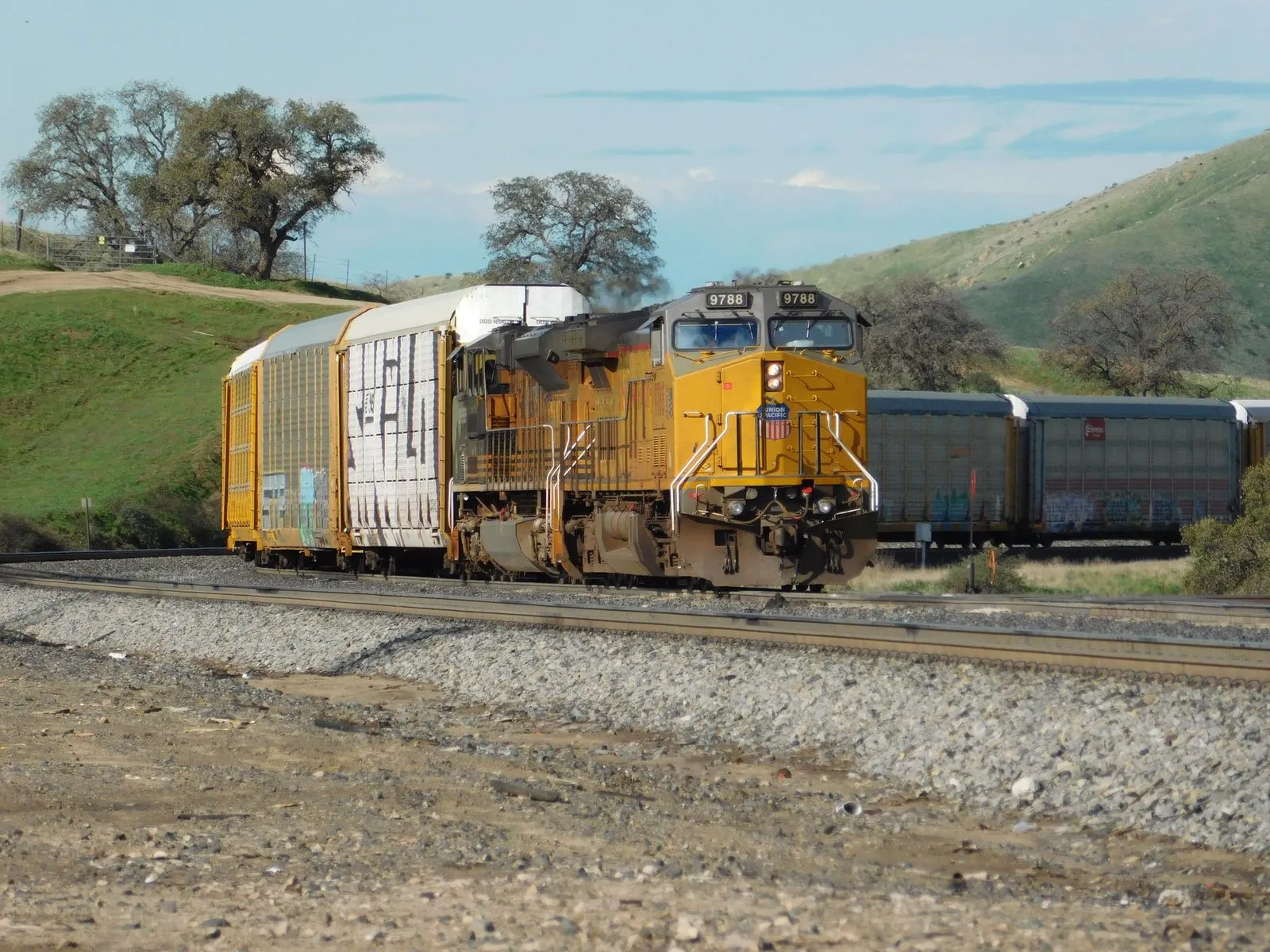
A California freight train at a rail corridor, illustrating the setting in which preservation and liability questions may arise.
For a starting point, review the official text of California Civil Code section 2100, California Vehicle Code section 22452, and 45 U.S.C. section 51. A statute is a starting point for analysis, not a prediction of how a court will decide an individual claim.
What evidence should be preserved after a train collision?
Railroad evidence can be controlled by several organizations and may change or disappear through ordinary operations. Prompt preservation can help a claim by fixing the conditions that existed near the event and identifying the records that must be requested.
- Photographs and video of the train, vehicles, tracks, platform, crossing, signals, gates, lighting, sight lines, and surrounding roadway
- Names and contact information for witnesses, passengers, first responders, operators, and nearby businesses with surveillance footage
- Police, fire, emergency medical, transit, and railroad incident reports
- Medical records, diagnostic imaging, treatment instructions, and a written record of symptoms and limitations
- Train event-recorder data, dispatch communications, crew schedules, inspection logs, maintenance records, and signal-system data when available
- Camera footage from trains, stations, crossings, vehicles, body-worn cameras, businesses, and nearby residences
- Photographs of clothing, safety equipment, vehicle damage, and any physical item involved in the incident
- Employment and activity records documenting time away from work and changes in ordinary responsibilities
Do not enter active tracks or attempt to collect dangerous evidence. Instead, photograph from a safe location, obtain medical care, follow reporting instructions, and tell a lawyer promptly about the condition of the scene and any preservation concerns. A lawyer may send a preservation notice and coordinate requests for records, but a notice does not guarantee that every item exists or can be obtained.
DC Law Group's California accident resources also explain why early documentation matters in injury claims. Readers can also review the firm's motorcycle accident guidance and truck accident guidance when a crossing collision involves another vehicle. The details of a railroad investigation require an incident-specific plan.
What deadlines apply to California railroad accident claims?
Deadlines are one of the most important reasons to seek legal guidance quickly, but there is no single deadline for every railroad incident. The operator's legal status, the claimant's relationship to the railroad, the type of claim, the location, and the date of discovery may all matter.
- Private personal-injury claims: California Code of Civil Procedure section 335.1 generally provides a two-year period for an action for injury to, or the death of, an individual caused by wrongful act or neglect. Exceptions and special rules may apply.
- Claims involving public entities: California Government Code section 911.2 generally requires a claim relating to injury to a person or personal property to be presented within six months after accrual. The claim process and later lawsuit deadlines must be analyzed separately.
- Railroad employee claims: FELA has its own rules and limitations provisions. A worker should not assume the ordinary California personal-injury timeline controls.
- Federal operators and special procedures: Amtrak and other federally connected or regulated operations may involve additional notice, administrative, or jurisdictional questions.
Read the official text of California Code of Civil Procedure section 335.1 and California Government Code section 911.2. Do not use a general deadline as a case deadline. A railroad accident lawyer should identify the parties and claim types first, then calculate the requirements that apply to the facts.
Call DC Law Group at (310) 571-8860 before a preservation or filing deadline becomes urgent.
How can a railroad accident lawyer help?
A railroad accident lawyer can organize the investigation around the actual incident instead of relying on an early assumption about fault. Depending on the facts, that work may include:
- Identifying every operator, contractor, public entity, employer, and other potentially responsible party
- Determining whether the claim involves passenger-carrier duties, ordinary negligence, FELA, a government-claim process, or a combination of legal theories
- Sending preservation requests for video, event data, dispatch records, inspection documents, and physical evidence
- Reviewing medical evidence and connecting the incident to current and future effects without overstating what the record proves
- Evaluating shared responsibility, defenses, insurance, and procedural requirements before a claim is presented
- Communicating with the relevant parties while protecting the injured person's ability to make an informed decision
DC Law Group represents California accident victims in matters involving serious vehicle, commercial, motorcycle, pedestrian, and other negligence-related injuries. A railroad case may require different technical and procedural work, so the firm should review the specific facts before stating whether it can assist.
Call DC Law Group at (310) 571-8860 for a prompt review of your railroad accident claim.
Frequently asked questions
Can I sue a railroad if I was injured by a train?
Possibly. A claim may exist when evidence shows that a railroad, transit operator, contractor, public entity, motorist, manufacturer, or another party acted negligently or violated a duty that contributed to the injury. The responsible party and available claim depend on the incident facts.
What if the train accident occurred at a crossing?
A crossing investigation may examine train operation, warning gates and signals, roadway design, sight lines, track maintenance, driver conduct, and the responsibilities of public agencies or contractors. More than one party may share responsibility.
Do railroad workers use the same claim process as passengers?
Not necessarily. An injured railroad employee may have a claim under FELA, which has specialized rules for injuries connected to railroad employment. The employee's job, the carrier's operations, and the facts of the incident should be reviewed promptly.
How long do I have to file after a California train collision?
There is no universal deadline. A private personal-injury claim may involve California's general two-year statute, while a claim involving a public entity may require an administrative claim within six months. Railroad employee and federal-operator matters can involve additional rules.
What should I do immediately after a railroad accident?
Get emergency care, report the incident as appropriate, preserve photographs and witness information from a safe location, keep medical records, avoid guessing about fault, and contact a lawyer promptly. Early guidance can help identify preservation needs and time-sensitive procedures.
This article provides general information and is not legal advice. Every railroad accident claim is different and must be evaluated on its individual facts and circumstances.
Contact DC Law Group at (310) 571-8860 for a California railroad accident claim consultation.