
A chemical burn can worsen after the initial exposure, even when the injury first appears minor. Strong acids, drain cleaners, paint thinner, gasoline, and other substances can damage tissue, while some milder chemicals may cause harm that becomes noticeable hours later. If you have a serious exposure, seek emergency medical care first. Call DC Law Group at (310) 571-8860 for a confidential, no-obligation discussion when you are medically safe to do so.
A chemical burn lawyer free consultation can help you understand whether the facts may support a California injury claim. The discussion can identify parties for investigation, evidence to preserve, and possible overlap with workplace benefits or other claim paths. Liability is not automatic. The appropriate strategy depends on the substance, exposure setting, medical evidence, responsible parties, and applicable deadlines.
The first step is identifying what qualifies as a chemical burn and why the nature of the exposure matters. From there, careful treatment records and preserved evidence can help clarify causation and the claims that may be available.
What Is a Chemical Burn, and When Can It Support a California Claim?
A chemical burn is tissue damage caused by contact with a corrosive or otherwise harmful substance. Examples can include strong acids, drain cleaners, paint thinner, gasoline, and other chemicals. The injury may affect the skin, eyes, airways, or internal tissues, depending on the substance and the way exposure occurred. Medical evaluation should come first, because a chemical injury can continue developing after the initial contact.
Not every exposure creates the same legal issue. A milder chemical may cause damage that is not immediately obvious and may become more apparent hours later. For that reason, the absence of severe symptoms at the scene does not by itself determine whether an injury occurred. Medical records, the treating provider's observations, and the timeline of symptoms can help document what happened.
Possible settings for a California chemical burn claim
A claim may arise in several different settings, depending on the facts:
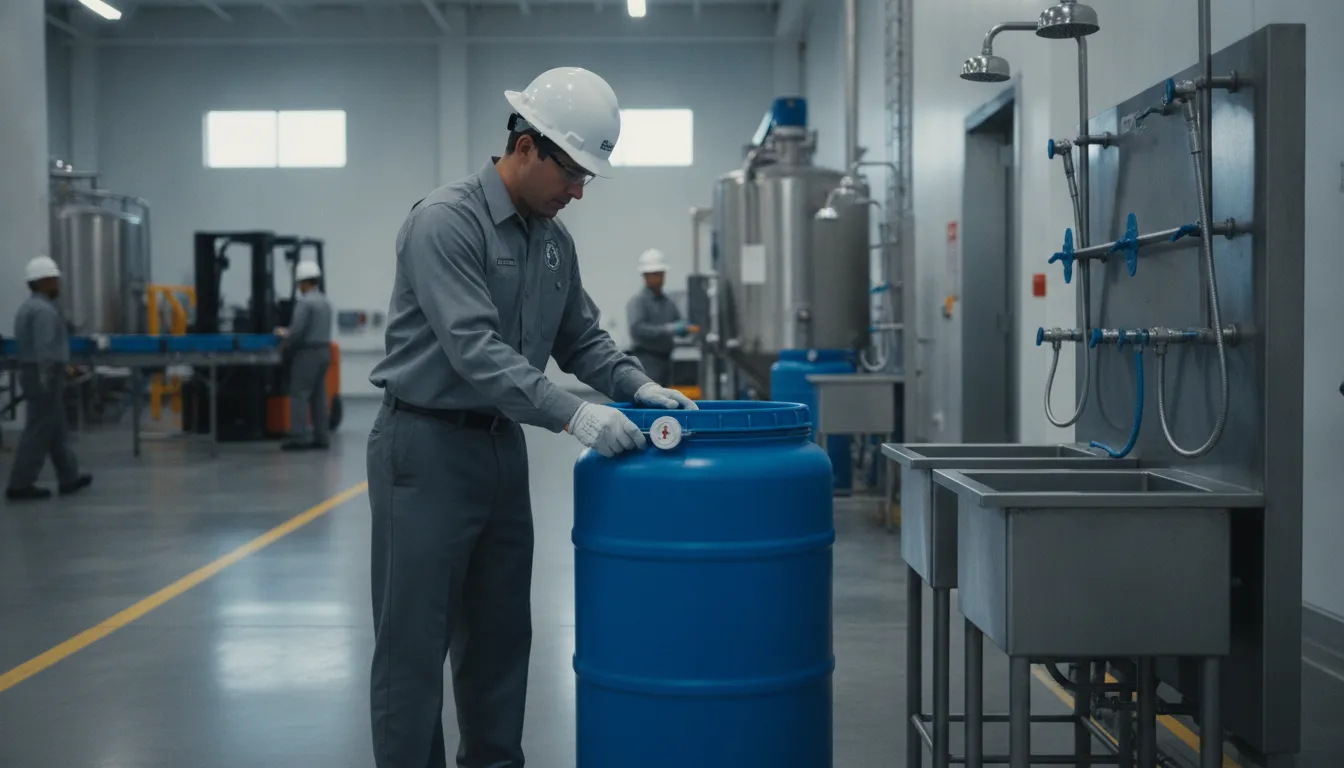
- Workplace exposure: The investigation may examine the chemical's labeling, safety data sheet, training, protective measures, and the employer's hazard communication practices. OSHA describes hazard communication programs as including container warnings, safety data sheets, and employee training. These materials may help establish what information was available and how the chemical was intended to be handled.
- Product-related exposure: If a consumer or worker is injured while using a chemical product, relevant questions may include whether the product was defectively designed, inadequately labeled, or accompanied by insufficient warnings. The product, packaging, instructions, and purchase information may all matter.
- Premises or contractor exposure: A property operator, maintenance company, cleaning contractor, or another business may become part of the investigation. This may apply if chemicals were stored, applied, spilled, or left accessible where people could encounter them.
- Vehicle or transportation incident: A collision or delivery event involving a chemical may raise different questions about the conduct of drivers, carriers, employers, manufacturers, or other parties.
These categories are not conclusions about liability. A viable claim generally requires a fact-specific analysis of duty, breach, causation, and legally recognized harm. The investigation may need to connect the particular chemical exposure to the injury while accounting for other possible causes and the conduct of multiple parties. California residents can review DC Law Group's California personal injury attorneys practice information for broader context.
Preserve the chemical container, label, safety data sheet, photographs, clothing, incident reports, and communications when doing so is safe and does not delay treatment. Emergency care remains the priority. The potential claim setting and responsible-party analysis can be addressed after the immediate medical needs are handled.
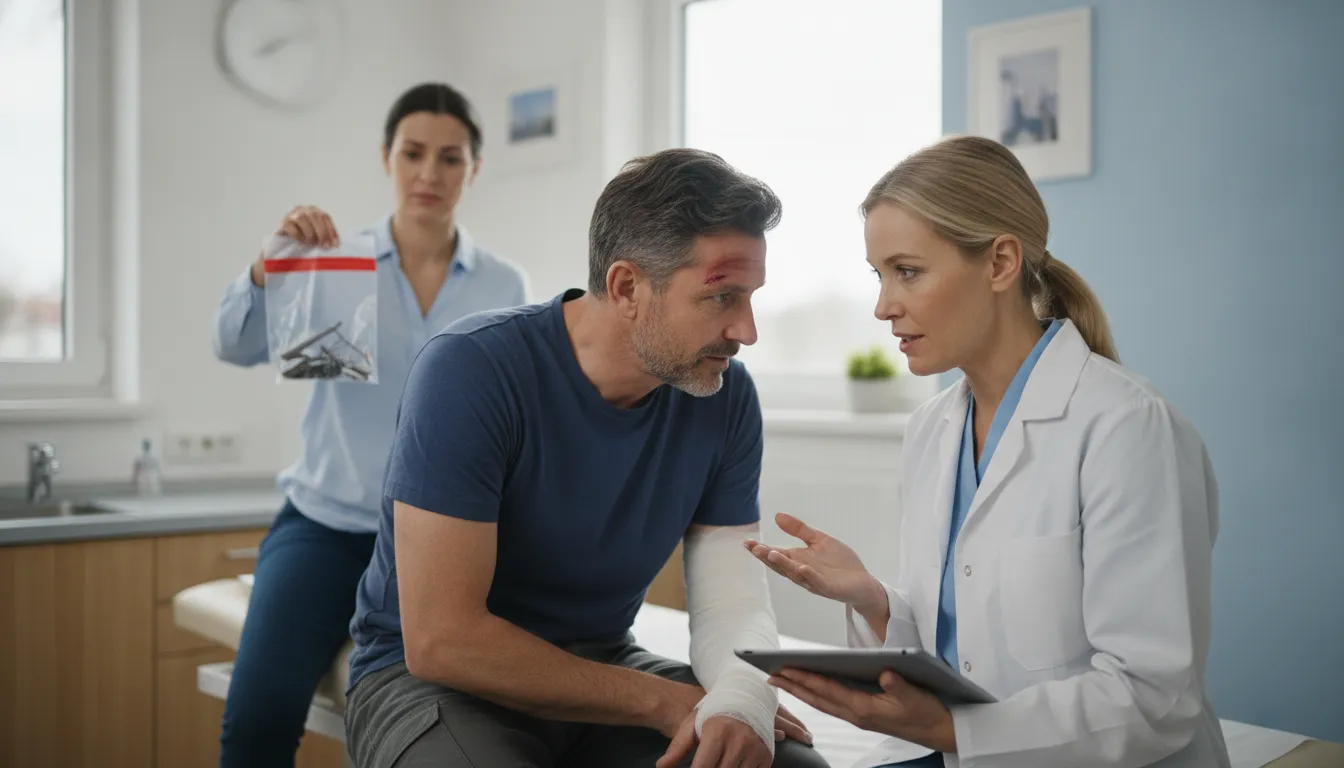
Medical consultation after a California chemical exposure
Medical documentation can help preserve the timeline of a chemical exposure and injury.
What Should You Do Immediately After a Chemical Exposure?
When a chemical contacts your skin, eyes, or clothing, treat the exposure as a safety emergency first. The severity of an injury may not be obvious immediately, particularly when a milder chemical causes damage that develops over several hours. Do not delay emergency care to photograph the scene, identify a potentially responsible party, or gather records. Those issues can be addressed later.
1. Move away from the source if you can do so safely. Protect yourself and others from additional contact or fumes. If the exposure involves a toxic chemical or you are unsure what happened, contact Poison Control at 800-222-1222 in the United States. Call 911 when emergency help is needed. The CDC chemical emergency response guidance provides general information for responding to chemical incidents.
2. Remove dry chemical material carefully. If a dry substance remains on the skin, protect the injured person from further harm. Use gloves if available and brush away remaining material without spreading it to uninjured skin. Do not take a step that exposes you or someone assisting to further contamination.
3. Remove contaminated clothing and jewelry. Carefully take off items that may continue holding the chemical against the body. Avoid pulling contaminated material across the face or other unaffected areas when doing so would increase exposure.
4. Rinse the exposed area with water. Mayo Clinic first-aid guidance recommends rinsing chemicals off for at least 20 minutes, using a shower when available. If the area remains painful, additional rinsing may be needed. Follow emergency dispatch or medical professional instructions for the specific substance. For workplace-related incidents, the NIOSH first-aid guidance is another authoritative safety reference.
5. Get medical evaluation promptly. Major chemical burns require emergency medical help. Emergency attention is especially important for deep or extensive burns, burns involving the face, hands, feet, groin, buttocks, or a major joint, and symptoms such as cool clammy skin, a weak pulse, or shallow breathing. Call 911 for urgent symptoms or follow the direction of emergency personnel.
6. Preserve basic information only after care is underway. If it does not interfere with treatment, keep the chemical container or record the chemical name so responders can identify it. Do not handle a hazardous container unnecessarily. Later, save related labels, safety information, work instructions, photographs, and clothing as directed by medical or safety professionals. The priority is decontamination, emergency assessment, and following the treatment plan.
These steps are general safety information, not medical advice. Chemical exposures can require substance-specific treatment, so rely on emergency responders and qualified clinicians for decisions about your injury.
How Do You Preserve Evidence After a Chemical Burn?
Once urgent medical needs are addressed, preserve information that may help explain what happened. Chemical injuries can involve a product, workplace process, property condition, vehicle, or more than one potential source. The evidence should identify the substance, document the exposure, and connect the event to the injury without assuming who is legally responsible.
Identify the chemical and the setting
If it is safe to do so, keep the original container, label, packaging, or equipment involved. Photograph the label rather than relying on memory. Write down the product name, manufacturer, lot or batch information, and where the item was located. At work, request or preserve the applicable safety data sheet (SDS), container-label information, chemical inventory, training materials, and written hazard communication program. OSHA explains that hazard communication includes container labeling, safety data sheets, and employee training: OSHA HazCom requirements.
Do not handle a leaking container or contaminated material merely to obtain evidence. Tell medical providers and emergency responders the chemical name or bring the container only when doing so is safe. Mayo Clinic advises taking the container or chemical name when seeking emergency medical help. The priority remains decontamination and treatment.
Document the injury and the event
- Take clear photographs of the affected area as soon as practical, then continue documenting changes during treatment. Include a few wider images showing location and context, but do not delay care for photography.
- Preserve clothing, shoes, gloves, protective equipment, and personal items involved in the exposure. Place them in separate clean containers if medical or safety personnel instruct you to do so, and avoid washing or discarding them until their handling is clarified.
- Record the date, time, location, task, people present, sequence of events, odors or warnings noticed, and symptoms that followed. Ask witnesses for their names and contact information. Do not pressure anyone to adopt a particular version of events.
- Request the incident report, workplace photographs, inspection records, maintenance records, delivery records, and relevant video. Make a written request that potentially relevant video, product samples, equipment, and electronic messages be preserved.
- Keep medical records, discharge instructions, prescriptions, photographs, follow-up appointments, and communications with insurers, employers, property operators, manufacturers, or other involved parties. Save original emails, texts, and attachments rather than only screenshots.
Medical-facility records may be important when establishing the connection between an exposure and the resulting injury. A California personal injury attorney can help organize the evidence and identify what additional preservation requests may be appropriate based on the facts.
Who May Be Responsible for a Chemical Burn?
Responsibility depends on how the exposure occurred, who controlled the hazard, and whether the available evidence supports a legal theory such as product liability, negligence, or premises liability. More than one person or business may require investigation. The table below identifies possible avenues for review, not a conclusion that any particular party is legally responsible.
| Setting | Possible responsible parties | Evidence to investigate |
|---|---|---|
| Consumer or industrial product | A manufacturer, distributor, seller, or another entity in the distribution chain may be examined if the product was defective, lacked adequate warnings, or was supplied for an unsafe use. | The container, label, instructions, safety data sheet, purchase records, remaining product, photographs, and records of how the product was used. |
| Employer or worksite | An employer or another workplace entity may be relevant when training, protective equipment, storage, labeling, or hazard communication is disputed. OSHA rules address labels, safety data sheets, and employee training. | Incident reports, training records, chemical inventories, workplace policies, safety data sheets, photographs, witness accounts, and the identity of contractors or supervisors. |
| Contractor or property operator | A contractor, building owner, property manager, or operator may be investigated when chemical materials were stored, applied, transferred, or left accessible in an unsafe manner. | Contracts, work orders, inspection records, maintenance logs, access controls, warnings, surveillance footage, photographs, and communications about the hazard. |
| Transportation crash or spill | A driver, vehicle owner, carrier, cargo handler, or company responsible for loading may be relevant if a collision or improper containment caused the exposure. | Police and incident reports, vehicle and cargo records, shipping documents, photographs, video, witness statements, and chemical identification records. |
| Premises outside the workplace | A property owner, occupier, event operator, or maintenance contractor may be examined when visitors encountered an unmarked chemical hazard or inadequate safeguards. | Photographs of the area, warning signs, inspection and maintenance records, prior complaints, incident reports, witness information, and medical records. |
Medical-facility records can be important because they document the injury, treatment, symptoms, and medical opinions relevant to causation. Preserving the chemical container and related records should never delay emergency care. A fact-specific review by California personal injury attorneys may help identify which parties and evidence warrant further investigation.
Can a Workplace Chemical Burn Involve Workers Compensation and a Third-Party Claim?
A chemical burn suffered while performing job duties may raise more than one legal question. Workers compensation may address an injury arising out of and in the course of employment when the applicable statutory requirements are met. Separately, the facts may support an injury claim against a third party whose conduct, product, or property contributed to the exposure. These issues are related, but they are not interchangeable, and neither route is automatic.
How workers compensation may apply
California workers compensation generally focuses on the connection between the injury and the employment. An investigation may examine what task you were performing, where the exposure occurred, which chemical was involved, whether the incident was reported, and what medical treatment followed. Under California Labor Code section 3600, coverage can apply when the employee is performing service incidental to employment and the injury is proximately caused by the employment, with or without negligence. The statute also identifies circumstances involving the employer and employee being subject to the compensation provisions. The specific facts and employment status still matter.
Workplace records may help clarify that analysis. Depending on the incident, relevant materials can include the chemical label, safety data sheet, training records, exposure procedures, incident reports, photographs, witness accounts, and medical records. Federal hazard communication rules address chemical labels, safety data sheets, and employee training. But the existence or absence of a particular record does not by itself establish legal responsibility.
When a separate third-party claim may be considered
A separate claim may be evaluated when someone other than the employer may have contributed to the injury. Potential examples can include a manufacturer or supplier of the chemical, a contractor that performed work at the site, a property owner or operator, or another business responsible for equipment, storage, warnings, or site conditions. An employer may also be involved in the factual investigation, but the legal effect of an employer-related claim can differ from a claim involving an outside party.
California Labor Code section 3852 addresses the relationship between workers compensation and an action against a third person. Read the statute at California Labor Code section 3852. The statute does not mean every workplace chemical burn creates a third-party case. A claim may depend on identifying a legally responsible outside party, proving causation, preserving evidence, and complying with the rules that apply to the particular claim.
Because workers compensation issues and third-party theories can affect one another, avoid discarding the chemical container, clothing, or related records before they can be evaluated. A California personal injury attorney can review the known facts and explain which questions require further investigation. That review is not a guarantee of eligibility, liability, or a particular result.
What Damages and Case Factors Are Reviewed?
A chemical burn case is not evaluated by the appearance of the injury alone. The review usually begins with the exposure itself, the medical diagnosis, and the evidence connecting the event to the harm. It may also consider how the injury affected work, daily activities, relationships, and the need for continuing care.
Medical evidence and recovery
Keep records from emergency care, specialists, hospitals, rehabilitation providers, and follow-up visits. Treatment notes may describe the location and depth of the burn, eye or airway involvement, scarring, infection concerns, pain, procedures, and expected follow-up. Photographs taken at appropriate intervals can help show how the injury changed, but they do not replace a clinician's assessment. Follow the treatment plan and tell providers about new or worsening symptoms.
The medical timeline matters. A chemical injury may not be fully apparent at the first examination, particularly when symptoms develop after the exposure. Records can help establish when symptoms began, what treatment was provided, and whether later findings are consistent with the original event. The substance, concentration, duration of contact, route of exposure, and decontamination steps may all require review by qualified professionals.
Work, daily life, and property
Depending on the injury, a claim may examine time away from work, reduced ability to perform job duties, changes in household activities, and future treatment needs. Keep employer communications, wage records, schedules, and notes about restrictions. Do not exaggerate or minimize symptoms. A clear account is more useful than a conclusion about what the claim should be worth.
Property damage can also be relevant. Clothing, shoes, protective equipment, electronics, a vehicle, or other personal items may have been contaminated or damaged during the incident. Preserve those items when safe. Do not discard, clean, or alter them merely to make them easier to store. Ask medical or safety professionals how potentially contaminated material should be handled.
Liability, causation, and insurance
The investigation may assess whether a product defect, inadequate warning, unsafe work practice, negligent maintenance, improper storage, transportation event, or another condition contributed to the exposure. It may also consider whether multiple parties had different responsibilities. Evidence from medical facilities, witnesses, employers, property operators, manufacturers, insurers, and public agencies may fit together in different ways.
Insurance communications should be saved, including letters, emails, recorded-statement requests, and proposed releases. Do not assume that an insurer's position resolves the legal analysis. If you need help organizing an injury record, contact DC Law Group with the information that is safe to share. A lawyer can explain what additional facts are needed, but no review can promise a particular result.
How Long Do You Have to Pursue a California Chemical Burn Claim?
There is no single deadline that applies to every chemical burn matter. California Code of Civil Procedure section 335.1 generally provides a two-year period for an action for injury caused by the wrongful act or neglect of another. Read the text of California Code of Civil Procedure section 335.1, but do not treat the general rule as a case-specific filing calculation.
The deadline may depend on the type of claim, the identity of the defendant, when the injury was discovered, and whether a government entity is involved. Workplace injuries can also involve separate workers compensation notice and claim procedures. Product-related claims may require a different limitations analysis from a negligence claim. Special rules can apply to minors, injuries that develop over time, or parties with a statutory notice requirement.
Why early review matters
Evidence can become harder to locate as time passes. A product may be discarded, a chemical formulation may change, video may be overwritten, a worksite may be repaired, and witnesses' memories may fade. Early medical documentation can also help preserve the timeline between exposure, symptoms, treatment, and any ongoing limitations. These practical concerns do not change the legal deadline, but they can affect an investigation.
Write down the exposure date, the date symptoms began, every treatment date, the employer or business involved, and any communications about the incident. Keep copies of reports and notices. Avoid signing a release or giving a recorded statement about fault without understanding what it means. If you want a preliminary discussion about your circumstances, schedule a case evaluation and bring the records you can safely obtain.
Only a qualified attorney who reviews the actual facts can assess which deadlines may apply. Do not wait for a limitations period to approach before asking about the correct claim path. A prompt review can identify missing information and help protect evidence while medical care remains the priority.
How Can a Chemical Burn Lawyer Free Consultation Help?
A chemical burn lawyer free consultation can provide a structured way to discuss what happened without assuming that a claim will succeed. The discussion may focus on the exposure setting, the chemical or product involved, the medical timeline, and the evidence that still exists. It can also help identify whether the facts call for further review of a product, worksite, vehicle, property, contractor, or insurer.
What to bring to an initial discussion
- The chemical container, label, packaging, safety data sheet, or a photograph of the identifying information, if safe to preserve.
- Medical records, discharge instructions, prescriptions, photographs, and a timeline of symptoms and treatment.
- Incident reports, employer or property communications, witness names, photographs, video details, and relevant messages.
- Insurance letters, requests for statements, proposed releases, or other documents received after the exposure.
You do not need to have every document before asking a question. Describe the setting accurately and identify what you know, what you do not know, and what remains to be located. A fact-specific review may clarify potential claim theories, preservation steps, workers compensation issues, and deadlines. It cannot determine responsibility without investigation or guarantee eligibility, representation, or an outcome.
DC Law Group represents personal injury clients throughout California. To discuss the circumstances when you are medically safe to do so, contact DC Law Group. Emergency symptoms should be addressed by emergency responders or qualified medical professionals, not by waiting for a legal consultation.
Call DC Law Group at (310) 571-8860 for a confidential case discussion.
Frequently Asked Questions About Chemical Burn Claims
What should I do first after a chemical burn?
Move away from the source when safe, follow emergency instructions, remove dry material and contaminated clothing only when doing so will not cause further exposure, and rinse as directed by emergency responders or medical professionals. Seek prompt medical evaluation. Major burns, deep burns, extensive burns, burns affecting the face or a major joint, and signs of shock require emergency help. Do not delay care to gather evidence.
Can I pursue a claim if the chemical burn happened at work?
Possibly, but the answer depends on the employment relationship, the circumstances of the exposure, the medical evidence, and the parties involved. Workers compensation may be relevant to an injury arising from employment. A separate claim may also be evaluated if a manufacturer, supplier, contractor, property operator, or another third party contributed to the exposure. California Labor Code section 3852 addresses an employee's action against a third person, but it does not make every workplace chemical burn a third-party case.
What evidence helps a chemical burn lawyer evaluate a case?
Useful information may include the chemical container and label, safety data sheet, product instructions, photographs, clothing or protective equipment, and incident reports. Also preserve inspection reports, witness information, video details, medical records, treatment photographs, and communications with employers, businesses, insurers, or manufacturers. Preserve potentially relevant items safely and follow professional guidance for contaminated materials. Evidence should be gathered after urgent treatment is underway.
How long do I have to file a California chemical burn claim?
California Code of Civil Procedure section 335.1 generally states a two-year period for an action for injury caused by another person's wrongful act or neglect. That general rule is not a deadline calculation for every case. The period can vary with the claim type, defendant, discovery of injury, government involvement, workers compensation rules, and other facts. Have a qualified attorney review the matter promptly rather than relying on a general online timeline.
Talk With DC Law Group About Your Chemical Burn
A chemical burn may involve urgent medical needs, complicated evidence, and more than one possible claim path. After you have obtained appropriate care, gather the records that are safe to preserve and ask questions before important evidence or deadlines are lost. DC Law Group represents personal injury clients throughout California and can review the known facts without assuming liability or promising a result.
Call DC Law Group at (310) 571-8860 to request a confidential, no-obligation discussion.