

A personal injury lawsuit in California is a civil case brought by an injured person who believes another person or business caused legally recognized harm. Before filing, you generally need to identify the responsible parties, preserve evidence, understand the applicable deadline, and evaluate whether a negotiated claim or a court case best fits the facts. This guide explains the process without predicting an outcome.
Call DC Law Group at (310) 571-8860 for a confidential case evaluation.
What is a personal injury lawsuit?
A personal injury lawsuit is a civil action seeking legal relief for harm caused by another party's wrongful act or neglect. The injured person is usually the plaintiff, and the person, business, insurer, property owner, employer, or other entity alleged to be responsible may be named as a defendant. The claim may involve physical injury, emotional harm, property damage, lost earnings, medical care, or future effects.
A demand to an insurance company is not the same as a lawsuit. A claim is often investigated and negotiated before court papers are filed. A lawsuit begins when the plaintiff files a complaint and other required documents with the proper court. The defendant must then be formally served and given an opportunity to respond.
The California Courts personal injury guide identifies common pre-filing questions, including who to sue, where to file, what legal theory applies, what losses to document, and what evidence may support the case.
What should you do before filing a California injury case?
Before filing, organize the facts, preserve proof, identify every potentially responsible party, review insurance information, and calendar the earliest plausible deadline. A clear pre-filing record helps an attorney evaluate liability and damages, select the proper court, and avoid losing a claim because an important document, witness, or notice was overlooked.
- Obtain appropriate medical evaluation and follow the recommended treatment plan.
- Write down when, where, and how the incident occurred while your memory is fresh.
- Preserve photographs, video, vehicle damage, damaged personal property, and relevant messages.
- Keep medical records, bills, prescriptions, work records, and notes about symptoms and limitations.
- Collect insurance policy information and the names of people or businesses involved.
- Save contact information for witnesses and ask them to preserve what they observed.
- Do not delete social media posts or publish statements that speculate about fault or recovery.
- Refer settlement papers, recorded statements, and releases to counsel before signing when possible.
Do not wait for every medical appointment to seek legal guidance. The legal deadline can arrive before the full medical picture is known, and some evidence becomes harder to obtain with time. An attorney can help separate urgent preservation steps from questions that can be answered later.
How does evidence support a personal injury lawsuit?
Evidence connects the event to the defendant's conduct, the injury to the event, and the claimed losses to the injury. Strong evidence can include photographs, incident reports, medical records, witness testimony, video, vehicle data, inspection records, employment documentation, expert opinions, and communications with insurers. Evidence should be preserved in its original form whenever possible.
Different cases call for different proof. A motor vehicle collision may require scene photographs, traffic-camera footage, vehicle damage records, cell phone evidence, or commercial driver and maintenance records. A premises case may involve inspection logs, incident reports, ownership records, and photographs of the condition. A rideshare or commercial vehicle case may involve multiple insurers, employers, contractors, or corporate records.
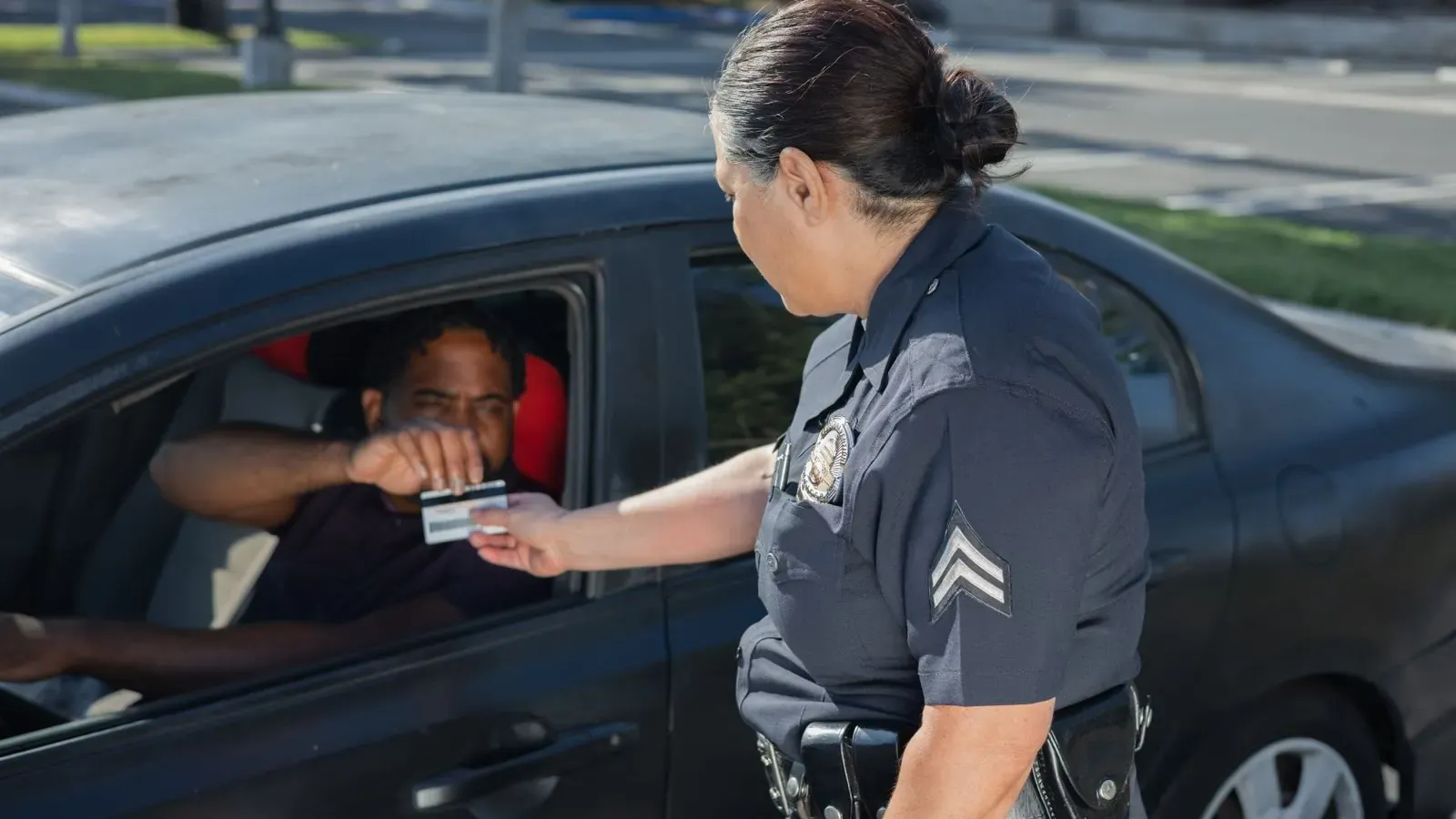
California driver and law enforcement officer exchanging identification after a collision
Preserving incident information and identifying the parties can help establish the factual record.
Keep a simple evidence log. Record what the item is, where it came from, when it was collected, and who has possession of it. Do not alter photographs or video. If a phone, vehicle, roadway, business, or property may contain evidence, tell counsel promptly so preservation requests can be considered.
How is fault evaluated in California?
California injury cases commonly turn on duty, breach, causation, and damages. The plaintiff must present evidence supporting the legal theory, while the defense may dispute what happened, whether the defendant owed a duty, whether the conduct caused the injury, or whether another condition contributed. Responsibility can involve more than one person or entity.
Comparative fault means the evidence may support assigning some responsibility to the injured person or to other parties. California cases can therefore involve a dispute over each participant's percentage of responsibility rather than a simple all-or-nothing conclusion. A fault allocation can affect the amount recoverable, but the effect depends on the claims, evidence, defendants, and court rulings in the particular case.
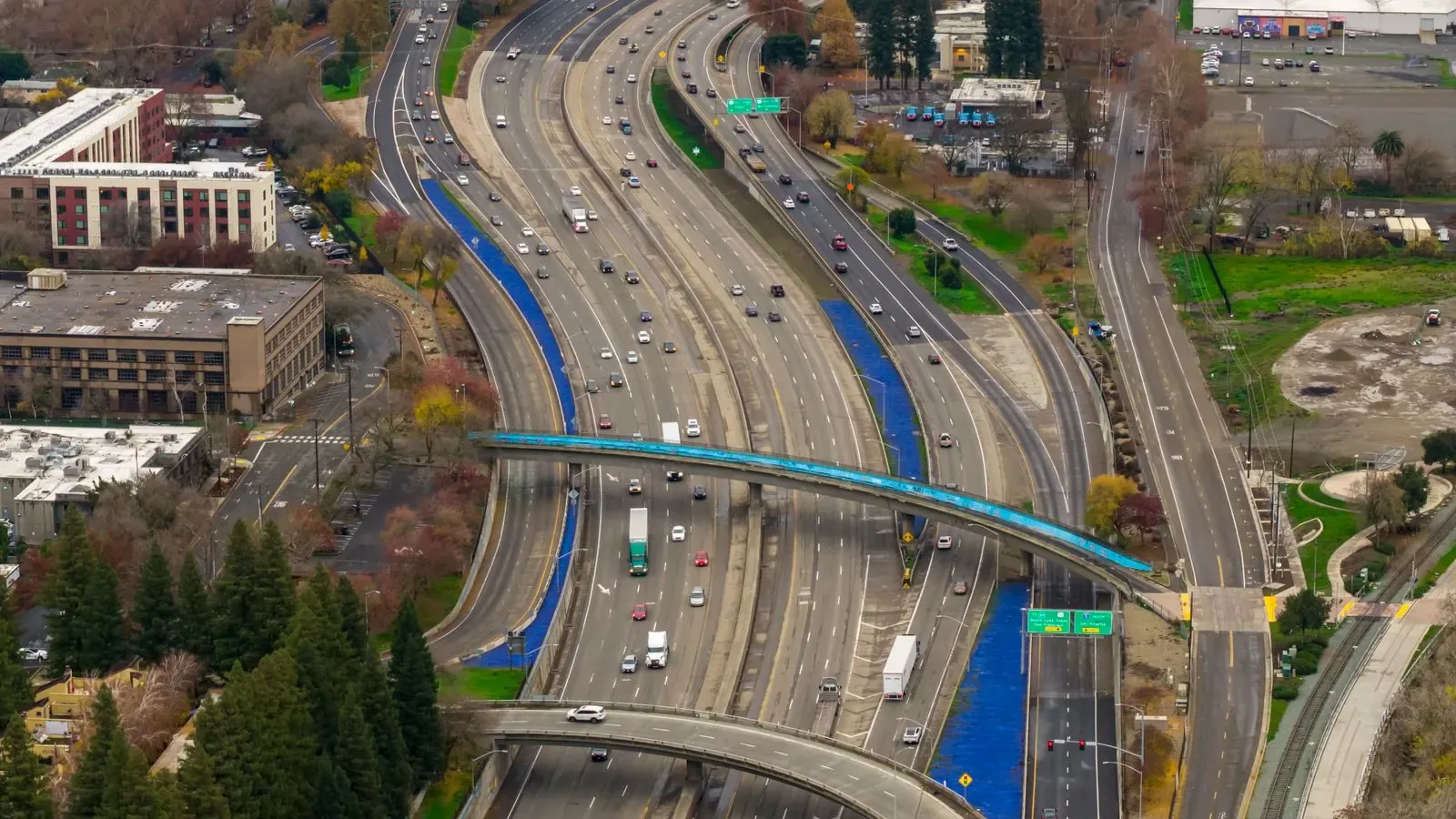
For example, in a highway collision, the parties may dispute speed, following distance, lane movement, visibility, vehicle maintenance, or an unexpected roadway condition. In a commercial vehicle case, investigators may also examine driver training, hours of service, maintenance, loading, or employer responsibility. These are fact questions, not assumptions that can be resolved from the accident label alone.
- Who controlled the conduct or property? Ownership records, employment records, contracts, policies, and witness accounts.
- What happened? Photographs, video, reports, vehicle data, physical evidence, and testimony.
- What caused the injury? Medical records, examination findings, treatment history, and qualified expert opinions.
- What losses resulted? Medical documentation, work records, repair records, and evidence of ongoing limitations.
What is the California deadline for filing?
For many personal injury actions, California Code of Civil Procedure section 335.1 provides a two-year period for an action based on injury or death caused by another person's wrongful act or neglect. The date and legal theory matter, and exceptions can change the analysis. The statutory text of CCP section 335.1 should be read with case-specific legal advice, not used as a substitute for it.
Claims involving a government entity require special care. California Government Code section 911.2 generally requires a claim relating to injury or damage to be presented to the public entity within six months after the accrual of the cause of action. The official text of Government Code section 911.2 contains the rule and statutory exceptions. A government claim deadline is not the same as the deadline for filing the civil lawsuit.
Other timing rules can apply to minors, delayed discovery, medical malpractice, public entities, criminal conduct, or claims governed by a contract. The correct deadline may also depend on when the claim accrued and which defendant is being sued. Ask a California personal injury attorney to review the dates as soon as possible rather than relying on a general deadline.
What happens after a complaint is filed?
Filing a complaint starts the court case, but it does not finish the plaintiff's work. The complaint states the material facts and legal causes of action the plaintiff alleges. Required filing documents and filing fees depend on the case and court. The defendant must be served under the applicable rules, and the plaintiff must file proof of service when required.
1. Prepare the pleadings: identify the parties, court, legal claims, material facts, and requested relief.
2. File with the court: submit the complaint and required cover documents in the proper California court.
3. Complete service: arrange lawful service on each defendant and document it.
4. Receive the response: the defendant may answer, raise defenses, or file another permitted response.
5. Exchange information: discovery may include written questions, document requests, depositions, inspections, and expert work.
6. Evaluate resolution: the parties may negotiate, mediate, or continue toward trial.
7. Present the case: if no resolution occurs, the parties present admissible evidence and legal arguments to the court or jury.
A filed lawsuit does not guarantee a trial or a particular result. Many civil cases resolve during investigation, discovery, mediation, or later negotiations. Litigation can still be important when liability, damages, insurance coverage, or the appropriate defendants cannot be fairly resolved through the pre-suit process.
Should you settle before filing a lawsuit?
The decision to settle before filing depends on liability evidence, injury prognosis, available insurance, damages, the defendant's position, the deadline, and the client's goals. Early resolution may avoid litigation steps, but a rushed release can end future claims before the long-term effects are known. A careful evaluation compares the proposed resolution with the evidence and remaining legal options.
Before signing a release, consider whether it addresses all responsible parties, all categories of injury, future medical needs, liens or reimbursement claims, property damage, lost earnings, and tax or benefit issues that may apply. The wording can be as important as the amount offered. Once a release is signed, undoing it may be difficult or impossible.
DC Law Group's personal injury practice page describes the firm's focus on representing California accident victims. The firm also handles motor vehicle matters through its accident practice resources. A case evaluation can help identify what information is still needed before making a decision.
When should you speak with a California personal injury attorney?
Early legal advice can be especially important when the injury is serious, fault is disputed, several people or businesses may be responsible, a government entity is involved, the incident involves a truck or rideshare vehicle, an insurer requests a recorded statement, or a release is presented. Prompt review gives counsel more time to preserve evidence and assess deadlines.
- The other side denies responsibility or blames you for the incident.
- Your symptoms continue, worsen, or may require future care.
- You missed work or cannot perform your normal job duties.
- Multiple vehicles, commercial entities, employers, or insurers are involved.
- The incident occurred on public property or involved a public employee.
- An insurer makes an early offer or asks you to sign a broad release.
- You are unsure who owns the vehicle, property, equipment, or business involved.
- You are approaching a possible filing or government claim deadline.
Bring the incident timeline, photographs, reports, medical information, insurance correspondence, witness details, and employment records to the consultation if available. If some records are missing, do not delay contact while trying to build a perfect file.
Speak with DC Law Group at (310) 571-8860 before a possible deadline passes.
Frequently asked questions
How long do I have to file a personal injury lawsuit in California?
Many California injury actions are subject to a two-year period under CCP section 335.1, but the deadline can differ based on the defendant, claim type, accrual date, and statutory exceptions. Claims against a government entity may require an earlier government claim. Get a case-specific deadline review promptly.
Do I need to file a lawsuit before speaking with a lawyer?
No. You can speak with a California personal injury attorney while the matter is still being investigated or negotiated. Early advice can help preserve evidence, identify defendants, communicate with insurers, and calendar deadlines before a filing decision is made.
Can I still bring a case if I share some responsibility?
Possibly. California comparative fault principles can permit an injured person to pursue a claim even when the evidence suggests the person or another party shared responsibility. The available recovery and defenses depend on the facts, proof, claims, and allocation of responsibility.
What evidence should I save after an accident?
Save photographs, video, reports, medical records, bills, prescriptions, work records, insurance communications, vehicle or property records, witness details, and messages related to the incident. Keep original files and avoid posting statements that speculate about fault or the extent of your recovery.
What happens if the responsible party is a California government entity?
Special government claim rules may apply. Government Code section 911.2 generally addresses a six-month claim presentation period for injury or damage claims, subject to statutory rules and exceptions. The government claim process and the later lawsuit deadline are separate issues requiring prompt legal review.
Can a personal injury lawsuit settle before trial?
Yes. A case can resolve during pre-suit negotiations, after filing, during discovery, or in mediation. Settlement is a decision based on the evidence, injury information, available coverage, defenses, and the client's objectives. Filing a lawsuit does not require a case to continue through trial.
Contact DC Law Group at (310) 571-8860 to discuss your California personal injury case.
*This article is for general educational information and is not legal advice. Every case is different and must be evaluated on its individual facts and circumstances.*