

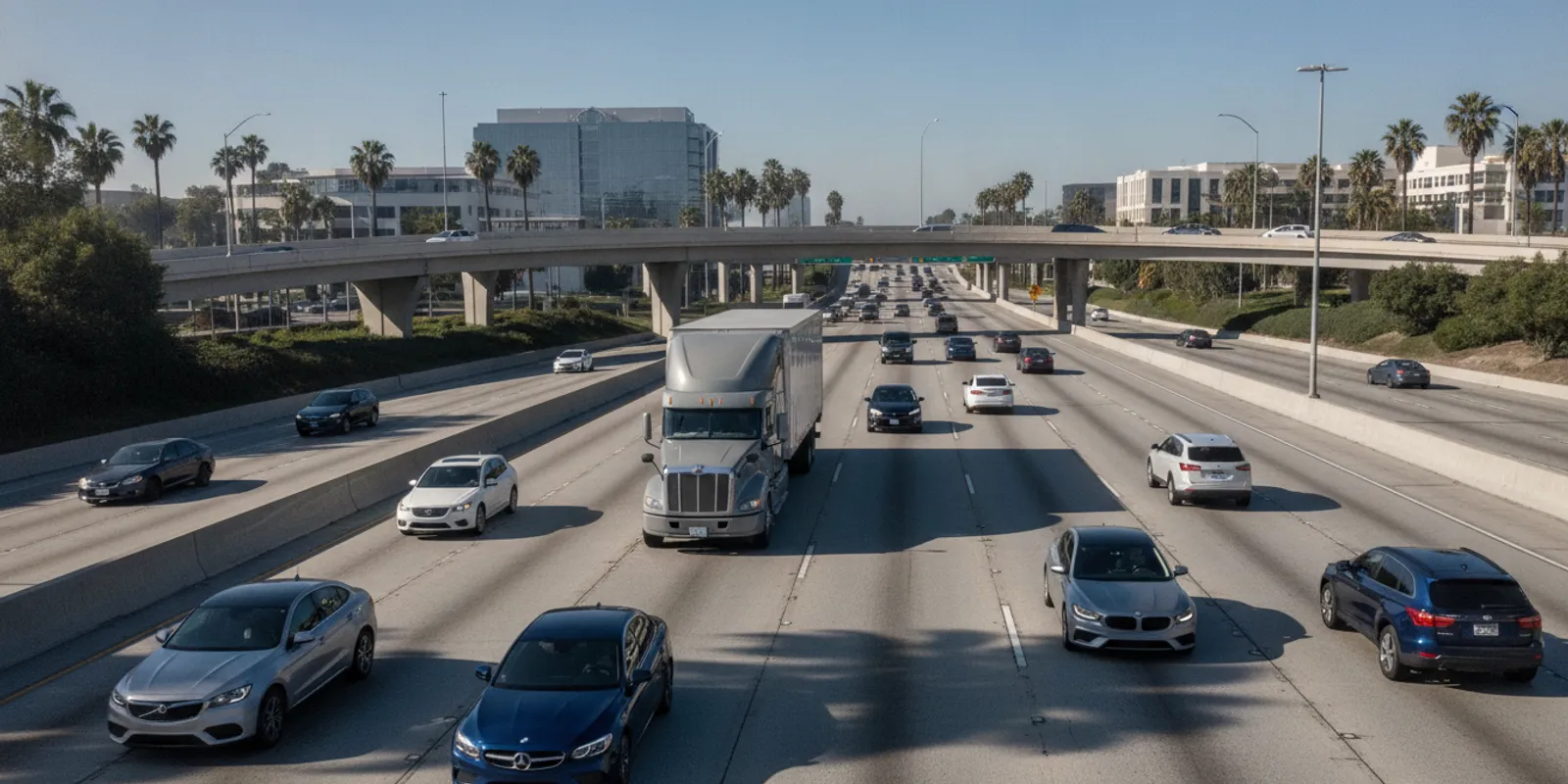
A collision involving a commercial truck can leave an injured person facing medical appointments, insurance calls, and uncertainty about what evidence matters. A Beverly Hills truck accident lawyer can review how the crash happened, identify potential sources of records, and explain the legal process. Preserve what you can without putting yourself at risk, and get medical care for injuries.
Contact DC Law Group to discuss your truck collision
What should you do immediately after a truck collision near Beverly Hills?
Start with safety and medical care. Call 911 if anyone is injured or the roadway presents a hazard. Follow instructions from emergency responders. Do not approach a damaged truck, spilled cargo, or traffic lanes to collect evidence. If you can safely do so, make a brief record of what you remember while the details are fresh.
At the scene, prioritize these steps when circumstances allow:
- Get to a safe place and request emergency assistance as needed.
- Seek medical assessment, even if symptoms seem manageable at first. Tell the provider when and how symptoms began, and follow care instructions.
- Exchange identifying, vehicle, registration, and insurance details with the other driver. Record the trucking company name, unit number, trailer markings, and any visible carrier information.
- Ask witnesses for names and contact details. Do not pressure anyone to adopt a particular account.
- Photograph the scene only from a safe location. Capture vehicle positions, damage, roadway conditions, traffic controls, and visible marks or debris.
- Report the collision to law enforcement and keep any report number or agency information.
A driver should not argue about fault at the scene or guess about facts they did not observe. Avoid posting details or images publicly while the events are being reviewed. For a broader checklist, see what to do after a truck accident in California.
Which evidence may explain how the truck crash happened?
Truck cases can involve records held by several people or businesses. Some information is created electronically and may be overwritten or routinely discarded. A prompt, focused request through appropriate channels can help identify and preserve relevant material. Do not attempt to access a company system, take property, or interfere with an investigation yourself.
Useful evidence may include:
- Scene documentation: photographs, video, measurements, roadway layout, weather, lighting, traffic controls, and debris locations.
- Vehicle information: damage patterns, inspection findings, maintenance history, repair records, and any available event data.
- Driver and trip records: dispatch communications, route details, schedules, qualification records, and hours-of-service materials, if relevant and available.
- Electronic records: event recorder data, onboard camera footage, GPS or telematics information, and communications from a fleet or dispatch platform.
- Witness accounts: names and direct contact details, along with each person's own recollection.
- Injury and work records: medical records, treatment instructions, missed-work information, and a personal log of symptoms and day-to-day limitations.
The specific records depend on the vehicles, route, companies involved, and facts of the collision. A truck may have cameras or data equipment, but its presence and contents should not be assumed. A lawyer can assess which sources may matter and whether a formal preservation notice or other lawful process is appropriate.
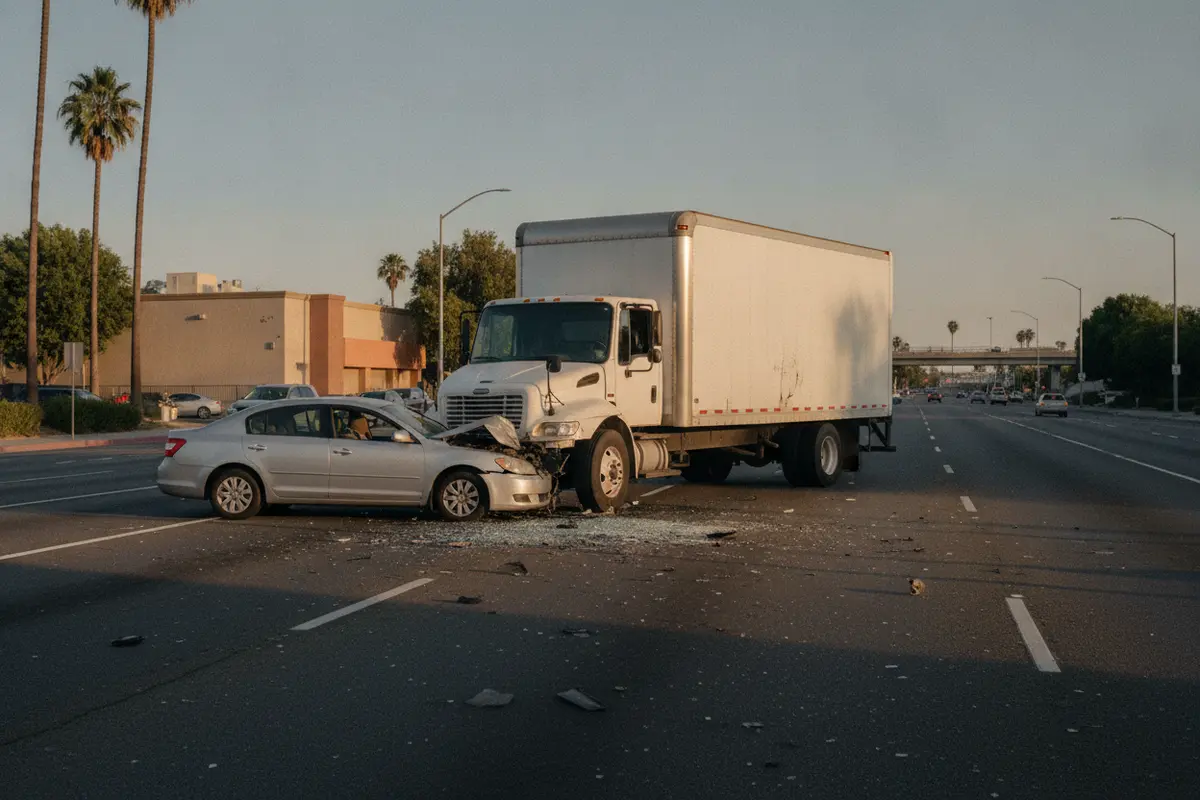
Passenger car and commercial truck after a collision on a Southern California road
Who may be responsible for a commercial truck collision?
Responsibility depends on evidence, not merely on which vehicle is larger or who received a citation. A driver may be responsible for negligent conduct such as unsafe speed, distraction, or failing to maintain a proper lookout, if supported by the facts. Other parties may also require investigation.
Depending on the circumstances, potentially relevant parties can include:
- The motor carrier or employer: The facts may raise questions about supervision, training, dispatch practices, vehicle maintenance, or responsibility for a driver's conduct.
- A vehicle owner or leasing company: Ownership and control arrangements may matter, particularly when the truck is leased or operated under another company's authority.
- A maintenance provider: Records may show whether inspection or repair work contributed to a mechanical issue.
- A cargo or loading business: Cargo movement or loading practices may be relevant when they affected vehicle stability or operation.
- A manufacturer or parts supplier: A defective component may be considered where evidence supports that theory.
These are investigative possibilities, not conclusions about any particular collision. Several parties may dispute responsibility, and more than one person's conduct can contribute. California applies comparative responsibility principles, so the evidence and applicable law matter to how a claim is evaluated. A legal review should distinguish a documented fact from an inference that still needs support.
For related information, read DC Law Group's overview of what a truck accident lawyer does and its guide to reading a California accident report.
What California deadlines should an injured person know?
California deadlines can depend on the claim, the defendant, and the facts. In general, a personal injury action is subject to a two-year statute of limitations, but exceptions and other rules may apply. A claim involving a public entity can require an administrative claim much sooner, generally within six months, before a lawsuit may proceed. Different rules can apply to minors, delayed discovery, or other circumstances.
Do not assume that an insurance discussion, an open investigation, or ongoing treatment pauses a legal deadline. Nor should a person rely on a general article to calculate a filing date. Confirm the applicable requirements promptly with a California attorney, especially if a government vehicle or public agency may be involved. These time limits can be fact-specific, and missing a required step may affect the ability to pursue a claim.
Keep a copy of any notice, claim form, agency response, or court document, together with the date it was received or sent. If the collision involved a public bus, municipal vehicle, or a roadway condition that may involve a public entity, flag that fact early when seeking legal guidance.
How do truck claims differ from ordinary vehicle claims?
A truck collision may require investigation beyond the drivers' accounts and ordinary vehicle damage. A commercial carrier may have dispatch and maintenance records, and the truck may contain electronic systems that record operating data. The driver may have been working for a carrier, delivering cargo, or operating a leased vehicle. Each relationship can affect which evidence exists and which parties should be considered.
The table below is a practical comparison of common record types, not a promise that a particular record exists or will prove fault.
| Record or evidence | What it may help clarify | Practical point |
|---|---|---|
| Scene photos and witness details | Vehicle positions, visibility, roadway conditions, and independent observations | Gather only from a safe location; note when and where each image was taken. |
| Inspection and maintenance records | Whether a mechanical issue or prior repair may be relevant | Identify the truck and the entity responsible for maintaining it. |
| Dispatch, route, and schedule records | Trip circumstances and communications around the delivery | Preserve dates, route references, and company names where known. |
| Event data, camera, GPS, or telematics | Possible vehicle movement, timing, or recorded events | Availability, retention, and interpretation vary by system. |
| Medical and employment records | Injury assessment, treatment, recovery, and effects on work | Keep copies and make a dated record of appointments and work changes. |
Official crash information can help place roadway safety questions in context, but statewide or county data cannot establish what caused an individual collision. The California Office of Traffic Safety provides county crash rankings and related information. Case-specific conclusions require evidence about the particular event.
What should you organize before speaking with a lawyer?
You do not need to solve the case before asking for guidance. A simple, orderly packet can make an initial discussion more useful. If a document is unavailable, note that rather than delaying contact to obtain it.
- The date, approximate time, and location of the crash, including nearby intersections or freeway access points.
- Names and contact information for drivers, witnesses, responding agencies, and any carrier or employer identified at the scene.
- Photographs, video, the police report number, and any communications received from insurers.
- A short timeline of medical visits, symptoms, treatment instructions, and changes in daily activities.
- Information about missed work or changed duties, if applicable, and records that help explain those changes.
- Any letters or forms with response dates, particularly paperwork from a public agency.
Keep original files when possible. Do not edit photos or recordings in a way that removes context; make a separate copy if you need to annotate something for your own notes. Store communications and documents in one secure place and record the date of each new contact.
If you are looking for counsel, confirm that the attorney handles injury claims involving commercial vehicles and is licensed to practice in California. Ask who will communicate with you, what documents are needed, how the representation agreement works, and what steps may be taken to preserve evidence. An initial conversation is also a chance to explain your priorities and ask how the firm will assess the particular facts.
What local details should Beverly Hills-area drivers document?
Location can shape which witnesses, records, and public agencies may be relevant, but it does not determine who caused a crash. A collision on a city street may involve different traffic controls and nearby businesses than one on a freeway or a loading area. Record the precise location as carefully as possible: street names, direction of travel, intersection, nearest driveway, freeway ramp, mile marker, or landmark. A general note such as “near Beverly Hills” may not be enough to identify a camera source or locate a witness later.
In a dense commercial area, nearby businesses or buildings may have cameras facing a roadway, entrance, or parking area. Do not assume footage exists or that it will be retained. Note the business or building name and approximate camera position, if visible, then share that information with counsel or investigators. Do not enter private property or demand access to a recording. A formal request may be needed, and the camera owner may have its own rules.
For a freeway or major arterial collision, note the direction of travel, lane, ramp, and any nearby construction or traffic control. If a commercial delivery vehicle was turning, stopping, or entering a driveway, the position of the truck and the available sightlines may become important. A simple diagram made from memory can help preserve your recollection, but label it as a later sketch rather than a measurement.
Weather, glare, road surface, lighting, and traffic flow can change quickly. If you noticed one of these conditions, write down what you observed and when. Avoid conclusions such as “the road caused it” unless supported by facts; record specifics instead, such as rain, a blocked view, or a traffic signal's apparent state. This makes later review more precise.
Public information can provide background about traffic patterns, but broad area statistics do not prove the cause of a particular event. The California Office of Traffic Safety's county rankings page can serve as a starting point for county-level crash information; it is not a substitute for scene evidence, witness accounts, or a reconstruction of the collision.
How can you keep records clear as treatment continues?
In the weeks after a crash, keep an uncomplicated, dated file. Save appointment summaries, instructions, test results, prescriptions, and communications about scheduling. Follow the care plan provided by your treating professionals, and ask them questions directly when symptoms change or instructions are unclear. A personal note can record pain, mobility, sleep, or difficulty completing ordinary tasks, without trying to diagnose an injury.
Keep work information separate from medical information. If you miss work or have changed duties, record the dates and the practical change, and save relevant correspondence or schedules. Do not alter time records or ask another person to create a statement that does not reflect their own knowledge. Clear records are more useful than estimates made much later.
Make a contact log for calls and letters from insurers, carriers, and other businesses. Note the date, caller, organization, phone number, subject, and any requested action. Keep copies of letters and envelope dates. If an offer or release is presented, do not sign solely because the other party says it is routine. Ask what the document does and consider obtaining legal advice before agreeing to terms.
Take care not to overstate what you know. Distinguish what you personally saw from what someone else told you, and preserve the original version of photos, messages, and documents. If you discover an error in a report, identify the precise passage and the facts you believe are inaccurate. Ask the responding agency about its process for submitting a correction or supplemental statement; a disagreement does not automatically change the report.
When can a Beverly Hills truck accident lawyer help?
Legal counsel may be useful when injuries are significant, fault is disputed, several companies may be involved, or an insurer requests a recorded statement or broad authorization. A lawyer can review available records, identify unanswered questions, communicate with insurers on a client's behalf when retained, and explain procedural options. The precise work depends on the matter and the scope of representation.
A careful assessment can also help separate established facts from open questions. For example, a damaged component may warrant further inspection, but damage alone does not prove a defect. A driver's work schedule may be relevant, but a schedule by itself does not establish unsafe conduct. These distinctions help keep a claim grounded in evidence.
DC Law Group handles personal injury matters, including commercial-vehicle collisions. To discuss whether the firm may be able to review your circumstances, use the personal injury practice information or the California vehicle collision page. Information in this article is general and is not legal advice. The right analysis depends on the facts, the parties, and applicable law.
Call DC Law Group at (310) 571-8860 to discuss your situation
Frequently asked questions
How soon should I preserve truck collision evidence?
As soon as reasonably possible, while prioritizing medical care and safety. Scene photographs and witness details can be gathered early, while some business or electronic records may be subject to routine retention practices. A lawyer can advise whether a preservation request is appropriate.
Do I need the police report before contacting a lawyer?
No. You can seek legal guidance with the report number, basic collision details, and documents already available. A report may take time to obtain, and it is only one source of information rather than a final determination of civil responsibility.
Can more than one party be responsible?
Potentially. The driver, carrier, vehicle owner, maintenance provider, cargo business, or a product-related entity may warrant review depending on evidence. The facts must be investigated before responsibility can be determined.
How long do I have to bring a California injury claim?
Many personal injury actions generally have a two-year limitations period, while claims involving public entities can have much shorter administrative deadlines. Exceptions may apply. Ask a California attorney to assess the deadline for your specific facts as soon as possible.
What if the truck driver or company contacts me?
Stay courteous, request the caller's name and organization, and keep a record of the contact. Do not guess about events or sign a release you do not understand. You may seek legal guidance before providing a recorded statement or authorizing access to records.
Contact DC Law Group to discuss a commercial truck collision in Beverly Hills or nearby.