

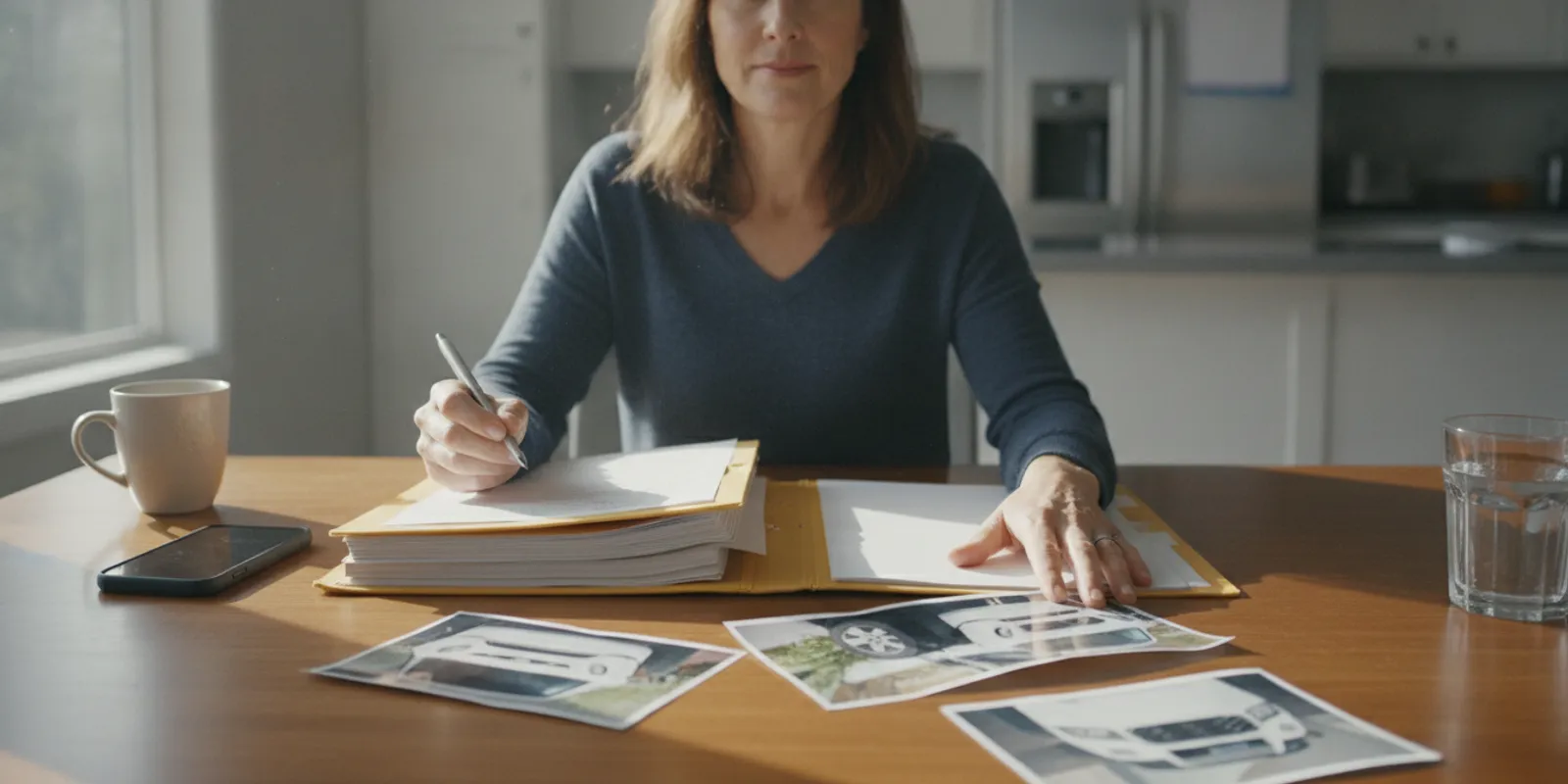
If you are researching the steps to filing a car accident lawsuit in California, it helps to separate two processes: reporting a collision to an insurer and filing a civil case in court. Many people begin with an insurance claim, while a lawsuit may be considered later if important issues remain unresolved. Start by protecting your health and keeping a clear record of what happened.
Request a consultation with DC Law Group
What should you do before you contact an insurer?
Address urgent medical needs first. Follow the instructions of your treating providers, keep appointment summaries and referrals, and save bills and other treatment records. Describe symptoms accurately, including when they began and how they affect ordinary activities. If you have to postpone an appointment or miss one, write down the reason. Do not decide that an injury is unimportant based only on how a vehicle looks.
When it is safe, exchange identifying and insurance information with the other driver. Record the date, approximate time, precise location, direction of travel, and weather or road conditions you observed. Photograph the vehicles, visible damage, traffic controls, roadway layout, and any visible injuries. Get witness names and contact details if possible. If law enforcement responds, ask how to request the collision report. Avoid guessing about details you did not see.
Make a short account while the event is fresh. Write what happened in sequence, what you personally observed, and what you learned later from another person. Keep the original photos, messages, and documents. Note any nearby business or traffic cameras that could have captured the scene, but do not assume a recording will be kept indefinitely.
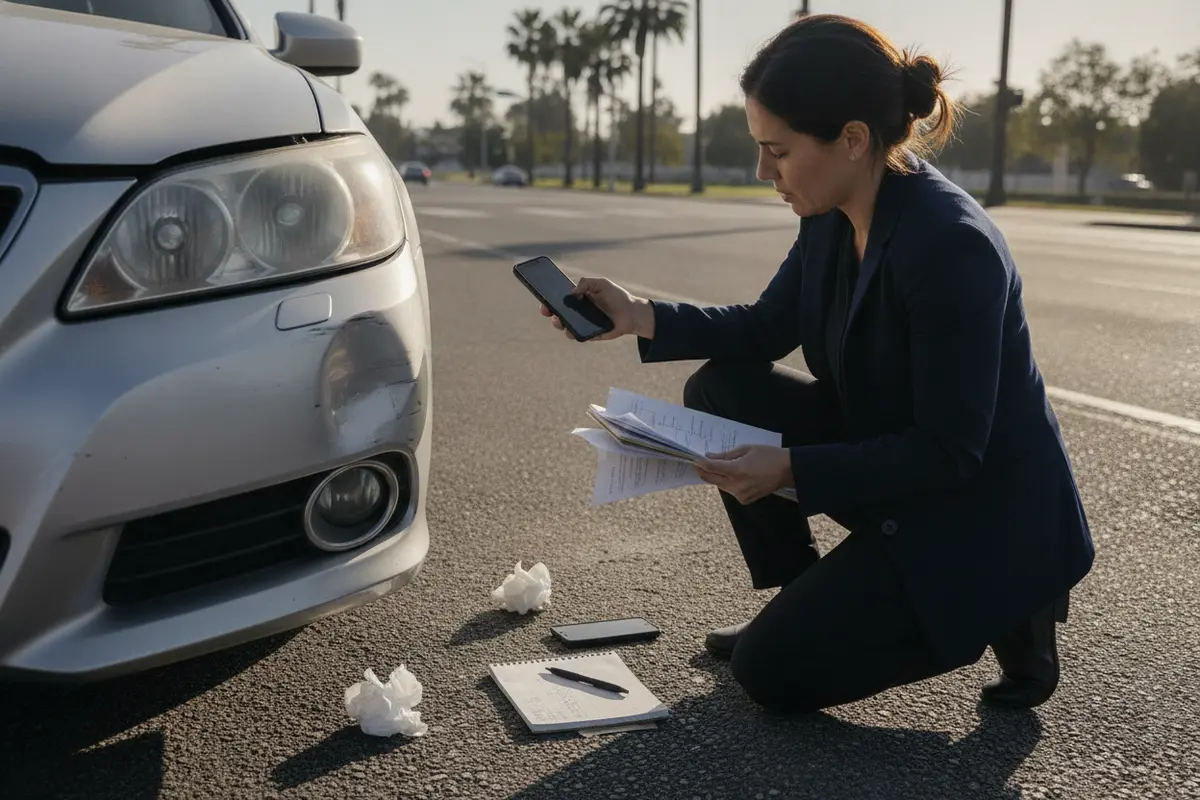
Driver photographing vehicle damage and organizing collision records
These early notes are a memory aid, not a substitute for an investigation. Do not edit original photographs or add details to make an uncertain recollection sound definite. A dated, factual record can help you explain what is known and identify what still needs to be checked. For an overview of representation, see DC Law Group's California personal injury attorneys and the personal injury practice page.
How do you decide which insurer to notify?
Begin with the policies that might apply. Depending on the circumstances, you may notify your own insurer under a policy that could provide coverage, report a claim to the other driver's insurer, or do both. Review your policy for notice and cooperation requirements. Prompt notice can make it easier to preserve a consistent record, even when you do not yet have every document.
Do not assume that the other driver's insurer will handle every issue affecting you. Your own policy may have provisions relevant to collision damage or an uninsured or underinsured driver. Coverage depends on the policy language and facts. If the other driver has no insurance, or the available policy may not be enough, review the notice instructions in your own policy and seek help understanding the options. DC Law Group has information about uninsured and underinsured motorist claims in California.
If a commercial vehicle, rideshare trip, or another potentially responsible party was involved, tell the insurer the basic facts and preserve relevant records. For a rideshare trip, save the app receipt, trip details, and messages. For a work vehicle, note the company name and vehicle markings. Those details do not establish responsibility by themselves, but they may help identify which coverage questions need investigation. Related information is available in DC Law Group's guides to commercial truck collisions and Uber and Lyft collisions.
How do you open and document the claim?
When you report the collision, provide accurate basic information: the date and approximate time, location, drivers and vehicles involved, whether anyone sought medical care, and whether law enforcement responded. Ask for a claim number, the adjuster's name and contact information, and the preferred way to send records. If a question calls for information you do not know, say that you are unsure rather than filling the gap with a guess.
Keep a contact log from the first call. For each conversation or message, record the date, the person or department, the subject, what was requested, and any next step or stated due date. Save copies of letters, forms, photographs, estimates, and email attachments. If you send files through a portal, note the date and save any confirmation. This gives you a way to check whether a document was received instead of relying on memory.
A claim report is not the same as an admission about fault, and opening a claim does not require you to accept a settlement. An insurer may investigate responsibility, applicable coverage, vehicle damage, and claimed injuries. The initial report starts a record; it does not answer every legal or factual question.
For example, suppose an adjuster asks for photographs and an update about treatment during a call. Write down the request, clarify which photographs are needed and how to submit them, then save the files you send. If a later letter says the requested material is missing, your dated log and transmission confirmation help you respond with specifics. If you cannot meet a requested date, ask the adjuster what to do and keep a note of the answer.
What records help keep a claim organized?
Set up a simple folder system soon after the collision. A paper folder or secure digital directory can work. Use separate sections for scene evidence, medical care, work records, vehicle matters, policy documents, and insurer communications. Give files clear names that include the date and subject, such as “2026-11-03 repair estimate.” Keep an unchanged copy of original images and make a backup of important digital files.
- Claim numbers, policy information, insurer contacts, and dated call notes.
- The collision report, scene photographs, witness details, and your first written account.
- Appointment dates, provider instructions, visit summaries, referrals, and related bills.
- Work schedules, absence records, and documents showing income affected by missed work, if applicable.
- Repair estimates, inspection records, towing or transportation receipts, and vehicle-related correspondence.
- Letters, forms, releases, and a record of when each item was received or sent.
Keep documents in their original form where possible. Do not discard damaged property before documenting it and asking what inspection or preservation steps may be appropriate. Do not delete relevant messages or social media posts. Avoid posting detailed accounts or images publicly while facts are still being reviewed; a brief online post can omit context and be misunderstood.
Medical records should come from the providers who treated you. Be complete and truthful with them, including relevant earlier conditions or treatment. Do not try to reshape a medical history to fit a claim. A personal symptom journal can help you remember dates, activity limits, and questions for your provider, but it is not a diagnosis or a replacement for the provider's records.
Discuss your claim questions with DC Law Group
When an insurer requests a release or a large set of records, read what it authorizes before signing. Ask which records, date range, and subject matter are requested, and why they are needed. A narrow request and a broad authorization can have different effects. If you do not understand the scope, request time to review it and get advice before signing.
How should you respond to an adjuster?
Be courteous, direct, and accurate. Distinguish what you saw from what another person told you. If you do not remember a speed, distance, or exact timing, say so. Do not turn an estimate into a precise number. If your symptoms are still being assessed, describe what you know now without claiming certainty about future effects.
Before giving a recorded statement, ask who is requesting it and whether the request is from your own insurer or another party's insurer. Policy duties may differ. Clarify the purpose and topics, note the request in your contact log, and consider legal guidance before giving a detailed recorded account. Do not sign documents you have not read or do not understand.
Ask for important requests and decisions in writing when practical. If a form includes a statement you believe is inaccurate, identify the specific wording and ask how to correct it before signing. Keep your responses focused on the question. You do not need to speculate about another person's intentions or make a legal conclusion about who caused the collision.
A settlement release deserves particular care. It may end the ability to pursue the claims it covers, even if treatment is continuing or new information emerges later. Read the written terms rather than relying only on an oral explanation. Check who is released, which claims are resolved, and whether the document addresses all claims or only a defined portion. Resolve questions about scope before signing.
How can responsibility and insurance coverage be evaluated?
California comparative fault principles can affect a claim when more than one person may have contributed to a collision. Responsibility is evaluated from the evidence and applicable law; an early position taken by an insurer is not necessarily a final determination. Avoid accepting a fault percentage as established just because it appears in an initial letter or phone call.
Evidence may include vehicle positions, photographs, road markings, signals, witness observations, the collision report, and available video. Each item has limits. A photograph may show where a vehicle stopped but not the full sequence. A witness may recall one part of the event but not another. Compare accounts and preserve the source material so it can be assessed in context.
Consider an intersection example: one driver says the signal was green; the other remembers entering on green as well. The practical next step is not to choose one account without support. Record the intersection and travel directions, identify witnesses, preserve photographs, and note possible camera locations. If video may exist, record where it could be held and when you first identified it. A lawyer can assess whether additional investigation is appropriate.
Coverage is a separate question from responsibility. An insurer may need to determine which policy applies, whether a driver was acting for an employer, or whether a rideshare trip was active. Preserve receipts, work-related details, app records, and vehicle identifiers that may help answer these questions. Avoid assuming that one policy necessarily resolves every claim.
How is an insurance claim different from the steps to filing a car accident lawsuit?
An insurance claim is a request for benefits or compensation handled through an insurer. A lawsuit is a formal civil action filed in court against a party alleged to be legally responsible. A claim does not automatically start a lawsuit, and settlement discussions do not necessarily resolve every issue. Litigation may be considered when important disputes remain, but the right course depends on the facts and the law.
In an insurance investigation, an adjuster may seek documents, statements, or an inspection. In a lawsuit, parties follow formal procedures that can include pleadings, discovery, motions, and court appearances. The exact sequence varies. Filing a court action does not guarantee a particular result, and not every claim requires litigation.
Keep the distinction in mind when you receive a letter. A claim acknowledgment, request for records, or settlement proposal is not itself a court filing. A court document has its own response requirements. If you receive papers that appear to come from a court, note the date and promptly get legal advice rather than treating them like ordinary insurer correspondence.
Which deadlines matter in the steps to filing a car accident lawsuit?
Time limits vary with the parties and the type of claim. A claim involving a public entity may have an administrative claim requirement that differs from the deadline for an ordinary civil action. Do not assume that an insurer's investigation or settlement discussion pauses a legal deadline. If a public vehicle, public agency, or roadway condition may be involved, raise that fact promptly when seeking advice.
Confirm the deadline that applies to your facts with a California attorney. Keep the collision date, names of possible parties, and all notices together so they can be reviewed. If you receive a court notice, read the stated response date and seek help without delay. The California Courts official website provides court and self-help information, but general materials do not determine the deadline for an individual claim.
How should you assess a settlement proposal?
Before deciding whether to resolve a claim, identify exactly what the written proposal covers. Compare the release language with the claim being discussed. Check whether the proposal addresses injuries, vehicle damage, and other documented losses, and whether it resolves claims against one person or more. If the document is unclear, ask for clarification in writing before signing.
Consider a person who is still attending appointments when a proposal arrives. The key question is not simply whether the first amount sounds acceptable. The person should understand what the release ends, whether the available records reflect the present medical picture, and what happens to unresolved issues. A signed release may close claims within its scope. Do not assume an insurer can reopen them later if circumstances change.
Different collisions call for different review. A matter with clear accounts and completed treatment may raise different questions from a serious injury claim with disputed responsibility, several possible policies, or an incomplete investigation. A careful record lets you identify what is established, what is disputed, and what remains unknown. A California car accident attorney can review the circumstances and explain potential next steps without promising an outcome.
For a focused evidence question, DC Law Group's guide to dashcam footage in a California collision claim discusses preserving digital recordings. Keep the original file, note who recorded it and when, and do not edit it. If a recording belongs to someone else, note where it may be located rather than trying to access it without permission.
What should you prepare before asking for legal guidance?
A short, organized chronology can make a consultation more useful. Start with the collision date and location, then list major events in order: when the claim was reported, who contacted you, what records were requested, when medical care began, and any proposal or notice received. Keep the account factual. Mark uncertain dates as approximate rather than presenting them as exact.
Gather the claim number, insurer letters, policy details available to you, photographs, collision report, medical visit summaries, and any release or form you have been asked to sign. You do not need to solve the legal issues before asking questions. Make a separate list of what you do not know, such as whether another policy may apply or where a recording might be held.
Useful questions include: Which policy or policies may apply? Is any notice requirement approaching? What does this release resolve? Which records should I preserve? Does the available evidence leave a factual issue that should be investigated? If a particular event involved a car, the firm's car accident practice page and DC Law Group team page provide further information about the firm.
Request a consultation about your collision claim
Frequently asked questions
Do I have to file a lawsuit to open an insurance claim?
No. You can report a collision and open an insurance claim without first filing a lawsuit. Whether a civil case may later be appropriate depends on the facts, available coverage, evidence, and applicable deadlines.
Should I give the other driver's insurer a recorded statement?
First clarify who is requesting the statement and whether your own policy requires cooperation. Be truthful and do not guess. Consider legal guidance before providing a detailed recorded account to another party's insurer.
Can I pursue a claim if I may share some responsibility?
Possibly. California comparative fault principles may affect a claim when responsibility is shared. The evidence and legal analysis matter, so do not treat an early insurer position as the final answer.
What if the other driver has no insurance?
Review your own policy for potentially applicable uninsured motorist coverage and follow its notice instructions. Preserve the collision record and ask for advice about available coverage and deadlines.
What should I do if I receive court papers?
Read the papers for the court, case number, and response date, then seek legal advice promptly. Court documents have formal requirements and should not be handled as routine insurer letters.
Call DC Law Group to discuss your collision claim
Keep your records organized, prioritize your health, and seek guidance early when responsibility, coverage, or a deadline is uncertain. The right next step depends on the facts of your collision.