

If an accident in San Diego left you injured, a san diego personal injury lawyer may help you understand which facts matter, what information to preserve, and how to respond to insurance requests. You do not need a complete file before asking questions. Start by getting appropriate medical care and writing down what you remember while the details are fresh.
REQUEST A FREE CONSULTATION with DC Law Group
When may it help to speak with a personal injury lawyer?
A consultation may be useful when you were injured and another person, business, or organization may share responsibility. It can also help when responsibility is disputed, several people or vehicles were involved, the injury needs continuing care, or an insurer asks you to give a recorded account or sign a release. You can ask questions even if you are uncertain about what happened or do not yet know how serious the injury may be.
For a minor incident with no injury and no dispute, some people handle routine insurance communication on their own. Reconsider that choice if symptoms emerge, treatment continues, the accounts of the event differ, or new evidence comes to light. A lawyer can review the information available and explain possible legal issues. No early conversation can promise a particular result.
It may also be worth seeking advice if a commercial vehicle, rideshare trip, public agency, or employer is involved. Different parties and insurance policies may need review. The label an adjuster gives an incident is not a final decision about responsibility or available coverage.
What should you do in the first hours and days?
Put safety and health first. Request emergency help when needed, and follow advice from qualified medical professionals. Do not postpone needed care to gather paperwork or speak with an insurer. Keep copies of visit summaries, referrals, prescriptions, and follow-up instructions. Note when symptoms began and how they change over time.
- Make the area safe. Move away from immediate danger if possible. Call for help when a person is injured or the scene remains hazardous.
- Exchange basic information. When safe and appropriate, record names, contact information, vehicle details, and insurance information for the people involved.
- Identify witnesses. Ask for names and reliable contact details. Do not pressure anyone to agree with a particular account.
- Photograph the scene. If it is safe, capture vehicle positions, visible damage, traffic controls, roadway conditions, and the surrounding area. Do not put yourself in danger to take a picture.
- Make required reports. Follow applicable reporting instructions and keep any confirmation or report reference. For a rideshare trip, save relevant app details and make the report through the platform.
- Write a dated account. Record the time, location, sequence of events, what you recall, and what you are unsure about. Add later changes in symptoms or daily activities as they occur.
Keep original photos and messages when possible. Avoid editing files in ways that remove context. If a business, vehicle system, or public agency may have video or other records, write down where the information may be held and discuss preservation promptly with counsel. Do not try to access someone else’s private device or account.
Which records can make an initial review more useful?
You do not need to assemble every record before seeking advice. A short, dated timeline can help an attorney understand the sequence and spot missing information. Include the incident date and place, the people involved, medical visits, insurer contacts, and any scheduled appointments or deadlines you know about.
| Record group | Examples to gather | How it may help |
|---|---|---|
| Incident details | Date, approximate time, location, sequence, roadway or property conditions | Provides a working account and helps identify evidence sources |
| People and policies | Names, contact details, vehicle or employer information, insurer letters | Helps identify parties and questions about applicable coverage |
| Medical care | Visit summaries, referrals, treatment dates, symptom notes | Shows what symptoms were reported and when care occurred |
| Scene evidence | Photographs, witness details, report reference, available video | May help clarify accounts that differ |
| Work and daily activities | Missed shifts, changed duties, tasks that became difficult | Documents practical effects for further review |

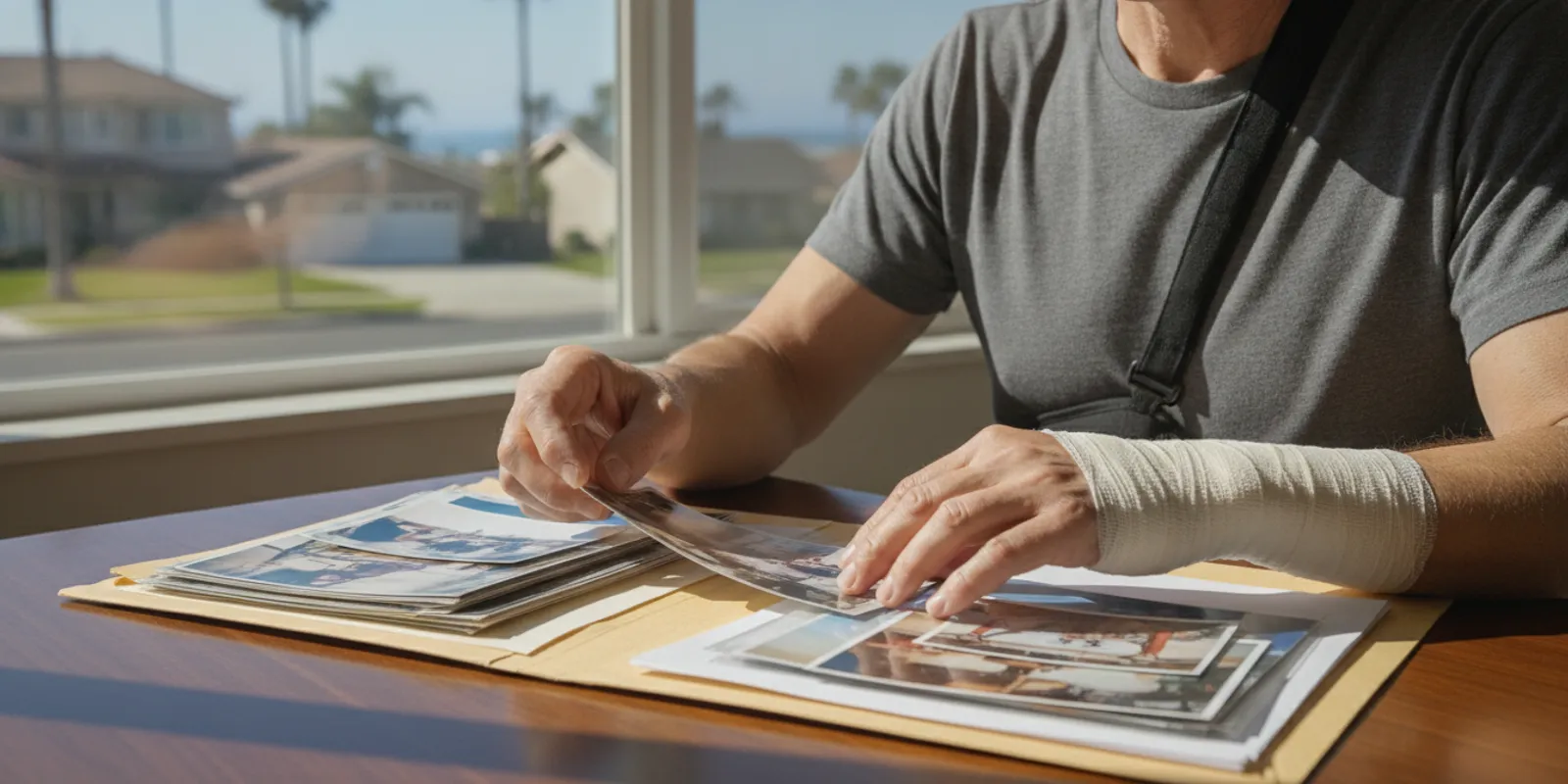
Accident records and photographs organized for a legal consultation
Save letters, emails, claim references, and call notes in a dated folder. For each call, note the caller’s name, company, date, and the subject discussed. If you do not know an answer, do not guess. You can say you will check your records and respond after reviewing them.
A useful timeline separates what you directly recall from what someone later told you. For example, note “I saw the other vehicle enter the intersection” only if that is what you remember seeing. If you learned the sequence from a witness or report, identify that source. This distinction helps a reviewer evaluate the evidence without blending recollection and inference.
For each document, note where it came from and when you received it. Keep the original email or letter, including any attachments, rather than saving only a cropped image. If a document has several pages, check that all pages are included. Use a simple file name such as “medical visit—date” or “adjuster letter—date” so you can find it quickly. Do not write over an original report or alter a photograph to make it appear clearer.
Keep a brief symptom and activity log, but make it factual. Record the date, what you were doing, what changed, and whether you sought care or followed medical instructions. For example, “I could not lift the grocery bag with my right arm on Tuesday” is more useful than a broad conclusion about what the injury means. Do not exaggerate or minimize. If your condition changes, update the log and discuss medical questions with your care provider.
A first review may examine several connected questions: which parties may have duties, what evidence supports each account, whether coverage may apply, what medical documentation exists, and whether a deadline or preservation step needs attention. The review is not a substitute for a medical assessment, and initial information may not answer every question. An organized list of unknowns can help focus follow-up work.
How should you handle insurance communications?
An insurer may ask questions to investigate an incident, but an early conversation can become part of the claim record. Be accurate and avoid guessing about distance, speed, timing, or the full extent of an injury. Ask for the adjuster’s name, company, and claim reference. You may request that important questions be sent in writing and take time to review documents.
Before giving a recorded statement, signing a broad medical authorization, or accepting a proposed resolution, make sure you understand what is being requested and what the document covers. A release may affect later requests related to the incident. Consider getting legal advice first, especially when treatment continues, responsibility is disputed, or you do not understand the document.
More than one policy may be relevant. Depending on the circumstances, there may be questions about a driver’s policy, your own coverage, an employer’s coverage, or a rideshare policy. The existence of a policy alone does not establish that it applies. The people involved, the timing, the activity underway, and the policy terms may all matter.
For a vehicle incident, keep repair estimates, towing records, photographs taken before repairs, and messages about vehicle access. Preserve damaged items that could help explain the event until you have considered whether they should be documented. Keep a copy of anything you send to an insurer, along with the date it was sent.
When a new request arrives, log the date received, what the adjuster wants, and any response date provided. Separate requests for routine claim details from requests for a recorded interview, medical records, or a signed release. If the request is unclear, ask what it covers and whether a written response is acceptable. Do not ignore a communication, but do not treat a requested response date as the only deadline that may apply to a legal claim. Keep the envelope or email showing when the request arrived.
What if someone says you share responsibility?
California applies comparative fault principles in civil injury claims. A person’s recovery may be reduced in proportion to that person’s share of responsibility; contributing to an incident does not automatically end every possible claim. How responsibility is allocated depends on the evidence and legal analysis. Do not treat an adjuster’s preliminary view, or uncertainty about a fast-moving event, as a final determination.
Evidence that may help explain responsibility includes scene photographs, witness accounts, vehicle damage, available video, and the timing of each person’s actions. Details can matter: a clear view of a traffic signal, the position of a vehicle, or the direction a person was traveling may help clarify accounts that otherwise conflict. Preserve what you can lawfully access and record where other relevant material may be located.
Which deadlines should you keep in view?
Filing deadlines depend on the type of claim, the parties, and the facts. A claim involving a public entity may require a different procedure from a claim between private parties. An insurer’s notice requirement is not necessarily the same as a court filing deadline. Do not rely on a general online estimate as a substitute for checking the deadline that applies to your circumstances.
Tell a lawyer the incident date and whether a public agency, public vehicle, or government employee may be involved. The California Courts website is an official starting point for general court information, but it does not determine which deadline applies to an individual claim. Prompt advice can also help identify records that might otherwise be overwritten, witnesses who may be harder to locate, or scene conditions that may change.
How can you prepare for an initial case discussion?
Prepare a concise account rather than trying to create a perfect file. Begin with the date, place, people involved, and a sequence of events. Then explain what you know directly, what remains uncertain, what care you have received, and what communication you have had with insurers. Bring or identify available documents; clearly label items you are still waiting to obtain.
- A written timeline, including uncertainty rather than guesses.
- Names and contact details for involved parties, witnesses, insurers, and claim contacts.
- Medical visit dates and current recommendations from your care team.
- Photographs, report references, relevant app records, and correspondence.
- A brief account of missed work or changes to ordinary activities.
- Any document you were asked to sign, with the date it was requested.
- Your questions about evidence, communication, deadlines, and next steps.
If a report or medical record is not available yet, say so. Avoid altering records or deleting related messages. Do not post detailed commentary about a disputed event on social media; public statements can be read without the context you intended. Preserve relevant messages and posts rather than attempting to conceal them.
DC Law Group handles injury matters involving vehicle collisions, commercial trucks, motorcycles, rideshare trips, and pedestrians. Read about San Diego injury representation, the firm’s personal injury practice, and its information about car accident claims. Related pages cover truck accident matters, motorcycle incidents, Uber and Lyft matters, and pedestrian injury claims. These pages provide general information; an individual matter depends on its facts.
For another practical overview, see the guide to reading a California incident report. You can also review what to expect during a car accident case review. Use these resources to organize questions, not to decide a deadline or outcome without advice specific to your situation.
Call DC Law Group at (310) 571-8860 to discuss your situation
Frequently asked questions
Should I speak with a lawyer if I am unsure who caused the incident?
A discussion may help identify which facts need investigation. Preserve available records, avoid guessing in insurer communications, and explain honestly what you remember and what remains uncertain.
Do I need an incident report before contacting a lawyer?
No. You can ask for an initial discussion without having a report in hand. Share the date and location, the responding agency if known, and a report reference if you have one. The report may be obtained later.
What if symptoms began after the incident?
Seek appropriate medical guidance and explain when the symptoms began. Keep a dated record of changes and care. A medical professional can address health questions; a lawyer can review how the timeline relates to a potential claim.
Can I resolve a claim directly with an insurer?
That depends on the facts and the terms of any proposed resolution. Before signing a release or accepting an offer, understand what claims it covers and whether it affects later requests connected to the incident. Consider legal advice if injury, disputed responsibility, or continuing care is involved.
What if a public agency or vehicle may be involved?
Identify the agency and incident date, preserve available records, and seek prompt advice. Special claim procedures and notice periods may apply, so do not assume the usual deadline governs.
REQUEST A FREE CONSULTATION with DC Law Group
A focused account and organized records can make an initial case discussion more productive. If you have questions about an injury in San Diego, contact DC Law Group to discuss the facts you have gathered.