

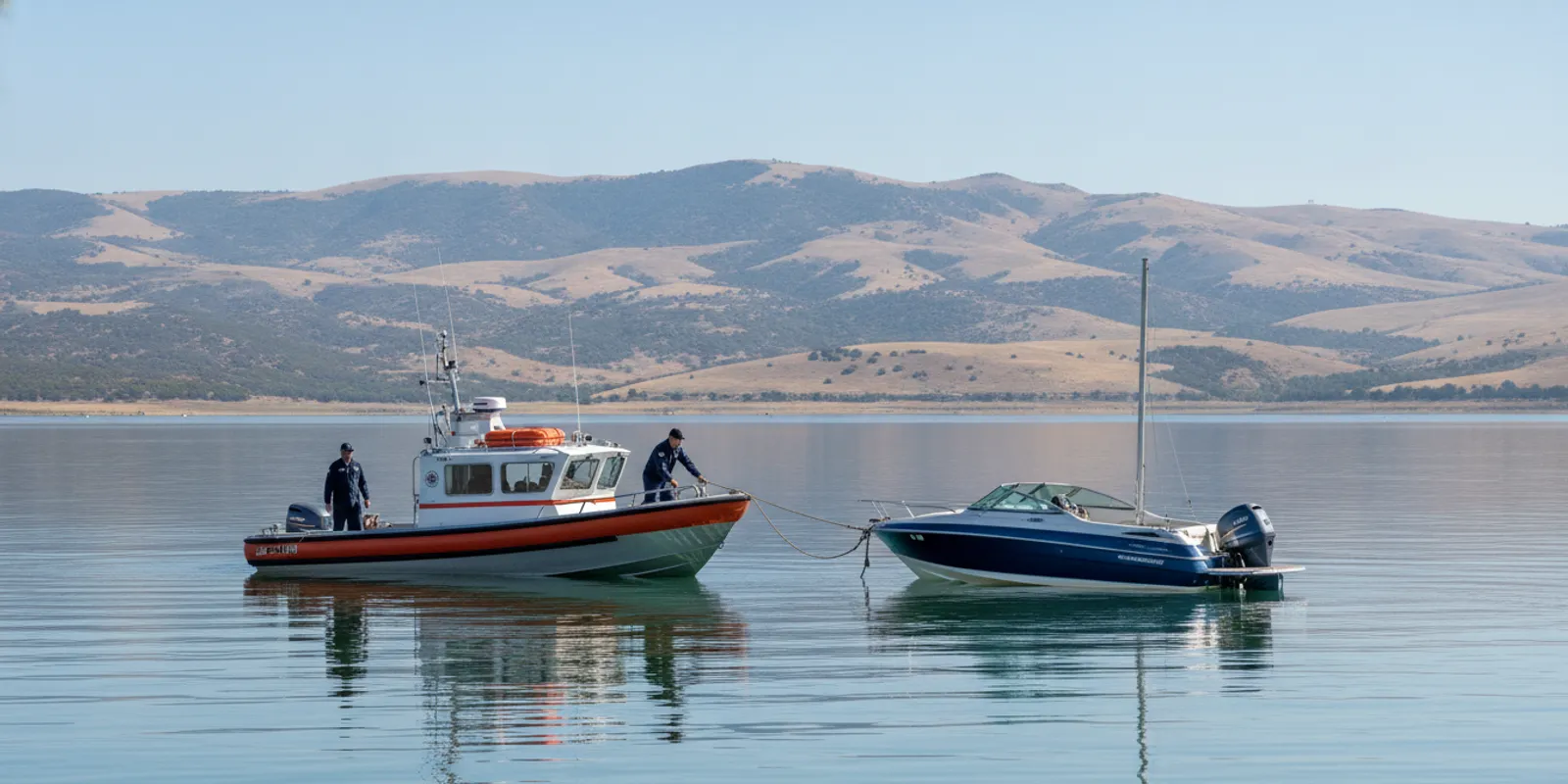
A California boating accident lawyer can help injured passengers and families understand what facts, records and legal rules may matter after a collision or another waterway incident. Start with safety and medical care, report emergencies, preserve information and avoid guessing about responsibility before the evidence is reviewed.
Request a consultation with DC Law Group
What should you do first after a boating accident?
Address immediate danger before trying to document anything. Call emergency responders if someone is seriously hurt, missing, in the water or otherwise at risk. Follow directions from responders, and do not put yourself or another passenger in danger to retrieve a phone, photograph damage or recover property. If the vessel can be moved safely, follow the operator's and authorities' directions.
Seek medical evaluation for injuries, even when symptoms appear mild at first. Tell the treating professional how and when the injury occurred, what you felt and whether symptoms changed. Keep appointment instructions and records. A timely medical record may help establish the course of symptoms, but treatment decisions belong to the patient and treating professional.
As soon as practical, write a neutral account in your own words. Note the date, approximate time, waterway, nearby landmarks, weather, visibility, boat descriptions, direction of travel and sequence of events. Separate what you personally observed from what someone later told you. Do not fill gaps with assumptions.
- Collect names and contact details for operators, owners, passengers and witnesses.
- Photograph vessels, visible damage, safety equipment, the scene and relevant markers, if safe.
- Save texts, trip confirmations, rental documents, photographs and incident paperwork in original form.
- Keep treatment records, work schedules and receipts related to the injury and travel for care.
- Record any report number and the agency that received the report.
Preserve original digital files and make a separate backup. Avoid editing images or adding notes to original files. Do not post detailed accounts or images publicly while facts are still being gathered.
How can a California boating accident lawyer assess responsibility?
A collision does not by itself establish legal responsibility. An investigation considers what each operator and any other potentially responsible person or entity did, what duties applied, and whether a breach caused the injury. Relevant facts may include lookout, speed, navigation, right-of-way, visibility, weather, wake, operator experience, vessel condition and compliance with safety requirements.
Imagine two vessels meet near a channel entrance and a passenger is hurt. Useful questions include where each vessel was positioned, what each operator could see, whether either changed course, how quickly the vessels were moving and what warning was given. A passenger's first impression can matter, but it should be compared with photographs, witnesses, electronic records and physical evidence. The answer cannot be determined from the injury alone.
Responsibility may involve more than the person at the helm. An owner may be relevant if an unsafe boat was provided or maintenance issues contributed. A rental provider's agreement, instructions and equipment records may matter based on its role and the circumstances. A repair business or manufacturer may warrant investigation if a defect or improper repair contributed. These are possible lines of inquiry, not assumptions that any party is liable.
Passenger injuries need their own factual review. A passenger may have been seated, moving around the vessel, entering or leaving it, or taking part in an activity when hurt. The location and timing can clarify what happened, what instructions were given, whether a hazard was apparent and how the operator responded. Preserve trip details and describe the sequence accurately rather than assigning blame.
Which evidence can clarify how the incident happened?
Evidence can be scattered among passengers, agencies, vessel owners, rental providers and insurers. It may be overwritten, repaired or discarded, and memories can fade. Make a list early of what exists and who controls it. A lawyer can assess whether a formal preservation request or another process is appropriate.
- Scene images and video: Preserve photographs of the waterway, visibility, markers, damage, safety equipment and visible injuries. Keep originals and note who took each image and when.
- Electronic information: GPS units, chartplotters, phones, engine systems or tracking services may hold location, timing or route information. Do not reset, replace or dispose of equipment before seeking advice about preservation.
- Witness accounts: Record each witness's name and contact details, along with where the person was positioned. Ask for contact information without coaching anyone or trying to align accounts.
- Vessel and trip documents: Keep rental agreements, passenger lists, trip confirmations, maintenance invoices, inspection forms and communications with an owner or operator.
- Medical and work records: Save visit summaries, treatment instructions, work schedules and records showing how the injury affected ordinary activities.
- Agency materials: Ask for the report number and agency contact. Reports may preserve observations or statements, but they are not necessarily a final decision on civil responsibility.
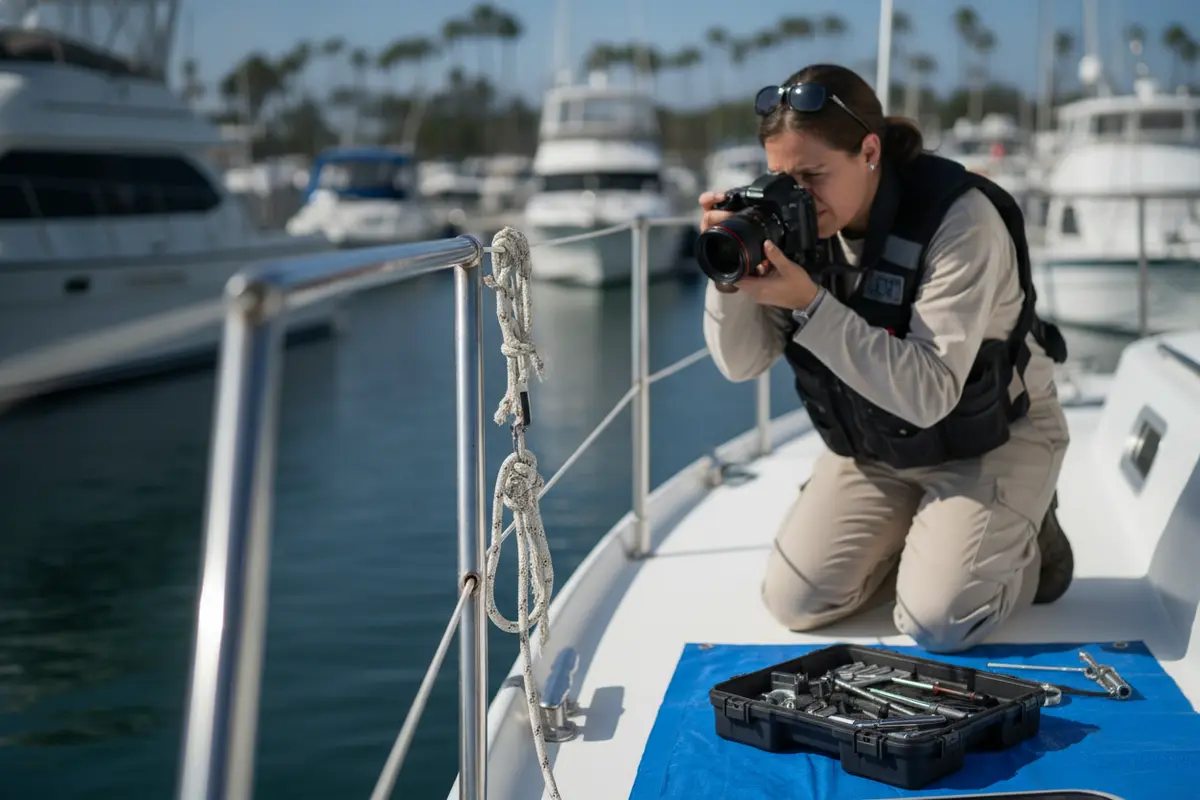
Marine investigator documenting damage and safety equipment aboard a recreational boat
Keep a simple evidence log. For each item, note what it is, who has it, when it was created and whether the original remains available. If a boat or component may need inspection, do not authorize a repair or discard the part before documenting its condition and considering preservation. If urgent repair is necessary for safety, take clear photographs first when possible, retain removed parts and keep repair paperwork.
How does suspected impairment affect an investigation?
Evidence of alcohol or drug use may be relevant to operator conduct, but an accusation alone does not establish impairment or prove that impairment caused an injury. Investigators may consider witness observations, statements, official records, testing under applicable procedures and the timing of each observation. The existence and availability of such evidence depend on the event and governing law.
Write down what you personally observed: the time, the person's words or actions, who else was present and what happened next. Avoid turning an impression into a conclusion. For instance, describe an operator's unsteady movement or a specific statement rather than labeling the person impaired. Preserve messages or official documents, and let a qualified investigation assess their significance.
Other conduct may matter too, including distraction, unsafe speed, an inadequate lookout or failure to account for conditions and passengers. A careful account distinguishes observation from inference and helps later reviewers test competing explanations.
When might a defective vessel or component matter?
Some incidents raise questions about steering, propulsion, a safety device, vessel structure or another component. A mechanical problem should not be presumed merely because a boat was involved in an accident. Investigators need to determine what failed, whether the item was maintained and used as intended, and whether the issue contributed to the injury.
Preserve the vessel and relevant parts in their post-incident condition when feasible. Keep service and repair records, purchase or rental documents, product identification and communications about reported problems. Make a record of anyone who handled, moved or repaired the vessel. If a component was removed, note who removed it, where it is stored and whether it was altered.
Technical inspection may require coordination so relevant parties have a fair opportunity to examine an item. Do not conduct destructive testing or discard a part on your own. A lawyer can evaluate whether to arrange inspection by qualified professionals and whether evidence supports investigating a manufacturer, seller, owner or repair provider.
Which agency or Coast Guard records may help?
The appropriate reporting authority depends on the waterway, vessel, injury and applicable rules. A serious event may involve local law enforcement, a state boating authority, the U.S. Coast Guard or more than one agency. Ask who took the report, obtain an incident number and keep later correspondence. Reporting procedures and access to records vary by situation.
Potential records may include an incident report, witness statements, photographs, inspection notes or communications. Some material may not be immediately available, and an agency file may not contain every relevant item. A report can document an investigation without resolving civil liability or deciding which court could hear a claim.
For general federal boating safety information, see the U.S. Coast Guard Boating Safety resource. It offers general information, not a determination of the law governing an individual incident. The firm's guide to reading an incident report may help explain why a report should be reviewed alongside other evidence.
How do state and federal law questions arise?
A boating injury may raise questions about whether California law, federal maritime law or both apply. The answer depends on facts. The incident location, whether the waterway is navigable, the vessel's activity and the connection between the event and maritime commerce may all be relevant. A recreational setting does not alone resolve every jurisdiction question.
Jurisdiction and governing law are related but distinct issues. The proper court, available legal standards and procedural rules require a fact-specific assessment. The place where an accident happened is important, but it may not answer every question about governing law or forum. Do not rely on a general online summary to choose where to file or calculate a deadline.
Provide a lawyer with the exact waterway or launch area, the vessel's purpose, route and use, and information about the people or businesses involved. A map pin, marina receipt or trip record may be more useful than a broad description such as being on a lake. A lawyer can assess the location and activity without assuming that all water-related claims follow one rule.
What insurance issues should be reviewed?
Potential coverage depends on policy wording, vessel ownership and use, the people involved, location and the type of injury or property damage. A vessel policy, homeowners policy, rental agreement, business policy or another form of coverage could be relevant. Do not assume that a particular policy applies or that one insurer is the only possible source of coverage.
Keep declarations pages, policy documents, claim numbers, letters and notes of calls. When speaking with an insurer, provide accurate information and distinguish what you know from what you do not know. Ask for important requests in writing. Before signing a release or giving a detailed recorded statement, understand what it covers and whether it could affect other claims. A discussion with an insurer does not establish liability or determine the value of an injury claim.
Coverage questions and responsibility questions are separate. A policy may contain conditions, exclusions or limits that require review, while the underlying facts may point to more than one potentially responsible party. An organized folder of correspondence and a dated call log can prevent confusion when several parties or policies are being evaluated.
How do common boating claim issues compare?
This comparison helps organize questions. It is not a finding about who is responsible, and the same incident may involve more than one row.
| Incident type | Records to preserve | Questions for investigation |
|---|---|---|
| Vessel collision | Scene images, damage, navigation data, witness contacts | Lookout, speed, course, visibility and operator actions |
| Passenger injury aboard | Trip details, seating or activity context, medical records | How the injury occurred, instructions and response |
| Possible equipment problem | Component, service history, repair records and product details | Condition, maintenance, warnings and causal connection |
| Suspected impairment | Witness observations, report number and agency records | What evidence exists, reliability and legal availability |
| Fatal incident | Agency records, witness information and relevant documents | Potentially responsible parties, eligible claimants and deadlines |
Consider a hypothetical passenger injury after a sudden turn. If one passenger remembers a warning, another recalls none, and the boat's navigation unit records a change in course, each item contributes a different perspective. An investigator would compare timing, vantage point, equipment reliability and medical documentation rather than treating one account as conclusive. This process can identify what remains uncertain and what records should be sought next.
Call DC Law Group at (310) 571-8860 to discuss the facts
What if a boating incident caused a death?
A fatal incident may give rise to a wrongful death claim if legal requirements are met. California law sets rules about who may bring such a claim and what losses may be considered. Eligibility, claims that may be available and the evidence needed depend on the relationship to the deceased and the circumstances. A separate claim on behalf of the deceased person's estate may also be relevant in some cases.
Families can preserve the incident number, agency correspondence, photographs, witness contacts, trip and vessel records, and relevant medical documentation. Keep records that show family relationships and the practical effects of the loss. A criminal investigation and a civil claim have different purposes; one does not necessarily resolve the other. Review the firm's information about California wrongful death matters and its broader personal injury practice.
When several family members are involved, identify one point of contact to keep documents organized while respecting each person's need to communicate with counsel. Avoid discarding personal property or vessel-related materials that may have evidentiary value until their relevance has been considered.
Which deadlines may apply?
There is no single deadline that safely covers every boating incident. The applicable period can depend on the claim, the parties, the location, whether a public entity is involved and whether state or federal law governs. A claim against a public entity may require an administrative step separate from an ordinary civil lawsuit deadline. Maritime issues may alter the analysis.
Do not assume that obtaining medical care, filing an agency report, notifying an insurer or negotiating a claim pauses a legal deadline. Write down the incident date and dates of notices, communications or claim submissions. Ask a qualified lawyer to identify potential deadlines promptly, especially when an agency, government body or vessel operator has sent a form or release.
Early review gives the parties more opportunity to locate witnesses and preserve records. Waiting for every medical appointment or a completed agency investigation before asking about time limits can create avoidable uncertainty. A consultation does not require that every fact already be known; an accurate preliminary chronology is a useful start.
How can you prepare for a legal consultation?
Gather what is available without delaying care or trying to solve every legal question yourself. A concise timeline is often more helpful than a long narrative built from memory weeks later. Include what you know, what you are unsure about and who may have additional information.
- Incident date, waterway, nearby landmark, vessel activity and agency report number.
- Names and roles of operators, owners, passengers, witnesses and any rental or repair provider.
- Photographs, video, messages, trip confirmations, vessel details and maintenance documents.
- Medical providers, treatment dates, instructions and symptoms you reported.
- Work schedules or other records showing how the injury affected routine activities.
- Insurance letters, policy information, claim numbers, releases or settlement communications.
- A list of evidence that may be held by another person, business or agency.
Do not alter documents to make the chronology seem more complete. Mark uncertain times as estimates and preserve original messages and files. If a record is missing, note where you believe it may be held. DC Law Group's appointment information and contact page provide ways to request a discussion. For a broader overview, see its accident and injury information.
Frequently asked questions
Does every boating collision create a legal claim?
No. A claim generally requires a legally recognized basis and a connection between the conduct at issue and an injury or loss. The facts and governing law determine whether those requirements are met.
Can a passenger seek recovery if the operator is a friend?
Potentially. A personal relationship does not decide responsibility. The operator's conduct, cause of injury, applicable insurance and governing law need review.
Should I wait for an agency report before asking for legal advice?
No. You can ask about your options while an investigation is pending. Preserve records and identify possible deadlines promptly; an agency report may take time and may not answer every civil question.
Can a vessel manufacturer or repair provider be responsible?
Possibly, if reliable evidence supports an actionable defect or improper repair and a causal connection to the injury. Inspection, maintenance and use history can affect that assessment.
How long do I have to bring a boating injury claim?
There is no one deadline for every incident. State, federal, public-entity and other rules may differ, so have a qualified lawyer assess the circumstances promptly.
Call DC Law Group at (310) 571-8860 to request a consultation
Request a consultation with DC Law Group
After a boating injury, clear documentation and prompt legal review can help identify the issues that deserve investigation while important evidence is still available.