

A collision on a Modesto street or Central Valley highway can leave a motorcyclist facing serious injuries, disputed accounts, and questions from insurers. A Modesto motorcycle accident lawyer can review available evidence and explain possible next steps. Safety and medical care come first.
REQUEST A FREE CONSULTATION with DC Law Group
What should a rider do immediately after a Modesto motorcycle crash?
Prioritize safety. Call emergency services if anyone is injured or the scene is dangerous, and follow responders’ instructions. Do not enter traffic to gather evidence or delay urgent care for photographs. When safe, exchange names, contact details, vehicle registration, and insurance information. Ask witnesses for their names and contact details. Record the exact location, time, weather, lane, and direction of travel.
Take photographs only from a safe place. Wide images can show the intersection, traffic controls, vehicle positions, and sight lines; close images can show damage, debris, or road conditions. Preserve the motorcycle and riding equipment in their existing condition until documented, when practical. Do not delay safety-related repairs. Write down your recollection promptly, distinguishing what you saw from what another person later said.
If you cannot document the scene, ask a companion or witness to help safely. Keep original files where possible and note when and where each image was taken. A short factual note made soon after the event can preserve details that are difficult to recall later. Mark uncertainty rather than guessing about speed, distance, or timing.
Why do visibility and intersection disputes arise?
A driver may say an approaching motorcycle was difficult to see. That statement does not settle right of way or determine whether anyone acted reasonably. The relevant questions may include the signal phase, turn direction, lane positions, sight obstructions, lighting, speed, and when each person had an opportunity to react. Each disputed point should be considered against the available evidence rather than a single person’s initial account.
Start by recording the precise intersection and each vehicle’s approach. If it is safe, photograph the approaches from both directions, traffic signs or signals, parked vehicles or landscaping that may affect sight lines, and the final vehicle positions. Include fixed landmarks so another person can locate the scene. Record the date and approximate time because traffic and lighting may change.
Potential evidence includes witness accounts, vehicle damage, the collision report, photographs, and nearby business or traffic-camera footage. Video can be overwritten, so identify possible sources promptly and ask that relevant recordings be retained. Do not assume a camera exists or captured the event. A photograph may show the post-impact position but not necessarily the movement just before impact. Damage location can help test an account of the impact angle, but cannot alone establish who had the right of way.
Visibility evidence can include headlamp condition, clothing, lane position, and movement, together with the other driver’s lookout and turning decisions. Consider each item in context. A witness who saw the signal may address a different issue from someone who arrived after the collision. Preserve accounts accurately and avoid turning an observation into a legal conclusion.
How can roadway conditions affect a motorcycle claim?
Loose gravel, uneven pavement, standing water, debris, construction changes, or a poorly visible hazard may be relevant to how a motorcycle responded. Document the precise location and condition as soon as safely possible. Take one wide image that shows the road layout and one close image of the particular condition. Include landmarks and note the direction of travel and lane.
Record the date, time, weather, lighting, and any warning signs or work-zone markers. If the condition changes quickly, a witness’s image may help preserve what was present. Keep original files with their timestamps instead of relying only on edited copies. Do not return to a dangerous location or attempt a measurement while exposed to traffic.
A roadway hazard alone does not establish liability. A driver, business, public entity, contractor, or another party may require investigation depending on control of the location, notice, and applicable duties. If a public agency or public vehicle may be involved, raise that issue promptly because special procedures may apply.
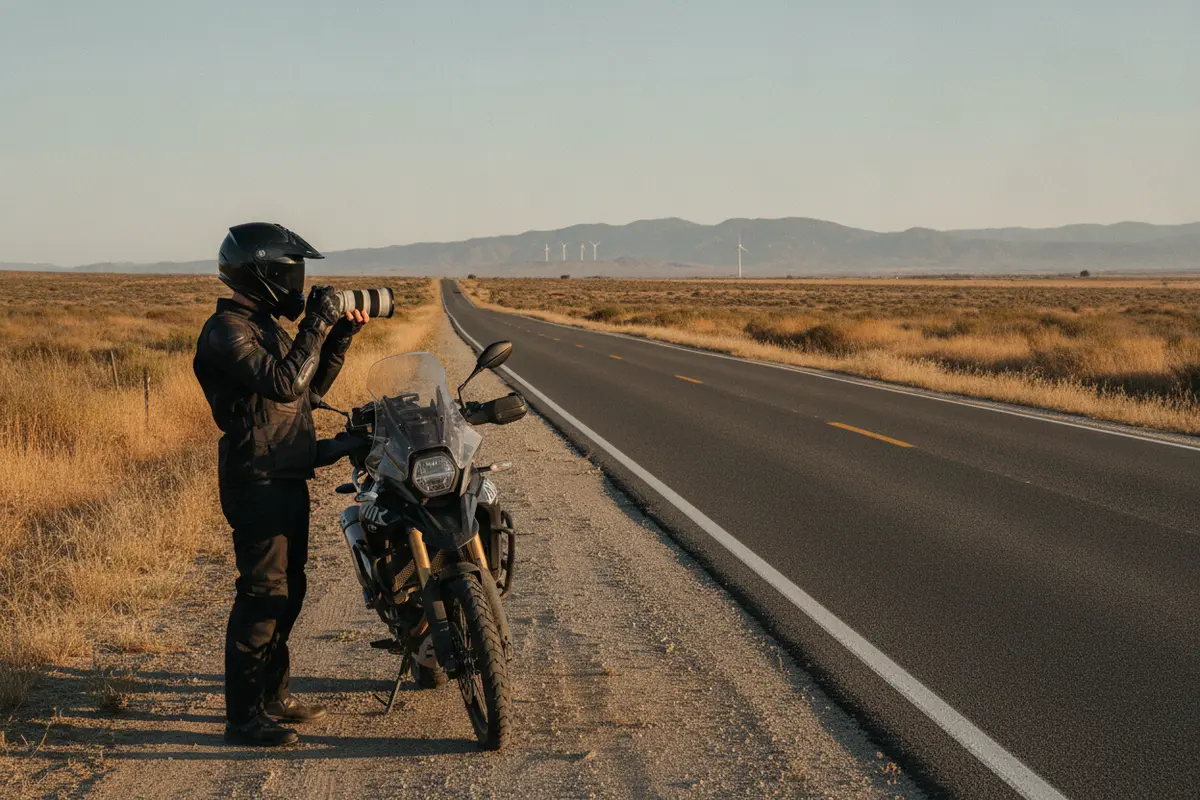
Rider documents a motorcycle crash scene on a Central Valley roadside
What evidence helps explain a motorcycle crash?
Organize evidence by topic and date. A basic file can include:
- Scene materials: original photographs, video, location, weather, lighting, traffic controls, and road conditions.
- People and accounts: driver and witness contact details, what each person observed, and when the account was recorded.
- Vehicle and gear: motorcycle condition, inspection or repair records, helmet, clothing, and pre-repair images.
- Official records: incident numbers, collision-report information, and agency communications.
- Medical records: evaluations, diagnoses, instructions, prescriptions, referrals, and follow-up appointments.
- Daily impact: dated notes about symptoms, activity limits, missed work, and tasks requiring help.
Keep copies and note when each item was received and from whom. If sending material to an insurer, retain the exact version and transmission date. Do not alter original photographs or messages. Avoid detailed public commentary about the collision; an isolated statement can be misunderstood without context.
A useful evidence log can list the item, date obtained, source, and question it may address. For example, “intersection video, requested Tuesday, nearby shop, may show signal sequence” is more useful than a folder labeled only “proof.” The log does not predict what evidence will show; it helps identify follow-up work and prevents records from being overlooked.
How should severe injuries be documented?
Motorcycle injuries can require continuing evaluation and care. Tell clinicians about symptoms, when they began, and how they change. Describe functional limitations in concrete terms. Seek medical guidance if a symptom worsens or a new issue appears rather than relying only on an informal note.
Keep a care chronology with dates, providers, recommendations, medication changes, referrals, and questions to revisit. Save discharge instructions and appointment confirmations. When multiple providers are involved, list each provider and the purpose of the visit. Bring relevant prior instructions to follow-up appointments so the clinician has context.
Describe the effect on work and ordinary activities with specific examples. Instead of writing only “daily tasks are difficult,” record which task was affected, what happened when you tried it, and how long the limitation lasted. Precise, consistent notes are more useful than broad conclusions. Do not exaggerate or attempt to diagnose yourself.
Future medical needs should be supported by appropriate medical evidence. An early estimate may not capture the full course of recovery. Ask treating professionals about clinical questions and keep their recommendations with your records. Legal analysis of a claim is separate from medical decisions about care.
What should riders know about insurer communications?
Report the collision as required by applicable policies and keep a record of each communication. Ask who is calling, which company they represent, and what information is requested. Consider legal advice before providing a recorded statement or signing a broad medical authorization, especially when injury or responsibility remains disputed.
Do not guess about speed, distance, or timing. If you do not know, say so. Avoid adopting another person’s description as your own. Keep copies of letters, forms, claim numbers, and messages. For phone calls, note the date, representative, topic, and requested next step. If a request is unclear, ask for it in writing.
Before sending documents, make an inventory. Medical records may contain information unrelated to the collision, so understand the scope of an authorization before signing. Retain a copy of every form. Coverage depends on the policies and roles of the people involved; a rider’s own policy, another driver’s policy, or other applicable coverage may need review. Do not assume a particular source of recovery is available. See DC Law Group’s motorcycle accident information and personal injury overview.
REQUEST A FREE CONSULTATION with DC Law Group
How does comparative fault work in California?
California follows a comparative-fault approach. In general, responsibility may be allocated among parties based on their share, and a claimant’s own percentage can affect recovery. The legal analysis depends on evidence and applicable law. An allegation that a rider was partly responsible is not itself a final determination.
Insurers may examine speed, lane position, visibility, signals, helmet use, and whether each person responded reasonably. Consider a disputed turn: one driver says the motorcycle was moving too quickly, while the rider says the car turned across the rider’s path. A careful review may compare witness accounts with signal timing, damage, photographs, and video. Each item has limits, so consider the full sequence rather than relying on one image or statement.
Make a list of what is known, what is disputed, and what evidence might address each issue. A witness who saw a signal may provide useful information about signal timing; a person arriving afterward may be able to describe the scene but not the events leading to impact. This distinction helps organize follow-up without overstating what a witness can establish.
Which California deadlines may apply?
Deadlines depend on the parties and claim type. California generally sets a time limit for filing many personal injury actions, but exceptions and special rules may change the analysis. A claim involving a public entity can have an earlier administrative claim requirement. Do not rely on a general online summary to calculate a deadline for a specific collision.
Record the collision date and promptly seek advice about the facts. If a public agency, public vehicle, or roadway condition may be involved, mention that when requesting guidance. Keep notices, letters, and claim submissions, including evidence of when they were sent or received. Missing an applicable deadline can affect the ability to pursue a claim.
The California Courts website provides court information. A lawyer can assess which limitation period or claim procedure applies to the particular facts. Do not postpone that assessment while waiting for every record to arrive; an initial review can identify dates and documents needing prompt attention.
How can a lawyer review a Modesto motorcycle claim?
A lawyer may gather records, identify potential parties, request evidence, review insurer communications, and evaluate how the evidence relates to responsibility and injury. For a Modesto collision, the review may begin with the precise location, direction of travel, intersection or road design, and possible sources of video. Verify local details rather than assuming them from the city name.
Before a consultation, assemble the collision date and location, incident number, photographs, witness details, insurer correspondence, and a concise medical chronology. Add questions: Which evidence may disappear? Could a public entity be involved? What should I understand before signing a document or giving a statement? If an item is missing, note what you have tried to obtain.
To discuss an injury matter, use DC Law Group’s contact page or its consultation information. You can also review the firm’s California accident representation overview. A legal assessment depends on the facts, evidence, applicable law, and procedural deadlines.
Explain what you remember without feeling that you must resolve every factual dispute yourself. Describe your route, the location, what you recall before impact, what happened afterward, and who may have information. Identify uncertainties plainly. Clear limits on memory are preferable to unsupported detail.
Motorcycle claim evidence at a glance
| Issue | Potentially useful material | Why it may matter |
|---|---|---|
| Intersection visibility | Signal details, sight-line photos, witness accounts, video | May help reconstruct what each person could see |
| Roadway condition | Wide and close images, location, time, warnings | May document a hazard before it changes |
| Injury and treatment | Clinical records, instructions, referrals, symptom chronology | May show diagnosis, care, and reported limitations |
| Insurance handling | Policy correspondence, claim number, call notes | Creates a record of communications and open issues |
| Motorcycle condition | Pre-repair images, inspection records, damaged gear | May preserve evidence relevant to impact |
Use this as a starting checklist, not a guarantee that every item exists or answers a disputed question. Some records may be held by other people or organizations. Note who may have them and when you requested them, then retain any response.
Frequently asked questions about Modesto motorcycle claims
Should I keep my motorcycle after a crash?
Document its condition before repair when practical. If repair is necessary, take clear photographs and keep inspection and repair records. Do not delay safety-related repairs without appropriate professional guidance.
What if the other driver says the motorcycle was hard to see?
That statement does not decide responsibility. Relevant evidence may include lighting, sight lines, vehicle positions, signal timing, witness accounts, and video. Avoid speculation and preserve available evidence.
Can a roadway condition be part of a motorcycle claim?
It may be relevant, but a hazard alone does not establish liability. The responsible parties, notice, control, and applicable legal duties require evaluation. Public-entity claims may involve special procedures and deadlines.
When should I speak with a lawyer?
Seek legal guidance promptly if injuries are serious, responsibility is disputed, an insurer requests a recorded statement, or a public entity may be involved. Early review may identify evidence and deadlines needing attention.
REQUEST A FREE CONSULTATION with DC Law Group
Careful documentation and timely legal guidance can help an injured rider understand the evidence and issues that may shape a California motorcycle claim.