

A crash can leave an Uber passenger trying to recover while also sorting out which insurer should receive a claim. The driver's app status, whether you were inside the vehicle, the other driver's coverage, and the timing of your medical care can all affect the analysis. Save the trip receipt, document your injuries, and keep every medical and insurance communication.
California rideshare coverage may apply differently depending on where the driver was in the trip and whether another motorist caused the collision. A riverside uber accident lawyer can help identify the relevant coverage, preserve evidence, and evaluate potential claims without assuming the outcome. For case-specific guidance, call DC Law Group at (310) 571-8860.
Before discussing responsibility or accepting an insurer's position, focus on the first hours: protect your health, record what happened, and preserve the details tied to the Uber ride. Those steps can make the later insurance review more reliable.
What to Do in the First Hours After a Riverside Uber Crash
1. Get to safety and seek medical evaluation. If anyone needs emergency help, call 911. Even when symptoms seem manageable, a prompt medical evaluation can document what happened and identify injuries that may not be obvious immediately.
2. Make sure the crash is reported. Ask whether law enforcement was contacted and obtain the incident information when available. California also requires a driver to report an accident to the DMV within 10 days when someone is injured or killed, or when the statutory property-damage threshold is met. Review the California DMV reporting guidance for the applicable process.
3. Preserve the trip details. Save the Uber receipt, ride date and time, pickup and drop-off information, driver profile, vehicle details, and any messages in the app. Do not assume the trip history will remain easy to access later.
4. Document the scene when safe. Take photographs of the vehicles, visible damage, roadway, traffic conditions, and any visible injuries. Record the names and contact information of witnesses, and keep the driver's insurance information. California requires drivers to carry evidence of financial responsibility in the vehicle.
5. Be careful with insurer communications. Report the collision as appropriate, but keep your account accurate and limited to facts you know. You generally do not need to speculate about fault, the full extent of your recovery, or which insurance policy should pay before those issues are evaluated.
Keep medical records, discharge instructions, receipts, and notes about symptoms in one place. The first hours can be confusing, particularly when a rideshare claim may involve more than one driver or insurer. These steps preserve useful information without requiring you to decide the legal outcome immediately.
How California Insurance Coverage Works During an Uber Trip
For a Riverside passenger, the insurance path can depend on more than who appears responsible for the collision. The driver's status in the Uber app, whether a ride request had been accepted, and whether you had entered or exited the vehicle can affect which coverage provisions apply. California Public Utilities Code section 5433 sets requirements for transportation network company, or TNC, insurance, but those requirements do not guarantee a particular recovery in every claim.
During an accepted ride request through completion, California requires primary TNC insurance for death, personal injury, and property damage. The law also requires uninsured and underinsured motorist coverage from the moment a passenger enters the vehicle until the passenger exits. The statute describes the applicable limits and makes this coverage primary over other applicable uninsured or underinsured motorist coverage. See California Public Utilities Code section 5433.
App status matters before a passenger enters the vehicle. When a driver is logged into the platform and available for a ride, but has not accepted a passenger request, California law addresses different minimum liability and property-damage coverage. The listed minimums cover bodily injury, death, and property damage, along with certain excess coverage requirements. The exact facts and policy language still need to be evaluated. Under section 5433, required TNC coverage is primary for the covered periods described above; the statute does not make that coverage contingent on a personal auto policy denying a claim first.
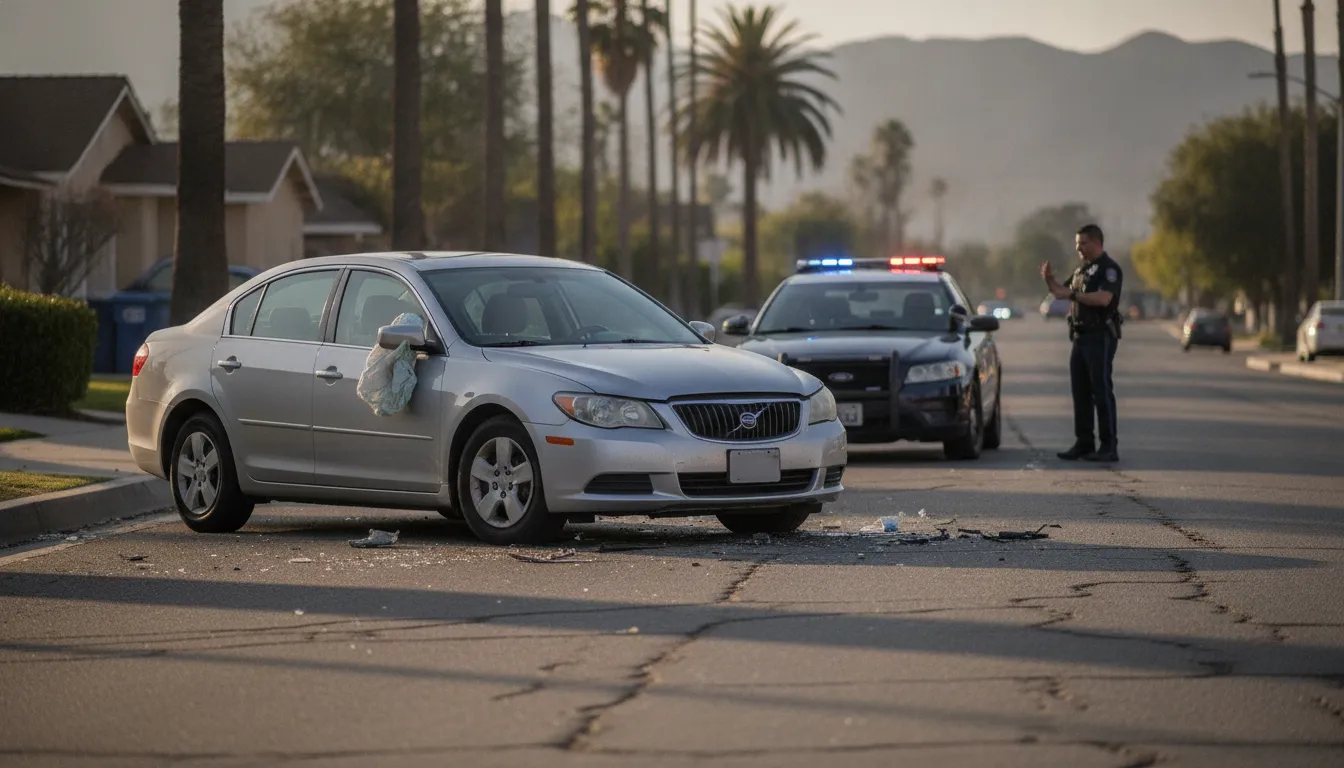
Uber vehicle traveling on a Riverside, California roadway after a collision
Coverage questions at different stages of an Uber trip
| Trip stage | Coverage question | Practical next step |
|---|---|---|
| Driver is available in the app | Had the driver accepted a ride request? | Preserve the trip timeline and identify the app status. |
| Ride accepted, before entry | Was the passenger inside the vehicle when the collision occurred? | Save the ride receipt, pickup details, and communications. |
| Passenger inside, through exit | Did the crash occur during the covered passenger period? | Document injuries, treatment, vehicle details, and witnesses. |
| Other driver lacks sufficient insurance | Could passenger UM/UIM coverage apply? | Ask how TNC and other potentially applicable policies coordinate. |
These categories are a starting point, not a coverage decision. Passenger entry and exit, app records, the identity of each driver, collision facts, policy terms, and injury evidence may all matter. A Riverside Uber accident lawyer can review those details without assuming that a statutory limit alone determines the result.
What Evidence Helps Connect the Crash to Your Injuries
After a Riverside Uber crash, preserve information that shows what happened, when symptoms began, and how the injuries affected your life. Start with medical records, discharge instructions, diagnostic results, bills, and notes from follow-up visits. Keep a simple symptom timeline with dates, pain levels, limitations, and activities you could no longer perform. Be accurate and consistent rather than minimizing or exaggerating symptoms.
Save the trip receipt, pickup and drop-off details, driver and vehicle information, and screenshots of relevant app screens while they remain available to you. Do not assume that a screenshot proves every part of the trip, and do not promise yourself that platform records will be available later. If you received messages, emails, or calls about the collision, retain them in their original form. Avoid deleting or altering communications.
* Take photographs of the crash scene, vehicle damage, visible injuries, roadway conditions, and anything else that may help explain the impact. Only do so safely.
* Record witness names and contact information, along with what each person personally observed. Do not coach a witness or ask someone to adopt your version of events.
* Keep information about every involved vehicle, including license plate details, make, model, and insurer information if known.
* Maintain employment records that document missed work, reduced duties, or changes in earnings. Ask your employer for accurate records rather than estimating.
Preserve communications with insurers and avoid guessing about fault, medical recovery, or facts you did not observe. A lawyer can explain what a car accident lawyer does, including how evidence gathering and insurer communications generally fit into a claim. The appropriate evidence depends on the facts, the injuries, and the parties involved.
Who May Be Responsible for an Uber Passenger's Injuries?
The Uber driver or another motorist
After an Uber crash in Riverside, responsibility is not always limited to the person behind the wheel. Depending on how the collision occurred and what the driver was doing in the app, a claim may involve the Uber driver, another motorist, or an insurance carrier providing coverage for the trip. The facts must be evaluated before anyone can responsibly determine fault.
The driver of the Uber vehicle may be responsible if negligent driving caused the collision. A separate motorist may be involved if that driver's conduct contributed to the crash. In some cases, more than one driver may share responsibility. Police reports, vehicle damage, witness accounts, photographs, and medical records can help establish what happened, but an initial assumption about fault is not a final legal conclusion.
The TNC insurer and applicable passenger coverage
California law recognizes transportation network company, or TNC, insurance obligations that can apply during a rideshare trip. For passenger injuries, the TNC has the statutory obligation for required uninsured and underinsured motorist coverage, and that coverage applies from the passenger's entry into the vehicle until exit. The applicable policy and claim process still depend on the trip's facts, the driver's app status, and the available insurance information.
A passenger's own auto policy may also need to be reviewed for potentially applicable coverage. That does not mean the passenger caused the crash or that a personal policy automatically controls. It means all potentially relevant policies should be identified and coordinated carefully. DC Law Group explains its approach to Uber and Lyft accident claims for passengers dealing with multiple parties and insurance questions.
Call DC Law Group at (310) 571-8860 to discuss your Riverside Uber passenger claim.
How a Riverside Uber Accident Lawyer Can Clarify Insurance Steps
Insurance questions can become difficult when an Uber passenger's injuries involve the rideshare driver, another motorist, and one or more insurers. A riverside uber accident lawyer can review the trip details, identify the potentially involved parties, and explain which coverage questions require closer investigation. The applicable insurance layer may depend on what the driver was doing in the app and what happened during the collision.
Coverage coordination is not always a simple matter of contacting one carrier. Rideshare claims may require examining personal and commercial policies, the driver's status, and whether uninsured or underinsured motorist coverage could apply. Ask how those issues will be evaluated, what information is needed, and whether a carrier has taken a position that should be reviewed.
Preserving evidence and managing communications
Early evidence can help connect the trip, the collision, and the resulting injuries. Keep the trip receipt, screenshots of the ride information, photographs, witness details, medical records, and every message or letter from an insurer. A lawyer can also explain what records may be relevant and how to preserve them without promising that any particular source will be available.
Insurer communications deserve care. Before giving a recorded statement or signing a release, ask what the request means and whether it could affect the claim. DC Law Group's discussion of what a car accident lawyer does covers evidence gathering, insurer communications, and common stages of an auto-accident claim.
Questions to ask during a consultation
* Which parties and insurance policies should be investigated?
* Could uninsured or underinsured motorist coverage be relevant if another driver's coverage is absent or insufficient?
* What evidence should I preserve, and which communications should I route through counsel?
* What facts could change the evaluation of my claim?
The answers depend on the facts of the individual crash. A consultation should help you understand the next insurance steps, not guarantee a particular coverage decision or result.
How Medical Care and Claim Communications Affect Your Case
After a Riverside rideshare collision, your medical care and communications can help create a clear record of what happened and how the injuries affected you. Seek appropriate medical evaluation, follow the provider's instructions, and tell the provider about symptoms accurately, including pain, dizziness, numbness, sleep changes, or symptoms that develop later. Do not minimize a problem because it seems manageable, but do not speculate about its cause or future recovery either.
Keep copies of visit summaries, referrals, prescriptions, bills, work notes, and messages about appointments. A simple dated symptom log can help you remember changes between visits. It may also be useful to preserve the Uber trip receipt, in-app messages, texts, emails, and voicemail related to the collision or your claim. These records can matter when reviewing evidence and insurer communications, which are among the typical stages of an auto-accident claim described in what a car accident lawyer does.
An insurer may ask for a recorded statement, medical authorization, or details about prior conditions. Answer truthfully, but read requests carefully and avoid guessing about fault, speed, vehicle movement, or whether an injury is permanent. If you do not know, say so. Consider getting advice before signing broad releases or giving a recorded statement, particularly when multiple drivers or insurance policies may be involved.
Use this checklist:
* Attend recommended appointments and follow treatment instructions.
* Record symptoms, limitations, missed work, and medical instructions.
* Save trip records, photographs, messages, emails, and insurer letters.
* Describe facts and symptoms accurately without predicting the outcome.
* Preserve communications rather than deleting or editing them.
These steps do not guarantee a particular claim result. They help preserve information for a fact-specific review.
What Is the Deadline to Bring a California Injury Claim?
California Code of Civil Procedure section 335.1 generally gives a person two years to bring an action for personal injury or death caused by another person's wrongful act or neglect. The limitations period is important, but it should not be treated as an automatic answer for every Riverside Uber passenger claim. The date of the incident, the parties involved, and the legal theory of the claim can affect the analysis. Read the official text of California Code of Civil Procedure section 335.1.
Exceptions and claim-specific rules may change the applicable deadline. For example, claims involving a government entity, a minor, or a different procedural requirement may require separate analysis. Insurance notice deadlines and evidence-preservation concerns can also arise before the general limitations period expires. Waiting can make it harder to locate witnesses, preserve trip information, and connect medical records to the collision.
For a practical overview of timing issues after a crash, see these California accident claim deadlines. A deadline cannot be calculated reliably from a general article alone. If you were injured as an Uber passenger in Riverside, gather your trip details and medical records, then have the facts reviewed promptly.
Call DC Law Group at (310) 571-8860 to discuss your California injury claim.
Frequently Asked Questions
Can you sue Uber for an accident?
Possibly, but the proper claim depends on the crash facts, the driver's app status, the parties involved, and the available insurance. A passenger may have a claim involving the driver, another motorist, an insurer, or Uber-related coverage. The rideshare company's role should be evaluated rather than assumed.
Can I get compensation if my Uber crashes?
You may be able to seek compensation for accident-related injuries and other legally recoverable losses when the evidence supports liability and damages. Save your trip receipt, medical records, photographs, witness information, and communications with insurers. California's rideshare insurance rules can apply differently depending on when the passenger entered and exited the vehicle. See California Public Utilities Code section 5433: the statute.
Is it worth hiring an attorney for a car accident?
Legal guidance may be useful when injuries are significant, treatment is ongoing, fault is disputed, multiple vehicles or insurers are involved, or an insurer requests a recorded statement. An attorney can help organize the claim, identify coverage issues, preserve evidence, and explain available options without deciding the outcome in advance.
How hard is it to win a car accident lawsuit?
No result is guaranteed. The strength of a lawsuit usually depends on proof of fault, a clear connection between the collision and the injuries, reliable medical documentation, and compliance with applicable deadlines. A case review can identify evidentiary problems and potential defenses before a lawsuit is considered.
Ready to Discuss Your Riverside Uber Passenger Claim?
Understanding which insurance coverage may apply and preserving the right records can help you evaluate your next steps after a crash. DC Law Group can review the circumstances of your Riverside Uber passenger injury claim and explain questions to consider about the claim process.
Call DC Law Group at (310) 571-8860 to discuss your situation and get started.