

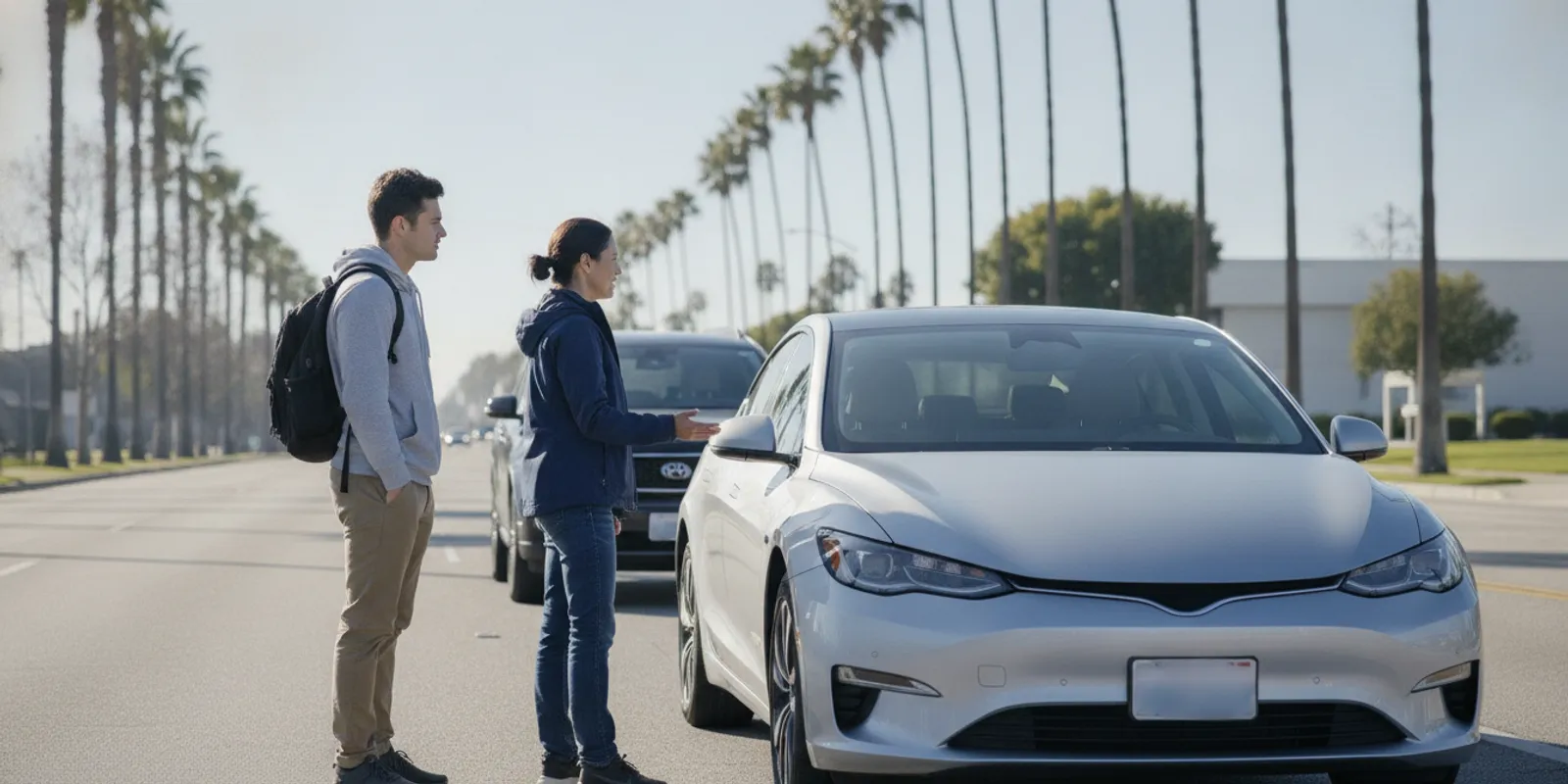
If you were hurt in a rideshare crash, your role in the trip can affect which insurance policies may apply and who may be responsible. A rideshare injury lawyer California claim review should start by asking whether you were driving, riding as a passenger, or using another vehicle—and what the driver’s app showed at the time. The answer is fact-specific, but both drivers and passengers may have a path to seek compensation when another party caused an injury.
Request a consultation with DC Law Group
Why does a driver’s or passenger’s role matter?
Rideshare crashes can involve several people and insurance policies. A passenger may be looking at the rideshare driver’s coverage, another motorist’s policy, or more than one source. A rideshare driver who is injured may need to examine the other driver’s coverage, the driver’s own policy, and any coverage connected to the active rideshare trip.
Being a passenger does not automatically make the rideshare driver responsible. Being a rideshare driver does not automatically make the other motorist responsible. Investigators look at how the collision happened, what each person did, and what evidence supports those accounts. A person’s role helps identify possible coverage; it does not decide fault by itself.
California law and insurance terms can interact in ways that are not obvious from an app screen or a police report. The relevant facts may include whether the driver had accepted a trip, was carrying a passenger, or was waiting for a request. Preserve evidence of that status rather than relying on memory alone.
It helps to separate three questions that are sometimes blended together in the first hours after a crash. First, what happened on the road? Second, who may have contributed to the collision? Third, which policy or claim process may apply to each person? An answer to one does not automatically answer the others. For example, a driver’s app may document a trip phase, but it does not by itself prove that driver caused the impact or that an insurer must accept a claim.
The distinction matters to everyone in the vehicle. A passenger generally needs to document the ride and injury, while a rideshare driver may also need records establishing app activity. A motorist in a separate vehicle may have a claim involving one or more drivers, even if that person was not using a rideshare service. Keep the questions open until the evidence and policy documents are reviewed.
What may a passenger need to consider after a rideshare crash?
A passenger may have a claim if someone’s negligence caused the collision and the passenger suffered an injury. Depending on the facts, potentially responsible parties may include the rideshare driver, another driver, or more than one party. A vehicle owner or another company could also warrant investigation in a particular case, but responsibility cannot be assumed from a person’s job or vehicle alone.
Passengers are often not controlling either vehicle, but they still benefit from recording what they observed. Note where you were seated, whether you wore a seat belt, the route, the time, and what happened just before impact. Do not guess about speed or fault if you did not see it. Describe what you actually observed.
If the rideshare driver caused the crash, the company’s insurance response may depend on the driver’s app status and the trip phase. If another motorist caused it, that driver’s policy may be relevant. If more than one person contributed, the available claims and allocation of responsibility can become more complicated. A passenger may need to notify more than one insurer, while avoiding assumptions about which insurer will accept responsibility.
Passengers should also save the trip receipt, ride details, driver and vehicle information, and any messages from the platform. A screenshot can help preserve information that may later become difficult to retrieve. Keep copies of medical records and follow-up instructions. If symptoms appear or change after the crash, tell a medical professional and document when you noticed them.
Think through a passenger’s account in chronological order. Before the ride, save the pickup and destination information if it remains available. During the ride, write down the route and any unusual event you directly noticed, such as a sudden lane change, hard braking, or a signal. After the collision, note where the vehicles came to rest and who spoke with you. Avoid filling gaps with assumptions. “I saw the other car enter the intersection” is more useful than an unsupported conclusion about the other driver’s speed.
If you left the scene before gathering information, do not assume that nothing can be preserved. The trip receipt, platform account, messages, medical visit records, and a later written recollection can still help reconstruct the event. Keep the original files where possible and note when you obtained each item. If the platform provides a way to report a safety incident, retain the confirmation or reference number.
What may an injured rideshare driver need to consider?
A rideshare driver can pursue a claim when another party’s conduct caused an injury. The responsible party might be another driver, or the facts might point to more than one person. The rideshare driver’s work status does not by itself resolve who caused the collision. An investigation should consider both the driving evidence and the insurance arrangements in effect at the time.
For a driver working through an app, timing matters. Record whether the app was off, on and waiting for a request, or connected to an accepted trip or passenger ride. Preserve trip records, dispatch messages, and any available screenshots. The applicable insurance provisions can differ depending on the activity underway, the policy language, and the facts of the crash.
Do not assume that a personal auto policy covers every activity performed while driving for a rideshare platform. Likewise, do not assume that platform-related coverage applies in the same way during every app phase. Ask for the policy information and claim details in writing, and have the documents reviewed in context. Avoid giving a recorded statement about disputed facts before you understand who is requesting it and why.
Drivers should keep records of missed work and changes to their ability to perform driving tasks. Preserve the vehicle’s photographs, repair inspection records, and any relevant dash-camera footage. Do not delete app data or messages. The specific records that matter depend on the issues in dispute.
Make an app-status timeline as soon as reasonably possible. Start with when you logged in, whether a request arrived, when you accepted it, when the passenger entered the vehicle, and whether the ride had ended. Use available app history, text notifications, calendar entries, and other records to check your recollection. Label estimates as estimates instead of presenting them as exact times. If the app or phone is damaged, preserve the device and ask the appropriate platform support channel how to retrieve trip history rather than resetting it.
A driver may also need to keep ordinary work records that put the injury in context. Note scheduled shifts missed, driving tasks that became difficult, and communications about resuming work. Save the records as they are created instead of trying to recreate a long period from memory later. These documents do not establish fault on their own, but they can help explain the timeline and practical effects of an injury.
How can the two types of claims differ?
The same collision can create different practical questions for a passenger and a rideshare driver. This comparison is a starting point, not a determination of coverage or legal responsibility.
| Issue | Passenger | Rideshare driver |
|---|---|---|
| First question | Which driver or other party may have caused the crash? | Who caused the crash, and what was the app status? |
| Potential insurance sources | Policies tied to one or more at-fault drivers; coverage connected to the rideshare trip may also be relevant. | Another party’s policy, the driver’s own policy, and potentially coverage associated with the active app phase. |
| Useful trip evidence | Receipt, route, vehicle and driver details, and trip communications. | App status, trip acceptance and completion times, dispatch messages, and earnings records. |
| Key caution | Do not assume the rideshare driver alone is responsible. | Do not assume a personal or platform policy applies without reviewing its terms and the trip facts. |
| Shared priority | Get appropriate medical attention, preserve evidence, report accurately, and keep copies of claim communications. |
Consider two common examples. A passenger’s vehicle may be struck by a motorist who ran a red light while the rideshare driver was proceeding lawfully. In that situation, the other motorist may be a central focus of the investigation, even though the passenger was riding in a rideshare vehicle. In another crash, a rideshare driver may be struck while waiting for a new request. The driver’s app activity, the other driver’s conduct, and the language of relevant policies may all need review. Neither example determines the outcome of a real claim; small differences in evidence can change the analysis.
Fault may also be disputed. Each driver may describe the events differently, and photographs or witness accounts may not answer every question. A collision reconstruction, vehicle inspection, roadway camera footage, or electronic records may be worth investigating in some cases. Whether these materials exist, can be obtained, and are useful depends on the specific circumstances. A police report is one source of information, not necessarily a complete investigation or a final decision about civil responsibility.
A third example shows why a rideshare passenger should not treat a single insurance conversation as the whole claim. Suppose the rideshare vehicle and a second vehicle make contact during a lane change, and the passenger reports pain later that day. Each driver may give a different account of the sequence. The passenger can preserve the trip, get appropriate medical attention, and provide an accurate account without deciding which driver is legally responsible. Evidence such as vehicle damage locations, nearby camera footage, witness observations, and the drivers’ recorded trip timelines may help clarify disputed details.
In another variation, a rideshare driver is waiting for a request when a vehicle strikes the driver from behind. The driver might have app records showing the app was active, but those records do not establish every insurance term or settle the question of fault. The driver can preserve the app screen and notifications, identify the other motorist and witnesses, document the scene if safe, and request claim details in writing. A careful review considers the road evidence and policy documents together rather than relying on one label such as “rideshare accident.”
Insurance representatives may ask for a recorded account, medical authorizations, or documents about the trip. Before responding to broad requests, identify who is asking, what claim they represent, and how the information may be used. Keep your answers truthful and limited to what you know. Do not sign a form that you do not understand. If there are several possible policies, keep a separate timeline of calls and written communications for each claim so that dates, requests, and responses do not become confused.
These practical distinctions explain why a passenger and a driver from the same crash can face different claim questions. A passenger may need to establish the trip and injury, while a driver may need to establish the trip phase as well as the collision facts. Both should preserve records early and avoid treating an insurer’s first position as a complete assessment of responsibility.
For a general overview of the firm’s rideshare practice, see DC Law Group’s Uber and Lyft accident representation page. A page about what to know after an Uber accident may also help identify questions to raise during a consultation.
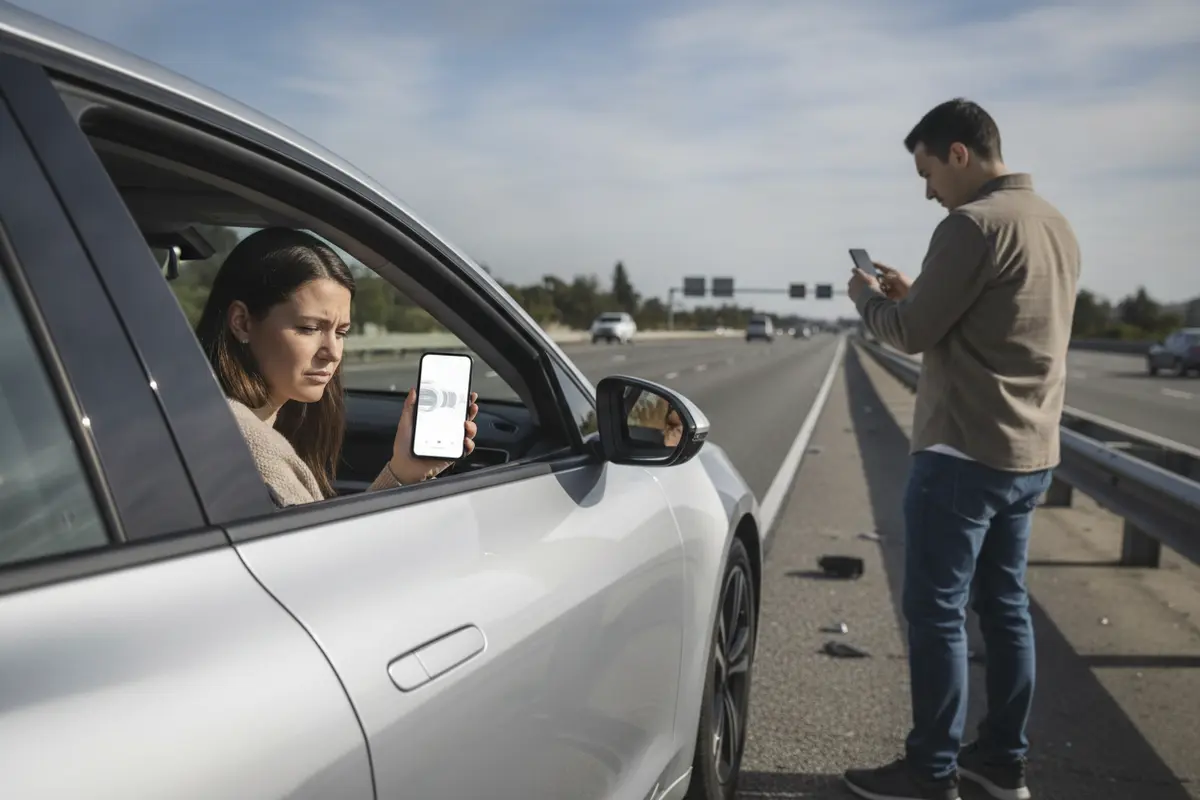
A passenger saves rideshare trip details and photographs after a California collision
What evidence should you preserve?
Evidence can disappear quickly. Take reasonable steps to preserve information, but do not put yourself at risk to collect it. If you can do so safely, photograph the scene, vehicle positions, damage, road conditions, traffic controls, and visible injuries. Capture wide views as well as close-ups. Keep original files and note when and where each image was taken.
- Trip and app records: Save the ride receipt, trip identifier, driver or passenger details, status screens, and platform messages.
- Witness information: Write down names and contact details for people who saw the collision. Ask what they observed, not what they think caused it.
- Official records: Record the responding agency and any report or incident number. A report can be useful, but it is not necessarily a final ruling on fault.
- Medical documentation: Keep visit summaries, instructions, referrals, and a brief dated record of symptoms and how they affect daily activities.
- Vehicle and work records: Preserve repair documents, relevant camera footage, work schedules, and records of missed shifts or driving activity.
- Communications: Save insurer letters, claim numbers, emails, and notes of phone calls, including dates and the names of people you spoke with.
Keep your description of the crash factual and consistent. If you do not know an answer, say so rather than filling in a gap. Do not edit or delete potentially relevant photographs, video, app records, or messages. Before signing a release or agreeing to a final resolution, make sure you understand which claims and losses it covers.
Organize copies in a simple folder, whether digital or paper. One subfolder can hold trip and app materials, another medical records, and a third insurance and police communications. Use neutral file names that include the date and a short description, such as “October 3 scene overview” or “trip receipt.” Keep a separate note of where original files remain. This does not require special software; the goal is to make it easier to locate a document when someone asks for it and to reduce the chance that a message or image is overlooked.
When photographing damage, include the whole vehicle and then closer views of the affected areas. Take pictures from more than one angle if it is safe. Do not move a vehicle or enter traffic to get a better image. If a witness offers contact details, write them down accurately and avoid coaching that person or asking them to adopt your interpretation. These small steps help preserve what was observed without turning a hurried recollection into a claim about facts you did not see.
Medical notes should distinguish what you felt from what someone else told you. A dated personal note can record when a symptom began, whether it changed, and how it affected a normal task. Do not treat a personal log as a diagnosis or substitute for professional care. Give medical providers an accurate history and follow their guidance. If you discover a relevant record later, preserve it and note when it was found rather than altering earlier notes.
What should you do in the first days after the crash?
- Address urgent safety and health needs. Contact emergency services when needed and seek medical evaluation for injuries. Follow the treating professional’s instructions and seek follow-up care when advised.
- Make a basic record. Write down the date, approximate time, location, people involved, and what you remember. Separate your direct observations from anything someone else told you.
- Report the collision accurately. Follow applicable reporting requirements and notify the relevant platform or insurer as appropriate. Ask for confirmation and retain claim numbers.
- Preserve electronic evidence. Save trip records, app status, photographs, messages, and camera footage. Keep a backup so an automatic deletion or device issue does not erase it.
- Be careful with broad statements. You can provide basic factual information, but do not speculate about fault, injuries, or insurance coverage. Ask for written requests and take time to understand them.
- Get legal guidance when the issues are unclear. A lawyer can review the facts, identify potential parties and coverage questions, and explain options for your situation.
These steps do not need to happen in a perfect order. Prioritize safety and medical needs. Once those are addressed, make a short timeline while your recollection is fresh, save materials already available on your phone, and record what information is still missing. For example, if you do not yet have a claim number or a copy of the report, note who you contacted and when you plan to follow up. A short checklist can help you avoid repeating the same calls or forgetting a request.
When contacting an insurer or the platform, keep the first report factual. Give the date, location, people involved, and basic description you can accurately confirm. If you are unsure about a detail, say that you will check your records rather than estimating. Ask for the representative’s name, the claim number, and a written description of any documents requested. Keep each response with the relevant claim file.
Deadlines may apply to injury claims and can vary with the parties and circumstances. Some claims involving public entities can involve separate, shorter procedures. Do not rely on a general online summary to calculate a deadline. The California Courts website provides statewide court information, and a lawyer can help identify which rules may apply to a specific claim.
For information about California court resources, visit the California Courts website. The site is a starting point for general court information, not a substitute for advice about a particular claim.
How can a rideshare injury lawyer help clarify the claim?
A lawyer can examine the collision evidence, app records, insurance communications, and medical documentation together. That review may help identify which people or entities require further investigation, what coverage questions to ask, and whether additional records should be preserved. It can also help keep communications organized when several insurers or claim representatives are involved.
A useful case review begins with the client’s role and a clear timeline. For a passenger, the review may start with trip confirmation, seating position, observations, and the point at which symptoms were noticed. For a driver, it may also include app-phase records and the relevant policy documents. In either situation, the lawyer can compare the account with photographs, report details, witness information, and insurer correspondence. The goal is to identify unanswered factual and coverage questions, not to assume the answer before reviewing the evidence.
A lawyer may also help identify what information to request and how to preserve it. Examples include platform trip records, vehicle inspection materials, available video, or written policy information. Not every source exists or will be available in every matter. A focused request should relate to a real issue in the case, and each request should be tracked so that responses and follow-up dates are clear.
Before choosing counsel, ask who will handle your questions, how the firm communicates updates, what documents you should provide, and how the fee agreement works. Ask for clear answers in writing when appropriate. The right fit is one where you understand the process and feel comfortable discussing the facts of your injury.
DC Law Group is a team of personal injury attorneys handling matters that include Uber and Lyft accidents. To discuss whether the firm may be able to assist, use the DC Law Group contact page or request an appointment. No review can promise a particular result; each claim depends on its own facts, evidence, and applicable law.
Talk with DC Law Group about your rideshare injury claim
Frequently asked questions
Can a rideshare passenger make a claim if the rideshare driver was not at fault?
Potentially. If another driver or party caused the crash, the passenger may have a claim involving that party. The facts and available coverage determine what options may exist.
Can a rideshare driver make a claim against another motorist?
Yes, an injured driver may have a claim if evidence supports that another motorist caused or contributed to the collision. The driver’s app activity and applicable insurance documents may also matter.
Does the rideshare app being on automatically decide which insurance applies?
No. App status is an important fact, but the trip phase, policy terms, and circumstances of the crash also matter. Preserve the records and have the specific documents reviewed.
Should I accept an insurer’s first offer?
Do not decide based only on the fact that an offer was made. Understand what it resolves, which claims it releases, and whether you have a clear picture of your injuries and related losses before signing.
What if I am unsure whether my injury is serious?
Seek guidance from a qualified medical professional. Record your symptoms and follow medical instructions; do not rely on an insurer or a legal article to diagnose an injury.
Request a consultation with DC Law Group
This article provides general information, not legal or medical advice; a lawyer must evaluate the facts and circumstances of an individual claim.