
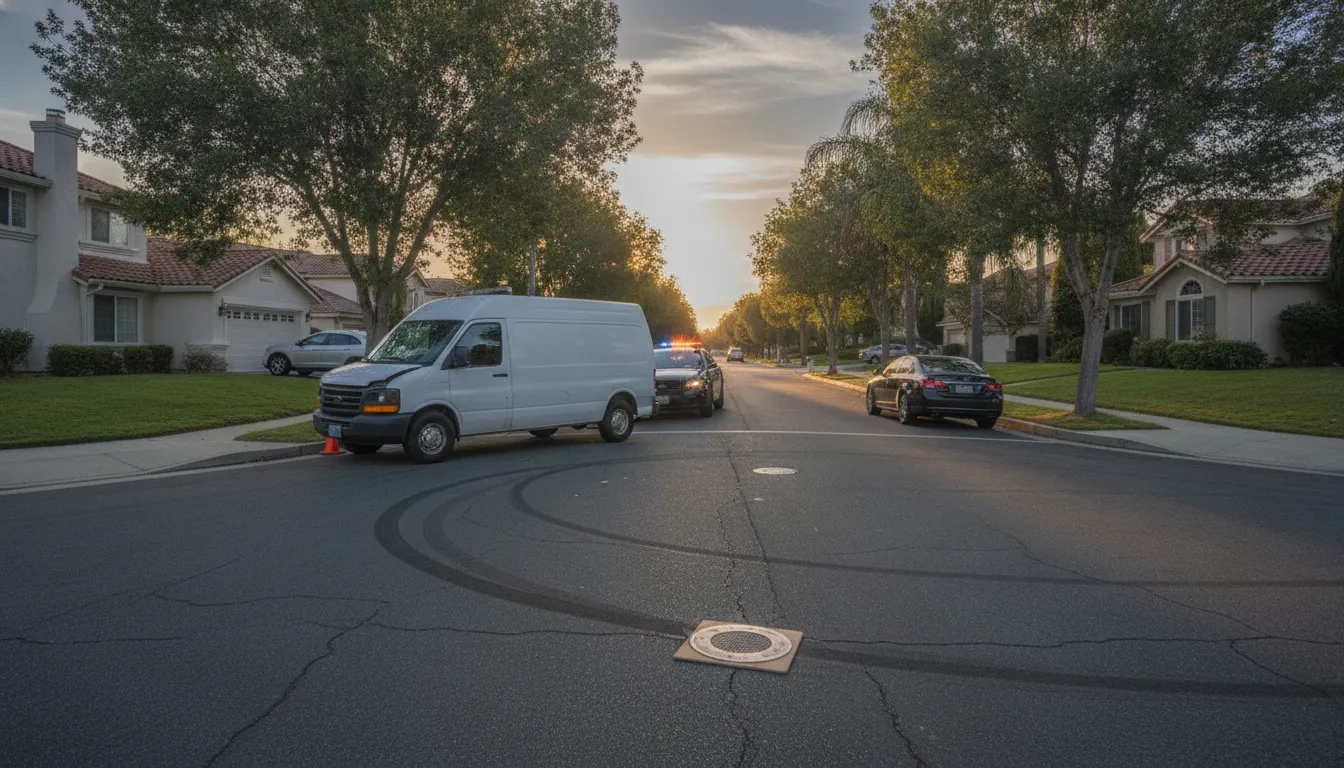
A delivery van collision can leave you dealing with injuries, vehicle damage, and medical care. You may also have questions about who should answer for the crash.
A driver, employer, vehicle owner, maintenance provider, contractor, or another entity may be relevant. The answer depends on the facts and available evidence.
Call DC Law Group at (310) 571-8860 to discuss your California accident claim.
A *delivery van accident lawyer california* search often reflects a practical question: who may be responsible after a delivery van crash?
The answer requires examining driver conduct, the work relationship, the van's ownership and condition, delivery records, insurance coverage, and other possible causes. This guide explains what to preserve and how potential parties are evaluated.
Every collision has different evidence and relationships. This overview is general information, not a prediction about a particular claim. Start with the possible parties. Then work through the records that can clarify what happened.
Who May Be Liable After a California Delivery Van Crash?
Responsibility after a delivery van collision may involve more than the person behind the wheel. The driver, the company that hired or directed the driver, the vehicle owner, and businesses responsible for maintenance may each require separate investigation. In some cases, another contracting entity may also be relevant.
The right parties depend on the facts, the driver's work relationship, the vehicle's condition, and what the driver was doing at the time of the crash.
The delivery driver
A driver may be personally responsible if negligent conduct caused the collision. Investigators may examine speed, following distance, lane changes, distraction, fatigue, impairment, and compliance with traffic rules. A delivery schedule alone does not establish fault. Evidence must connect the driver's conduct to the impact and the injuries claimed.
The employer or contracting company
The business that employed the driver may be involved when the driver was performing work duties. A delivery company, retailer, logistics provider, or another contracting entity may have information about the driver's assignment, training, supervision, and route.
The analysis can become more complicated when a business labels a driver an independent contractor rather than an employee. The written agreement is important, but it is not necessarily the only evidence that matters.
The vehicle owner and maintenance provider
The van's owner may be relevant if an unsafe condition contributed to the collision. Potential issues can include defective brakes, worn tires, steering problems, inadequate lighting, or other mechanical failures.
Maintenance records, inspection histories, repair invoices, and vehicle data may help determine whether a maintenance provider, fleet operator, owner, or manufacturer should be investigated. These parties are not automatically liable merely because they owned or serviced the van.
Liability and insurance coverage are separate questions. A driver or company may appear responsible for causing a crash. Insurers may dispute which policy applies.
A careful investigation should preserve the police report, witness information, medical records, vehicle records, contracts, and available electronic delivery or vehicle data.
How Does Employer or Contractor Status Affect a Delivery Van Claim?
After a delivery van collision, identifying the driver is only the beginning. The investigation may need to determine whether the driver was an employee, an independent contractor, or working through an app-based delivery arrangement.
That classification can affect which parties may have relevant records, which insurance policies may apply, and how the driver's work activity relates to the collision. It should not be assumed from the van's logo or the driver's statement alone.
Scope of work matters
A key question is what the driver was doing when the crash occurred. Was the driver transporting a package, traveling to a pickup, making a delivery, returning to a facility, or using the van for a personal errand?
Investigators may review delivery assignments, dispatch records, route data, time records, loading information, and communications. Relevant records may include an accepted assignment, route information, delivery timestamps, or messages with a dispatcher.
Contracts, ownership, and insurance
The driver, delivery company, vehicle owner, logistics contractor, and maintenance provider may have different roles. A contract may describe who controlled the work, supplied the vehicle, trained the driver, or was responsible for inspection and maintenance.
Vehicle registration, lease documents, maintenance records, and commercial insurance information can help clarify those relationships. The fact that a driver is called a contractor does not, by itself, resolve every liability question.
What Evidence Should You Preserve After a Delivery Van Accident?
Evidence can clarify how the collision occurred, who was involved, and which insurance policies may respond. Start by preserving what you can safely access. Do not put yourself in danger or interfere with emergency personnel.
Take photographs of the vehicles, roadway, traffic controls, visible injuries, property damage, and surrounding conditions. Capture multiple angles, including points of impact, debris, skid marks, lane markings, and damaged signs.
Keep copies of medical records, discharge paperwork, prescriptions, treatment notes, and healthcare instructions. Maintain a dated record of symptoms, appointments, missed work, transportation difficulties, and other ways the injury has affected daily activities.
Identify witnesses and official records
Write down the names and contact information of anyone who saw the collision. If a witness gives you a brief description of what happened, record it promptly and preserve the original message or note.
Request the police report when it becomes available, but remember that an officer's initial account may not resolve every issue. Photos, witness accounts, vehicle damage, and later testimony may provide additional context.
Preserve commercial-vehicle information
Depending on the vehicle and delivery operation, relevant material could include driver schedules or logs, dispatch records, maintenance and inspection records, GPS data, route information, telematics, dashcam footage, and photographs taken by the company.
Do not assume that every van has each type of system. Identify what may exist and note the driver, employer, vehicle owner, delivery company, and any other entity connected to the trip.
Digital evidence can be overwritten, deleted, or lost through routine retention practices. Preserve your own photographs, videos, messages, call records, and location information in their original form.
For a broader explanation, review how to preserve commercial vehicle evidence. The guide explains the different parties and record systems that may be involved.
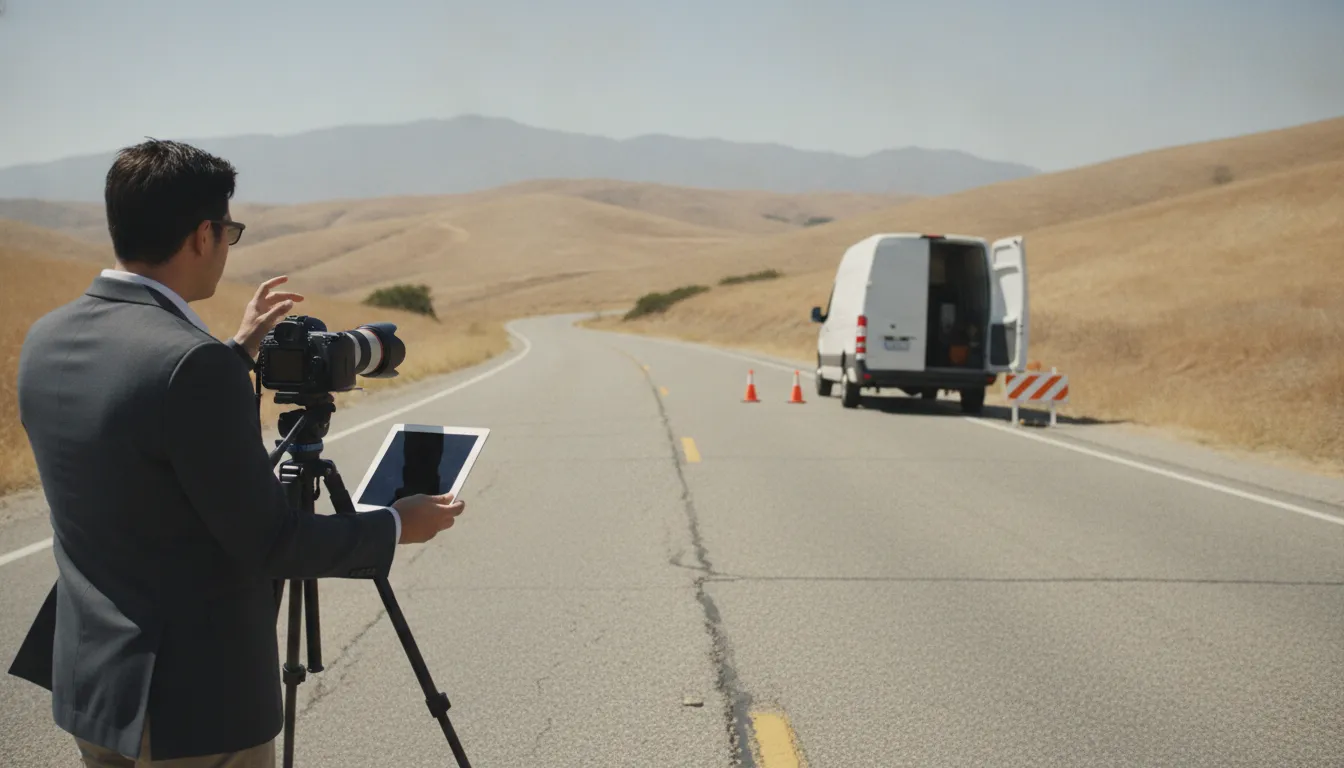
Investigator documenting a California delivery van and roadway
How Do Insurance and Shared Fault Affect Recovery?
A delivery-van collision can involve more than one potentially responsible party and more than one insurance policy. The driver may be responsible for causing the crash, while an employer, vehicle owner, contractor, or another entity may have a separate role that must be investigated.
Liability and coverage are different questions. Identifying who may have caused the collision does not automatically determine which insurer must respond.
Insurance may depend on the driver's role and activity
Start by identifying how the van was being used, who controlled the driver, and which vehicle and commercial policies may apply. A policy can be connected to the driver, the employer, the vehicle owner, or a business using the vehicle.
Insurers may also examine whether the driver was working, making deliveries, carrying out a personal errand, or acting within an assigned route. Delivery records, dispatch information, vehicle data, or assignment records may help establish what the driver was doing.
Shared fault can change how a claim is evaluated
California injury claims may involve allegations that more than one person or entity contributed to the harm. An insurer might argue that another driver, the injured person, a road condition, or a maintenance issue played a role.
Whether that argument is supported depends on the evidence and applicable legal rules.
Issues commonly separated during a delivery-van claim review
A careful review keeps liability, coverage, shared-fault arguments, and documented damages separate before drawing conclusions. Do not assume that an insurer's shared-fault position is correct simply because it appears in a claim letter.
What Is the Deadline to Act After a California Delivery Van Collision?
California personal-injury claims generally require prompt attention. Under California Code of Civil Procedure section 335.1, an injured person typically has two years from the date of injury to file a personal-injury lawsuit.
The statute is available at California Code of Civil Procedure section 335.1. Evidence can become harder to locate, and vehicle data may not remain available.
Why the general rule may not answer every claim
The applicable deadline can depend on the people and entities involved, the type of claim, and the circumstances of the collision. A claim involving a government-owned vehicle or public entity can involve different notice and filing requirements.
Claims brought by or for a minor may also be governed by different rules. A wrongful-death claim has its own legal framework. These are examples, not an exhaustive list.
Other facts can affect the analysis, including when the injury was discovered, whether multiple claims are being pursued, and whether the delivery van was operated for a public agency or private business.
Missing a required deadline can seriously affect a claim. Review the timeline based on the specific facts rather than assuming a general online rule applies.
For practical guidance, review the steps after a California truck crash.
When Should You Speak With a Delivery Van Accident Lawyer in California?
Speak with counsel promptly when a delivery-van collision causes serious injuries, fault is disputed, or more than one person or company may be involved.
A delivery driver, employer, vehicle owner, maintenance provider, contractor, or another motorist may each raise different factual and legal questions. An early review can help identify which facts matter before important evidence becomes harder to locate.
It is also sensible to seek a fact-specific review before giving a detailed recorded statement, signing a release, or accepting an insurer's position about responsibility.
Insurance communications do not necessarily resolve who caused the collision. They may not show which policy should respond.
Call DC Law Group at (310) 571-8860 to discuss your California accident claim.
Situations that deserve prompt attention
1. Serious or changing injuries: Preserve medical records and treatment documentation while following medical guidance.
2. Disputed fault: Preserve photographs, the collision report, witness information, and other available evidence.
3. Multiple parties or policies: Separate responsibility from the question of which policy may apply.
4. Requests from an insurer: Before making statements or signing documents, understand what the request addresses.
5. Evidence that could disappear: Note records that may require timely preservation.
DC Law Group provides truck accident legal representation and handles California motor-vehicle matters. Every delivery-van case has different facts and evidence.
A timely, individualized review may help clarify the issues.
Call DC Law Group at (310) 571-8860 before the FAQ section to discuss your next step.
Frequently Asked Questions
Who may be liable after a delivery van accident in California?
Potentially responsible parties may include the delivery driver, delivery company, vehicle owner, maintenance provider, or another party whose conduct contributed to the collision. Liability depends on the evidence and circumstances.
What evidence matters after a delivery van collision?
Preserve the collision report, photographs, medical records, treatment documentation, witness information, insurance communications, and available vehicle, route, maintenance, or delivery records.
Can a delivery company be responsible for its driver's conduct?
It can be, but the answer depends on the driver's relationship with the company and the facts surrounding the trip. Employment and operational records can be important.
How long do I have to file a California delivery vehicle accident lawsuit?
California personal-injury claims generally require attention to a two-year lawsuit deadline under Code of Civil Procedure section 335.1, subject to exceptions. The applicable deadline can change with the parties, claim type, and circumstances.
When should I speak with a delivery van accident lawyer?
Consider a legal review when injuries are significant, fault is disputed, multiple insurance policies may apply, or the delivery company has information you cannot obtain. A lawyer can help identify potentially responsible parties and preserve evidence.
Schedule a Review of Your Delivery Van Collision
Liability after a California delivery van collision can depend on the driver's conduct, employment relationship, vehicle ownership, company policies, and available evidence. A fact-specific review can help clarify which records and insurance issues may matter.
Call DC Law Group at (310) 571-8860 to discuss your collision and next steps. This guide is general education, not a case-specific legal opinion.