

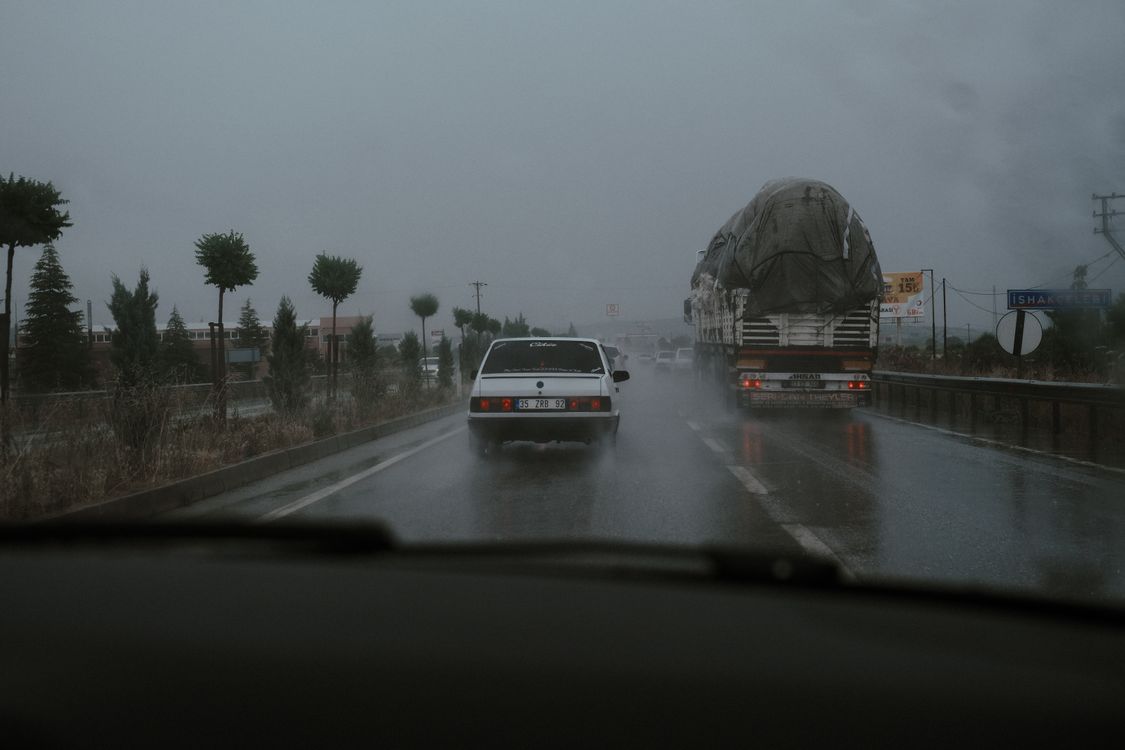
A California rain accident lawyer can prove that bad weather did not excuse a driver's unsafe choices. California drivers must slow down, increase following distance, and maintain control when rain reduces traction and visibility. When a driver ignores those duties, the rain may explain how a collision happened, but it does not erase fault.
Request a free consultation with DC Law Group if you were injured in a wet-weather collision and need help preserving evidence.
A driver can be held responsible for a rain crash when unsafe speed, poor following distance, worn tires, abrupt steering, or another careless choice contributed to the collision. Useful proof includes scene photos, witness accounts, weather records, vehicle data, tire inspections, and traffic-camera footage.
Victims can still pursue a claim when a storm contributed to the crash. The central question is whether each driver used reasonable care for the conditions. DC Law Group investigates the choices made before impact and works to preserve evidence before rain, repairs, or routine data deletion makes it harder to recover.
California Rain Accident Lawyer: Why rain does not excuse unsafe driving in California
Rainy weather often catches drivers off guard in California. While a storm might seem like an act of God, it does not free a driver from their duty to stay safe. At DC Law Group, we know that wet roads demand extra care. If you were hurt in a crash, our team can help you find out what happened.
We work on a "NO FEES UNLESS WE WIN" basis so you can get help without worry. If you need a California rain accident lawyer, we are here to fight for you. Drivers in our state must change how they drive when the clouds roll in. If you fail to slow down, you may be at fault for the crash.
Many people think they can blame the rain for losing control. But the law says you must be ready for the road as it is. A careful driver knows that a wet road needs more space and less speed. If you do not change your ways, you are not acting with fair care.
The myth of the weather defense
In many car crash cases, the other driver might say they could not avoid the crash because the road was wet. They try to use the rain as a shield. But rain is a known risk, not a surprise. A driver must always use fair care on the road. If the road is wet, you must slow down to stay safe.
They do not just keep going at the limit. A rain-related sideswipe liability often leads to side-impact or rear-end crashes that could have been stopped. When the rain starts, oil and dirt on the road mix with water. This makes the surface slick and hard to grip.
How the basic speed law works
California has a specific rule called the Basic Speed Law. This rule is in California Vehicle Code section 22350. It says you must never drive faster than is safe for the way the road looks now. This is true even if the sign says you can go 65 miles per hour.
If it is pouring rain and the road is flooding, 65 is too fast. Most crashes in bad weather happen because people do not respect this law. They think the sign is the only rule, but that is not true. Data from the U.S. Department of Transportation shows the high risk of wet roads.
Following distance and visibility
Seeing the road is hard when heavy rain hits. Windshields fog up, and spray from other cars can blind you. In these times, you must leave more space between you and the car in front. A dry road gap is not enough for a wet one because of the slick surface.Wet pavement and road spray require lower speeds and greater following distance.
Can a hydroplaning driver be held responsible?
Yes. A hydroplaning driver may be responsible when unsafe speed, worn tires, poor vehicle maintenance, or abrupt steering contributed to the loss of control. Rain does not eliminate the duty to drive carefully. The facts immediately before the skid usually determine whether the driver acted negligently.
Many people think that a car sliding on water is just bad luck. In the eyes of the law, this is rarely true. If you have been hurt in a crash, a California rain accident lawyer can help you find who is at fault. At DC Law Group, we offer a "NO FEES UNLESS WE WIN" policy so you can get help without worry. While the rain is a factor, drivers must still act with care to keep others safe on the road.
How hydroplaning happens
Hydroplaning happens when water builds up between a car's tires and the road. This thin layer of water can lift the car. When this happens, the driver loses the power to steer or brake. While the water is the main cause, the choices a driver makes often lead to the slide.
The first ten to fifteen minutes of a storm are often the most unsafe. During this time, water mixes with oil and grease on the road. This creates a slick layer that makes it easy for tires to lose their grip. A driver who does not slow down during these first few minutes may be found at fault for any crash.
Speed and car care
California law says you must drive at a safe speed for the road state. The law known as the Basic Speed Law says the posted limit is only for dry roads. If the road is wet, you must slow down to stay safe. A driver hitting a patch of water at high speed might be breaking the law. This is true even if they are below the posted limit.
Poor car care also leads to fault. Tires need deep tread to push water out of the way. If a driver uses bald tires, they are not being safe. Experts also look at the state of windshield wipers. You should buy new wipers every 6 to 12 months to make sure you can see the road. If a driver cannot see because of old wipers, they may be to blame for the crash.
Proving fault in wet weather
When a car slides, firms and courts look at the choices made before the loss of control. Did the driver slow down? Did they leave enough space? These facts help in fault in a dangerous merge. Legal teams look at all parts of the crash to see if the driver met their duty of care.
Data from the U.S. Department of Transportation shows that about 47% of weather-linked crashes happen during rain. This high number is why pros look so closely at how people drive. They check if the driver used their lights or tried to brake too hard on a turn. If you were hurt because another driver failed to adjust, you may have a strong claim.
Common forms of negligence in a rain crash
California rain can make roads slick and unsafe in just a few minutes. When a crash happens, a California rain accident lawyer looks for signs that a driver failed to act with care. Driving in the rain needs more than just staying under the speed limit. Negligence often comes from a person's choice to ignore the new risks that wet weather brings to the road. Under the law, all drivers have a duty to keep others safe by changing how they drive.
Failing to adjust speed for wet roads
The most common form of negligence in the rain is driving too fast. Many people think they are safe as long as they stay under the posted speed limit. But California law says that is not so. The Basic Speed Law needs drivers to travel at a speed that is safe for the current weather. On wet roads, a safe speed is often much lower than what the sign says. Drivers who ignore this rule put everyone around them at risk of a bad crash.
High speeds reduce the time a person has to act when they see a problem. It also makes it much harder to stop a car. Fast driving on wet roads can lead to hydroplaning. This happens when tires lose their grip on the road and slide on top of the water. When a driver loses control this way, they are often at fault for the results. Finding this type of unsafe driving in hazardous conditions involves looking at black box data and skid marks.Rain, glare, and road spray can sharply reduce a driver's visibility.
Vehicle care and poor sight issues
A driver must also make sure their car is ready for a storm. This means checking tires and windshield wipers before the rainy season starts. Worn tires do not grip the road well. They make it much more likely that a car will slide during a turn or when braking. If a driver knows their tires are bald but drives anyway, they may be found liable for a crash. Proper car care is a key part of road safety.
Poor sight is also a major factor in weather-related crashes. According to the U.S. Department of Transportation, nearly half of these crashes happen while it is raining. Drivers must use their lights and wipers to see the road and help others see them. Failing to turn on headlights in a storm is a clear sign of negligence. A lawyer can use car repair logs and photos of the scene to show these failures after a crash.Negligent ConductEvidence Used to Prove FaultSpeeding in rainPolice reports, skid marks, and GPS dataFollowing too closeDashcam clips and damage patternsWorn tire treadPhotos of tires and repair shop logsNo headlightsWitness statements and scene photosQuick lane changesTraffic camera video and black box logs
Unsafe driving moves in wet weather
Some drivers continue to follow too closely even when roads are slick. In the rain, you need more space to stop your car safely. Following too close prevents you from stopping in time if the car in front hits the brakes. This often leads to rear-end crashes that could have been stopped with a bit more care. Safe drivers leave a large gap between their car and the one ahead.
Abrupt moves like fast lane changes also cause big problems. Quick turns or hard braking can trigger a skid on wet asphalt. This is why proving fault after a dangerous merge often involves talking to those who saw the crash. They can tell if a driver was weaving through traffic or moving too fast for the rain. Safe driving means making slow and steady moves to keep tires on the ground.
Last, a driver must use their turn signals well in advance. In the rain, other drivers have a harder time seeing and acting to your moves. Giving more notice helps stop sideswipe and merging accidents. When a driver fails to signal or cuts off others, they show a lack of care for the safety of the public. These choices lead to harms on California highways every year.
What evidence proves fault after a wet-weather collision?
The strongest evidence often includes scene photographs, dashcam or traffic-camera video, witness statements, police observations, weather records, tire-condition photographs, and event data recorder information. Together, these sources can show whether a driver failed to slow down, maintain visibility, or leave enough stopping distance.
Proving who caused a crash in the rain is not always simple. In California, the law says drivers must adjust how they drive when roads are slick. A California rain accident lawyer can help you find the proof you need to win your case. Most weather-related crashes happen on wet roads. Data from the U.S. Department of Transportation shows that 75% of these incidents occur on wet pavement. You must collect many types of records to win.
Vital visual proof and reports
Photos and videos from the scene are the best way to show what happened. You should take pictures of the cars, the road, and the sky. These images show how hard it was raining and how deep the water was on the street. Video from a dash cam or a nearby store can also show if a car was going too fast for the wet roads. Visual proof shows the path each car took before the hit.
The police report is another key piece of paper. When officers arrive, they look at the scene and talk to both drivers. They may write down if someone broke the law or did not use the right evidence used in merging-crash claims. In California, you must drive at a safe speed for the current conditions. If the report says the other driver was too fast for the rain, it helps your claim.
Car state and driver data
The state of the cars can tell a lot about the crash. Tire tread is very key when it rains. If the other car had thin tires, it could not grip the wet road well. A tire check can show if the driver failed to keep their car safe. Brake tests are also useful to see if the car could stop in time. Poor car care is a common way to show evidence of careless wet-weather driving.
Many new cars have a "black box" that records data. This tool keeps track of speed, braking, and steering. It can show if the other driver tried to slow down or if they were speeding when they hit you. This data is hard to argue against because it comes right from the car. Your team can use this to show exactly what the other car was doing in the seconds before the crash.
Witness accounts and legal records
People who saw the crash can provide helpful stories. Witnesses see the crash from different angles and can say who was weaving or speeding. Their statements are neutral and carry a lot of weight with insurance firms. It is best to get their names and phone numbers right after the hit. A witness may see things you missed.
Medical files are a must for any injury claim. These records show the harm you suffered and link it to the crash. You should see a doctor as soon as you can. The files will list your hurts and the care you need to get better. Without these records, it is hard to prove how much the crash hurt you or what you lost.
When roadway drainage problems contribute to the crash
Rain often makes driving hard, but it is not always the only cause of a wreck. In many cases, a road that does not drain well adds to the danger. When water stays on the asphalt, it creates a trap for even the best drivers. If you were in a wreck, a California rain accident lawyer from DC Law Group can check if a road defect caused the crash. We focus on finding out why the road was not safe for the current weather.
Standing water and hydroplaning risk
Poor drainage leads to deep pools of water on the freeway. This standing water often causes tires to lose their grip and slide. This dangerous event is called hydroplaning. It can happen even if you are driving at a normal speed. According to the U.S. Department of Transportation, about 47% of weather-related crashes happen during rainfall. When drains are clogged or roads are not sloped right, the risk of a crash goes up for everyone on the road.
Standing water is one of the top environmental hazards on California highways. If a road crew does not clear out debris from storm drains, the water has nowhere to go. This makes the road much more slick than it should be. Drivers may not see the deep water until it is too late to slow down or steer away. In some cases, the water can be deep enough to stall a car or cause a driver to spin out of control.
Why road design and repair matter
Roads must be built to handle heavy rain. This means they need a slight curve, or "crown," to push water to the sides. If the design is poor, water will sit in the middle of the lane instead of flowing away. A road crew may also make a mistake that leaves the road surface uneven. These flaws can turn a normal rainy day into a scene for a multi-car pileup. Poor lighting can also make it harder for you to see these hazards in time.
Keeping up with road repairs is also key to keeping drivers safe. Cities and states must fix ruts and holes that can hold water for hours. If a public agency knows about a bad drain but does not fix it, they may be at fault for a crash. Proving this fault takes a deep look at repair logs and old road plans. This is a key part of the how a car accident claim proceeds involving road defects. Our team looks for a history of past wrecks in the same spot to show the road was not safe.
Filing claims against a government agency
When a road defect causes a crash, a public entity may be liable for the harm. This could be a city, a county, or a state group like Caltrans. However, these cases are not like a normal claim against another driver. Strict rules apply when holding a government entity responsible for a "dangerous condition of public property." You must show that the agency knew about the risk, or should have discovered it through regular inspections.
The most important rule is the short time limit for these claims. In California, you usually have only six months from the date of the crash to file a formal notice. If you miss this date, you could lose your right to get any help with your medical bills or car repairs. A legal team can help you find the right agency and file the forms on time. We also work fast to save video from nearby cameras or take photos of the road before it is fixed.
What should you do after a rain-related crash?
A car crash in the rain can leave you in shock. Wet roads and low light make it hard to see what happened. But the steps you take now are vital for your health and your case. If you need help with the what to expect during an injury claim, talk to a pro. A California rain accident lawyer can help you through this hard time. At DC Law Group, we offer a "NO FEES UNLESS WE WIN" policy to help you recover.
Stay safe and gather proof
The main thing is to stay safe. Rain makes roads slick and stops cars from braking fast. Other drivers may not see your wrecked car through the rain. Check yourself and your friends for hurts. If anyone is in pain, call 911. Move your car to the side of the road if you can do so safely. This keeps other cars from hitting you. Turn on your hazard lights so people can see you in the rain.
Once you are safe, record what happened. Rain can wash away clues like skid marks or debris. You must act fast to save proof. According to the U.S. Department of Transportation, about 21% of all car crashes are linked to weather. Take photos of the cars and the road. Show the rain, the wet road, and any puddles. These photos help prove who was at fault when the road was slick.
Follow these steps in order
Check for hurts and call 911 if you or others need help.Move your car to a safe spot away from traffic if possible.Take photos of the scene, the cars, and the wet road.Swap contact and insurance info with the other drivers.Get contact details from any witnesses who saw the crash.Visit a doctor to check for injuries even if you feel fine.Speak with a lawyer to learn about your rights after the wreck.
Know the local laws
Proving who caused a crash in the rain is hard. A driver might say the rain was to blame, not their driving. But California law says drivers must slow down in bad weather. This is the Basic Speed Law. It means you must drive at a safe speed for the road state, no matter what the sign says. A driver who does not slow down for slick roads may be at fault.
When it first rains, oil on the road makes it very slick. This oil can cause cars to slide even at low speeds. Your lawyer will look at these facts to help build your case. They will check if the other driver was going too fast for the wet road. If you were hurt because of someone else's poor choice, you have rights. A lawyer can help you hold the other driver liable for their acts.
Take care of your health
Some hurts do not show up right away. You might feel fine at the scene, but pain can start later. Rain-related crashes often involve sudden stops. This can cause neck or back pain. See a doctor as soon as you can. A medical report is a key piece of proof. It shows that the crash caused your hurts. If you wait too long, the insurance firm might say you were not really hurt.
Taking care of your health also helps your legal case. A pro can help you get care while they handle the legal side. This lets you focus on getting better while they work for you. They can talk to the insurance firms and fight for what you need.
Frequently Asked Questions
Is a storm an "act of God" in a California crash claim?
No. In most cases, rain is not an "act of God" that clears a driver of fault. This term is for rare events that no one could plan for. Since rain is common, California law says drivers must plan for it. You have a duty to slow down when roads are wet. As noted by the U.S. Department of Transportation, many weather crashes occur in the rain. Drivers who fail to adjust are still to blame for the harm they cause.
Can I get help if I was partly at fault for a rain accident?
Yes. California uses a law called pure comparative fault. This means you can still get payment for your harm even if the crash was partly your fault. If you were found at fault, your final check will be cut by that same amount. For instance, if you are found ten percent at fault, you would get ninety percent of the total losses. A lawyer helps you show that the other driver did not use care in the rain.
What should I do right after a crash in the rain?
Move your car to a safe area away from traffic if you can. Call 911 so the police can come to the scene. Take photos of the road, the rain, and both cars to show the state of the crash. Get the names and phone numbers of people who saw what took place. Do not tell the other driver that the crash was your fault. Call a lawyer to help you talk to the insurance firm and protect your rights.
Do insurance firms treat rain accidents differently?
Insurers often try to blame the storm for the crash. They may claim that the rain was an event no one could avoid. This helps them deny your claim or pay you less for your harm. A lawyer can use facts to show the other driver was not being safe. We look for signs like high speed or bald tires. Our team fights to show the driver failed their duty to act with care even when the weather was poor.
Ready to prove fault in your weather-related crash?
Time-sensitive proof can disappear quickly after a rain crash. Water can wash away road marks, damaged vehicles may be repaired, and electronic data may be overwritten. DC Law Group can help preserve police reports, witness accounts, vehicle records, and other evidence while it is still available.
Contact DC Law Group to request a free consultation about your rain accident claim.