
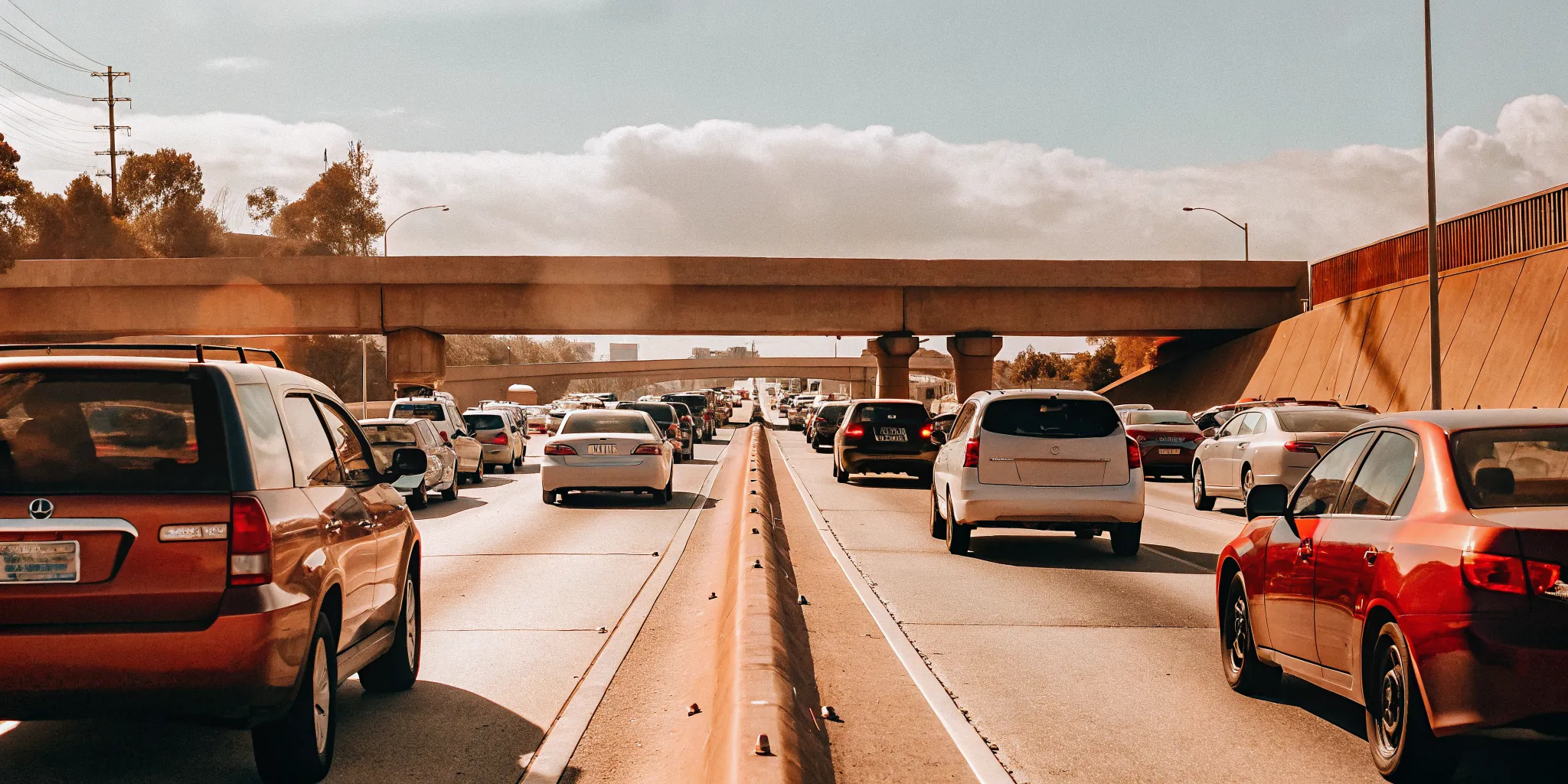
A freeway merge crash can happen in seconds, but the fault dispute can last for months. One driver may say the merging car cut in too soon. The other may say traffic sped up, the lane ended without warning, or the through driver drifted into the merge lane. A California merging accident lawyer studies the lane layout, vehicle damage, video, witness accounts, and right-of-way rules. This work can stop an insurer from locking in a one-sided version of the crash.
If you were hurt in a merge crash, contact DC Law Group for a free consultation before giving a recorded statement.
A California merging accident lawyer helps injured drivers prove who had the right-of-way, who changed lanes unsafely, and whether both drivers share fault. In freeway merge cases, liability usually turns on signals, safe speed, lane position, traffic conditions, and evidence from the crash scene.
Proving liability is the key step after a crash. Start with the rules that define who is usually at fault in a merge collision.
California merging accident lawyer: Who is usually at fault?
Fault usually starts with the driver who entered the lane, but it does not always end there. California merge cases require a fact-by-fact review of who had the right-of-way, who signaled, who maintained a safe speed, and whether either driver made the collision unavoidable. DC Law Group reviews these details closely so the insurance company cannot reduce a valid claim with an unsupported blame argument.
The duty of the driver who merges
In most cases, the driver who is joining the road must yield. Under California Vehicle Code 21804, any driver joining a highway must yield to nearby traffic. The entering driver should wait for a safe gap before moving into the lane. Cars already in the lane have the right to keep their path. A merging driver should match the speed of the traffic to enter safely. This helps avoid a crash where one car hits another.
Safe lane changes and signals
Other drivers on the road should also follow safety rules. Each driver should check that a lane change is safe before they move. They should also give a clear signal before they turn or change course. This signal warns other people and helps stop a sideswipe crash. If a driver speeds up to block a car or shifts lanes without a sign, they may share the blame. We look at every fact to find who is truly at fault.
Road lines and lane marks
Lines on the road help keep drivers safe on the freeway. Large broken lines show that a lane will soon end or merge. When you see these, you should get ready to move. You should not cross double solid white lines. These lines act as a wall to keep cars in their lanes. They are often found near ramps where cars enter and exit. If a driver crosses these lines, they break the law. This can cause a rear-end crash in heavy traffic. You can see how DC Law Group works for each motor vehicle collision client on our site.
Shared fault and state law
California uses a rule where more than one person can be at fault. This is known as pure comparative fault. It means that both drivers might share the blame for a crash. A judge or a decision-maker may assign a part of fault to each driver. If you were partly at fault, you can still recover compensation. Your total recovery will be cut by your share of the blame. It is vital to have a strong case from the start.
Common freeway merge scenarios a California merging accident lawyer reviews
Freeway merge liability is most contested when lane markings, traffic speed, and driver timing are unclear. A lawyer reviews whether the crash involved an on-ramp entry, a lane reduction, a zipper merge, a sudden lane change, or a driver who blocked a safe merge.
On-ramp entry and right of way
One common case involves a car entering the freeway from an on-ramp. Drivers must join fast-moving traffic while checking their blind spots. Under California Vehicle Code 21804, the driver entering the highway must yield the right-of-way. They should wait for a gap that is safe enough to join without causing a threat. This rule keeps the flow of the main road steady. Merging drivers should also match the speed of traffic.
But disputes often start when the freeway driver speeds up or blocks the gap. If the merging car hits another vehicle, the law usually looks at the driver entering the road first. But if the other driver was reckless, they might share the blame. Some drivers even "gatekeep" by not letting others in. This can lead to road rage or sudden stops. These actions make it hard to avoid a hit. This is why these cases need a close look at all driver moves.
Lane reductions and ending paths
Lane ends are another place where crashes happen. You may see large broken white lines on the road. These marks show that a lane will soon end. Drivers should move over as soon as it is safe. If a driver waits until the last second, they might force their way into a small space. This move can lead to a sideswipe accident claim. These hits often cause cars to spin or hit the guardrail.
Sometimes road work or stalls lead to a closed lane. Drivers must merge out of the closed path with care. If a driver crosses a double solid white line, they break the law. These lines act as a wall that you should not cross. A crash in these areas often involves one car hitting the side or corner of another. Both drivers might claim the other one "came out of nowhere." This leads to a complex fight over who is to blame. Many of these crashes happen near big exits or city splits.
Stop and go traffic impacts
In busy cities, merging often happens in heavy traffic. Cars may move slowly or stop and start. Drivers may try to "zip" into a tight spot to save time. This often leads to a sudden stop. If the driver behind is not ready, a crash will occur. These hits often result in a rear-end accident lawyer California claim. This is very common during rush hour on routes like I-5 or US-101.
Chain reaction crashes can also start in these zones. One small bump can push cars into each other. This creates a mess of claims and insurance talks. Victims may face high medical bills and lost wages. DC Law Group helps clients coordinate medical care, vehicle issues, and available support during recovery. California uses a rule called shared fault. This means each driver gets a score for their share of the blame. Even if you were part of the crash, you might still get help for your losses.
Freeway merge claims often turn on lane position, signal use, speed, and traffic-camera evidence.
What evidence does a California merging accident lawyer use to prove fault?
Proving who is to blame after a freeway crash is often hard. On busy roads like I-5 or the 101, cars move fast and lanes change quickly. To win a case, a California merging accident lawyer must find proof that shows the other driver was at fault. Because California uses comparative fault rules, more than one driver can share the blame. This means you need strong facts to protect your rights and get help as you heal.
Visual proof from the scene
Photos and video are the best tools to show what happened. If you have a dashcam, the video can show if a driver failed to signal or cut you off. You should also take photos of the road. Look for large broken white lines that mark where lanes end. These marks help show where each car was right before they hit. If a driver crossed a double solid white line near a ramp, they may have broken the law.
The damage to the cars also tells a story. A sideswipe accident claim often leaves long scrapes on the doors. These marks can show which car moved into the other's path. Your lawyer will look at the angle of the hit to find out who had the right of way. Under state law, a driver must make sure a lane change is safe before they move. If they did not check their blind spot, the damage to their own car might prove it.
Official reports and vehicle data
A police report is a key piece of paper in any claim. When officers come to the scene, they write down what they see and what people say. They might cite a driver for breaking California Vehicle Code 21804. This law says drivers entering a highway must yield to traffic that is already there. If the police report says the other driver did not yield, it helps your case a lot.
Other data can also help. Many new cars have a "black box" that records speed and braking. This data can show if a driver sped up to block you or did not slow down. Witness statements are also helpful. People who saw the crash can tell the truth about what they saw. Phone records can show if a driver was on their phone when the merge happened. This proves they were not looking at the road.
Your health files also show the force of the crash and how it hit your body. For example, a neck injury might show you were hit from the side. Our team at DC Law Group uses these files to build a full picture of your loss. David Cohan handles cases himself to make sure every detail helps you. We work to get you the support you need for doctor bills and lost wages.
How to protect your evidence
You should act fast to keep proof. Video can be taped over, and skid marks on the road fade in the rain. Here are steps you should take right after a crash:
- Call the police so they can write a report.
- Take clear photos of all cars and the lane markings.
- Get the names and phone numbers of any witnesses.
- Keep every bill from the doctor and the repair shop.
- Talk to a lawyer before you give a statement to an insurance firm.
We help with each part, from fixing your car to paying your bills. There are no fees unless we win for you. This lets you focus on getting better while we find the proof for your claim. If you were hurt on a freeway, we can help.
Photos of lane markings, vehicle damage, and merge location help explain who had the safer path.
How comparative fault can affect a merging accident claim
California law uses a "pure" comparative fault system. This means more than one driver can share the blame for a crash. In a freeway merge, finding who is at fault is rarely simple. An insurance company might say you are partly to blame to reduce your recovery. A skilled California merging accident lawyer helps you fight these claims. They work to show the other driver's errors caused the wreck.
The role of pure comparative fault
California uses a "pure" comparative fault system for crash cases. This rule lets you seek a check even if you were partly to blame. It is much more fair than states where any fault stops your claim. But the amount you get will drop based on your fault share. If a jury finds you were 10 percent at fault, you only get 90 percent of the value.
Finding the right fault split is often a tough fight. The other driver's insurance firm will try to push more blame onto you. They want to pay out less of their own funds. Your legal team must use facts to prove you were driving with care. This work helps you get enough to cover your needs while you heal.
Examples of shared blame in a merge
Most drivers assume the person entering the freeway is always to blame. The driver entering the highway must yield to cars already there. But the through-lane driver still has a duty to drive safely. They cannot speed up just to block you or drive while looking at a phone.
Many California sideswipe motor vehicle collision cases involve shared fault. One driver might try to merge too soon, while the other is driving too fast for the lane. When both cars move at once, the blame might be split fifty-fifty. A good lawyer will look for proof that the other car had time to slow down or move over. If they had a chance to avoid the crash but did not, they share the blame.
Protecting your right to a full recovery
You should act fast to protect your claim after a highway crash. Evidence on a busy road can disappear in just a few hours. Skid marks fade and cars get fixed. To get a fair result, you need to show what really happened. This is why having a California merging accident lawyer on your side is so helpful.
Your legal team will collect all the facts to build your case. They look for video from nearby cameras and talk to people who saw the crash. They also check the car's sensors for data on speed and braking. This proof helps stop the other side from making up a story. By showing the truth, you can fight back against false claims that you were to blame. This hard work leads to a better outcome for you and your family.
Scenario.Likely fault issues.Useful evidence.Driver speeds up to block a merge.Failing to yield to a merging car.Dash cam video of sudden speed.Merging car cuts across double lines.Illegal lane change over barriers.Photos of road paint and debris.Sudden stop in a merge lane.Following too close for traffic.Brake marks and rear-end damage.No signal while entering freeway.Failing to warn others of movement.Witness notes and sensor data.
What should injured drivers do after a merging crash?
A merging crash on a busy freeway can be scary and confusing. You may feel shaken, but the actions you take in the next few minutes and days are vital. Taking the right steps helps protect your health and your legal rights. If you wait too long to act, you might lose key proof needed for your claim. This proof is needed to get help with your medical care and lost wages.
Stay safe and report the crash
The first goal is always safety. California roads move fast, and a stopped car in a merge lane is a hazard. You should try to move to a safe spot if your car still works. Once you are safe, you should report the crash. The firm provides full support for medical bills and vehicle repairs. Under California law, you should report any crash with injuries to the police or the Highway Patrol right away. This report will be a key piece of data for your case.
1. Check for injuries and stay safe. Look at yourself and your riders for any hurt. If anyone needs help, call 911 now.
2. Call the police to the scene. A police report shows who failed to yield the right-of-way as required by California Vehicle Code 21804.
3. Gather proof at the site. Take photos of the cars and lane markings to show how the other driver failed to follow merging safety rules.
4. Get a medical checkup. See a doctor even if you feel fine. You need a record that links your hurts to the crash so you can get help with bills.
5. Avoid giving recorded statements. You should tell your own insurance company about the crash, but do not give a recorded talk without help.
6. Talk to a California merging accident lawyer. At DC Law Group, we manage the legal claims process while you focus on healing.
How to protect your legal claim
The steps you take after a merge crash set the stage for your healing. In California, many people may share fault for a crash. This is called comparative fault. A lawyer helps prove that the other driver was the one who caused the harm. They look at things like speed, signals, and lane use to build your case. This is much like how fault is found in a lane-change collision cases.
Working with an expert keeps you from making mistakes that could hurt your case. For example, some drivers wait too long to get medical help. This makes it look like they were not really hurt. By seeing a doctor and a lawyer early, you show that you are taking your healing seriously. Our firm works on a model where we only get paid if we win for you. You can call us anytime for a free talk about your case.
How a lawyer helps when an insurer disputes a merge crash
Merging onto a fast California freeway is hard. It is even harder when a crash happens and the other driver's insurance firm blames you. If you were hurt, you need a lawyer who knows how to fight back. A legal claims process can guide you through these tough steps. They help find the truth and show who really caused the wreck. This is vital when the other side tries to shift the fault to you.
Checking the facts of your merge crash
A California merging accident lawyer starts by looking for proof. Insurance firms often claim the person merging did not yield. But the law is clear. Under California Vehicle Code 21804, drivers must yield to traffic that is close enough to be a hazard. Your lawyer will look at skid marks, car damage, dashcam video, traffic camera footage, and repair records. They search for data that shows you had the right of way. They also check if the other driver was speeding or on their phone.
Witnesses are also key to your case. A lawyer talks to people who saw the crash before they forget. They may hire experts to rebuild the scene using science. This help is vital when two stories do not match. By building a strong file of facts, your lawyer makes it hard for an insurer to deny your claim. They also get the police report to see what the officer wrote at the scene.
Stopping blame from insurance firms
In California, insurers use a rule called shared fault. This means they try to put some of the blame on you. They do this to lower the amount they have to pay out. They might say you did not use a signal or that you cut someone off. A lawyer knows these tricks. They protect you from saying things that could hurt your case. They handle all the calls and emails so you can stay calm and heal.
Your lawyer also looks at your health files with care. They work to show how the crash changed your life. They do not just look at your health today. They look at what you will need for your care in the years ahead. They also track the time you could not work. This makes sure the firm sees the full scope of your losses. You should not have to fight a large firm on your own while you are in pain.
Building your case with strong proof
If the insurance firm will not pay a fair amount, a lawyer prepares for court. They gather all the records and sort them for a judge. This includes doctor notes and proof of your missed work. Having a pro on your side shows the insurer that you are serious. Most cases settle before court, but being ready for a trial is the best way to get a good result. It puts pressure on the insurer to act in good faith.
Your lawyer will manage the complex legal dates and rules. They make sure every form is right and sent on time. This takes the weight off your back. With a lawyer, you have a team that wants the best for you. They work on a model where you owe no attorney fees unless they win your case. This lets you get top legal help without worry about how to pay for it right now. They keep you updated at every step of the way.
Frequently Asked Questions
Who is at fault in a merging accident in California?
In California, the driver who joins a new lane generally should yield. Fault often lies with the person who moves from a set path without making sure it is safe. Yet, the other driver might also share blame if they speed or block the path. Legal blame depends on the facts of the crash. A lawyer can help identify who is at fault and protect the claim from unfair blame.
What is California Vehicle Code 21804 regarding merging?
Per CVC 21804, any driver about to enter a highway must yield. This rule applies to cars coming from public roads, private lots, or small paths. The entering driver should wait until traffic is far enough away to move without creating a hazard. If you pull out and cause a crash, that driver may be held at fault for the wreck.
What does California law say about lane changes and merging safety?
Under CVC 22107, you should signal before you turn or change lanes. You should only move your car once you are sure it is safe to do so. This law aims to stop sideswipe and rear-end crashes on busy roads. If you fail to use a blinker or merge when a lane is full, that violation may support a fault finding.
How does comparative fault work in a California merging accident?
California uses a rule called comparative fault. This means that more than one driver can share blame for a crash. If you were ten percent at fault, you might only get ninety percent of your award. These cases can be hard to prove since both drivers often say the other was wrong. A lawyer can use dashcam footage, police reports, photos, and witness statements to show the truth.
How does hiring a California merging accident lawyer work?
Many injury firms use a contingency arrangement, which lets a client begin a case without paying a retainer. The firm is paid only after a successful recovery. This helps crash victims get legal help while they are still dealing with treatment and insurance problems. At DC Law Group, we offer a free review to help you understand your legal paths.
Talk to DC Law Group about your freeway merge crash
If a freeway merge collision left you hurt, do not let an insurer decide the story before the facts are gathered. DC Law Group can review the lane change, the damage pattern, the medical record, and the driver statements so the claim is built on proof.
Schedule a free consultation with DC Law Group to discuss what happened and what steps may protect your injury claim.