
What Happened?
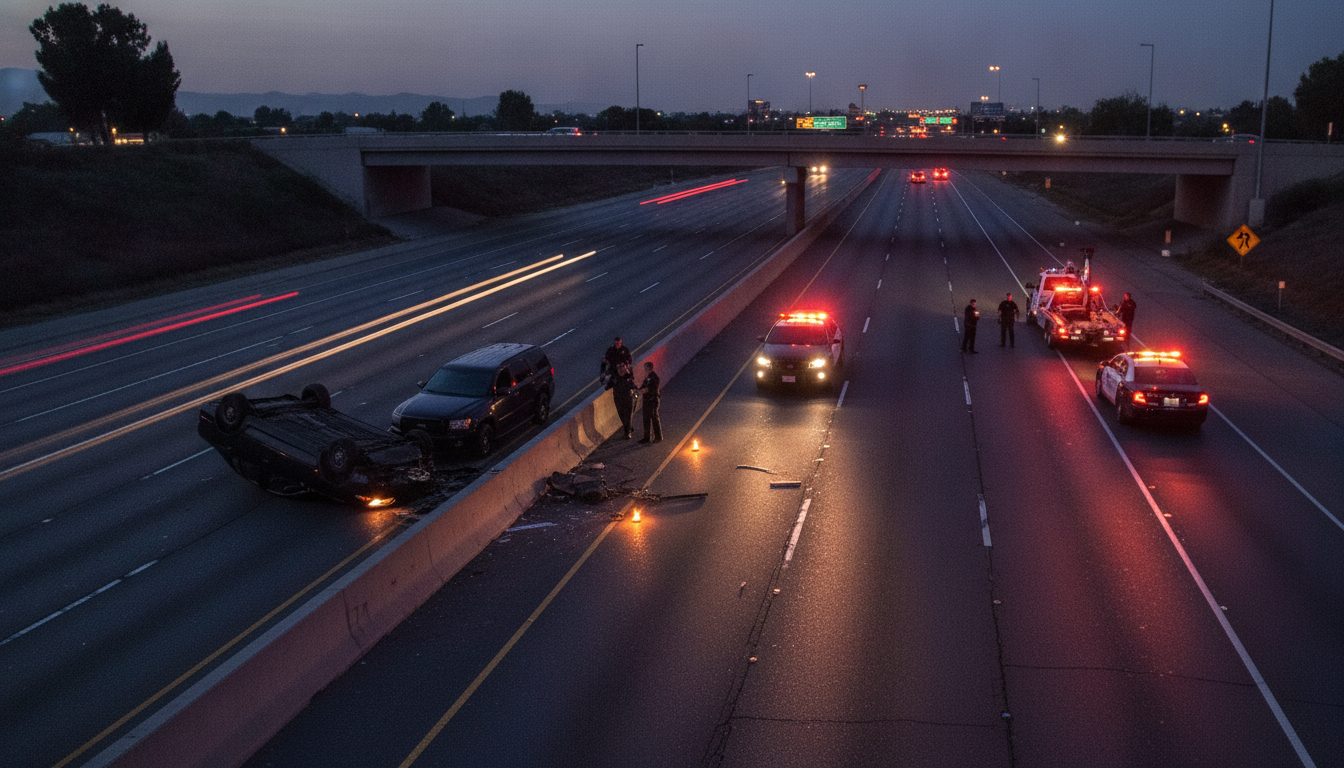
On August 16, 2026, a 24-year-old woman was killed when she was ejected from a sedan during a high-speed multi-vehicle crash on the northbound Escondido (215) Freeway in Perris, according to the California Highway Patrol. CHP officers were called to the northbound lanes of the freeway, north of the Ramona Expressway, at around 12:20 a.m. for reports of a two-car crash. Their preliminary investigation revealed that a 2008 Mazda 3 was traveling at a high rate of speed when it lost control, left the roadway, and collided with the guardrail in the center median. The impact caused the Mazda to overturn onto its roof and come to rest in the left-most lane, where it was immediately struck by a 2015 Ford Explorer that was traveling in the same lanes. An occupant of the Mazda was ejected from the vehicle during the crash sequence and sustained fatal injuries. The victim was identified by the Riverside County Sheriff's Coroner as 24-year-old Valerie Martinez of Moreno Valley, who was the registered owner of the Mazda; officials said it was not immediately clear whether she was the driver or a passenger. The other occupant of the Mazda sustained moderate injuries and was transported to a local hospital, while the two occupants of the Ford were uninjured. CHP said alcohol was a factor in the crash, and the Ford occupants were not under the influence. Authorities asked anyone with information to contact the CHP Accident Investigation Unit.
If you or a loved one has been hurt or lost a family member in a serious vehicle crash in Southern California, contact DC Law Group at (310) 571-8860 for a free consultation about your legal rights.
Why Are High-Speed Freeway Crashes Especially Dangerous?
Collisions involving a vehicle that loses control at high speed are among the most dangerous events on a California freeway. When a car leaves the roadway at speed and strikes a fixed object such as a concrete center-median guardrail, the force of the impact can cause the vehicle to roll over, and an occupant who is not properly restrained can be ejected from the vehicle entirely. Ejection from a vehicle is associated with a dramatically higher risk of catastrophic or fatal injury because the body is exposed to the full force of the crash instead of being protected by the vehicle's structure and restraint systems. In this incident, the Mazda overturned onto its roof and was left in the left lane, where a trailing SUV struck it moments later, compounding the danger for everyone inside. High-speed freeway collisions also leave little time for other drivers to react, and a crash that unfolds across multiple lanes can place uninvolved motorists at risk as debris and disabled vehicles occupy the travel portion of the roadway.
What Legal Options Exist After a Fatal High-Speed Collision?
Under California law, the surviving family of a person killed in a collision caused by another driver's negligence may be able to pursue a wrongful death claim for funeral and burial expenses, the value of the support and household services the deceased would have provided, loss of companionship, and other damages recognized under California law. A person who survives with serious injuries may have a separate personal injury claim for medical expenses, lost wages, pain and suffering, and other losses. Liability in a high-speed crash can turn on whether a driver was negligent by driving at an unsafe speed, losing control, or otherwise breaching the duty of care owed to other road users. When alcohol is a factor, it can strengthen a negligence case against the impaired driver under California law, and comparative fault principles may apportion responsibility among the parties involved based on the specific facts of the incident. Preserving evidence, including the final resting positions of the vehicles, dashcam or traffic-camera footage, and the official CHP report, can be important to an investigation.
What Should Someone Do After a High-Speed Freeway Crash?
A person who survives a high-speed collision should seek medical care immediately, follow all treatment recommendations, and keep records of every doctor visit, procedure, and medication. Some serious injuries, including internal injuries and head trauma, may not present symptoms right away, so a prompt medical evaluation is important even when injuries feel minor. Those involved should also preserve photographs of the scene, witness contact information, insurance details, and any available video, and should not speculate publicly about fault while the investigation is still underway. California generally allows two years to file a personal injury lawsuit and two years for a wrongful death action, though claims involving a government entity may be subject to a shorter administrative deadline. Consulting an attorney soon after a crash can help a family understand which deadlines and rules apply to their situation.
Frequently Asked Questions
Why does a driver who loses control at high speed face liability?
Under California law, every driver owes a duty of care to others on the road. Driving at an unsafe speed for the conditions, failing to maintain control of a vehicle, or drifting off the roadway can amount to negligence if it causes harm. When alcohol is a factor, it can support a finding that the driver breached the duty of care owed to other road users.
Does being ejected automatically make a crash fatal?
No, but ejection greatly raises the risk of severe harm. An occupant thrown from a vehicle is exposed to the full force of the crash and to the surrounding roadway environment, which is why safety systems and restraint use so strongly influence the severity of injuries in collisions that involve rolling over.
Can a family recover if the driver who lost control was also killed?
Possibly. Liability can extend to an at-fault driver even when that driver is also injured or killed, and an estate or insurer may be responsible for damages. The specific facts, including whether alcohol was involved and how fault is apportioned among the parties, shape what recovery may be available.
Summary
A 24-year-old woman died early Sunday, August 16, 2026, when a car being driven at a high rate of speed lost control on the northbound 215 Freeway north of the Ramona Expressway in Perris, struck a center-median guardrail, overturned onto its roof, and was struck by a passing SUV, according to the California Highway Patrol. The victim was ejected and suffered fatal injuries, and she was identified as Valerie Martinez of Moreno Valley. Another occupant of the car was moderately injured, and the two people in the SUV were uninjured. CHP said alcohol was a factor in the crash. High-speed freeway collisions carry a grave risk of ejection and death, and families and survivors affected by such a crash may have legal options that a personal injury attorney can help them understand.
REQUEST A FREE CONSULTATION