
What Happened?
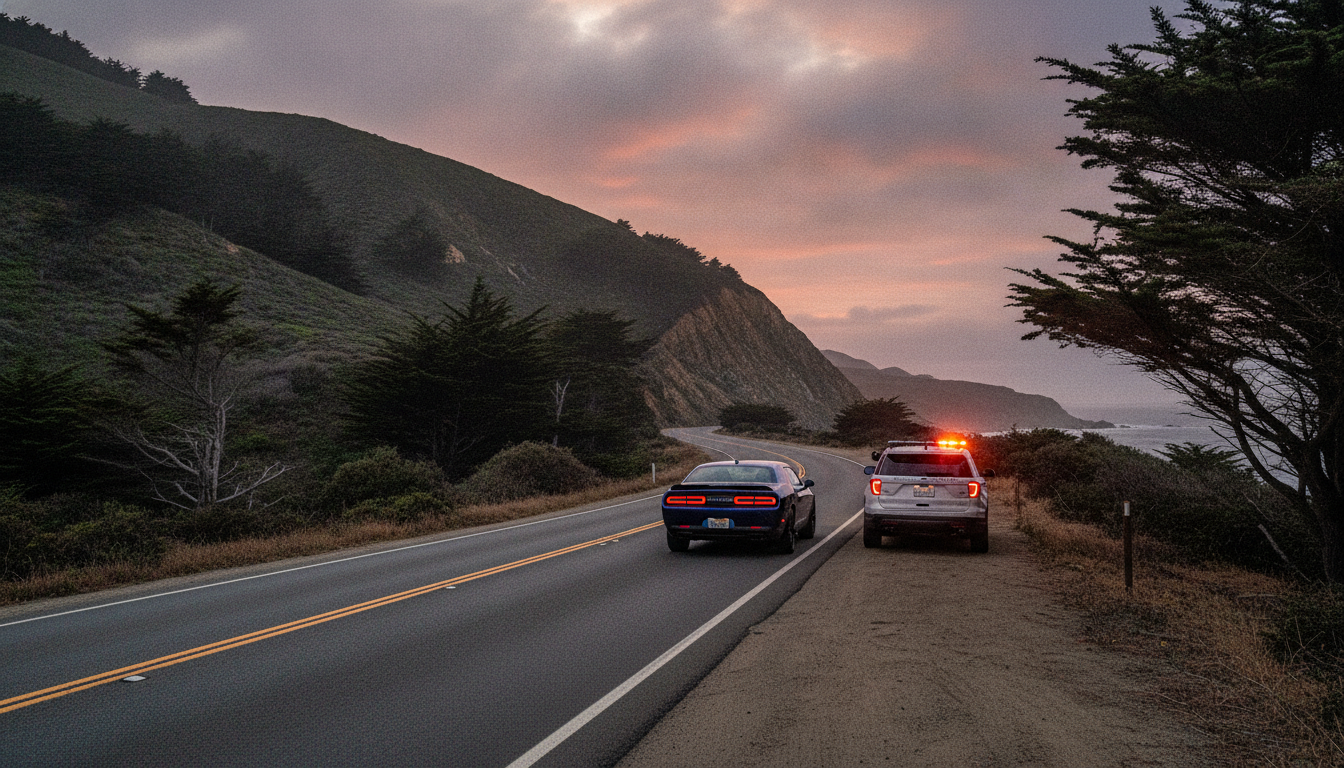
On August 15, 2026, a 47-year-old Big Sur man died after being struck by a vehicle while crossing Highway 1 near Palo Colorado, according to the California Highway Patrol. CHP Monterey said the crash occurred at approximately 8:23 p.m. on the northbound side of the highway. Investigators reported that a 20-year-old Fresno man was driving a Dodge coupe northbound when the pedestrian was walking west across the highway, and the Dodge struck the pedestrian. The injured man was transported to a local hospital, where he later died from his injuries. His identity was not immediately released.
If you or a loved one has been hurt in a pedestrian or vehicle crash in California, contact DC Law Group at (310) 571-8860 for a free consultation about your legal rights.
CHP said alcohol and drugs do not appear to have been factors in the crash. The agency reminded the public that increased traffic in the area from car week and the timber fire made extra caution important when crossing roadways. The crash remained under investigation by the California Highway Patrol as of the evening the collision occurred.
Why Are Pedestrian Crashes on Rural Coastal Highways Especially Dangerous?
Rural coastal highways like Highway 1 near Big Sur present unique dangers for pedestrians because segments are narrow, winding, and largely unlit after dark. Drivers approach curves without illuminated crosswalks or sidewalks, and visibility can drop sharply at dusk and into the evening. A pedestrian crossing between segments of the road may be hard to see until a vehicle is very close, leaving little time for a driver to react or brake.
This stretch of Highway 1 also sees heavy seasonal traffic, including events such as car week and wildfire-related movement in the area, which bring more vehicles and more people walking near the roadway at the same time. When a pedestrian is struck at highway speed, the resulting injuries are frequently severe or fatal because there is no protective structure around the person to absorb the force of the impact.
What Legal Options Exist After a Fatal Pedestrian Crash in California?
Under California law, the family of a person killed in a pedestrian crash may be able to pursue a wrongful death claim against a driver whose negligence caused or contributed to the collision. A claim can seek compensation for funeral and burial expenses, the value of household and financial support the deceased would have provided, loss of companionship and consortium, and other damages recognized under California law.
A person who survives with serious injuries may have a separate personal injury claim for medical expenses, lost wages, pain and suffering, and other losses. Because liability in a pedestrian crash can depend on where the pedestrian was crossing, the lighting and road conditions, whether the driver had time to see and avoid the pedestrian, and whether alcohol or drugs were involved, preserving evidence matters. Photographs of the roadway, the final position of the vehicle, any available dashcam or traffic camera footage, and the official CHP report can all help an investigation.
What Should a Family Do After a Fatal Pedestrian Crash?
After a fatal pedestrian crash, prompt action can protect a family's legal rights. Families should consider asking that the vehicle be preserved and inspected, seeking traffic or dashcam footage from nearby sources, and obtaining the CHP accident report as soon as it becomes available. Documenting the location, lighting, and weather conditions at the time of the crash can also be valuable during an investigation.
How Can a Pedestrian Injured in a Crash Protect Their Claim?
A pedestrian who survives a serious collision should seek medical care immediately, follow all treatment recommendations, and preserve records of every doctor visit, procedure, and medication. In California, a pedestrian who is hit while lawfully using a marked crosswalk generally holds strong rights, but the specific facts of each incident determine how fault is assessed. Keeping photographs, witness contact information, and insurance details, and avoiding public statements about fault while an investigation is open, can help preserve a claim.
Frequently Asked Questions
What should I do if I or a family member is hurt in a pedestrian crash?
Seek medical care first and call law enforcement to document the scene. Obtain the names and contact information of witnesses, preserve any available video or photographs, and request a copy of the police or CHP report once it is released. Prompt action protects evidence that can matter to a claim.
How long do I have to file a claim after a pedestrian crash?
California generally allows two years to file a personal injury lawsuit and two years for a wrongful death action in court, though claims against a government entity for a dangerous roadway condition can require a much shorter administrative deadline. Consulting with an attorney soon after the crash can help a family understand which deadlines apply to their situation.
Does crossing outside a crosswalk automatically bar a pedestrian claim?
No. A pedestrian who crosses outside a marked crosswalk can still have a claim if the driver was negligent, such as by failing to maintain a proper lookout or driving too fast for conditions. Comparative fault rules can reduce a recovery rather than eliminate it, and the specific facts of the incident determine how liability is assigned.
Summary
A 47-year-old Big Sur man died after being struck by a Dodge coupe while crossing Highway 1 near Palo Colorado on the evening of August 15, 2026. The California Highway Patrol was investigating the crash and said alcohol and drugs did not appear to be factors. Families affected by a serious pedestrian collision may have legal options, and preserving evidence and acting promptly can help protect their rights.
REQUEST A FREE CONSULTATION