

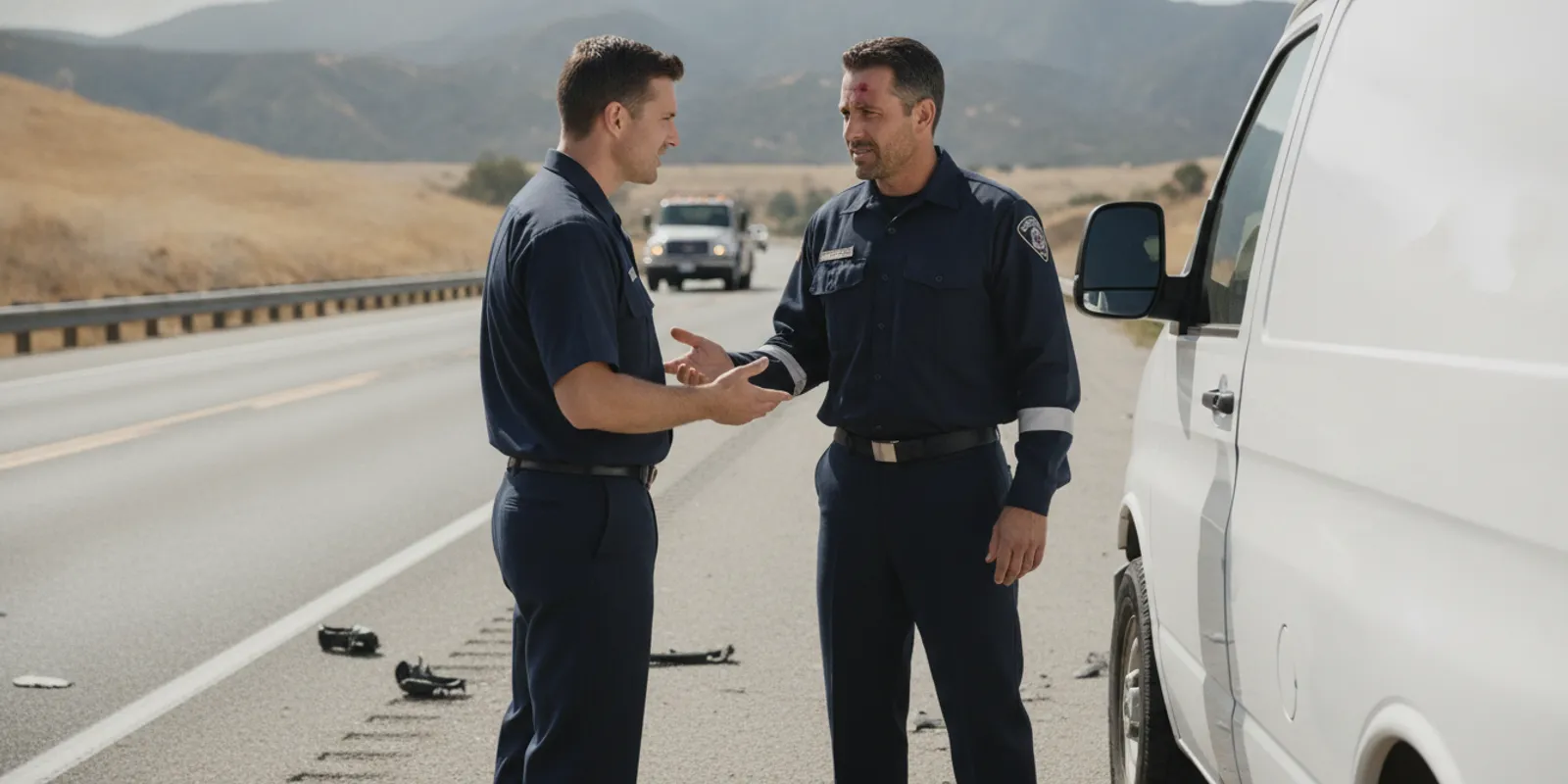
Knowing how to claim for injury from a company vehicle starts with protecting your health and preserving a clear record of what happened. A work van, delivery truck, or employee’s personal car used for work can raise questions about the driver, employer, and insurance coverage. DC Law Group's personal injury representation can help you sort the next steps. The right process depends on the facts, so avoid guessing about responsibility or signing documents before you understand them.
Request a free consultation with DC Law Group
What makes a company vehicle claim different?
A collision involving a vehicle used for work may involve more than one insurance policy. The driver may have personal auto coverage. An employer may carry a commercial policy. If you were working when hurt, workers’ compensation may be another separate process. Which policies apply depends on how the vehicle was being used, who owned it, the driver’s work status, and the facts of the collision.
Do not assume that a company name on a door proves the employer is responsible. Nor does a personal vehicle automatically mean that only the driver’s policy matters. A vehicle may be owned, leased, rented, or used under a work arrangement. Records about the trip and the driver’s duties can help clarify those issues.
A company vehicle accident guide explains that workers’ compensation generally addresses an employee’s own work injury, rather than serving as a standard auto claim. That distinction is a starting point, not a conclusion about every case. The details of the collision and the person’s role matter.
What should you do immediately after the collision?
First, get to a safe location if you can do so without worsening an injury. Call emergency services when anyone needs urgent help or the scene presents a danger. Follow medical instructions and arrange an evaluation for symptoms, even if they seem manageable at first. Some injuries are not obvious at the roadside.
- Exchange names and contact details with the driver and other involved people.
- Record the company or fleet name, vehicle description, license plate, and any unit number that is visible.
- Ask witnesses for a name and a reliable way to reach them.
- Photograph vehicle positions, damage, road conditions, traffic controls, and visible injuries when it is safe.
- Note the time, location, direction of travel, weather, and what you remember about the events.
- Request an incident or police report number if an officer responds.
Keep your account factual. Avoid arguing at the scene or agreeing to a version of events because someone is pressuring you. You can share the information needed for immediate safety and reporting without deciding who is legally responsible.
How should you report the incident to an employer?
If you are an employee who was hurt while working, report the injury to your employer as soon as reasonably possible and follow the employer’s written reporting process. Give the date, approximate time, location, vehicle involved, and a clear description of the injury and incident. Keep a copy of your report or note when and to whom you gave it.
Prompt reporting creates a record, but it does not require you to speculate about fault or the final diagnosis. If symptoms change or a clinician identifies an additional injury, update the appropriate people and retain the related records. If you were not an employee, you may still need to notify an employer, property owner, or vehicle owner for practical reasons, but do not assume that this replaces an insurance notice or legal claim.
Workers’ compensation and a third-party auto claim are distinct routes that may arise from the same event. An employee should not assume that a workers’ compensation report resolves every question involving another driver or a separate company. A person outside the employer’s workforce may have a different set of options. An attorney can review the roles and policies involved.
Which insurance companies may need notice?
Potential contacts can include the commercial vehicle insurer, the driver’s personal insurer, your own auto insurer, or a workers’ compensation administrator if you were injured on the job. You may not know every relevant policy at first. Ask for the insurer’s name, claim number, adjuster contact, and instructions for submitting records, and keep those details together.
Report the event to your own insurer as required by your policy, even if you believe another party caused the collision. Do not assume that your insurer will handle every claim on your behalf. The policies may have different notice requirements and roles. If a company representative or adjuster contacts you, ask who they represent and whether the communication concerns a commercial, personal, or workplace claim.
Be cautious with recorded statements, broad medical authorizations, and releases. You can ask for a request in writing and take time to understand its scope. Do not sign a document that appears to end a claim or release a party before you have considered the injuries, available records, and possible coverage issues.
What information helps identify the responsible parties?
Responsibility depends on evidence, not just the fact that a vehicle belonged to a business. A review may look at who controlled the vehicle, what the driver was doing, whether the trip was work-related, and what conduct contributed to the collision. It may also examine whether a vehicle defect, maintenance issue, loading problem, or another person’s conduct played a role. These are questions for investigation, not assumptions to make at the scene.
Preserve any information that could help identify the vehicle’s owner and operator. A company name, delivery label, vehicle number, dispatch details, work uniform, or witness description can be useful. If the driver says they were on a work errand, write down the statement and its context rather than treating it as a final answer.
For collisions involving larger commercial vehicles, records about the trip, vehicle, and employer may matter. DC Law Group’s page on California truck accident claims describes its commercial vehicle practice. For a collision involving a passenger car used for work, see the firm’s California car accident information. The vehicle category alone does not determine liability or available coverage.
How can you preserve evidence after leaving the scene?
Start a claim folder, either on paper or electronically. Save photographs in their original form and note who took them and when. Keep the police report information, messages with the employer or insurer, claim numbers, medical records, and receipts for injury-related expenditures. Do not alter photographs or delete messages that relate to the collision.
- Medical records: Keep appointment summaries, treatment instructions, prescriptions, and referrals.
- Work records: Save schedules, dispatch messages, route assignments, time records, and any incident form you receive.
- Vehicle evidence: Preserve images of damage and any inspection or repair paperwork you are given.
- Witness details: Record contact information and a short note about what each person observed.
- Daily notes: Write down symptoms, limits on ordinary tasks, missed work, and changes in treatment.
If you believe a vehicle camera, nearby business camera, dash camera, or company system recorded the event, make a note of where it may be. Such recordings may not be retained indefinitely. Do not access another person’s account or equipment. An attorney can send a request for relevant records and advise you on lawful preservation steps.
Make a simple timeline while memories are fresh. List the trip’s key events in order, including when you first noticed symptoms, when you sought care, and when you notified an employer or insurer. Mark which details come from your own memory and which came from a document or another person. That distinction keeps your notes clear if accounts later differ.
Save original files in a secure location and keep a separate working copy if you need to crop or annotate an image for personal review. Preserve the unedited version. For texts or emails, retain the full conversation and date information rather than only a selected excerpt. If a device or account may contain relevant records, do not delete, reset, or alter it before asking for guidance. Keep a note of each item’s source and the date you received it. A careful record can make it easier to answer follow-up questions without relying on memory alone.

A person organizing collision photographs and work records at a desk
How do medical care and work records support a claim?
Follow medical guidance and tell each provider that the condition followed a vehicle collision. Describe symptoms accurately, including when they began and whether they have changed. Keep scheduled appointments when possible, and ask the provider about questions you do not understand. Treatment records can help connect the reported symptoms to the incident, but they do not by themselves decide legal responsibility.
If you missed work or had limits on your duties, keep schedules, pay records, employer notes, and communications about modified work. If your job involved driving or handling equipment, note any restrictions that affect those tasks. Do not ask a clinician to state something they have not observed. Clear, consistent records are more useful than speculation.
Keep records of other effects as well. Note assistance you needed with everyday activities, travel for treatment, and changes in normal routines. These notes should be honest and specific. A claim is evaluated from its evidence and the applicable law, not from a single form or a dramatic description.
What should you do when an adjuster contacts you?
Get the adjuster’s name, company, claim number, and the insured party they represent. Ask what documents are requested and why. You can take time to review a request before responding. A courteous conversation does not require you to agree with the adjuster’s account or accept an offer.
Use your own notes and records when giving basic factual information. If you do not know an answer, say so instead of guessing. Avoid estimating how long recovery will take or describing a medical condition beyond what you know. Do not provide a broad authorization that allows unrestricted access to your records without understanding its scope.
Before accepting a settlement or signing a release, make sure you understand what claims and parties it covers. A release can affect the ability to seek further recovery from the parties named in it. Consider whether your medical condition and the available evidence are sufficiently understood. Legal guidance can help you assess what a document means in your circumstances.
How does an employee’s work injury fit with an auto claim?
An employee hurt while performing work duties may have a workers’ compensation matter, while an auto claim may involve a driver or entity outside the employer relationship. The claims can have different forms, administrators, and procedures. The available path depends on whether you were working, who caused the collision, the parties’ relationships, and the policies in force.
Tell each relevant representative that another claim or report exists. Do not assume one process automatically resolves the other. Keep copies of documents and note any payments or benefits you receive, along with the source. If a representative asks you to sign a release or make a statement about another party, consider getting legal advice before you do so.
People injured by a company vehicle while walking, riding as a passenger, or driving another car will not necessarily have a workers’ compensation claim. Their possible claims may instead depend on the driver’s conduct, the company’s role, and applicable insurance. A California pedestrian injury claim can raise different evidence questions from a work injury reported by an employee.
Which deadlines should you check in California?
Legal deadlines can depend on the parties and facts. A claim against a public entity may have a different early claim procedure from a claim against a private driver or company. An employee may also need to follow workplace injury reporting and workers’ compensation procedures. Do not rely on a general online statement as the deadline for your situation.
Identify every potentially responsible person or organization as early as possible and ask a California attorney to review the applicable deadlines. Waiting for an insurer’s investigation or for every symptom to resolve can create avoidable problems. Keep copies of any notice, claim submission, or written response and record the date it was sent or received.
What does the claim process usually involve?
The steps vary, but a practical sequence can help you stay organized. First, obtain appropriate medical care and make required work or policy reports. Next, identify the driver, vehicle owner, employer, and potentially relevant insurers. Preserve evidence and gather the records that explain the collision, injury, treatment, and effects on work or daily life.
Once the facts are clearer, the claim may involve an insurance investigation, exchange of documents, evaluation of responsibility and injury evidence, and discussions about resolution. If the parties cannot resolve the dispute, a lawsuit may be considered. Not every matter follows the same sequence, and no particular result can be promised.
| Stage | Useful action | Records to keep |
|---|---|---|
| At the scene | Seek help, exchange details, and document conditions safely. | Photos, witness contacts, report number, vehicle details. |
| First reports | Notify your employer when applicable and follow policy reporting instructions. | Incident report, insurer contacts, claim numbers, copies of notices. |
| Evidence gathering | Preserve medical, work, vehicle, and communication records. | Visit summaries, schedules, images, messages, repair documents. |
| Claim review | Confirm who is requesting information and review documents before signing. | Written requests, statements, offers, and any release under review. |
| Legal review | Ask counsel about responsibility, potential coverage, and deadlines. | Organized claim folder and a timeline of events. |
The sequence is a guide for organizing information, not a legal checklist that fits every case. An injured person may need to take several steps at once, especially when an employer, commercial insurer, or public entity is involved.
When may it help to speak with a California attorney?
Consider legal guidance if the company disputes that the driver was working, several policies may apply, an insurer requests a recorded statement or release, an injury affects your work, or a public entity may be involved. It may also help when the collision facts are disputed or you are unsure which deadlines apply. Bring the records you have; you do not need to solve every coverage question before asking for an initial review.
DC Law Group represents people injured in California vehicle collisions, including commercial vehicle and pedestrian matters. Its team can review the basic facts and discuss possible next steps. You can learn more about the California personal injury team or its attorneys and staff. Information on a website is general and does not determine the outcome of an individual claim.
Speak with DC Law Group about your company vehicle injury
Frequently asked questions
Can I make a claim if I was hurt by an employee driving a company vehicle?
Possibly. The answer depends on the driver’s conduct, the purpose of the trip, the employer’s role, available coverage, and other facts. An investigation may be needed before the responsible parties are clear.
What if I was working when the company vehicle collision happened?
Report the injury to your employer promptly and follow the applicable workplace process. A workers’ compensation matter and a separate auto claim may involve different parties and procedures. Ask a California attorney how the facts affect each route.
Should I give the company insurer a recorded statement?
Do not assume that you must answer questions immediately. Ask who the adjuster represents, what the statement will address, and whether the request can be provided in writing. Consider legal guidance before giving a recorded account, especially if responsibility or injury details are disputed.
What if I do not know who owned the vehicle?
Keep the details you do have, such as a plate, company name, vehicle number, photographs, and witness contacts. Share that information with the responding authority or an attorney, who can help determine what records or requests may identify the owner and insurer.
How soon should I get legal guidance?
Prompt review can help identify possible parties, preserve evidence, and check deadlines. Do not wait for an insurer to finish its review if you have questions about a release, a work injury, or a possible public entity claim.
Request a free consultation from DC Law Group
A well-organized record and timely guidance can help you understand the next steps after a company vehicle injury.