

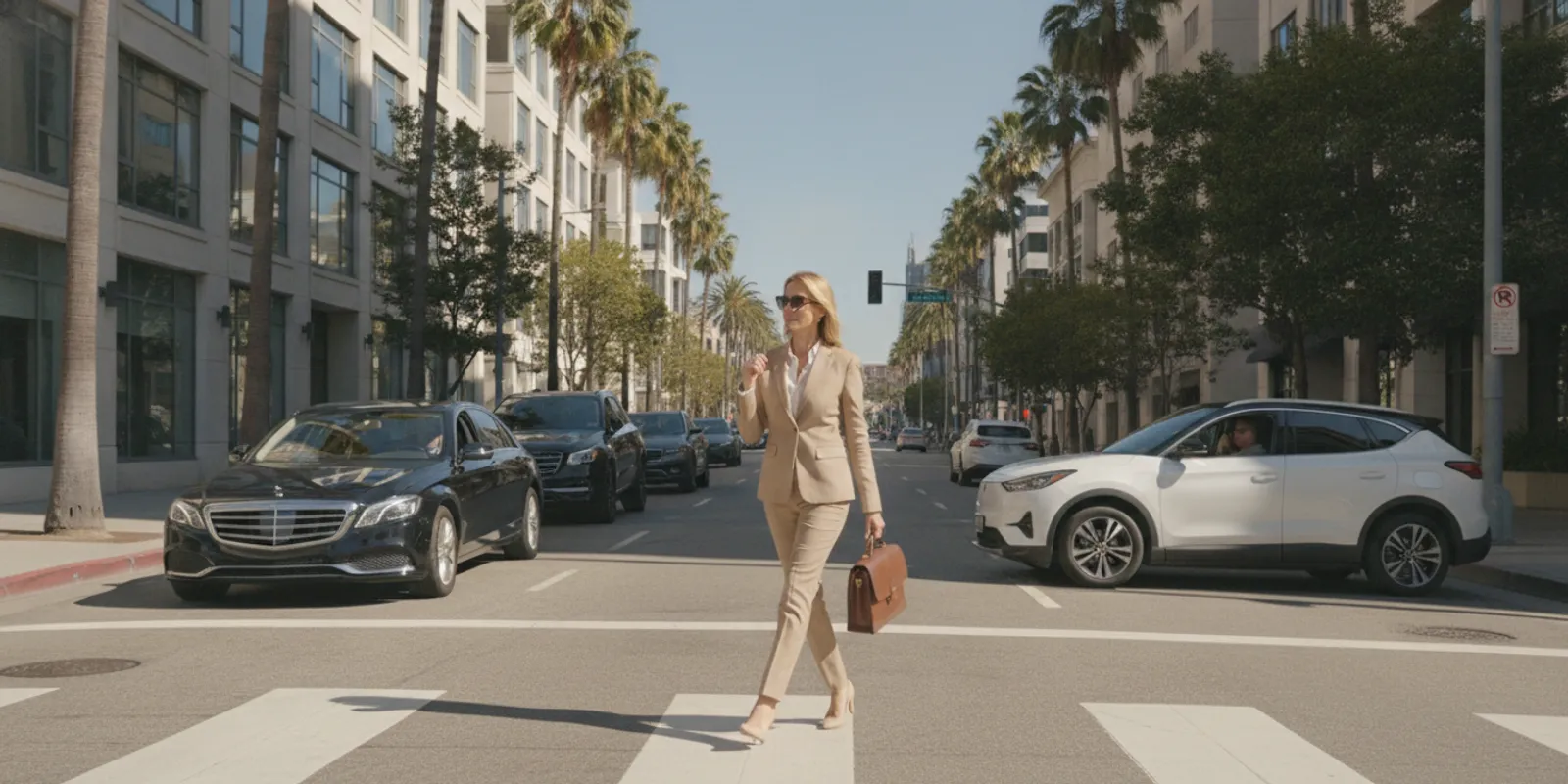
If you are asking how to claim for a pedestrian accident in California, start with health and safety, then preserve information that may clarify how the collision happened. A claim may involve insurance discussions or a lawsuit, but filing is not the first step for everyone. The right sequence depends on the facts, the people involved, and any deadlines that apply.
Request a consultation with DC Law Group
What should you do first after a pedestrian collision?
Move away from traffic if you can do so safely. Call 911 if anyone needs urgent medical help or emergency responders are needed. Give responders accurate information about what you remember. Do not try to investigate while you need medical attention, and do not put yourself at risk to photograph a vehicle or roadway.
Seek an evaluation from a medical professional, even when pain or other symptoms seem manageable. Describe the event and your symptoms plainly. Follow the clinician’s instructions, ask questions about care, and keep visit summaries, referrals, prescriptions, and instructions in one place. If symptoms change, tell your provider. The purpose is your health; records also help preserve a reliable timeline of care.
When the scene is safe, identify the driver and vehicle and exchange contact and insurance information. If a witness is willing, ask for their name and preferred contact method. Record the responding agency and incident number, and ask how you may request a report. Avoid guessing about speed, distance, signals, or fault. If you do not know an answer, say so rather than filling in a detail from memory.
How can you preserve evidence while details are fresh?
Write a short chronology as soon as you are able. Include the date, approximate time, precise location, direction you were traveling, crossing point, signal or sign information, lighting, weather, and what you recall immediately before and after impact. Mark which details you personally observed and which came from another person. This distinction helps keep later accounts clear and accurate.
If it is safe, photograph the crossing, nearby corners, traffic controls, road markings, sight lines, vehicle position, and visible damage. Do not step into traffic for a better angle. Keep original photo and video files where possible, and note when and where each was taken. If you cannot collect images yourself, a trusted person may be able to document the scene from a safe location.
Identify nearby businesses, transit vehicles, residences, or public cameras that might have captured the area. Write down the location and the time window that may matter. Recordings may not be kept indefinitely, so a prompt request to preserve relevant footage can be useful. Do not trespass or try to access restricted systems. A lawyer can discuss lawful ways to seek records and whether a formal preservation request is appropriate.
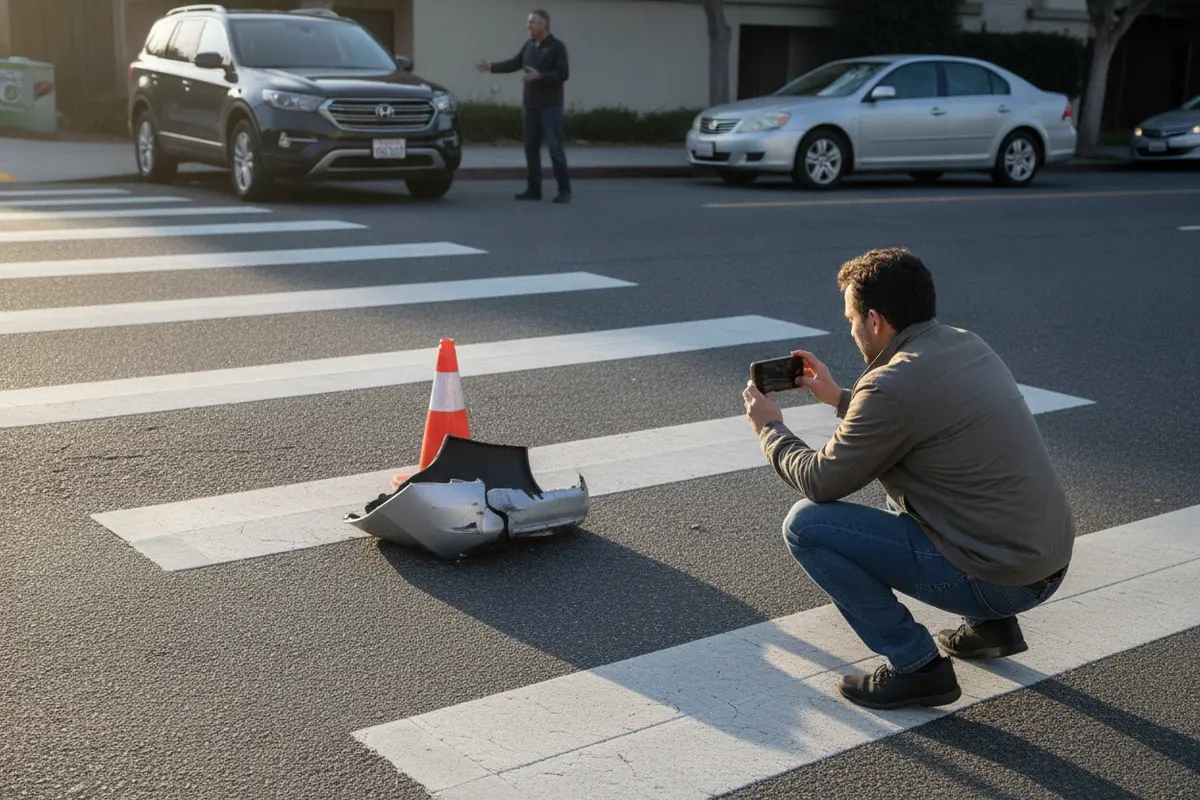
A person documents a California crosswalk and intersection after a pedestrian collision
Save text messages, emails, and communications related to the incident. Keep a dated log of appointments, symptoms, activity limits, missed work, and tasks that became harder. Be specific: “could not drive to a scheduled appointment” is more useful than a general note that the week was difficult. These entries are personal records, not substitutes for medical documentation or proof of responsibility.
Use a folder, whether digital or paper, and group material by type: incident information, images, medical records, work information, and insurer communications. Keep a simple list of what is missing and who you contacted to request it. Avoid editing original images or deleting relevant messages. If you later discover a mistake in a note, add a dated correction rather than silently changing the earlier entry.
Which facts may matter when responsibility is disputed?
Responsibility is evaluated from the circumstances, not from a single label such as “crosswalk collision.” Investigators and insurers may consider the route each person took, signal timing, turns, visibility, vehicle movement, roadway layout, and what each person could see or reasonably do. A marked crossing can be relevant, but it does not answer every question by itself.
California generally applies comparative fault principles. That means conduct by more than one person may be considered when responsibility is assessed. The pedestrian’s location or movement may be examined along with the driver’s actions and the surrounding conditions. Do not assume that one detail ends the analysis. A careful review should compare accounts with photographs, witness information, available recordings, reports, and medical records.
More than one party may warrant investigation in some circumstances. Depending on evidence and law, that could include a driver, an employer connected to a driver acting within work duties, or an entity responsible for a roadway or vehicle. These are possibilities to investigate, not a conclusion that any particular person or organization is responsible. Identifying all potentially involved parties can require records that are not available at the scene.
A police report can be an important source of information, but it may not contain every fact or resolve a civil claim. Check the report for names, vehicle information, location, and contact details. If you see an error, note the exact passage and ask the responding agency about its process for submitting a correction or supplemental information. Do not alter the report yourself.
What records should you collect for a pedestrian claim?
- Incident number, responding agency details, and any report you obtain.
- Driver, vehicle, insurer, witness, and other involved-party information.
- Original photos, videos, messages, and dated notes about the scene.
- Medical visit records, treatment instructions, referrals, and care-related correspondence.
- Work schedules, attendance records, or other material documenting specific work effects.
- Letters, emails, claim numbers, and dates and summaries of insurer conversations.
- Information about nearby cameras or other records that may no longer be readily available.
Keep copies and note when each item came into your possession. If a record is held by a medical provider, employer, government office, or business, write down the organization and the date you requested it. Avoid sending original documents unless there is a clear reason and you retain a copy. If a document contains private information unrelated to the incident, ask what is needed before sharing it.
For a useful overview of the firm’s California injury work, see DC Law Group’s personal injury practice. The firm’s pedestrian injury information may also help you identify questions to raise. These pages are background information, not a determination of what happened in a particular matter.
How should you handle calls and requests from insurers?
Notify an insurer that applies to your situation and follow any policy notice requirements if you are an insured person. The driver’s insurer may also contact you. Confirm the caller, company, and claim reference before sharing sensitive information. Keep a note of the date, the person’s name, the questions asked, and any requested follow-up.
Answer factual questions accurately, but do not guess at details you cannot recall or offer a medical forecast. You can ask for a request in writing and take time to read it. An insurer may ask for a recorded statement, documents, or permission to obtain medical records. Ask what the request is for and what period or subject it covers. If you are unsure about the legal effect, consider getting legal advice before agreeing.
A broad medical authorization may reach information beyond care connected to the collision. You can ask whether a narrower request would address the stated need. Keep copies of what you sign or send, and record when it was provided. Do not sign a settlement release just to move a conversation along. The release’s language can affect which claims it resolves, so understand its scope before making a decision.
An early offer is not necessarily a full assessment of an injury claim. Relevant information may still be developing, including medical care, the effect of an injury on daily activities, evidence about responsibility, and available coverage. There is no standard amount that fits every collision. A careful review uses the particular evidence and applicable law rather than a general online example.
DC Law Group’s consultation page provides a route to discuss your circumstances. If you have already spoken with an insurer, organize the claim number, dates, and documents requested so the discussion can address the current status rather than relying on memory.
What are the usual stages before and after a lawsuit is filed?
Many people use “claim” to describe the whole process, but an insurance claim and a court lawsuit are different steps. A claim may be presented to an insurer and discussed without a complaint being filed. When a lawsuit is appropriate, filing starts a court case; it does not itself prove the allegations or ensure a particular outcome. The table below is a general guide, not a fixed sequence for every matter.
| Stage | What may happen | Helpful preparation |
|---|---|---|
| Immediate response | Medical care, emergency response, and information exchange | Record the incident number, parties, and witness details |
| Evidence gathering | Review of reports, images, witness accounts, and records | Keep originals, build a dated chronology, and note missing items |
| Claim presentation | Insurer questions, coverage review, and discussion of responsibility | Organize communications and answer only from what you know |
| Resolution discussions | The parties may discuss resolution as information develops | Read proposed terms and understand any release before signing |
| Court case, when appropriate | A complaint is filed and served; litigation procedures may follow | Discuss deadlines, evidence, procedure, and risks with counsel |
Before filing, an attorney may assess potential defendants, legal claims, available evidence, insurance, and deadlines. A complaint generally identifies the parties and states allegations. The defendants may respond, and the case can proceed through information exchange, motions, settlement discussions, or trial. Court procedure is technical, and the steps depend on the case and applicable rules.
Not every claim leads to a lawsuit, and filing a lawsuit does not mean a trial is inevitable. Some disputes resolve through discussions; others continue in court. A person deciding whether to file should weigh the evidence, legal issues, practical demands of litigation, and possible outcomes with counsel. Neither a quick resolution nor a particular result can be promised.
If you want to learn about the people at the firm, see DC Law Group’s team information. For a collision involving another motor vehicle, the firm also provides California car accident information. Use information that fits the event rather than assuming all accident claims follow identical procedures.
Which California deadlines should you check?
Deadlines depend on the type of claim, the parties, and individual circumstances. A general personal injury limitation period may apply, but exceptions or different rules can change the analysis. A claim involving a public entity may require an earlier administrative claim. A minor, a question about when an injury was discovered, or other facts may also affect timing. This article is not a deadline calculation.
Write down the collision date and promptly ask a California attorney to identify the deadlines that may apply. Do not wait for every record to arrive before asking about timing. Evidence can become harder to locate as time passes, even when a filing deadline has not expired. Contacting an attorney does not itself file a lawsuit or pause a deadline.
Where a public agency or roadway condition may be involved, identify the agency and location as precisely as possible. Preserve photographs, correspondence, and any report that may help explain the issue. Do not assume that an ordinary insurer conversation satisfies a separate claim procedure. Ask counsel to evaluate the parties and deadlines from the actual facts.
How can you prepare for a useful consultation?
You do not need to decide in advance whether a lawsuit should be filed. A short chronology and key records can help an attorney understand what is known and what remains uncertain. Bring what you have, note what you have requested, and be clear about any prior insurer contact or document you signed.
- When and where the collision happened, including the nearest intersection or landmark.
- What you remember about your route, traffic controls, vehicle movement, and the impact.
- Whether a report was made and any incident or insurance claim number.
- Names or contact details for the driver, witnesses, and insurers.
- Medical evaluation and care so far, current symptoms, and planned follow-up.
- Photographs, videos, messages, and possible camera locations.
- Every insurer request, offer, release, or other document you have received or signed.
- Questions about parties, evidence preservation, procedure, and possible deadlines.
When a detail is uncertain, label it as uncertain. It is better to say that you do not remember a signal phase than to guess. Separate your own observation from information a witness or another person supplied. If new information changes your understanding, explain what changed and where the information came from.
DC Law Group represents people in California personal injury matters. A consultation is a chance to discuss the facts and possible next steps, not a promise of a particular result. You can learn more about the firm’s California personal injury work and its guide to how a pedestrian injury lawyer may help.
What does public research say about pedestrian injuries?
A study available through the National Library of Medicine examined pedestrian and pedalcycle crash injuries in the United States, including injury incidence and associated medical and economic effects. It offers population-level context, not a way to predict an individual person’s recovery or legal claim. You can read the study on pedestrian and pedalcyclist crash injuries for its scope and methods. Each collision and injury must be evaluated on its own facts.
How can you keep the process organized?
Use one document folder and one running log. For each call or message, record the date, person, method, subject, and requested follow-up. Name files with the date and a short description, and keep originals in a separate place from working copies. If an insurer or agency provides a reference number, add it to your log and to the folder label.
Keep questions about symptoms, treatment, and activity limits between you and your treating clinicians. Ask them about medical decisions and follow their instructions. Direct legal questions to an attorney. Keeping those roles clear helps ensure that medical care remains focused on your health while legal communications address the claim and its procedure.
When you receive a document, identify who sent it, what action it requests, and any date mentioned. If you do not understand a request, ask for clarification and keep the response. If an appointment or work activity changes, note the date and reason in your personal log. Organized records can make it easier to explain the timeline without overstating what they show.
Talk with DC Law Group about your next steps
Frequently asked questions
Do I need to be in a marked crosswalk to make a claim?
Not necessarily. The location and conduct of each person are among the facts that may be examined. A marked crossing can be relevant, but it does not alone decide responsibility. The specific scene and evidence matter.
What if the driver left before I got their information?
Report the incident to law enforcement and provide the vehicle description, direction of travel, time, location, and witness details you have. Preserve images or recordings and ask how to obtain the incident number. Do not pursue the vehicle yourself.
Should I speak with the driver’s insurer?
You may receive a call from the insurer. Confirm the caller and claim details, keep a record of the contact, and do not guess when answering. You can ask for requests in writing and seek legal guidance before giving a recorded statement or signing an authorization if you are unsure of its scope.
Can I ask a lawyer about the claim if some records are missing?
Yes. Explain what you know, identify missing documents, and say what you have requested. An attorney can discuss which records may be relevant and how to pursue them. Do not delay questions about deadlines while waiting for every record.
Does filing a lawsuit mean the case will go to trial?
No. A case may resolve before trial or continue through litigation. Its path depends on the evidence, legal issues, and decisions by the parties. No outcome is guaranteed.
Request a consultation with DC Law Group to discuss your situation.
This article provides general information, not legal advice. A California attorney can assess deadlines and options based on the facts of a particular matter.