
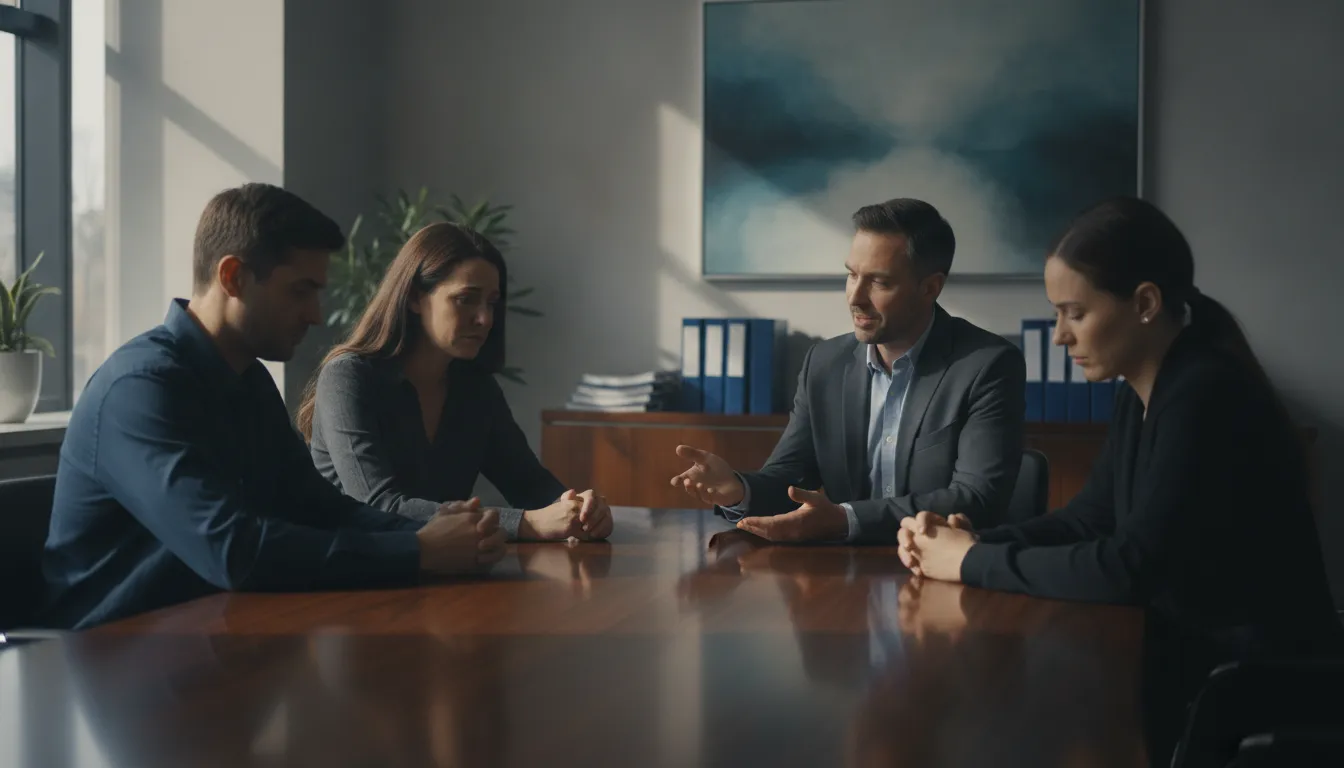
When a loved one dies because of another party's negligence, the legal questions can arrive before your family has had time to grieve. A focused consultation can help you understand whether a California wrongful death claim may be viable, who may have standing to bring it, and what evidence should be protected.
A free consultation wrongful death lawyer meeting gives your family an opportunity to discuss the death, review the basic facts. Ask how damages and contingency fees are handled, and evaluate whether the attorney has the experience and approach your situation requires. You are not required to decide immediately.
Call DC Law Group at (310) 571-8860 for a free consultation. The discussion can also clarify what records, reports, and witness information may matter. From there, your family can make a more informed decision about the next steps and the legal support that may help protect your interests.
How a Free Consultation Wrongful Death Lawyer Helps Your Family
After an unexpected death, your family may be facing grief, unanswered questions, and pressure from insurers or other parties. A consultation with a wrongful death attorney gives you a structured opportunity to understand your legal options before deciding whether to pursue a claim. It is a risk-free way to discuss what happened, identify the issues that matter, and determine whether the available facts support further investigation.
A free consultation wrongful death lawyer can begin by listening to your account of the incident and asking focused questions about the relationship between the deceased person and the potentially responsible party. The attorney may discuss who is legally permitted to bring the action, what evidence may be needed, and whether additional factual development is necessary. This early review is not a prediction of the result. It is an initial assessment of whether the claim appears legally and factually viable.
Reviewing the facts behind the death
Viability often depends on more than the fact that a death occurred. The attorney must consider whether another person's wrongful act or neglect contributed to the death, whether the evidence can establish responsibility, and whether the family member seeking advice has a recognized legal interest. During the consultation, bring any information you have, even if it seems incomplete or disorganized.
An initial review may include available police reports, witness statements, medical evidence, photographs, insurance correspondence, and other records related to the fatality. These materials can help the lawyer identify inconsistencies, preserve important leads, and determine whether expert analysis or additional investigation may be appropriate. If key evidence is missing, the consultation can clarify what should be requested and how quickly it may need to be preserved.
Helping your family make an informed decision
The consultation should also give you a clear understanding of the next steps, the legal process, and the questions that remain unanswered. A lawyer may explain potential challenges without minimizing them, including disputes over liability, conflicting witness accounts, or limitations on the available evidence. You should leave with a better sense of what pursuing a claim would involve and whether the attorney's experience fits the circumstances of your case.
Prepare a short timeline, identify witnesses, and bring relevant documents if you can. You are not expected to prove the case during the first meeting. The purpose is to provide enough information for a careful preliminary evaluation and to help your family decide what to do next.
What a Free Wrongful Death Consultation Covers
A free consultation gives your family an opportunity to explain what happened, understand the legal issues, and determine whether further investigation may be appropriate. It is not a courtroom hearing, and speaking with a lawyer does not require you to file a lawsuit. The purpose is to obtain an informed assessment before deciding what to do next.
Reviewing the available evidence
The attorney will ask about the fatal incident, the people and entities involved, and the events leading up to the death. Bring any records you can obtain, including police or collision reports, witness names and statements, photographs, insurance correspondence, and medical records. An initial review typically includes analyzing police reports, witness statements, and medical evidence related to the fatality. These materials can help clarify the sequence of events, the injuries involved, and possible evidence of negligence.
You do not need to have every document before the meeting. Tell the lawyer what exists, where it may be located, and whether another person or agency has it. A missing report or incomplete record may become part of the investigation rather than a reason to delay seeking legal guidance.
Assessing whether the claim is viable
A wrongful death attorney will evaluate whether the known facts support a potentially viable claim. That assessment may include questions about duty, negligent or wrongful conduct, causation, and the losses suffered by the surviving family members. The lawyer may also identify factual gaps that require additional records, witness interviews, expert review, or other investigation.
No responsible attorney can guarantee an outcome during an initial meeting. The evaluation is based on the information available at that time, and the legal assessment may change as additional evidence is developed. Ask what facts support the claim, what issues could present difficulties, and what steps would be needed to investigate further.
The consultation should also clarify practical next steps, including whether a filing deadline may affect the case and which records your family should preserve. To schedule a free consultation, gather the documents you have and write down your questions in advance. A clear timeline and organized evidence can help the attorney focus on the issues most important to your family.
Who Can Bring a Wrongful Death Claim in California
California's wrongful death law does not allow just anyone affected by a fatality to file a claim. California Code of Civil Procedure section 377.60 identifies the people who may assert a cause of action based on the death of another person. The statute generally refers to the decedent's successors in interest, which can include the surviving spouse or domestic partner, children, and, in some circumstances, other heirs.
The identity of the proper claimant matters because a wrongful death case is brought on behalf of legally recognized beneficiaries. Not simply on behalf of every relative or friend who experienced grief. The statute establishes an order of eligibility and addresses situations in which a surviving spouse, domestic partner, or child is not available. Depending on the family structure, other heirs or individuals who would have been entitled to the decedent's property may have standing under the statutory framework.
California law can also address more than one eligible person in the same action. For example, a surviving spouse and children may have interests in the claim. A lawyer must identify the full family relationship, determine which people qualify under section 377.60, and ensure that the case is presented consistently with the rights of all proper claimants. This is especially important when family members disagree about who should participate or when the decedent had no spouse or children.
What the family relationship establishes
A consultation should begin with a clear family and inheritance history. The attorney may need information about the decedent's marital or domestic partnership status, children, parents, dependents, and other heirs. Relevant records can include a marriage certificate, domestic partnership documentation, birth certificates, probate records, or other documents that clarify the relationship. The exact evidence will depend on the circumstances.
Being related to the decedent does not automatically establish standing. Conversely, a person who is not an immediate family member may still need to be considered if the statute gives that person a legally recognized interest. A careful review helps prevent an eligible claimant from being overlooked and reduces the risk of filing in the wrong person's name.
California's rules are set out in Code of Civil Procedure section 377.60. Because standing can depend on family structure, inheritance rights, and the facts surrounding the death, bring those details to an initial consultation so the attorney can evaluate who may properly pursue the claim.
What Wrongful Death Damages Cover in California
California wrongful death damages are determined from the circumstances of the individual case. Under California Code of Civil Procedure section 377.61. A court may award damages that are "just under all the circumstances." That standard recognizes that a death can affect a family in several distinct ways. Including the practical support the decedent provided and the irreplaceable personal relationship they shared.
Economic losses connected to the death
Economic damages address measurable losses resulting from the death. Depending on the evidence and the claimant's legal relationship to the decedent. These losses may include the value of financial support the decedent would likely have provided, lost income, and the value of household services. A claim may also address medical expenses related to the fatal injury and funeral or burial expenses.
Determining these losses is not simply a matter of looking at one paycheck or one invoice. The analysis may consider the decedent's work history, expected future earnings, contributions to the household, and the needs of surviving family members. Records, testimony, and other evidence help establish what support was provided and what the family lost.
Non-economic losses from the relationship
California law may also recognize non-economic losses. These can include the loss of the decedent's love, companionship, comfort, care, assistance, protection, affection, society, and moral support. A spouse or domestic partner may also seek damages for the loss of consortium. Children may experience the loss of parental guidance, training, and mentorship. Parents may have a claim for the loss of a child's companionship in circumstances recognized by California law.
These losses do not have a simple formula. Evidence about the family relationship, shared responsibilities, daily interactions, and the decedent's role in the household can help explain the harm. The purpose is not to reduce grief to a calculation, but to present a complete account of the losses the surviving family members have experienced.
A consultation with a wrongful death attorney can help clarify which family members may bring a claim and which categories of loss may be recoverable. The lawyer can examine the available records, identify evidence that should be preserved, and explain how California's damages rules may apply to the family's specific circumstances. Because eligibility and recoverable losses depend on facts such as the family relationship and the evidence available, a case-specific review is more useful than relying on a general damages estimate.
California Code of Civil Procedure section 377.61 provides the governing statutory framework for damages in a wrongful death action.
| Category of damages | What it addresses |
|---|---|
| Economic damages | Measurable financial losses, including lost income and support, medical expenses, and funeral and burial expenses. These are documented through records and evidence. |
| Non-economic damages | Losses tied to the relationship, including companionship, comfort, care, guidance, and loss of consortium. These depend on the family connection and the circumstances. |
Questions to Ask During a Wrongful Death Consultation
A consultation should help your family understand the legal path ahead and decide whether the attorney is equipped to handle it. Bring a written list of questions, along with any documents you have. Clear answers can reveal how carefully the lawyer evaluates evidence, explains legal issues, and communicates with clients.
1. How much experience do you have handling wrongful death claims in California courts? Ask whether the attorney has handled cases involving facts similar to yours, such as a motor-vehicle collision, unsafe property, medical negligence, or another fatal incident. California wrongful death law has specific standing, damages, and procedural rules. Experience in this state matters because familiarity with California courts and litigation practice can affect how the claim is investigated and presented.
2. What results have you achieved for families in similar cases? Ask for a candid discussion of the attorney's prior results, while recognizing that no lawyer can promise a particular outcome. The purpose is to learn whether the firm has addressed comparable liability issues and helped families pursue the types of recovery permitted by the facts and applicable law. A responsible attorney should also explain the limits of comparing one case with another.
3. Who will personally handle my case? Some firms assign day-to-day work to an associate, paralegal, or case manager after the initial meeting. Ask who will investigate the death, communicate with your family, prepare legal filings, and appear in court if necessary. Also ask how you can reach the person responsible for answering substantive questions. Knowing the case team at the beginning prevents confusion later.
4. What evidence do you need from us, and what will your team investigate? Ask whether the initial review will include police or incident reports, witness statements, medical evidence, photographs, video, employment records, and other materials relevant to liability and damages. You can also ask what evidence may need to be preserved quickly. Do not discard records, messages, photographs, or physical items connected to the death without discussing them with counsel.
5. What timelines and important deadlines should we understand? Ask what the next investigative steps are, when a claim or lawsuit may need to be filed, and what events could affect the schedule. A lawyer should identify time-sensitive evidence and explain the applicable California deadlines in the context of your facts. This conversation is especially important when an insurer, government entity, or other party may be involved.
6. How will you communicate with our family? Confirm the preferred communication method, who will provide updates, how quickly urgent questions are addressed, and how often you should expect meaningful case updates. You may also want to ask how major decisions, settlement discussions, and requests for documents will be explained. Families evaluating whether to work with a wrongful death attorney should choose a process that feels understandable and respectful.
These questions do not replace a case evaluation, but they help you use the meeting effectively. Give the attorney a complete and accurate account, ask for explanations when legal terminology is unclear, and take time to consider whether the proposed strategy fits your family's needs.
How Contingency Fees Work in a Wrongful Death Case
Most personal injury and wrongful death lawyers handle these cases through a contingency fee arrangement. In general, the family does not pay an attorney fee at the beginning of the case. Instead, the fee is taken from a recovery obtained through a settlement or court award. This structure can allow eligible family members to seek legal guidance without having to fund every stage of litigation themselves.
The exact terms should be discussed during the initial consultation and stated in a written representation agreement. That agreement should explain how the attorney's fee is calculated, when it becomes due, and how litigation expenses are handled. Families should also ask whether expenses such as obtaining records, consulting experts, investigating the incident, or filing court documents are treated separately from the attorney fee. Clear answers at the outset help prevent misunderstandings later.
What does a contingency arrangement cover?
A contingency arrangement generally ties the lawyer's fee to the result of the claim. If the case does not produce a recovery, the family generally does not owe the contingent legal fee. However, the terms of each agreement matter, and families should not rely on a general description alone. Ask the lawyer to explain what happens if the case settles before a lawsuit is filed, proceeds into litigation, or requires an appeal.
The arrangement also does not remove the need to establish the elements of a wrongful death claim. The available evidence may include police reports, witness statements, medical evidence, and proof related to liability and damages. During a consultation, the attorney can discuss whether the known facts support a viable claim and what additional investigation may be necessary. A lawyer should not guarantee a particular result, because the outcome depends on the evidence, applicable law, and the response of the opposing parties.
Who pays for a wrongful death lawsuit?
In many cases, the lawyer advances or coordinates litigation work under the contingency arrangement, with repayment addressed through the written agreement and any recovery. That does not mean every possible expense is handled identically in every case. Ask specifically who is responsible for expenses if there is no recovery, whether experts may be needed, and whether the family will receive periodic updates about significant case expenditures.
A free consultation with a wrongful death lawyer gives a family an opportunity to ask these questions before deciding whether to proceed. Bring any available reports, records, and information about the surviving family members so the attorney can discuss both the claim and the proposed fee structure with greater precision.
The Wrongful Death Filing Deadline in California
California generally gives a family two years from the date of death to file a wrongful death lawsuit. This deadline comes from California Code of Civil Procedure section 335.1. The statute is a critical planning point, but it should not be treated as a reason to wait. You can review the text of California's wrongful death statute of limitations through the state Legislature's website.
Missing the filing deadline can prevent an otherwise valid claim from moving forward. The date of death may seem straightforward, yet the facts surrounding a claim can raise questions about which deadline applies, how the claim should be filed, or whether a different rule affects a particular defendant. A California wrongful death lawyer can assess those issues after reviewing the available facts.
Why an early review matters
Prompt legal guidance also protects the quality of the investigation. Police reports, witness accounts, medical evidence, photographs, video, and other records may be harder to locate or evaluate as time passes. Witnesses can become difficult to reach, memories can fade, and physical evidence may change. Starting early gives the legal team more time to identify responsible parties, preserve relevant evidence, and develop a legally supported claim.
Families do not need to have every document assembled before seeking guidance. Bring what you have, including the death certificate if available, incident reports, insurance information, medical records, photographs, and contact information for potential witnesses. During a consultation, the lawyer can identify what additional records may be needed and explain the next steps. If you are ready to learn more about the filing process, you can file a wrongful death lawsuit with a clearer understanding of the legal timeline.
Frequently Asked Questions
What is included in a free consultation for a wrongful death lawyer?
The lawyer typically discusses the fatal incident, your relationship to the deceased, and the evidence available. That review may include police reports, witness statements, medical records, and potential liability evidence. The attorney can then explain whether the facts appear to support a wrongful death claim and what information should be preserved.
How do contingency fees work in a wrongful death case?
With a contingency fee arrangement, the attorney's legal fee generally comes from a settlement or court award rather than an upfront payment. The written agreement should explain the percentage, litigation expenses, and what happens if the case does not result in a recovery. Ask the lawyer to explain every provision before signing.
How hard is it to prove wrongful death?
The difficulty depends on the available evidence. A family generally must establish that another party's wrongful act or neglect caused the death, along with legally recognized losses. Establishing negligence, causation, and damages can require witness testimony, records, and expert analysis, so the consultation is an opportunity to identify evidentiary gaps.
Who can bring a wrongful death claim in California?
California law permits a decedent's successors in interest to assert a wrongful death cause of action, subject to the statute's requirements. The precise standing analysis may depend on family relationships and other circumstances. California Code of Civil Procedure section 377.60 identifies the authorized claimants: California CCP section 377.60.
What should I ask during the consultation?
Ask about the lawyer's experience handling wrongful death claims in California courts, experience with cases like yours, likely evidence needs, the expected litigation process, and communication practices. You can also ask what results the attorney has achieved for families, while recognizing that past results do not guarantee an outcome in your case.
Ready to Schedule a Free Consultation?
A confidential conversation can help your family understand whether a potential California wrongful death claim may be viable, who may have standing, and what evidence to gather. It also gives you an opportunity to evaluate whether the lawyer's experience and communication style fit your needs.
Call (310) 571-8860 to schedule a free, confidential consultation with DC Law Group about a potential wrongful death claim in California.