
California Garbage Truck Accident Lawyer
A California garbage truck accident lawyer identifies every potentially responsible public agency and private company, preserves truck and route evidence, and evaluates the deadlines that may govern a claim. Early investigation matters because sanitation vehicles can be repaired, electronic records overwritten, and government notice periods shorter than ordinary filing periods.
Garbage and recycling trucks work where people live, walk, cycle, park, and drive. Their routes require repeated stops, wide turns, frequent reversing, and operation near collection workers. When one of these heavy vehicles causes a collision, identifying the driver is only the beginning. The truck may be owned by a city, operated by a private sanitation contractor, maintained by a separate vendor, and dispatched under a municipal agreement. Each participant may possess important evidence and may be governed by a different legal procedure.
DC Law Group approaches these cases as complex commercial and public-entity matters, not routine passenger-vehicle claims. The investigation must determine who controlled the route, who employed and trained the driver, who inspected the truck, and whether defective equipment or unsafe operating practices contributed. It must also identify the earliest plausible deadline without treating any general rule as a substitute for advice based on the specific facts.
Why Are Garbage Truck Accident Claims Different?
Garbage truck claims differ because sanitation vehicles have large blind zones, specialized collection equipment, frequent-stop routes, and complicated ownership arrangements. A collision may implicate municipal claim procedures, commercial fleet records, employment law, vehicle maintenance duties, and product liability principles at the same time, requiring a coordinated legal investigation.
A loaded sanitation truck has far greater mass than a typical passenger vehicle. Its design can limit rear and side visibility, extend stopping distance, and require the driver to swing outward before turning. The collection process adds hazards: workers may ride outside the cab, hydraulic arms may extend near traffic, and bins or loose material may obstruct a travel path. These operational features affect both the standard of care and the evidence needed to reconstruct an incident.
The entity named on the truck may not be the only entity responsible. A city can own the fleet while a contractor supplies drivers. A private operator can control the route while another business performs repairs. A regional district can establish service rules while local personnel supervise daily work. Contracts, dispatch records, inspection files, and testimony about actual practices help establish which party controlled each safety function.
Public involvement also changes procedure. California law generally requires a person pursuing certain claims against a public entity to present a written government claim before filing suit. That process can involve a much shorter period than a conventional civil action. Whether it applies, which entity must receive notice, and what exceptions may be available require prompt, fact-specific analysis.
Who May Be Liable for a Garbage Truck Collision?
Liability may rest with the driver, an employer, a city or county, a private waste contractor, a maintenance provider, a component manufacturer, a loading crew, or another road user. The decisive questions are who owed a legal duty, who controlled the dangerous activity, and whose breach substantially contributed to the injuries.
A driver may be negligent by reversing without confirming the path is clear, turning across an occupied lane, failing to yield, exceeding a safe speed, or operating while distracted or impaired. If the driver was acting within the scope of employment, the employer may be vicariously liable. An employer may also face direct liability for negligent hiring, training, supervision, scheduling, or fleet upkeep when the evidence supports those theories.
A municipality or other public entity may be responsible for an employee's conduct or, in a proper case, a dangerous condition of public property. A private contractor may be responsible for its personnel, route policies, inspection program, or collection methods. The governing service agreement can help show who controlled hiring standards, dispatch, maintenance, incident reporting, and compliance oversight.
Mechanical failure can expand the case beyond the operator and employer. A repair vendor may be responsible if deficient work caused brake, steering, tire, lighting, camera, alarm, or hydraulic failure. A manufacturer may be liable if a defective vehicle or component contributed. Another driver can share responsibility when an unsafe maneuver forces the truck into a collision.
- The sanitation truck driver and the driver's employer
- A city, county, district, or other public entity
- A private collection or recycling contractor
- A maintenance, inspection, or repair provider
- A vehicle or component manufacturer
- Another motorist or road user whose conduct contributed
California comparative negligence principles may allocate responsibility among several parties, including an injured person when supported by evidence. That does not automatically defeat a claim. It makes a careful reconstruction essential, especially when an operator argues that someone entered a blind zone or disregarded a warning.
What Deadlines May Apply to Public and Private Claims?
The governing deadline depends on every responsible party and the nature of the claim. A claim involving a California public entity generally requires written notice within six months for personal injury, while other limitation periods may govern private defendants. Exceptions can exist, so a lawyer should evaluate the specific timeline promptly.
The government claim process is a critical issue when a sanitation truck is owned or operated by a city, county, district, or other public entity. A police report, insurer notice, or informal complaint may not satisfy the statutory presentation requirements. The written claim generally must identify the occurrence, circumstances, injuries, and other required information with enough specificity for the entity to investigate.
After a government claim is presented, a separate period may govern a lawsuit. The timing can depend on whether the entity issued a written rejection, when notice was delivered, and whether a late-claim procedure or another exception is potentially available. Claims involving minors, wrongful death, property damage, unidentified entities, or mixed public-private operations can present additional issues. No general deadline should be treated as absolute legal advice.
Potential defendantProcedural concernEarly investigative stepCity, county, or public districtA government claim may be required, often within six monthsConfirm the correct entity and evaluate a compliant noticePrivate sanitation operatorA civil limitation period and contractual evidence issues may applyVerify the legal entity and send preservation demandsMixed public-private operationDifferent procedures may run at the same timeReview service agreements and preserve claims against all partiesRepair provider or manufacturerPhysical evidence can change or disappearPreserve the truck and arrange an appropriate inspection
Prompt action is important even when a filing period appears distant. Video may be overwritten, route data may be deleted under ordinary retention practices, and the vehicle may return to service after repair. DC Law Group's California truck accident overview explains additional issues that arise in heavy-vehicle investigations.
How Do Garbage Truck Crashes Commonly Happen?
Garbage truck collisions commonly involve reversing, wide turns, unsafe lane changes, sudden stops, failed warning systems, unsecured material, or mechanical defects. Determining the cause requires analysis of the route, driver visibility, collection procedure, truck condition, electronic data, and actions of nearby motorists, pedestrians, cyclists, and workers.
Reversing and blind-zone incidents
Collection routes often require reversing in alleys, cul-de-sacs, loading areas, and narrow residential streets. Cameras, mirrors, audible alarms, spotters, and company procedures can reduce danger only when they are available, functional, and properly used. Investigators should determine whether the driver checked the path, whether a helper was assigned, and whether equipment recorded the maneuver.
Wide turns and side-impact collisions
Sanitation trucks need substantial room to turn. A driver who begins from an unsafe position, fails to signal, or does not monitor the passenger side can strike a cyclist, pedestrian, parked vehicle, or car in an adjacent lane. Road geometry and visibility matter, but they do not replace the operator's duty to use reasonable care under the circumstances.
Mechanical, collection, and loading failures
Worn tires, brake defects, steering problems, malfunctioning warning devices, hydraulic failures, and unsecured material can cause or intensify a collision. Maintenance records may show recurring defect reports, deferred repairs, or incomplete inspections. Route pressure can also be relevant when dispatch messages or supervisor instructions indicate that a driver rushed, skipped a safety step, or used an unsafe collection method.
Pedestrians and cyclists are particularly exposed because they may be difficult to see from the cab and have little protection from impact. The firm's pedestrian collision resource discusses the evidence used to evaluate driver visibility, right of way, and roadway conditions.
What Evidence Can Prove Responsibility?
Evidence may include photographs, witness accounts, surveillance recordings, onboard camera footage, event data, GPS history, route logs, inspection reports, repair files, driver records, dispatch messages, phone data, and municipal contracts. Targeted preservation demands are important because electronic information may be overwritten and physical evidence may change during repair.
A police report provides a useful starting point, but it rarely answers every civil liability question. Garbage trucks may contain forward-facing cameras, rear cameras, telematics, engine modules, braking data, and route-management systems. Nearby homes, businesses, traffic systems, or municipal facilities may also have recordings. Each source can establish different facts about speed, movement, warnings, sight lines, and the sequence of impact.
A thorough investigation often includes the following steps:
1. Identify the truck, registered owner, operator, employer, route controller, and every potentially involved public entity.
2. Send focused preservation notices addressing vehicles, video, electronic systems, employee files, route records, and communications.
3. Inspect and photograph the scene, sight lines, road design, vehicle damage, mirrors, cameras, alarms, and other safety equipment.
4. Interview witnesses and seek residential, commercial, traffic, or municipal recordings before routine deletion.
5. Analyze maintenance history, inspection documents, driver qualifications, training materials, and prior safety reports.
6. Consult qualified reconstruction, medical, or industry professionals when technical questions require expert analysis.
Evidence must also connect the collision to the claimed injuries and losses. Medical records, diagnostic images, employment records, photographs, and testimony from the injured person and family members can document changes in health, work, mobility, and daily activities. A legally sound claim links unsafe conduct to both the incident and the resulting harm.
Review DC Law Group's case results and learn how the firm develops evidence-driven injury claims.
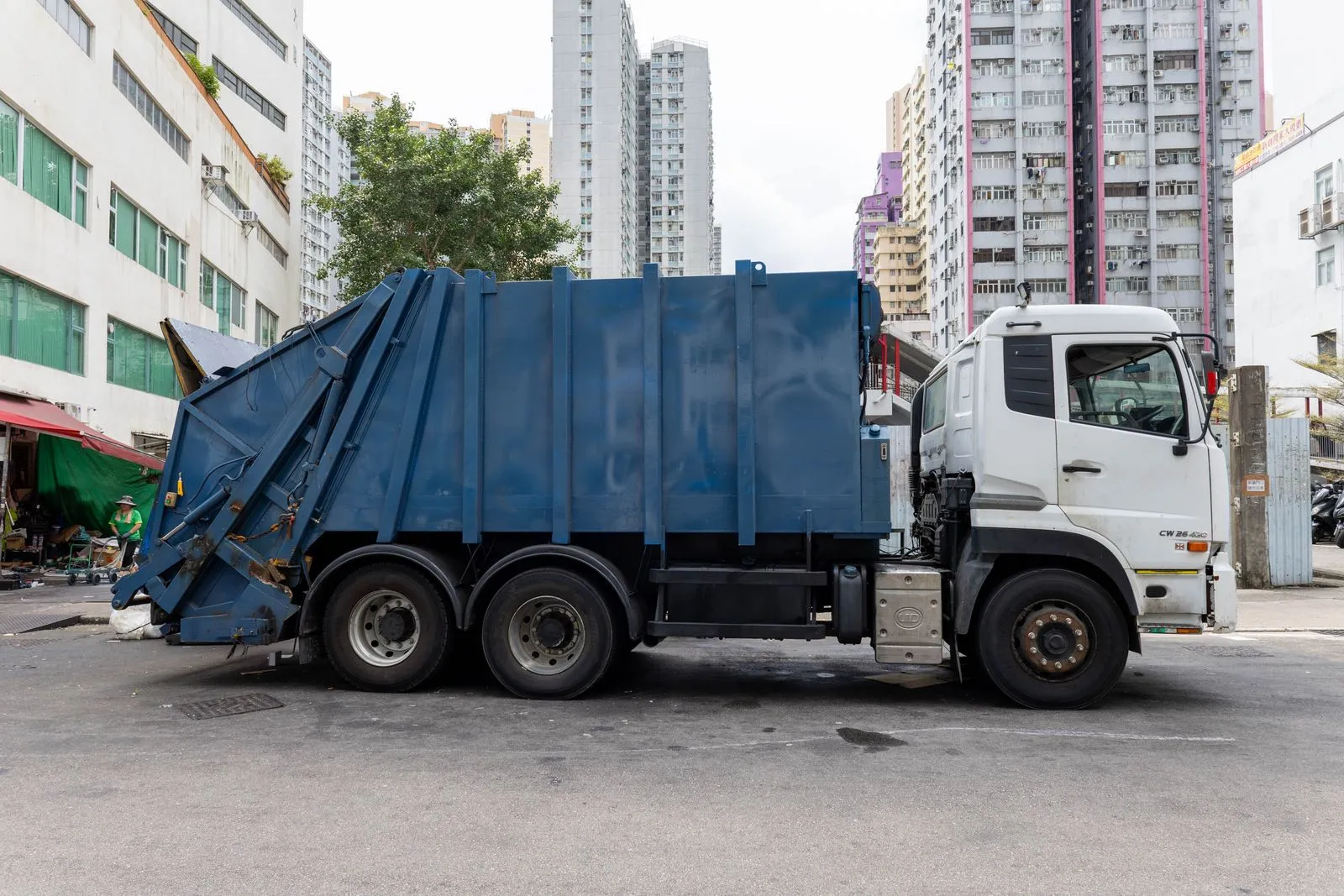
An urban garbage truck operating near vehicles and pedestrians.
What Injuries and Damages May a Claim Address?
A garbage truck injury claim may address medical treatment, rehabilitation, lost income, reduced earning capacity, property damage, physical pain, emotional distress, disability, and diminished enjoyment of life when supported by evidence. In a fatal collision, eligible family members may pursue damages available through California wrongful death and related claims.
The weight and operating pattern of a sanitation vehicle can produce severe trauma. Occupants of smaller vehicles may sustain traumatic brain injuries, spinal injuries, fractures, internal organ damage, crush injuries, nerve damage, amputation, or permanent mobility limitations. Pedestrians, cyclists, collection workers, and people standing near the truck can be especially vulnerable because they lack the protection of a vehicle compartment.
A careful legal assessment looks beyond the first emergency visit. Some injuries require surgery, therapy, medication, assistive equipment, home support, or long-term monitoring. Treating professionals and qualified experts can explain the expected course of care and the effect of permanent impairment. Employment records and vocational analysis may show missed work, changed duties, or diminished future earning ability.
California law recognizes economic and noneconomic damages that are legally caused by negligent conduct, subject to the evidence and any applicable rules. The available categories and value of a claim depend on the particular facts. DC Law Group evaluates medical documentation, expert analysis, and the client's lived experience rather than relying only on visible vehicle damage.
How Does DC Law Group Handle Garbage Truck Cases?
DC Law Group begins by identifying all public and private participants, calendaring the earliest plausible deadline, and preserving evidence. The firm then develops liability, medical, and damages proof, addresses defenses, communicates with insurers and agencies, consults qualified experts, and prepares the matter for negotiation or litigation according to its facts.
Early work can determine whether the full evidence trail remains available. The legal team can seek public records, examine collection agreements, locate witnesses, preserve electronic systems, and arrange a vehicle inspection before its condition changes. When a public entity may be involved, the firm can evaluate government claim requirements while continuing to investigate private contractors and vendors.
The defense investigation matters as well. A sanitation operator or insurer may contend that an injured person entered a blind area, ignored an audible warning, or caused the collision. Scene measurements, video, event timing, visibility analysis, and witness testimony can test those assertions. A precise response focuses on evidence rather than assumptions about how the incident occurred.
DC Law Group does not treat every sanitation truck incident alike. A residential reversing crash presents different questions than a highway collision, hydraulic equipment injury, falling-debris event, or worker incident. A California garbage truck accident lawyer should tailor the investigation to the route, vehicle, responsible entities, injury mechanism, and procedural requirements involved.
Frequently Asked Questions
People injured in garbage truck collisions often ask about public agency notice, contractor responsibility, partial fault, and vehicle inspections. The correct answer depends on the parties and evidence. Prompt legal review is prudent because short procedural periods may apply and valuable truck, route, video, and maintenance records can disappear.
Can I bring a claim if a private company collected waste for a city?
Potentially. A private contractor may be responsible for its driver, training, supervision, fleet, or operating procedures. A city or another entity may also bear responsibility depending on the service agreement and actual control over the work. Both the written contract and daily operating practices should be reviewed before determining the proper defendants.
What if I do not know whether the truck was publicly owned?
Do not assume the truck is private or wait for ownership to become obvious. An attorney can examine the truck number, registration, police report, route records, public agreements, and business filings. Because a government claim requirement may apply, counsel should evaluate the matter under the earliest plausible deadline while ownership is investigated.
Can I pursue a claim if I was partly responsible?
California generally follows comparative negligence principles. An injured person may still pursue a claim when another party shares responsibility, although any recovery may be reduced by the percentage of responsibility assigned to that person. Photos, video, visibility evidence, and witness testimony are important because an insurer may dispute how fault should be allocated.
Should the garbage truck be inspected after the crash?
Often, yes. An inspection may document impact damage, visibility, mirrors, cameras, warning systems, tires, brakes, lights, hydraulic equipment, and other components. The appropriate scope depends on how the collision occurred. A preservation demand should be sent promptly to reduce the risk of repair, alteration, or disposal before a qualified inspection.