
Best Lawyer for Car Insurance Claim: How to Choose Counsel in California
After a California crash, an adjuster may request a recorded statement, medical records, repair documents, or a quick response to a settlement proposal. These requests may affect how the claim is evaluated. The best lawyer for car insurance claim disputes reviews fault, coverage, injury records, vehicle damage, and claim handling. Counsel then recommends negotiation, mediation, or litigation.
Call DC Law Group at (310) 571-8860 for a case evaluation.
What Does the Best Lawyer for Car Insurance Claim Work Involve?
Direct answer: The best lawyer for car insurance claim disputes starts with a fact-based review of the crash, injuries, policies, and documented losses. The lawyer communicates with the proper adjuster and tests the insurer's position against the evidence. Counsel evaluates settlement terms and recommends negotiation, mediation, or litigation based on the claim's risks.
A strong evaluation starts with the facts, not the offer amount. Counsel should determine what happened and what evidence supports your account. The review should distinguish a vehicle-damage disagreement from a dispute involving contested fault, significant injuries, coverage questions, or poor claim handling.
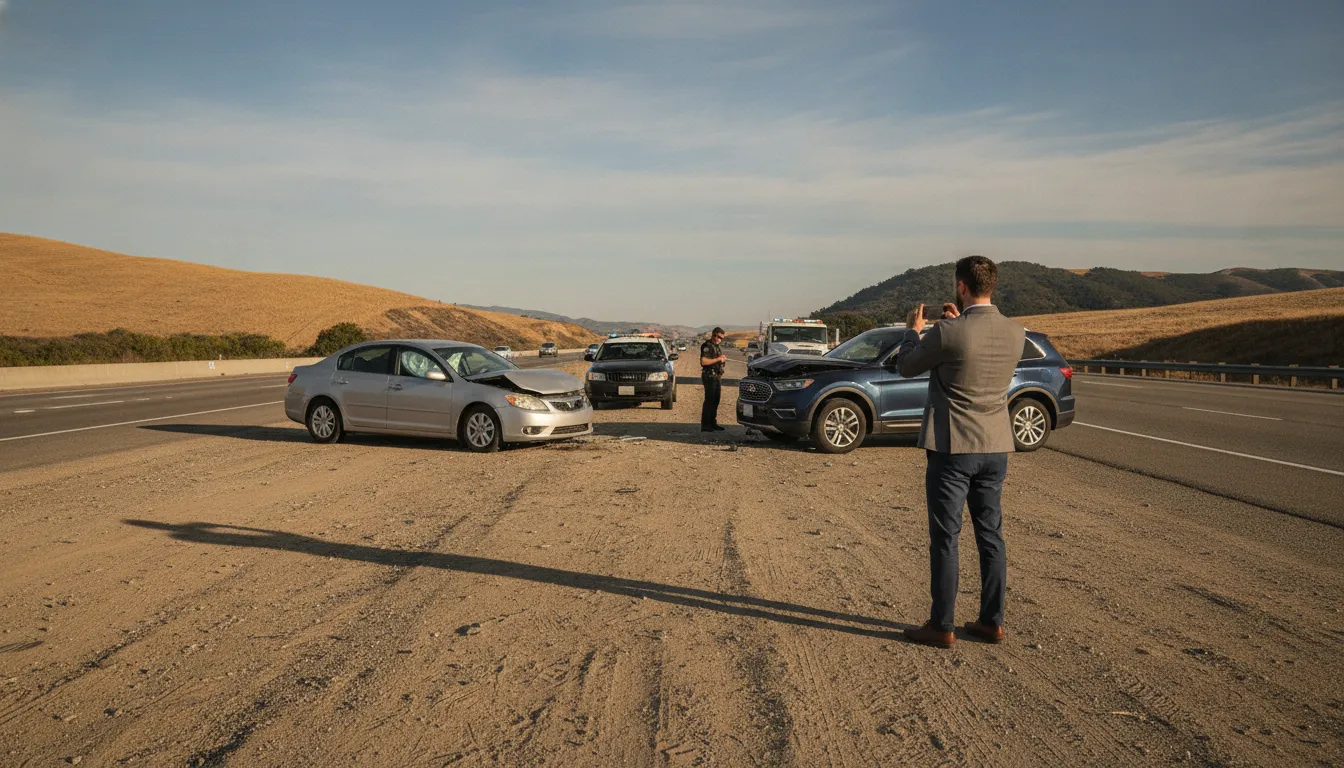
California collision scene being documented for an insurance claim
Experience with similar disputes
Relevant experience matters because insurance disputes turn on details that are easy to overlook. Ask whether the lawyer has handled disputed fault, uninsured or underinsured motorist coverage, multiple insurers, serious injuries, and disagreements over future treatment. Experience should mean more than a general statement about accidents. Ask how similar claims were investigated and resolved.
Evidence, liability, and coverage
A careful review includes photographs, the collision report, witness information, vehicle damage, medical records, and insurer communications. Counsel should examine competing accounts and explain whether the proof supports liability under California law. The policy also matters. The lawyer should identify relevant coverage, limits, exclusions, and deductibles. Counsel should explain whether the dispute involves your policy, another driver's coverage, or both.
Communication and strategy
An adjuster works for the insurance company, so the relationship is not neutral. Counsel should establish a communication plan, keep important requests and responses in writing, and explain each request before you respond. The strategy may include submitting proof, challenging the insurer's analysis, negotiating a demand, considering mediation, or preparing for litigation.
How Should You Choose a California Lawyer for an Insurance Claim?
Direct answer: Choose a California lawyer who regularly handles claims like yours and explains the evidence and policy issues clearly. The lawyer should identify who will manage the case and describe a realistic path from investigation to resolution. Compare process and judgment, not advertising language or a promised result.
Choosing counsel is a practical investigation. A consumer guide from MedlinePlus recommends considering experience with cases similar to your own: review the source guidance. For a California car claim, ask how the lawyer handles disputed liability, uninsured or underinsured motorist issues, multiple insurers, medical documentation, and settlement releases.
Questions to ask before retaining counsel
* How many California car accident claims similar to mine have you handled?
* Who will communicate with the adjuster and explain important decisions?
* How will you investigate fault and organize medical and property records?
* How will you evaluate future treatment, missed work, and other documented losses?
* What happens if the insurer denies liability, delays its investigation, or makes an incomplete offer?
* What does the representation agreement say about attorney fees and case expenses?
Request a written explanation of the representation agreement, including how fees are calculated and how case expenses are handled. Ask what happens if the matter does not resolve. It is also reasonable to ask whether the lawyer expects to negotiate, use mediation, or file suit if the insurer's position remains unsupported.
Look for clear explanations, not guarantees
A lawyer who explains uncertainty, identifies missing evidence, and sets realistic expectations is better positioned to help you make informed decisions. No lawyer can promise a particular outcome. A careful professional should explain the strengths and weaknesses of the claim, the available coverage, important deadlines, and the possible consequences of accepting or rejecting a settlement.
For related guidance on deciding whether legal representation may be useful, read DC Law Group's article about whether an attorney is worth getting after a car accident. That page addresses a broader representation question, while this guide focuses on insurance-claim disputes and settlement review.
How Should You Handle an Insurance Adjuster After a Crash?
Direct answer: Handle an insurance adjuster with accuracy, organization, and restraint. Confirm the claim details and identify the insurer. Answer factual questions without guessing. Keep copies of every submission. Avoid signing a release or giving a recorded statement until you understand the request.
The California Department of Insurance explains the adjuster's role in its guide to what to do after an automobile accident. Give truthful information, do not guess about facts you do not remember, and do not minimize symptoms that seem minor immediately after the collision.
Confirm claim details
Ask for the claim number, adjuster's name, contact information, and deadline for requested documents. Identify whether you are communicating with your own insurer or another driver's insurer. Those distinctions can affect the policy language and issues being evaluated. Keep communications focused on the collision, property damage, and injuries you are claiming.
Describe the incident accurately
Provide a factual account of what you observed. Avoid speculating about speed, fault, or medical outcomes. If the crash involved a phantom vehicle or a hit-and-run, review your policy and follow any required reporting procedure. The California Department of Insurance notes that policies may require timely notice of a hit-and-run claim, so check the policy rather than relying on a general assumption.
Preserve the communication trail
Save letters, emails, claim forms, estimates, text messages, and notices from every insurer. A dated log can help you track calls, names, requests, and responses. Read documents before signing them. If an adjuster asks for a broad medical authorization or a recorded statement, ask what information is needed and consider legal advice before responding.
What Evidence Strengthens a California Car Insurance Claim?
Direct answer: A strong car insurance claim connects the crash to injuries, vehicle damage, and other losses through organized records. Photographs, the collision report, witness information, medical records, repair records, wage evidence, and written insurer communications help evaluate liability and the full scope of harm.
Begin at the scene, if it is safe, by photographing the vehicles, roadway, traffic controls, and surrounding conditions. The California Department of Insurance recommends photographing the damage and accident scene. Keep original files and note when they were taken.
Organize medical and financial records
Medical documentation should show the treatment you received and how your condition developed. Preserve emergency records, physician notes, diagnostic results, prescriptions, progress notes, and appointment records. Keep repair estimates, invoices, towing and storage documents, rental-car records, and photographs showing the vehicle's condition. If the collision affected your ability to work, preserve wage statements, time-off records, and employer correspondence showing the work missed.
Preserve witness and insurer information
Record each witness's name, contact information, and a brief note about what the person observed. Save every letter, email, claim form, estimate, and notice sent to or received from an insurer. The California Department of Insurance advises keeping communications and copies of submitted documents in writing. A complete file reduces confusion and helps counsel identify gaps that require clarification.
Use a simple evidence checklist
1. Photographs of the vehicles, roadway, traffic controls, and visible injuries.
2. The collision report and any incident number.
3. Witness names, contact information, and observations.
4. Medical records, treatment dates, prescriptions, and diagnostic results.
5. Repair estimates, invoices, towing records, and rental-car documents.
6. Wage statements and records of missed work.
7. All insurer letters, emails, forms, requests, and claim notes.
How Do You Evaluate a Settlement Offer?
Direct answer: Evaluate a settlement offer against the full injury scope and the release language, not only the number in the letter. Review current and expected treatment, property damage, lost income, documented expenses, coverage, liens, reimbursement claims, and the rights you may waive before accepting payment.
Before responding, account for current medical treatment, reasonably anticipated future care, vehicle or property damage, lost income, and documented out-of-pocket expenses. Read the release closely. Many settlement documents require you to release the insurer and other potentially responsible parties. Signing before your medical condition is understood can create a serious problem if symptoms worsen or additional treatment becomes necessary.
Compare the offer with the evidence and policy
The California Department of Insurance advises consumers to review coverages, limits, and deductibles when assessing protection: read the California auto-accident guidance. Consider these questions before responding:
| Settlement question. | Why it matters. |
|---|---|
| Are future treatment needs reasonably known? | An unresolved condition can make a final release premature. |
| What coverage limits and deductibles apply? | Available policy funds can limit recovery even when documented losses are greater. |
| Are liens or reimbursement claims addressed? | Outstanding claims can affect the amount ultimately received. |
| What rights does the release waive? | Broad language can end claims that were not fully evaluated. |
| Is mediation or litigation proportionate? | Further proceedings require time, evidence, and additional uncertainty. |
Balance resolution against continuing risks
Rejecting an offer does not guarantee a better result. Litigation can involve depositions, expert testimony, and continued investigation while trial outcomes remain uncertain. Accepting an incomplete offer, however, may leave future treatment or reimbursement issues unresolved. If negotiations stall, the California Department of Insurance identifies its Automobile Claims Mediation Program as one possible option for eligible disputes.
Call DC Law Group at (310) 571-8860 before accepting a final settlement offer.
When Is Litigation the Right Next Step?
Direct answer: Litigation may be appropriate when an insurer has not meaningfully investigated the claim, denies fault without support, or maintains an inadequate offer after receiving persuasive evidence. A lawyer should review the policy, evidence, negotiation history, deadlines, and risks before recommending a lawsuit.
A disagreement alone does not establish improper conduct. The key question is whether the available evidence, policy language, and negotiation history justify escalating the dispute. Ask for the insurer's position in writing. If the claim was denied, request the specific factual and policy grounds. The California Department of Insurance explains that insurers have claim-handling obligations, so compare the insurer's actions with the policy and applicable requirements.
Consider alternatives before filing
Depending on the claim, mediation may offer a structured way to address a settlement disagreement without immediately commencing a lawsuit. The California Automobile Claims Mediation Program is available for certain consumer disputes. Mediation does not replace evaluating the claim or protecting applicable deadlines, and different claims can involve different limitation periods and notice requirements.
Separate poor outcomes from unsupported conduct
An incomplete investigation, unsupported denial, or disappointing offer can raise concerns, but those facts alone do not prove bad faith. A careful review should distinguish a legitimate coverage disagreement from conduct that may violate applicable obligations. Preserve every document and avoid signing a release before understanding its effect.
For a related explanation of when legal help may become necessary, read DC Law Group's guide on when to hire a car accident lawyer. You can also review the firm's California car accident practice area or contact page for the next step.
Frequently Asked Questions
Do I need a lawyer for a car insurance claim?
Not every claim requires legal representation. Consider speaking with a California car accident lawyer when fault is disputed, injuries are significant, an insurer seeks a recorded statement or broad medical release, or an offer does not account for documented losses. A lawyer can review the claim, explain options, and help protect your rights without promising a particular result.
How do I choose the best lawyer for a car insurance claim?
Look for experience handling similar California claims, a clear process for communicating with adjusters, and plain-language explanations of negotiation, mediation, and litigation. Ask who will manage the claim, how updates will be provided, and how evidence will be organized. Relevant experience and careful judgment are more useful than a generic promise of success.
What does a car insurance claim lawyer do?
A lawyer may investigate the crash, organize photographs and medical records, review policy language, communicate with the adjuster, and prepare a demand supported by evidence. The lawyer can also assess whether a settlement resolves known claims before you sign a release. Keep your own copies of important documents throughout the process.
Can a lawyer help with a low car insurance settlement offer?
Yes. A lawyer can compare the offer with treatment records, repair documentation, ongoing medical needs, policy limits, and other evidence, then identify what remains disputed. Do not accept or sign a release before understanding its effect. If negotiation does not produce a fair resolution, mediation may be an option for some disputes.
What evidence is needed for a car insurance claim?
Gather photographs of the vehicles, scene, and damage, along with the collision report, witness information, medical records, repair documents, wage evidence, and a log of claim communications. The California Department of Insurance recommends photographing the accident scene and damage and keeping written records of communications and submitted documents.
Call DC Law Group at (310) 571-8860 to discuss your California car insurance claim.