
What Happened?
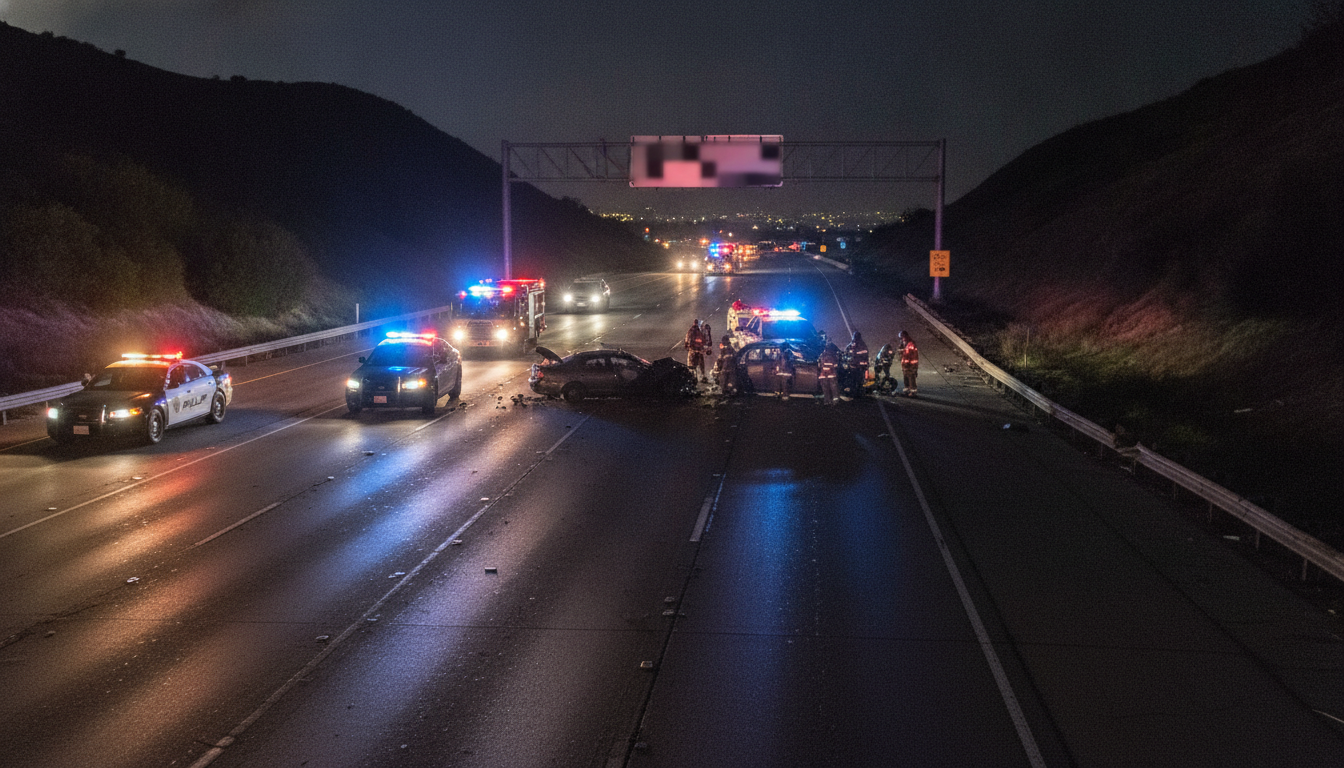
On August 11, 2026, a man was killed in a head-on collision on Interstate 15 near Fallbrook when a wrong-way driver, who investigators suspected was under the influence of alcohol, entered the freeway in the wrong direction, according to the California Highway Patrol and the San Diego County Medical Examiner's Office.
The collision was reported at about 12:24 a.m. on southbound Interstate 15 near Mission Road, north of State Route 76. CHP received reports that a silver Ford Escape was traveling northbound in the southbound lanes just before the crash. A 38-year-old man from Escondido driving southbound was struck head-on and pronounced dead at the scene at 12:44 a.m. The driver of the Ford Escape, a 32-year-old man from San Diego, suffered life-threatening injuries and was transported to a local hospital.
CHP officers from the Oceanside Area Office and North County Fire Protection District firefighters and paramedics responded to the scene. The collision drew several emergency crews and at least five vehicles were reported involved in the larger incident scene. CHP requested a full closure of southbound Interstate 15 while personnel treated the injured, investigated the fatal collision, and cleared the wreckage, with multiple tow trucks called to remove the damaged vehicles.
If your family has been affected by a serious or fatal crash on a California highway, contact DC Law Group for a free consultation to understand your legal rights and options.
What Do CHP Officers Investigate After a Fatal Wrong-Way Crash?
After a fatal wrong-way collision, the California Highway Patrol conducts a thorough investigation to determine how the crash occurred and whether any driver violated California's rules of the road. Officers document the position of both vehicles, mark the roadway, and photograph debris and damage. They typically interview witnesses, review event data recorders from the vehicles, and request toxicology testing when alcohol or drug impairment is suspected.
In this case, CHP said its preliminary investigation indicated the driver of the silver Ford Escape was under the influence of alcohol at the time of the collision. Because a fatal collision investigation is complex and may take time, the details released soon after the crash are often preliminary. They should not be treated as a final explanation of what caused the crash.
What Legal Rights Do Families Have After a Wrong-Way Crash?
When a person is killed in a motor vehicle crash caused by another driver's negligence, the surviving spouse and children, and in some cases other dependents, may be entitled to pursue a wrongful death claim. Under California law, a wrongful death action can seek compensation for funeral and burial expenses, the financial support and services the deceased would have provided, loss of companionship and consortium, and other damages recognized by law.
People injured in a car accident caused by someone else's negligence may also pursue compensation for medical expenses, lost wages, pain and suffering, and property damage. When a driver causes a collision while impaired by alcohol, that evidence can be important in establishing negligence. California applies a comparative fault standard, meaning a recovery can be reduced if an injured person shared responsibility for the crash. An experienced personal injury attorney can help identify all avenues of recovery available.
How Can a Family Protect Its Claim After a Fatal Collision?
Early action can make a meaningful difference after a fatal collision. Because evidence on a highway can disappear quickly, families should consider having a legal representative request preservation of the vehicles, obtain any available dashcam, traffic, or surveillance video, and secure the officer's crash report as soon as it is ready. Keeping receipts, photographs, medical records, and correspondence with insurance companies organized is also important.
California places strict filing deadlines on civil claims, and a claim against a government entity that may be responsible for a dangerous roadway condition carries an even shorter administrative deadline. Families should therefore review their legal options promptly rather than waiting until an insurance settlement is offered, particularly when the full circumstances of the crash have not yet been established.
Frequently Asked Questions
Where did the wrong-way crash occur?
The fatal crash happened on southbound Interstate 15 near Mission Road in the Fallbrook area of northern San Diego County, north of State Route 76.
What caused the crash?
CHP reported that a silver Ford Escape was traveling northbound in the southbound lanes shortly before the collision. The driver of that vehicle was suspected of being under the influence of alcohol, and the head-on collision killed the driver of a southbound Honda.
Who can bring a wrongful death claim after a crash like this?
The surviving spouse and children of the deceased generally have the primary right to bring a wrongful death claim, and other dependents or family members may qualify depending on their relationship to and financial dependence on the deceased.
What is the statute of limitations for a wrongful death case in California?
In California, the general statute of limitations for a wrongful death claim is two years from the date of death. A claim against a government entity responsible for a roadway condition may require an administrative claim within six months, so prompt legal review is important.
If you have lost a loved one or been seriously injured in a California car accident, call DC Law Group at (310) 571-8860 for a free consultation about your legal options.