
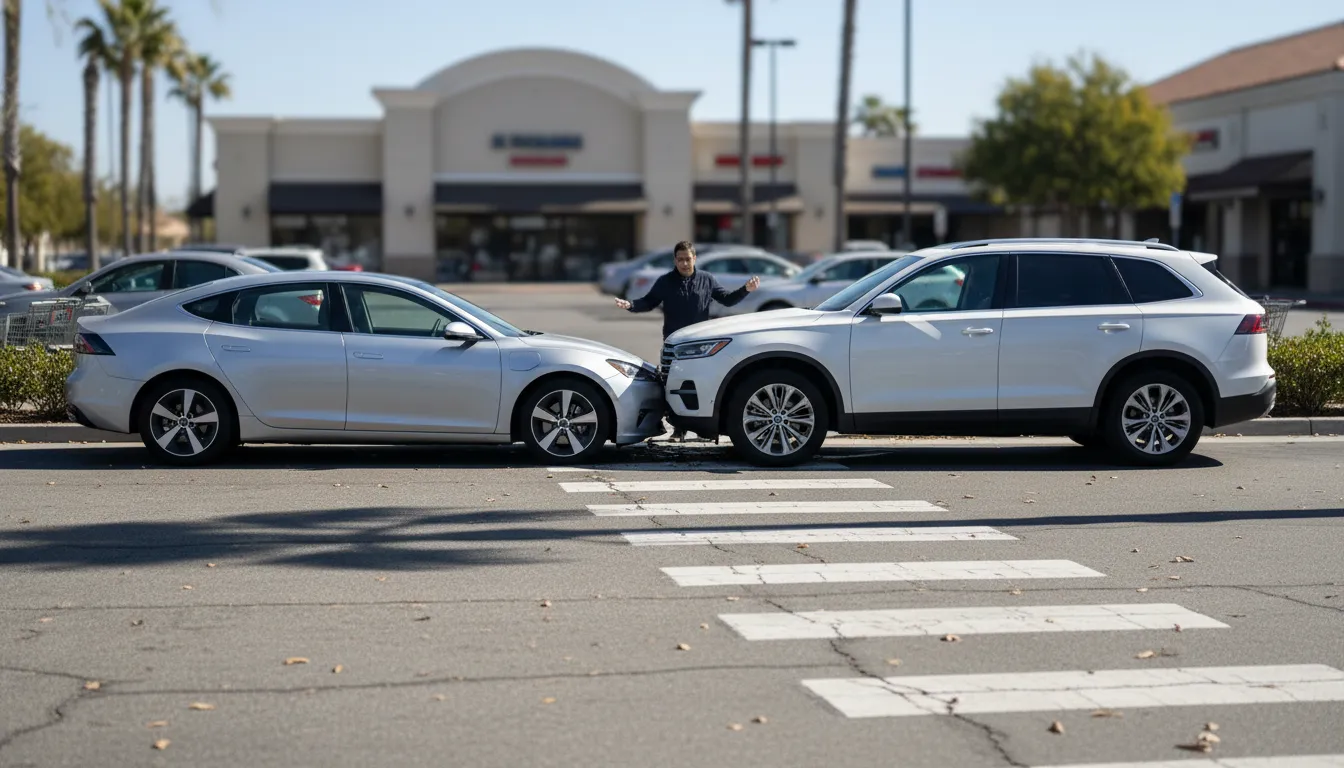
A low-speed collision in a parking lot can leave high-impact injuries and disputed fault. The property itself may help explain why it happened and who is responsible.
Schedule a consultation about your California parking lot injury claim.
A parking lot accident lawyer California victims consult investigates whether a driver or property owner contributed to an injury in a busy parking facility. The same review can apply after collisions at stores, apartment complexes, office garages, schools, and paid lots on private property throughout California. Evidence may include camera footage, witness accounts, vehicle damage, lighting, signs, lane markings, traffic controls, maintenance records, ownership records, and earlier hazard reports. Federal safety research found vehicle-strike injuries among retail workers in and near parking facilities, including at supermarkets and grocery stores. A claim identifies each responsible party, connects unsafe conduct to the harm, and pursues recovery for treatment, missed work, and property damage.
After a parking lot crash, the first issue is not only who hit whom. Unsafe property conditions may also have helped cause the injury. The following section explains when a claim may involve both issues.
Parking lot accident lawyer California: when does a crash become a claim?
The short answer.
A parking lot crash becomes a personal injury claim when someone is hurt and evidence shows another party's carelessness caused the harm. The event may be a slow-speed car impact, a backing vehicle striking a walker, or a fall after a collision. A parking lot accident lawyer California can examine injury records, insurance coverage, video, and who controlled the location.
Unlike a crash on a public road, a parking lot incident may raise two kinds of fault. One question is whether a driver failed to look, yield, or move at a safe speed. Another is whether a property condition helped create the danger. In a crash involving a bus or transit vehicle in a private lot, the firm's California bus accident claim guide explains additional issues that may affect responsibility.
Minor-looking contact can still cause an injury that is not clear at the scene. Records, photographs, and witness details help separate an injury claim from a dispute limited to vehicle damage.
Liability beyond the driver
Parking lots mix cars and people in tight spaces, near store doors, carts, loading areas, and marked crossings. That setting matters when a pedestrian is hit or two vehicles collide where sight lines are limited. The claim may focus on driver conduct, and it may also examine control of the site.
For example, faded direction markings, broken lighting, blocked views, or a poorly managed traffic path may be relevant facts. They do not prove fault alone. An injured person must preserve proof tying a driver's actions or property condition to the crash and resulting injuries.
Parking area impacts are a recognized safety problem, not a minor inconvenience. A CDC publication reported 68 retail workers injured by motor vehicles in or near parking facilities from 2010 through 2013. That workplace data does not decide a California claim, but it shows why parking area hazards require close review.
What turns an injury into a claim?
A claim starts with harm that can be documented, such as medical care, missed work, pain, or damage to a vehicle. It also needs proof of fault and a link between the unsafe act or condition and the injury. In a private lot, that proof may include both driving evidence and property evidence.
- Driver evidence: photos of vehicle positions, witness names, camera footage, and insurance details.
- Site evidence: lighting, signs, striping, obstructions, potholes, or prior reports of the same hazard.
- Injury evidence: treatment records, bills, work loss documents, and a day-by-day record of symptoms.
Responsibility can rest with one party or be shared, depending on what the evidence shows. A driver, business, property owner, property manager, or other party may need review. Because a parking lot has both traffic and property issues, an early investigation helps preserve the full picture.
Who may be responsible for injuries in a parking lot?
A parking lot injury does not point to one liable party in every case. A driver may cause a crash, while a broken walkway, poor lighting, or unsafe traffic pattern may add to the harm. The key question is what each person or business did, knew, or should have addressed before the injury.
Driver negligence
Drivers must watch for people, carts, reversing vehicles, stop signs, and marked lanes in parking areas. A driver may be responsible after speeding, backing without checking, failing to yield, looking at a phone, or driving while impaired. Video, witness statements, vehicle damage, phone records, and the police report may help show how the impact occurred.
A vehicle collision may still involve more than driving conduct. For example, faded markings, blocked sight lines, or a poorly placed loading area may shape how the collision happened. A parking lot accident lawyer California claim review should compare the driver's conduct with the layout and condition of the lot.
Dangerous property conditions
Commercial or residential owners and managers may face questions when a dangerous condition contributes to an injury. Common issues include potholes, uneven pavement, oil spills, loose wheel stops, missing signs, poor lighting, or failed security measures. Responsibility is not automatic. Evidence must show the condition mattered and that the responsible party had a fair chance to fix it or give warning.
Maintenance contractors may also be involved if their assigned work created or left a hazard. A paving company, cleaning vendor, lighting contractor, or debris service may have records that explain the lot's condition. A person hurt by a property hazard can read about a slip and fall in a parking lot. They should also preserve photos, shoes, receipts, and witness names.
Party.Issue.Proof.Motorist.Unsafe backing or yield failure.Video and witnesses.Manager.Lighting or signs.Photos and logs.Contractor.Repair or cleanup work.Service records.Employer.Work-area safety.Training records.
Employers and shared responsibility
An employer may enter the review when a worker was struck while gathering carts, directing cars, or delivering goods. The same may be true when work occurs near moving vehicles. This question turns on the job duties and safety steps in place. CDC-hosted workplace safety material describes accident prevention programs and training for workers exposed to parking-area vehicle hazards.
Several parties may have played different roles in the same event. Records such as leases, vendor contracts, inspection logs, incident reports, training materials, and camera footage can show who controlled each hazard. Early collection matters because video may be overwritten and pavement defects may be repaired after an injury.
Common parking lot crashes and dangerous conditions
Backups, turns, and walking paths
Parking lots mix cars, people, carts, bikes, and delivery vehicles in a small space. A driver backing from a stall may not see a person walking behind the car. Another common event occurs when two drivers reverse from facing rows at the same time. Crosswalks and travel aisles also place walkers in the path of turning vehicles.
These risks appear in store parking lots, apartment lots, school pickup areas, and office garages. A child may be hidden by an SUV. A shopper may step from between parked cars while carrying bags. In retail areas, struck-by vehicle risks are serious enough that the CDC has published safety guidance for parking-area hazards.
Driver choices that increase danger
Some crashes begin with a choice that saves seconds but creates risk. A driver may speed down an aisle or cut across empty spaces. The same driver may roll past a stop sign or turn too fast near an entrance. Garages add ramps, columns, tight corners, and sudden changes from daylight to shade.
Hit-and-run incidents create a second problem after impact. The injured person may not know the driver's name or insurance information. Cameras, witness details, a license plate, store incident reports, and photos of the area may help show what happened. A parking lot accident lawyer California claim can involve both driver conduct and conditions on private property.
Property conditions that can shape a claim
A careful driver cannot correct every site hazard. Dim lights can make a pedestrian hard to see at night. Overgrown plants, signs, cart corrals, dumpsters, or badly placed parked vehicles can block sight lines. Faded stripes may blur the route for cars and walkers, while missing or unclear signs can add confusion near exits.
The setting matters because a shopping center, apartment complex, school lot, or office garage may control features that guide traffic. Questions often include whether lights worked, striping was clear, warning signs were present, and known visibility problems were addressed. Those issues may fit a premises liability lawyer review when a hazard helped cause an injury.
- Backing crashes near walking aisles.
- Impacts near store entrances.
- Side impacts from unsafe driving.
- Crashes near blocked views.
- Hit-and-run collisions.
After a crash, the physical layout can change quickly. Cars leave, carts move, lights switch on, and damaged signs may be repaired. Photos, video, witness names, and a report to the property manager can preserve details about both the driver and the lot.
What should you do after a parking lot accident in California?
A parking lot crash can leave you hurt, shaken, and unsure who may be responsible. Safety and care come first. Once you are safe, gather facts while the scene is still clear.
Health and incident reporting
Parking lots can expose pedestrians and workers to moving vehicle hazards. A CDC-published parking safety report addresses vehicle strike risks in or near parking facilities. These steps help protect your health and preserve useful facts.
1.
Move safely and get medical help. Move out of traffic if you can do so without worsening an injury. Call 911 for urgent pain, bleeding, dizziness, or trouble walking. Even if symptoms seem mild, seek care and explain when they began.
2.
Report the event. Contact police when a driver hit you, injuries occurred, or unsafe conduct is involved. Notify store security or the property manager as well. Ask for the report number and the name of the person receiving your report.
3.
Photograph the scene. Capture vehicle damage, license plates, injuries, parking lines, signs, and nearby storefronts. Also document lighting, pavement hazards, blind corners, and blocked views. Take wide and close photos before vehicles move, if you can do so safely.
4.
Locate video and witnesses. Look for cameras on buildings, gates, pay stations, and nearby businesses. Ask witnesses for their names, phone numbers, and where they saw the crash. If a witness agrees, note a short account in your phone.
5.
Save records from the start. Keep medical papers, prescriptions, repair estimates, towing bills, work notes, and insurer messages. Save damaged clothing and original photos. Write brief notes about pain, sleep, travel, and work limits while events are fresh.
6.
Use care with insurer requests. Report the accident truthfully and provide basic contact details. Do not guess about speed, injuries, or fault. Before a detailed recorded statement or release, consider advice about your rights and the records requested.
7.
Consult counsel after an injury. A parking lot accident lawyer California can examine driver actions, property conditions, reports, video sources, and insurance issues. This review matters when a store, garage, school, or private lot may hold evidence.
Details that may disappear quickly
A parking lot collision may involve site conditions as well as driver conduct. Photograph dim areas, faded markings, broken signs, standing water, debris, or damaged barriers. Note the exact space, aisle, entrance, and time of the crash.
Video may be saved for only a limited period under a business policy. Ask the manager to preserve footage, but do not argue at the scene. Keep a copy of your request and the name of each person contacted.
Help while you recover
Care visits, repair needs, and insurance calls can pile up while you are injured. If you want help reviewing the accident and your records, contact DC Law Group for a consultation. Bring your reports, photos, medical papers, and insurer communications.
Evidence that can support a parking lot injury case
A parking lot injury may involve a careless driver, an unsafe property condition, or both. Evidence can show how the event happened and who had notice of a risk. A parking lot accident lawyer in California can review which records fit the facts of the injury.
Evidence from the scene
Start with evidence that can change or vanish. Ask the store, garage, apartment complex, or other property operator to preserve surveillance video at once. Video may show vehicle movement, walking paths, lighting, warning signs, or the moments before impact.
Photographs should capture more than the place of injury. Take wide images of traffic lanes, blind corners, stop signs, wheel stops, pavement changes, drains, and nearby light fixtures. Take close images of debris, liquids, broken concrete, skid marks, damaged items, shoes, and visible injuries.
- Save the date, time, weather, and exact parking space or lane location.
- Request an incident report and keep any store receipt, parking ticket, or garage entry record.
- Record the names of employees, security staff, drivers, passengers, and other witnesses.
Prior safety reports can matter when a hazard was known before someone was hurt. In one parking-area workplace investigation, workers reported prior near misses and limited safety enforcement to the Centers for Disease Control and Prevention. Similar records may help explain notice, recurring traffic risk, or missing safety steps in a specific case.
Records that connect fault and harm
Driver-related proof may include contact details, license plates, insurance information, vehicle photographs, and repair estimates. Damage location can help match a vehicle to the contact described by witnesses or shown on video. Keep texts, emails, and any statement made by a driver or property representative.
For a property-related claim, request maintenance logs, lighting repair records, inspection checklists, security logs, and earlier complaints about the same area. These items may help show whether a dangerous condition existed before the injury. When unsafe property conditions are part of the facts, a premises liability lawyer can assess those records with the driver evidence.
Medical records also build the timeline. Keep emergency care notes, imaging results, treatment plans, bills, work restrictions, and follow-up appointments. Tell each provider how the injury happened and where pain began, so the record reflects the event and symptoms accurately.
Missing drivers and disputed accounts
A hit-and-run can make quick evidence collection more important. Ask witnesses for a description of the car, plate digits, direction of travel, and nearby businesses with cameras. Make a police report and notify the insurer promptly, without guessing about facts not yet known.
If the driver has no insurance, preserve the same proof of fault and injury. An insurance review may include uninsured motorist coverage, policy notices, claim letters, and requests for recorded statements. Keep copies before signing releases or giving broad access to private records.
How a lawyer investigates driver and premises liability issues
More than one line of inquiry
A parking lot crash may begin with a driver, but the review should not stop at the steering wheel. A lawyer can study how the vehicle moved and what each person could see. Witness accounts can then be compared with photos or video. This work develops facts before anyone assesses a party's role.
The property itself may also matter. A California premises liability lawyer may examine lighting, sight lines, faded markings, signs, traffic flow, or a damaged walking surface. Layout can matter where cars and people share a tight route. These issues do not prove fault on their own. They show the setting in which the injury took place.
Records that may disappear
Evidence in a store lot or parking garage can change quickly. Cameras may record a car's path, a person's position, nearby vehicles, or lighting at the time. A prompt review can ask that available video be preserved. This may matter before routine systems erase or replace a recording.
Other records may fill gaps when no clear video exists. A lawyer may seek an incident report, security log, repair request, lighting complaint, or witness contact details. Photos can document the lane, curb, markings, debris, damage, and injuries. Together, those items may test whether different accounts fit the physical scene.
Parking-area hazards call for close attention when a vehicle strikes a person. A CDC parking-area safety publication discusses workers struck by motor vehicles and ways to address parking-area hazards. The publication addresses workplace safety. It does not decide fault in any individual California injury case.
Unknown drivers and insurance questions
When a driver leaves the scene, the need to find evidence is even more urgent. Video, witness statements, receipts, gate records, or a partial plate may help locate the vehicle. Police report information may also confirm what was reported near the time of the crash. A lawyer can review each source for leads and conflicts.
The insurance review may continue even if the driver cannot be found. A lawyer can examine the injured person's policy and ask what coverage may apply. If a driver is identified but lacks enough insurance, policy terms can still shape available claim paths. The answer depends on the records and coverage in that case.
If you were hurt in a parking area, you can schedule a consultation with DC Law Group to discuss evidence that may need prompt attention. The firm can review known facts and explain possible next steps. That review does not assume the result of a claim.
A parking lot accident lawyer in California may review driver conduct, site conditions, and insurance issues at the same time. Useful evidence depends on the place and events. Preserving records early can help relevant questions receive a fair review while files and memories are still available.
Frequently Asked Questions
Who can be responsible for a parking lot accident in California?
A driver may be responsible when careless driving causes a parking lot crash. A store, apartment owner, office garage operator, school, or parking facility may also be involved if a dangerous condition contributed to the injury. According to DC Law Group, California personal injury law can apply when property owners fail to maintain safe parking lots. Responsibility depends on the facts and available evidence.
Can a property owner be liable if a driver hit me in a parking lot?
Yes, depending on the evidence. A claim may examine whether poor lighting, broken pavement, blocked views, missing signs, or unsafe traffic flow helped cause the crash. The driver's conduct still matters, but it may not be the only issue. Records, photographs, witness accounts, and any surveillance video can help show whether the property condition contributed to the injury.
What evidence should I collect after a parking lot injury accident?
If it is safe, take photographs or video of vehicle positions, injuries, pavement, lighting, signs, traffic markings, and nearby cameras. Get contact and insurance information from drivers and contact details for witnesses. Report the incident to the store, landlord, school, garage, or facility operator. Preserve medical records, repair bills, receipts, and missed-work records because parking lot conditions may change quickly.
Does DC Law Group handle parking lot accident injury claims?
DC Law Group represents people injured in motor vehicle, pedestrian, and property-related accidents throughout California. Its consultation page provides a way to discuss whether a parking lot claim involves a careless driver, an unsafe property condition, or both. The firm states that its No Fees Unless We Win policy applies to personal injury cases, including parking lot accidents. A consultation can address the available evidence and next steps.
Ready to Protect Your California Injury Claim?
Waiting after a parking lot crash can make it harder to preserve photos, witness details, records, and other information that may support your claim. While bills, missed work, and insurer questions may keep moving, delaying legal guidance can leave you unsure about the next useful step. Starting now gives an attorney time to review the location, the parties involved, and your options before key details become harder to collect.
You do not have to decide alone how to respond to injuries from a crash near a store, apartment, school, garage, or parking facility. Ready to take the next step? Schedule a free consultation to discuss your parking lot injury claim with DC Law Group.